Key Highlights
- 6016 aluminum offers high strength and exceptional good formability, making it ideal for automotive industry applications such as car bodies and structural components.
- It ensures corrosion resistance, which is critical for maintaining performance under diverse environmental conditions.
- The alloy complies with established production standards, ensuring consistency and reliability.
- Widely employed in lightweight designs, it supports energy efficiency while maintaining durability.
- Known for its superior surface quality, it enhances the aesthetic appeal of automotive sheets.

Introduction
Engineers love working with 6016 aluminum alloy because it offers such a fantastic mix of being lightweight, strong, and versatile. It’s especially popular in the automotive industry, helping to build sturdy yet efficient vehicles. People often choose this alloy for car bodies and parts because it’s easy to shape and very durable. As everyone seeks lighter, more innovative designs, 6016 aluminum has become a go-to material in advanced manufacturing, making numerous exciting options possible.
Chemical Composition of 6016 Aluminum

6016 aluminum is a lightweight, corrosion-resistant alloy in the 6000 series, commonly used in automotive body panels for its excellent formability and strength. Silicon (1.0%–1.5%) and magnesium (0.25%–0.6%) are key alloying elements that balance strength and workability. Small amounts of manganese and iron improve durability, making it suitable for applications needing complex shaping and surface quality.
|
Element |
Composition Range (% by weight) |
Description |
|---|---|---|
|
Aluminum (Al) |
97.0 – 98.5 |
The primary component, offering a lightweight and corrosion-resistant base. |
|
Silicon (Si) |
1.0 – 1.5 |
Enhances strength and formability, ideal for shaping complex parts. |
|
Magnesium (Mg) |
0.25 – 0.6 |
Boosts strength and corrosion resistance for durable performance. |
|
Iron (Fe) |
0.5 (max) |
Kept low to maintain corrosion resistance and surface quality. |
|
Manganese (Mn) |
0.2 (max) |
Adds toughness and supports structural stability in small amounts. |
|
Copper (Cu) |
0.25 (max) |
Minimal to enhance strength without compromising corrosion resistance. |
|
Zinc (Zn) |
0.2 (max) |
Limited to maintain corrosion resistance. |
|
Titanium (Ti) |
0.15 (max) |
Refines grain structure for improved manufacturing quality. |
|
Chromium (Cr) |
0.1 (max) |
Enhances wear resistance in trace amounts. |
|
Others (each) |
0.05 (max) |
Trace elements, controlled to ensure alloy consistency. |
|
Others (total) |
0.15 (max) |
Total minor elements, kept low to maintain performance. |
Meeting global standards such as GB/T 33227-2016, ASTM B209, and EN 485, the alloy’s composition ensures reliability for engineers working on structural components. Its customizability enables manufacturers to tailor it for applications requiring high tensile strength, corrosion resistance, and excellent machinability. These characteristics establish 6016 aluminum as a preferred material in modern engineering solutions.
Key Properties of 6016 Aluminum Alloy
The 6016 aluminum alloy is a lightweight and versatile material, great for automotive and structural applications.
This alloy stands out with:
- Lightweight Density: With a density of 2.70 g/cm³, it’s lightweight, making it ideal for reducing vehicle weight.
- Excellent Corrosion Resistance: Withstands well in harsh environments, such as roads or coastal areas.
- Excellent Formability: Easily shaped into sheets for stamping, ideal for car body panels.
- Good Weldability: Welds effectively, supporting strong assemblies in manufacturing.
- Moderate Strength: With a tensile strength of around 200–250 MPa in the T4 temper, it’s reliable for non-critical structural parts.
|
Property |
Value/Description |
|---|---|
|
Density |
2.70 g/cm³ |
|
Melting Point |
~580–650°C |
|
Tensile Strength (T4 Temper) |
~200–250 MPa |
|
Yield Strength (T4 Temper) |
~100–150 MPa |
|
Corrosion Resistance |
Very good, suitable for automotive and marine use |
|
Thermal Conductivity |
~160–180 W/m·K |
|
Electrical Conductivity |
~45–50% IACS |
|
Weldability |
Good, supports various welding methods |
|
Formability |
Excellent, ideal for sheet forming and stamping |
|
Thermal Expansion Rate |
23.5 × 10⁻⁶ /°C |
6016 Aluminum vs. Other Alloys
When compared to other aluminium alloys, 6016 aluminum offers distinct advantages, including high strength, good formability, and remarkable corrosion resistance. Its compliance with strict production standards guarantees consistent quality, making it a reliable choice for manufacturers.
Its flexibility in terms of width and thickness provides scope for diverse applications within the automotive industry, particularly for lightweight car bodies. These qualities establish 6016 aluminum as a standout option among alternatives like 6061, 6022, and 5182.
6016 vs. 6061 vs. 6022 vs. 5182 Aluminum

The following table highlights the key differences between 6016 aluminum and comparable alloys:
|
Alloy |
Key Characteristics |
Strength |
Corrosion Resistance |
Weldability |
Typical Applications |
|---|---|---|---|---|---|
|
Lightweight, heat-treatable, good formability, high surface quality |
Moderate (T6: ~280 MPa) |
Very Good |
Good |
Automotive body panels, sheet metal |
|
|
Versatile, heat-treatable, balanced strength and formability |
Moderate (T6: ~310 MPa) |
Very Good |
Excellent |
Structural components, marine fittings, general use |
|
|
Heat-treatable, good formability, improved corrosion resistance |
Moderate (T6: ~290 MPa) |
Excellent |
Good |
Automotive outer panels, high-quality surface parts |
|
|
High strength, non-heat-treatable, excellent formability |
Moderate (~270 MPa) |
Excellent |
Good |
Automotive body sheets, beverage can ends |
Engineers often select 6016 aluminum for its ability to withstand stress without degrading, particularly under environmental factors. Each alloy has unique characteristics that cater to specific design requirements.
Comparing 6016 T4, T6, and T651 Tempers
The mechanical properties of 6016 aluminum vary significantly across its tempers, such as T4, T6, and T651, allowing engineers to address different needs.
|
Temper |
Key Characteristics |
Strength |
Corrosion Resistance |
Formability |
Typical Applications |
|---|---|---|---|---|---|
|
6016 T4 |
Solution heat-treated, naturally aged, excellent formability |
Moderate (~220 MPa) |
Very Good |
Excellent |
Automotive body panels, formable sheet metal |
|
6016 T6 |
Solution heat-treated, artificially aged, high strength |
High (~280 MPa) |
Very Good |
Moderate |
Automotive structural components, high-strength panels |
|
6016 T651 |
T6 with stress relief by stretching, high strength, improved stability |
High (~280 MPa) |
Very Good |
Moderate |
Precision automotive parts, stress-sensitive applications |
In Summary:
- T4 Temper: This delivers a good balance of tensile strength (≥220 N/mm²) and elongation (≥18%), with smooth processing capabilities for automotive parts, such as car hoods.
- T6 Temper: Known for its enhanced high strength (≥290 N/mm²), this variant suits applications demanding exceptional load-bearing capacity, such as chassis components.
- T651 Temper: Combines stress relief with improved elongation, making it ideal for structural parts where flexibility and toughness are essential.
Understanding material certification relationships helps engineers source the right material for specific automotive designs.
Tips for Sourcing 6016 Aluminum
- Check Alloy Specifications: Ensure the 6016 aluminum alloy meets the automotive industry’s standards. Linsy Aluminum provides 6016 that complies with EN AW-6016, crucial for external car body panels.
- Confirm Temper Availability: Verify the supplier offers the specific tempers needed for forming. Linsy Aluminum supplies 6016 in T4 and T4P tempers, ideal for excellent formability in automotive applications.
- Match Application Needs: Prioritize suppliers with experience in automotive applications. Linsy Aluminum specializes in 6016 for automotive body sheets, hoods, and doors, where deep drawing and good surface quality are vital.
- Assess Surface Quality & Formability: Look for superior surface finish and excellent deep drawing capabilities. Linsy Aluminum’s 6016 is designed for high formability and a flawless surface, reducing manufacturing defects.
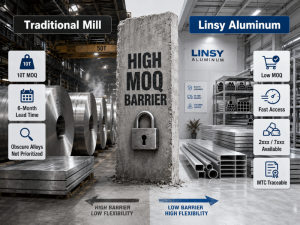
- Ensure Reliable Supply Chain: Opt for a supplier with consistent delivery and support. Linsy Aluminum offers global distribution and technical expertise, ensuring timely delivery for your production lines.
Conclusion
In summary, 6016 aluminum is a versatile alloy with excellent strength, formability, and corrosion resistance, ideal for engineering applications. Engineers should compare its properties to other alloys and tempers to choose the best material. Understanding its key features and sourcing tips helps maximize benefits. If interested in using 6016 aluminum, get quotes from Linsy Aluminum today for the best materials.
As a trusted leader in aluminum manufacturing, Linsy Aluminum offers certified 6016 aluminum, compliant with rigorous standards such as ISO 9001, ASTM B209, GB/T 33227, and EN 485.
With 20 years of experience and a robust 300,000-ton annual production capacity, we maintain an ample inventory of 6016 aluminum in various forms, including sheets, plates, and profiles, available in a diverse range of sizes. We are equipped to support custom dimensions and low Minimum Order Quantities (MOQs) to meet your specific project needs. Get a quote today!

Ready to source 6016 aluminum sheet for automotive or structural use? Explore our 6016 Aluminum Alloy.
Frequently Asked Questions
What are the main applications of 6016 aluminum in automotive engineering?
6016 aluminum is extensively used in the field of automobile manufacturing for parts like car doors, roofs, hoods, and luggage racks. Its high strength, corrosion resistance, and adaptability as an automotive aluminum sheet provide unmatched value for automotive industry applications.
How does 6016 aluminum compare to 6061 and 1060 alloys?
6016 stands apart with higher tensile strength, lightweight composition, and good corrosion resistance. While 6061 balances strength and durability, 1060 prioritizes purity. Both alternatives lack the enhanced surface quality tailored for car body applications.
Can 6016 aluminum alloy be welded or heat-treated?
Yes, 6016 aluminum offers good weldability and heat treatment capabilities, ensuring versatile use for creating structural components. Its high tensile strength and good formability comply with international production standards, enabling reliable engineering outcomes.
What are the recommended surface treatments for 6016 aluminum?
For optimal surface quality and corrosion resistance, recommended treatments include passivation, chemical cleaning, and oiling methods. Such processes enhance the sheet’s ability to withstand environmental protection challenges while maintaining its aesthetic appeal, width, and thickness.
Are there industry standards or certifications for using 6016 aluminum in the U.S.?
Yes, compliance with certifications like ASTM B209 and material certification relationships from major auto manufacturers ensures reliability. Meeting stringent production standards and working with reputable suppliers guarantees quality in the automotive industry.