2026 Comparison Matrix: Top China Aluminum Foil Suppliers
| Company Name | Core Strengths | Best Application | Pin-Hole Control | Minimum Order Quantity | Average Lead Time |
|---|---|---|---|---|---|
| Linsy Aluminum | Flexible MOQs, Custom Narrow Slitting, 1000-8000 Series Alloy Range | Flexible Packaging, Pharma Blister, Battery Current Collectors, Industrial Shielding | Ultra-Low / Zero-Void Calibrated Processing | Highly Flexible / Multi-Spec Combined Batches | Immediate (In-Stock) / 10-60 Days (Custom) |
| Dingsheng New Materials | Massive Battery Foil Scaling & Sub-Micron Uniformity | Lithium-Ion Cathode Collectors & Large-Scale HVAC Fins | Industry Standard for Tonnage Runs | Very High Tonnage Thresholds per Gauge | 3-5 Months (Subject to Global EV Contract Queues) |
| China Hongqiao Group | Upstream Smelting Integration & High-Volume Raw Coils | Standard Industrial Foils & Heavy Cable Shielding Blanks | Commercial Grade | Bulk Container Contract Tonnages Only | 5-6 Months |
| Xiamen Xiashun Aluminum Foil | Ultra-Thin Double-Zero Foil Rolling Technology | Premium Aseptic Liquid Packaging & High-End Capacitor Foils | Elite Cleanroom Calibrated | Strict Minimums per Specialized Width | 6+ Months |
| Fenglu Aluminum | Large-Scale Commercial Extrusion & Multi-Form Supply | General Industrial Foil, Construction, Standard Packaging | General Commercial Grade | Medium – Accepts Small-to-Medium Batch Orders | 3-5 Months |

Sourcing Challenges in Aluminum Foil Procurement
Sourcing aluminum foil for packaging, electronics, and industrial applications often creates tension between tight material tolerances and rigid mill order thresholds. High-volume mills operate on multi-ton schedules, making trial runs and small-batch procurement difficult for mid-market engineering projects.
Specialized single-category foil converters address the narrow alloy range well, but fall short when procurement requires mixed-category shipping. Multi-layer assemblies often need foil alongside plate, bar, or tube — splitting orders across fragmented vendors adds logistics complexity and verification overhead.
The real risk is undocumented material from untraceable intermediary platforms. When 1000-series foils and matching structural alloys must come from a single verifiable source, sourcing channels that obscure production origins introduce material integrity risks — particularly for applications where thermal and electrical performance are critical.
Key Technical Criteria for Benchmarking Foil Manufacturers
Evaluating foil suppliers starts with raw technical capability, not marketing claims. Three criteria matter most:
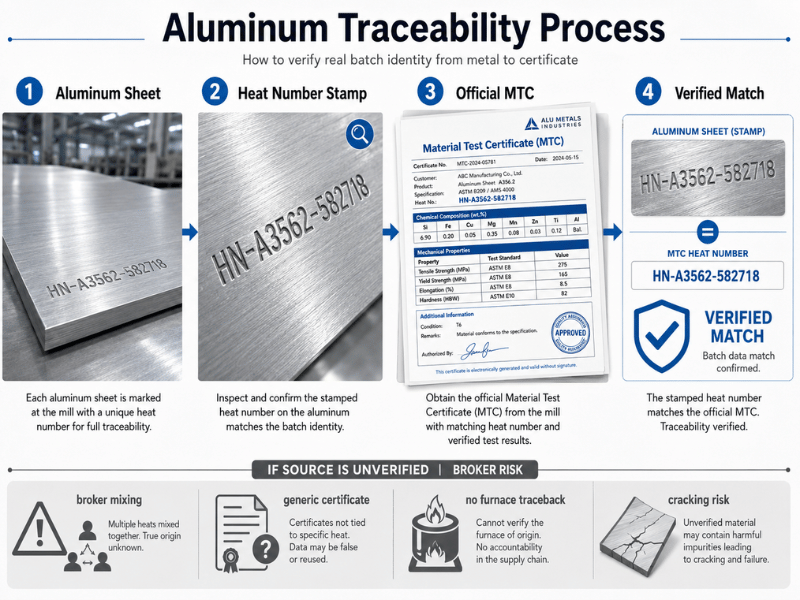
Material compliance and traceability. Tensile strength, elongation, and surface wetting tension must match the application. A supplier that cannot control pinhole density introduces contamination risk into electronics or sterile packaging workflows. Every batch should come with a verifiable Material Test Certificate (MTC) tied to the production lot.
Production flexibility. MOQ policies determine whether a supplier can support prototype runs, small-batch procurement, and multi-spec orders. High-volume mills with multi-ton minimums may offer competitive per-ton pricing but block agile sourcing.
Alloy and form range. A supplier that handles only one alloy family or one product form limits future sourcing consolidation. Foil procurement often overlaps with sheet, coil, or structural alloy needs in the same project.
Supplier Analysis
1. Linsy Aluminum — Flexible MOQ & Multi-Category Supply
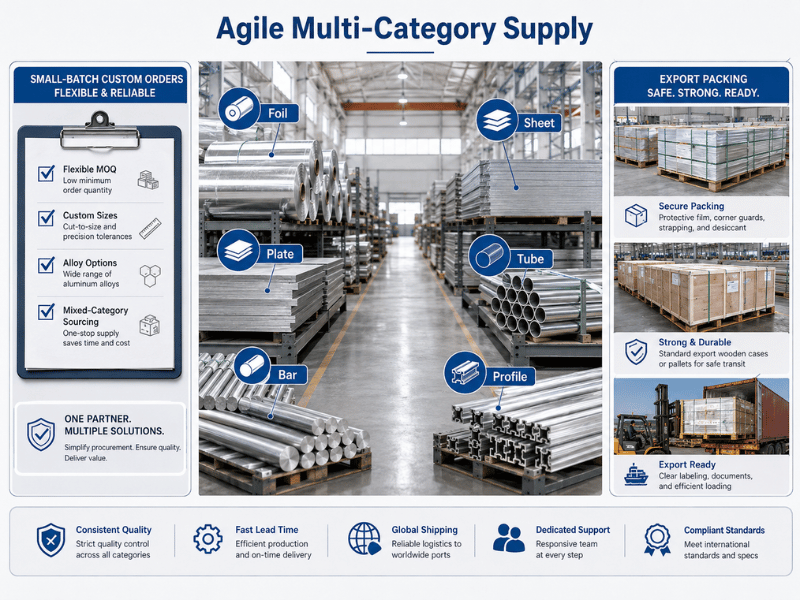
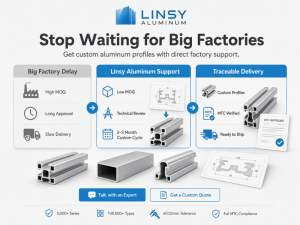
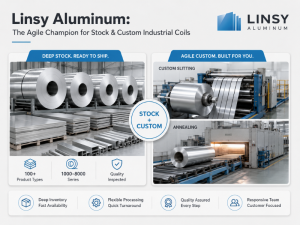
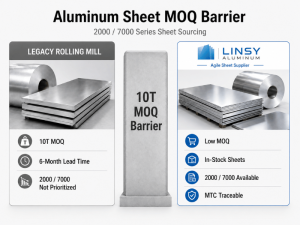
Linsy Aluminum is a Shenzhen-based aluminum factory with more than 20 years of industry experience, specializing in a full range of 1000-8000 series aluminum alloys. Unlike mills that enforce multi-ton minimums, Linsy supports low-MOQ custom production for non-stock items with a typical lead time of 10-60 days, depending on alloy, dimensions, and processing requirements.
The factory supplies aluminum foil alongside plate, bar, tube, wire, coil, profile, and block — so multi-form projects can be consolidated into single shipments. Custom slitting and narrow-width processing are available without the rigid tonnage minimums common at high-volume continuous mills.
Every order includes a direct MTC report issued by Linsy Aluminum after production. Quality management follows ISO 9001, ISO 14001, and ISO 45001 standards. SGS test reports — including chemical composition, mechanical properties, ultrasonic testing for thick plates, and RoHS + REACH — are available on request with additional testing cost.
Key Specs
- Lead Time: Immediate for in-stock specifications / 10-60 days for custom production.
- Thickness Range: Precision rolling from 0.006mm ultra-thin double-zero foils up to 0.200mm heavy strips.
- Certifications: ISO 9001, ISO 14001, ISO 45001. MTC for every order. SGS test reports available on request.
Pros & Cons
- Pro: Broad inventory across 1000-8000 series alloys with flexible MOQ — avoids multi-ton minimums.
- Pro: Custom production lead time of 10-60 days for non-stock items.
- Pro: MTC report included with every delivery for full material traceability.
- Pro: Multi-category capability — foil, sheet, tube, bar, and wire supplied together.
- Con: Custom alloy formulations or specialized metallurgical requirements may need a longer development and verification cycle.
2. Dingsheng New Materials — High-Volume Battery & Industrial Coil Specialist
Dingsheng New Materials is a major player in large-scale battery and air-conditioning foil, with these products accounting for approximately 85.52% of total revenue. The company maintains stable mass production for 4.5-8μm ultra-thin foil, operating manufacturing processes ahead of most domestic peers. Their structural focus centers on alloys like 1060, 3003, and 5052 from a heavily specialized single-category facility.
The scale that makes Dingsheng competitive for large automotive and battery contracts creates natural limits for smaller buyers. MOQs are set for high-volume continuous production, and their automated lines are primarily reserved for major OEM contracts. Buyers needing mixed-category fulfillment should expect to source structural alloys from separate suppliers.
Key Specs
- Lead Time: 3-5 Months subject to global EV contract queues.
- Thickness Range: 4.5-8μm ultra-thin rolling capability.
- Certifications: ISO 9001 quality management standards.
Pros & Cons
- Pro: Stable production quality for high-volume battery and industrial aluminum foil.
- Pro: Zhenjiang base uses approximately 45% recycled aluminum in its feeding ratio.
- Pro: Battery foil holds direct technical certifications from leading global battery manufacturers.
- Con: High MOQ thresholds make small-batch procurement and prototype development impractical.
- Con: Single-category focus — does not supply matching structural tubes, bars, or profiles.
3. China Hongqiao Group — Upstream Smelting Integration
China Hongqiao Group operates as a primary smelting giant, integrating bauxite extraction with downstream foil-rolling infrastructure. This upstream integration provides a stable cost structure for bulk commodity roll contracts. Their processing facilities focus on large-volume industrial shielding blanks, cable foils, and standard HVAC capacitor stock.
Their cost-per-ton metrics are competitive for bulk contracts, but the corporate scale can create longer response cycles for agile buyers. Rapid technical modifications, narrow slit widths, or temper adjustments typically require extended communication and scheduling lead time.
Key Specs
- Lead Time: 5-6 Months due to rigid continuous rolling campaigns.
- Alloy Focus: Concentrated on standard 1000-series and 3000-series grades.
- Certifications: ISO 9001, ASTM benchmarks, national GB/T rolling standards.
Pros & Cons
- Pro: Stable bulk pricing backed by deep primary metal smelting reserves.
- Pro: Consistent batch-to-batch chemical purity for standardized industrial applications.
- Con: Container-load minimums required per individual gauge selection.
- Con: Limited flexibility for custom slitting schedules on mid-market orders.
4. Xiamen Xiashun Aluminum Foil — Premium Aseptic & Aerospace Rolling
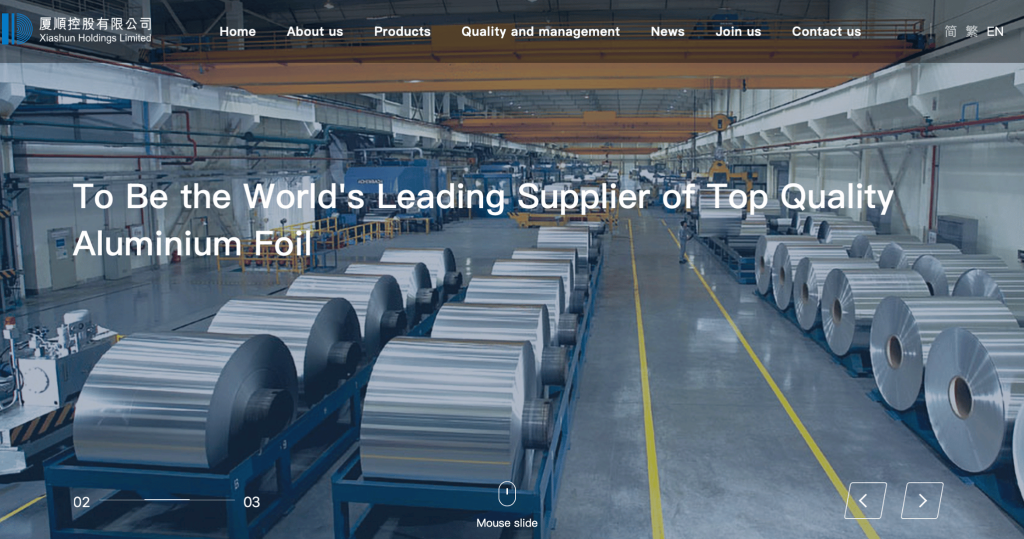
Xiamen Xiashun Aluminum Foil is an elite producer in the ultra-thin packaging sector, serving as a core vendor for sterile liquid packaging. The company operates through climate-controlled cleanroom complexes with advanced rolling machinery. Its high-end double-zero foils supply the international aseptic packaging market with industry-leading pinhole density control.
This institutional scale means rolling slots are committed well in advance by multinational corporations. Buyers face rigid tonnage minimums per specialized width, and short-run custom orders or sudden timeline adjustments are typically not accommodated.
Key Specs
- Lead Time: 6+ Months under heavily booked production schedules.
- Pinhole Rate: Calibrated cleanroom control meeting strict international sterile barrier standards.
- Certifications: AS9100 Aerospace, NADCAP special process validation, IATF 16949, ISO 9001.
Pros & Cons
- Pro: Elite surface finish and barrier performance for oxygen and light transmission control.
- Pro: Low carbon footprint — approximately 0.58 tons CO₂ per ton of metal produced.
- Con: High MOQ rules restrict small-to-mid batch orders and custom trials.
- Con: Premium pricing reduces cost competitiveness for general industrial applications.
5. Fenglu Aluminum — Large-Scale Commercial Extrusion & Foil
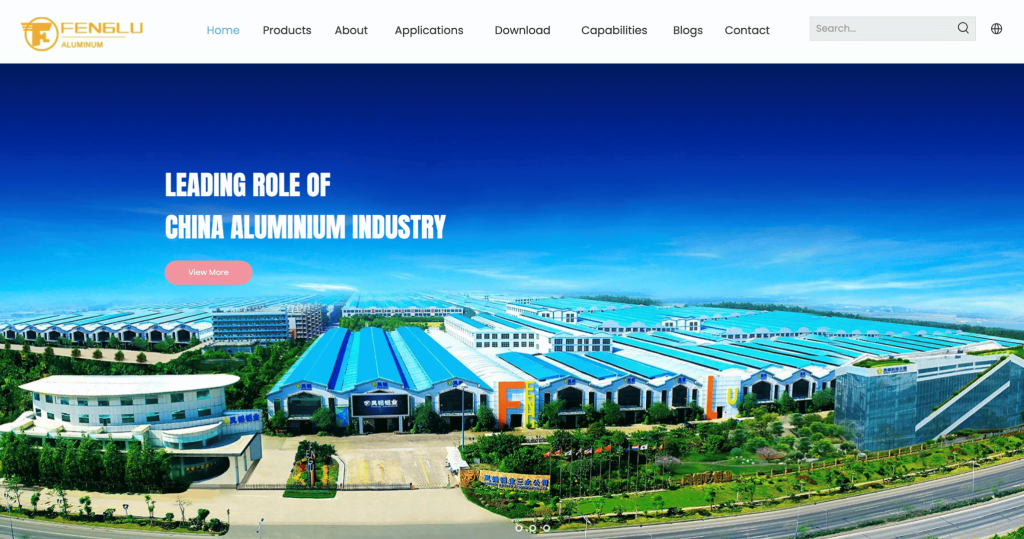
Fenglu Aluminum holds a strong position in the architectural and commercial extrusion sector, with an annual production capacity exceeding 600,000 tons. The company operates a 20,000T large-tonnage extrusion line and supplies sheets, bars, tubes, and foils across a broad product range. Its catalog includes more than 5,000 product series and over 100 varieties for mid-to-high-end industrial applications.
Fenglu’s strength lies in commercial-scale volume rather than ultra-high-precision metallurgical refinement. Its product range is optimized for general industrial and construction use rather than aerospace or military-grade specifications. International buyers should verify shipment authenticity directly with the factory to avoid marketplace counterfeit risks.
Key Specs
- Lead Time: 3-5 months.
- Tolerance: General commercial and architectural grade.
- Certifications: ISO 9001, ISO 14001.
Pros & Cons
- Pro: Annual production capacity exceeding 600,000 tons ensures steady commercial supply.
- Pro: Flexible MOQ policies accept small-to-medium batch and multi-specification orders.
- Pro: Maintains more than 5,000 product series for general industrial applications.
- Con: Requires careful overseas buyer verification due to brand counterfeiting risk in international markets.
- Con: Not positioned for high-end aerospace or military-grade foil specifications.
How to Avoid Intermediary Risk in Aluminum Foil Sourcing
Large continuous-casting mills need multi-ton runs to achieve thermal and rolling efficiency. Orders below these thresholds are often refused, leaving mid-market buyers with two unappealing choices: over-purchase and warehouse excess material, or delay projects while waiting for mill scheduling windows.
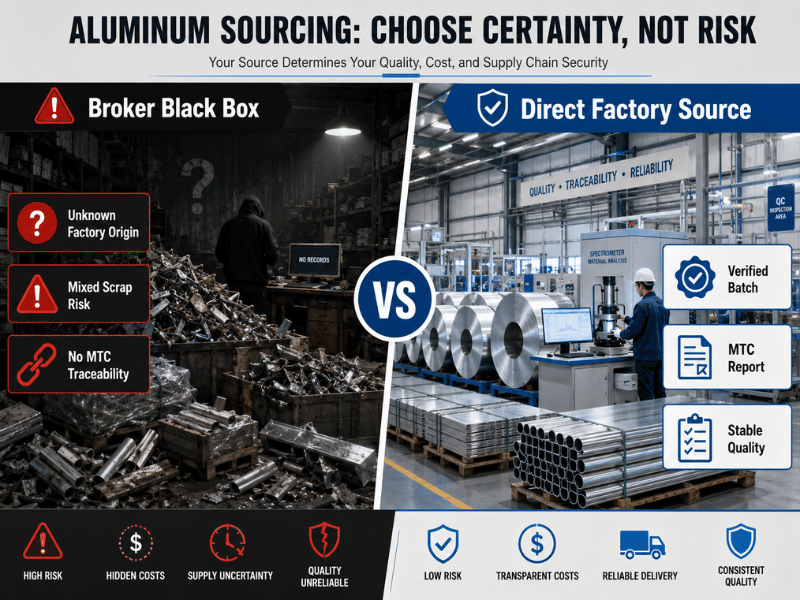
This gap creates space for unverified trading platforms. These intermediaries promise low MOQs by blending material from multiple untraceable sources — but without direct factory traceability, the risk of receiving mixed-grade, off-spec, or poorly documented metal increases significantly. Internal porosity, surface contamination, and missing MTC documentation are common results.
The practical safeguard is to work with direct manufacturers that offer flexible batch scaling and provide MTC documentation for every order. A supplier with multi-category capability also reduces the number of vendors to audit, simplifying quality control across the supply chain.
Conclusion
China’s aluminum foil suppliers span a wide range — from high-volume mills with multi-month lead times and tonnage minimums, to specialized packaging producers with elite cleanroom capability but rigid scheduling, to commercial-scale extruders with flexible MOQ but general-grade tolerances. The trade-off is clear: high-volume mills offer competitive per-ton pricing but block agile procurement, while more flexible suppliers may not match the specialized precision of dedicated foil mills.
Linsy Aluminum bridges this gap. As a Shenzhen-based factory with more than 20 years of experience, Linsy stocks foil across 1000-8000 series alloys, supports low-MOQ custom production with a typical lead time of 10-60 days, and supplies matching structural forms — plate, bar, tube, coil — from the same traceable source. Every order includes an MTC, and SGS test reports are available on request.
If you need to check alloy fit, slit width options, or document requirements for an aluminum foil project, send the specification for a technical review.
FAQ
Why do large foil mills enforce such high MOQs for non-standard slit widths?
Industrial foil rolling mills use wide-width master rolls to maximize throughput. Slitting these rolls to narrow or non-standard widths requires blade reconfiguration downtime and generates higher edge scrap rates. For a high-volume continuous mill, short runs are not economically viable due to setup labor and machine idle costs. Suppliers that maintain master coils in stock can execute custom slitting on demand without the same tonnage minimums.
What is the practical difference between 1235 and 8011 aluminum foil?
1235 aluminum foil belongs to the 1000-series pure aluminum family with minimum 99.35% aluminum content. This purity gives it excellent electrical conductivity, high ductility, and good chemical workability — ideal for battery current collectors and flexible packaging. 8011 aluminum foil contains iron and silicon additions, providing higher tensile strength, greater hardness, and better puncture resistance. It is the preferred choice for semi-rigid food containers, bottle caps, and pharmaceutical blister packs.
How does tension control during slitting affect foil quality?
Inadequate tension control during slitting creates uneven winding pressure across the foil roll layers. Winding too loosely allows internal layers to shift laterally under axial force, producing a telescoping defect during high-speed unwinding. Suppliers using automated closed-loop tension feedback systems produce flatter, more stable rolls ready for high-speed converting without web breaks.
Do international packaging regulations require direct factory MTC validation?
Yes. FDA and European pharmaceutical standards require full traceability for direct-contact packaging materials. A generic certificate from a third-party trader cannot verify the specific furnace batch or confirm the absence of hazardous oil contamination. Sourcing directly from an accredited factory with authentic MTC documents tied to unique heat numbers supports regulatory audit compliance and reduces product recall risk.
Can I order aluminum foil and structural aluminum from the same supplier?
It depends on the supplier’s product range. Most specialized foil mills focus exclusively on rolled foil products and do not supply structural forms like plate, bar, or tube. A multi-category factory that handles both foil and structural aluminum across 1000-8000 series alloys — such as 6064 aluminum for extrusion applications or free-machining 2011 aluminum for precision parts — can consolidate procurement, reduce the number of vendors to audit, and simplify MTC documentation management across the supply chain.