Основные моменты
- Алюминий is about one-third the weight of carbon steel, with a density of ~2.7 g/cm³ vs ~7.8 g/cm³.
- Carbon steel offers higher tensile and yield strength, making it the default choice for heavy structural loads.
- Aluminum naturally forms a protective oxide layer that prevents rust; carbon steel requires coatings or treatments to resist corrosion.
- Aluminum is easier to form and machine into complex shapes, while steel demands more energy and specialized tooling.
- Carbon steel withstands much higher temperatures, making it suitable for engine components and high-heat environments.
- Choosing between aluminum and carbon steel depends on your project’s priorities: weight, corrosion resistance, strength, or cost.
Введение
Aluminum and carbon steel are two of the most widely used metals across construction, automotive, aerospace, and manufacturing. Each offers distinct advantages — aluminum brings lightness and natural corrosion resistance, while carbon steel delivers high strength at a lower material cost. The right choice comes down to what your project demands from the material.
This comparison walks through strength, weight, corrosion resistance, formability, heat tolerance, cost trade-offs, and real-world applications. By the end, you will have a clear framework for deciding whether aluminum or carbon steel fits your project best.
Key Differences Between Aluminum and Carbon Steel
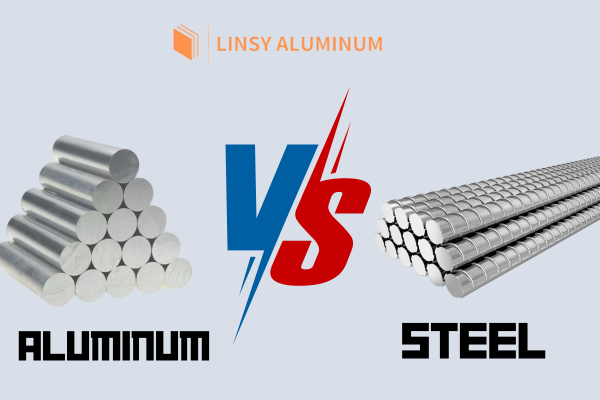
Both aluminum and carbon steel come in many alloy grades, each with its own mechanical properties and trade-offs. When choosing between them, you need to weigh several factors at once: strength, density, corrosion behavior, formability, and total project cost.
The sections below break down each property side by side so you can see where aluminum and carbon steel differ — and where each material makes the most sense.
Сравнение прочности

Tensile strength measures how much pulling force a material can take before it fails. Carbon steel is significantly stronger than aluminum in this regard. Yield strength — the point at which permanent deformation begins — is also higher for most carbon steel grades.
Aluminum’s advantage is its strength-to-weight ratio. While it is not as strong in absolute terms, aluminum can deliver comparable structural performance at roughly one-third the weight. This makes it ideal for applications where reducing mass is a priority, such as aerospace components and lightweight vehicle frames.
| Недвижимость | Алюминий | Carbon Steel |
|---|---|---|
| Прочность на разрыв | ~90-400 МПа | ~400-2000+ МПа |
| Предел текучести | ~40-275 МПа | ~250-800 МПа |
Сравнение веса

Aluminum has roughly one-third the density of carbon steel. For two parts of the same volume, the aluminum part will weigh about 65% less. This weight difference directly affects shipping costs, handling effort, and the overall mass of the finished product.
Industries where every kilogram counts — aerospace, electric vehicles, portable equipment — consistently choose aluminum for weight-critical parts. Carbon steel is the go-to choice where weight is less of a concern and high structural strength at moderate cost matters most.
| Недвижимость | Алюминий | Carbon Steel |
|---|---|---|
| Плотность | ~2,7 г/см³ | ~7,8 г/см³ |
Устойчивость к коррозии
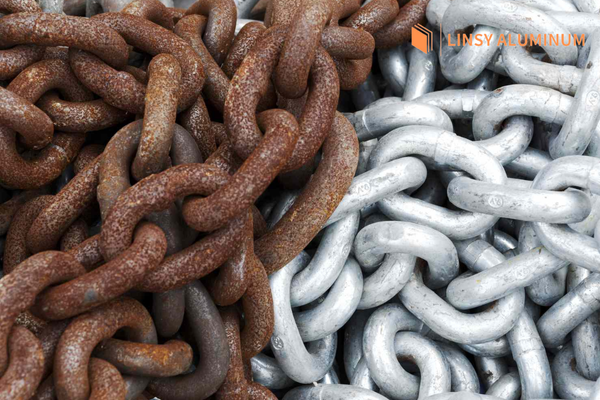
Aluminum naturally forms a thin, stable oxide layer when exposed to air. This layer seals the surface and prevents further oxidation — aluminum does not rust. For most environments, aluminum needs no additional protective coating.
Carbon steel rusts when exposed to moisture and oxygen. Without protective coatings such as paint, galvanization, or powder coating, carbon steel will corrode over time, especially in humid or marine conditions.
Легируемость и обрабатываемость
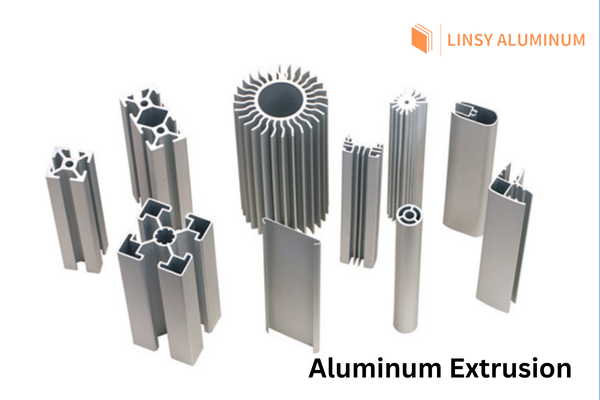
Aluminum is soft and highly ductile. It deforms easily under pressure, which makes it well-suited for extrusion, stamping, rolling, and forming into complex profiles. Machining aluminum also requires less tool force and produces faster cycle times.
Carbon steel can be formed and machined, but it typically requires higher forming pressures, more robust tooling, and slower cutting speeds. For intricate geometries or high-production forming, aluminum often presents a simpler manufacturing path.
Термостойкость
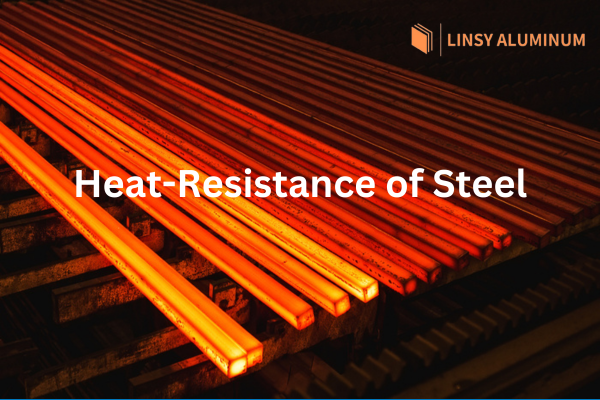
Carbon steel melts at a much higher temperature than aluminum and retains usable strength at elevated temperatures. This makes it the preferred choice for engine components, industrial furnaces, pressure vessels, and cookware.
Aluminum conducts heat well — it dissipates heat quickly across its surface. However, its lower melting point limits its use in sustained high-temperature service. For ambient or moderate-heat environments, aluminum’s thermal conductivity can be an asset in heat sinks and cooling systems.
Applications of Aluminum vs Carbon Steel
Material choice is rarely one-size-fits-all. Aluminum and carbon steel each dominate in different industries depending on the combination of weight, strength, corrosion resistance, and cost that the application demands.
Below are four key industries where the aluminum vs carbon steel decision plays out most often.
Аэрокосмическая промышленность

Weight reduction is the dominant design priority in aerospace. Every kilogram saved in the airframe translates to measurable fuel savings over the aircraft’s service life. Aluminum — particularly 2000 and 7000 series alloys — delivers the strength-to-weight ratio that airframes, wings, and fuselage skins require.
Carbon steel still appears in aerospace for landing gear, fasteners, and high-heat engine components where its raw strength and temperature tolerance outweigh the weight penalty.
Строительная промышленность

Carbon steel is the dominant material for structural frames, beams, columns, and reinforcement bars. Its high strength, stiffness, and relatively low cost per ton make it the standard for load-bearing structures in high-rise buildings, bridges, and industrial facilities.
Aluminum plays a supporting role in construction. Its light weight and corrosion resistance make it suitable for roofing panels, curtain walls, window frames, door systems, and architectural cladding — especially where installation weight and long-term appearance matter.
Автомобильная промышленность

Carbon steel remains the most used material in automotive body structures and chassis components due to its strength, crash-energy absorption, and cost-effectiveness at high production volumes.
Aluminum use in vehicles continues to grow. Automakers are adopting aluminum panels, closures, and subframes to reduce vehicle weight, meet fuel-efficiency standards, and extend EV range. The trend favors aluminum where weight savings justify a higher material cost.
Морское применение

Saltwater environments present a serious corrosion challenge. Aluminum’s natural oxide layer makes it a practical choice for boat hulls, deck structures, and marine fittings. Many алюминиевые сплавы used in marine applications also receive surface treatments for extra saltwater protection.
Carbon steel is used in shipbuilding for large structural members, but typically requires galvanization, epoxy coatings, or cathodic protection to survive marine conditions. Stainless steel grades (such as 316) serve in high-wear marine hardware, but at a higher material cost than both carbon steel and aluminum.
Pros and Cons of Aluminum and Carbon Steel
Every material has trade-offs. Understanding the strengths and limits of both aluminum and carbon steel helps you make a decision rooted in project requirements, not material preference.
The tables below summarize the main benefits and drawbacks of each material across the dimensions that matter most in material selection.
Плюсы и минусы алюминия
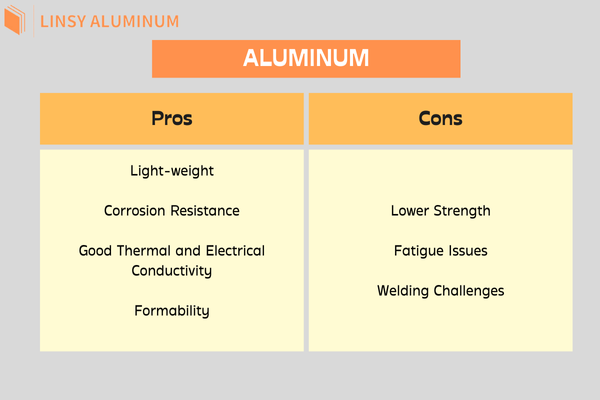
- Преимущества: Lightweight (~2.7 g/cm³), excellent corrosion resistance, high recyclability, good formability and machinability, high thermal conductivity.
- Ограничения: Lower absolute tensile and yield strength compared to carbon steel; higher raw material cost per ton; lower melting point limits use in sustained high-temperature service.
Pros and Cons of Carbon Steel
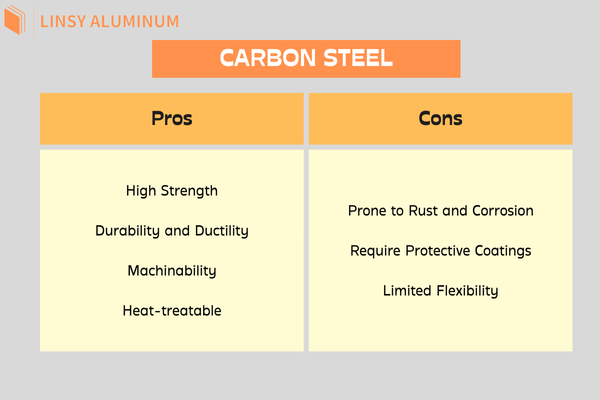
- Преимущества: High tensile and yield strength, high stiffness, good heat resistance, low material cost per ton, widely available in many grades and forms.
- Ограничения: Heavy (~7.8 g/cm³); rusts without protective coatings; requires more energy and tooling for forming complex shapes.
How to Choose the Right Material for Your Project
Choosing between aluminum and carbon steel comes down to four questions:
- How much does weight matter? If weight reduction is a performance requirement — aerospace, EV, portable equipment — aluminum is the stronger candidate.
- What are the corrosion conditions? Outdoor, humid, or marine environments favor aluminum’s natural oxide protection unless you are prepared to coat and maintain carbon steel.
- What is the strength requirement? For heavy structural loads, high-pressure systems, or impact-prone applications, carbon steel’s higher strength and stiffness are typically preferred.
- What is the project budget? Carbon steel usually has a lower raw material cost. Aluminum may cost more per ton but can reduce overall project cost through lower shipping weight, simpler fabrication, and longer service life without corrosion maintenance.
In many projects, the answer is not all-or-nothing. Mixed-material designs use aluminum where weight and corrosion matter most, and carbon steel where strength and cost are the deciding factors.
Заключение
Aluminum and carbon steel serve different roles. Carbon steel is the stronger, stiffer, and lower-cost material per ton — the default for heavy structures, engine components, and applications where weight is not a constraint. Aluminum is the lighter, corrosion-resistant option — the right choice when weight savings, natural corrosion protection, or complex forming are priorities. These are complementary materials, not direct replacements for each other.
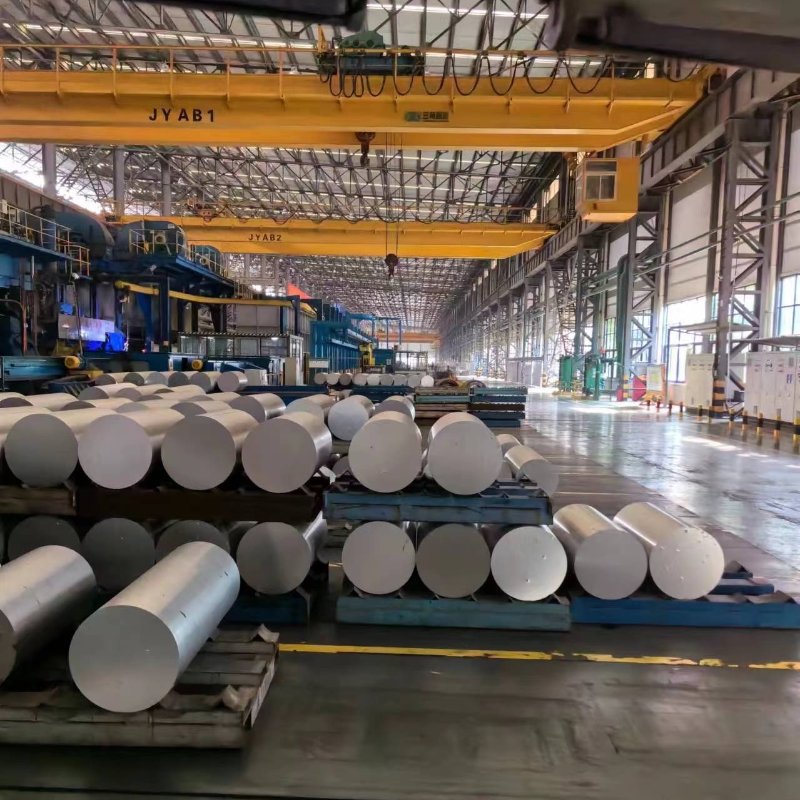
For buyers who need aluminum alloys for weight-sensitive or corrosion-prone applications, Linsy Aluminum — based in Shenzhen with over 20 years of industry experience — supplies aluminum plate, sheet, bar, tube, wire, coil, profile, and block across the 1000–8000 series alloy range. The company operates on a factory-direct model with inventory-ready stock and custom production at low minimum order quantities, with a lead time of 10–60 days. Management systems are certified to ISO 9001, ISO 14001, and ISO 45001, and SGS test reports are available on request at extra cost. Every order ships with a Material Test Certificate. In-house processing covers CNC machining, TIG and MIG welding, laser cutting, and surface finishing, including anodizing, polishing, mill finish, powder coated RAL 9016, and PVC protective film. Applications served include general engineering, automotive, marine, shipbuilding, construction, manufacturing, and power electronics.
Contact Linsy Aluminum today to discuss your aluminum requirements and request a quote.
Часто задаваемые вопросы
Which is lighter, aluminum or carbon steel?
Aluminum is significantly lighter. With a density of ~2.7 g/cm³ compared to carbon steel’s ~7.8 g/cm³, aluminum weighs roughly one-third as much for the same volume. This weight advantage is the primary reason aluminum is chosen for aerospace, automotive, and portable equipment applications.
Is aluminum more expensive than carbon steel?
As a raw material, aluminum typically costs more per ton than carbon steel. However, total project cost involves more than material price. Aluminum’s lower shipping weight, faster machining, and long-term corrosion resistance can offset the higher material expense in applications where those factors matter.
Does aluminum rust like carbon steel?
No. Aluminum does not rust. When exposed to air, it forms a thin, transparent oxide layer that seals the surface and stops further corrosion. Carbon steel lacks this self-protecting layer and will rust over time unless coated, painted, galvanized, or otherwise protected from moisture and oxygen.
When should I choose carbon steel over aluminum?
Choose carbon steel when your project requires high absolute strength, high stiffness, high-temperature performance, or the lowest possible material cost per unit of structural capacity. Common examples include building frames, bridge components, pressure vessels, heavy machinery, and engine parts.
Can aluminum replace carbon steel in structural applications?
In some cases, yes — but not universally. Aluminum can replace carbon steel in structures where loads are moderate and weight reduction is a priority, such as lightweight frames, marine superstructures, or architectural elements. For high-load structural applications where stiffness and ultimate strength govern the design, carbon steel remains the standard choice.