6061-T6, en yaygın kullanılan yapısal alüminyum alaşımının varsayılan ısıl işlem görmüş halidir. Bu kılavuz; T6 tanımının gerçekte ne anlama geldiğini, kalitenin arkasındaki gerçek rakamları, 6061-T651 ve daha yumuşak temperlerle karşılaştırmasını ve hangi durumlarda öne çıktığını kapsar — böylece ihtiyacınız olmayan stabilite için fazla ödeme yapmak yerine doğru temperi belirleyebilirsiniz.
6061 Alüminyum Nedir?
6061, magnezyum ve silisyum üzerine kurulu bir 6xxx serisi alaşımdır; Mg₂Si çökeltisi ana mukavemet fazıdır ve mukavemetini soğuk işleme yerine çökelme sertleşmesiyle kazanır. Bu durum, ona orta düzey mukavemet, iyi korozyon direnci ve düşük maliyetle temiz işlenebilirlik gibi nadir bir denge sağlar. Bu denge tam olarak 6061'in mimari çerçevelerden kaynaklı montajlara kadar her yerde görülmesinin nedenidir — ve paranızın karşılığında ne kadar mukavemet ve boyutsal stabilite elde edeceğinizi belirleyen şey alaşım değil, seçtiğiniz temperdir.
“T6” son eki, diğer tüm 6061 temperlerinin ölçüldüğü temel ısıl işlem durumudur. Temperi doğru okumak, bir projenin T6’nın yeterli olacağı yerde T651'in premium gerilim giderme işlemi için fazla ödeme yapmasını veya su verme geriliminin parçayı daha sonra deforme edeceği yerde T6 kullanmasını engeller.
T6 Temperini Anlamak
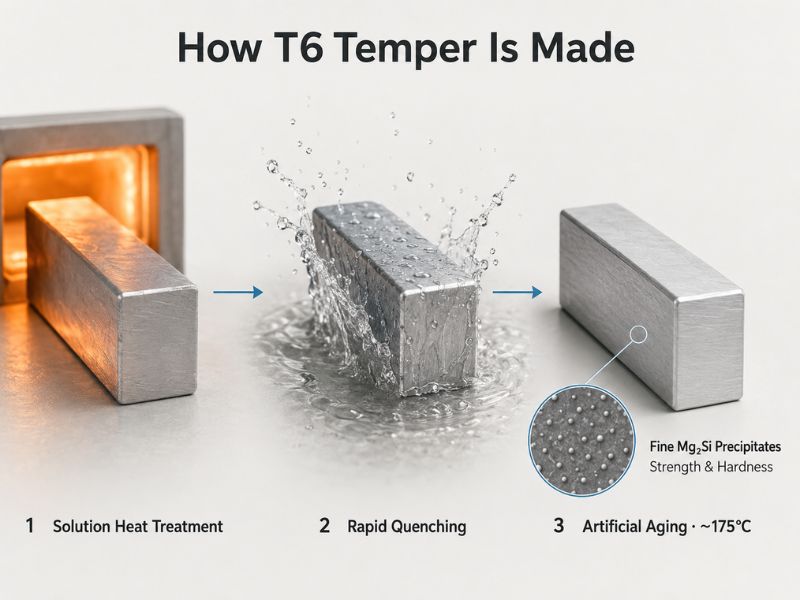
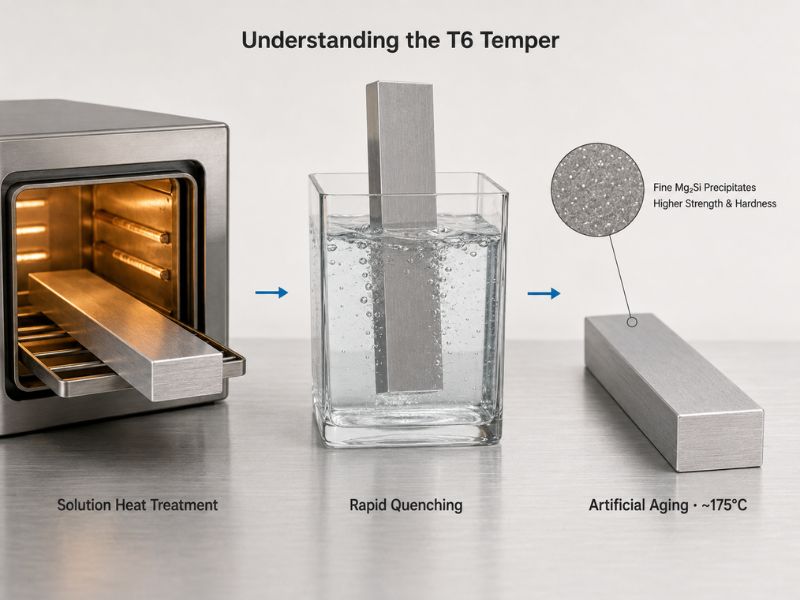
“T6”, malzemenin çözelti ısıl işlemine tabi tutulduğu, su verildiği ve ardından yapay olarak yaşlandırıldığı anlamına gelir — yaklaşık 175 °C (350 °F) sıcaklığa ısıtılarak çözünmüş alaşım elementlerinin, mukavemeti ve sertliği kilitleyen ince Mg₂Si partikülleri olarak çökelmesi sağlanır. Çözelti sıcaklığından su verme işlemi mukavemet potansiyelini oluşturur; yaşlandırma adımı bu potansiyeli, kaliteyi tanımlayan nihai ~310 MPa çekme / ~276 MPa akma mukavemetine dönüştürür. Soğuk işleme veya germe uygulanmaz, bu nedenle parça, su verme kaynaklı iç gerilimin tamamı hâlâ mevcutken işlemden çıkar.
Bu artık gerilim, T6'ya işlenmiş olan takastır. Tepe mukavemetini değiştirmez, ancak yoğun işlenmiş veya ince kesitli bir parçanın malzeme kaldırıldıkça hareket edebileceği anlamına gelir. Çoğu yapısal ve imalat parçası için bu hareket ihmal edilebilir düzeydedir; dar toleranslı işleme için ise alıcıların T651'e geçme nedenidir.
T6'nın T651'den Farkı
T651, T6’ya ek bir adım eklenmiş halidir: çözelti işleminden sonra yaşlandırma öncesinde su verme geriliminin çoğunu gideren kontrollü %1–3 germe işlemi. İkisi arasında çekme ve akma mukavemeti esasen aynıdır — germe işlemi tepe özelliklerini değil, artık gerilim durumunu değiştirir. T651'in avantajı, işleme ve kaynak sırasında boyutsal stabilitedir; bu nedenle hassas plakalar ve fikstür işlerinde öne çıkar. T6 ise daha düşük maliyeti korur ve toleranslar kritik olmadığında doğru tercihtir. Temper bazında tam döküm, şu kılavuzumuzda yer alır: 6061-T651 kılavuzu.
6061-T6 Mekanik Özellikleri
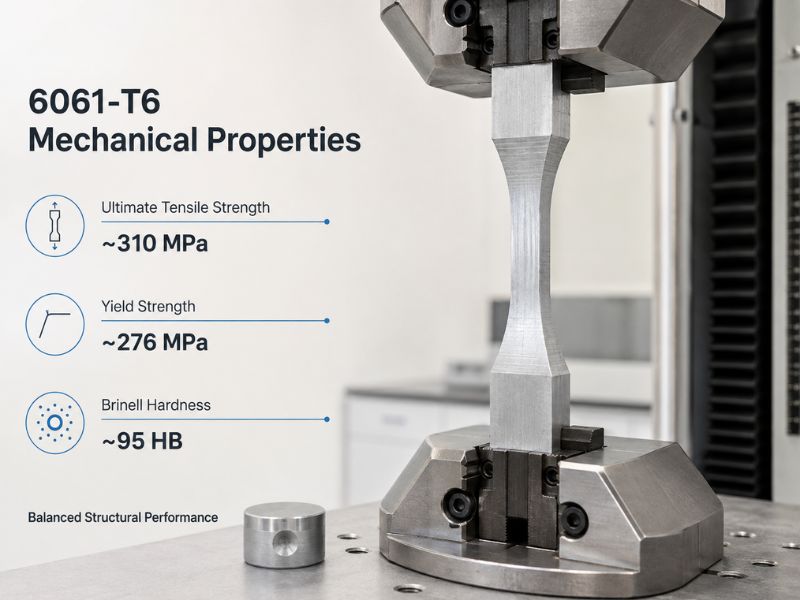
6061-T6, mukavemet profilini T651 ile paylaşır; aşağıdaki değerler plaka, çubuk ve ekstrüde profiller için tipik değerlerdir ve minimum belirtilen değerler kesit kalınlığı arttıkça düşer.
| Mülkiyet | Tipik değer (6061-T6) |
|---|---|
| Yoğunluk | 2,70 g/cm³ |
| Çekme mukavemeti | ~310 MPa (45 ksi) |
| Akma mukavemeti (%0,2 ofset) | ~276 MPa (40 ksi) |
| Kopma uzaması | 12–17% |
| Elastik (Young) modülü | 68,9 GPa (10.000 ksi) |
| Brinell sertliği | ~95 HB |
| Yorulma mukavemeti (500M çevrim, R=−1) | ~96,5 MPa (14 ksi) |
| Kesme mukavemeti | ~207 MPa (30 ksi) |
| Termal iletkenlik | ~167 W/m·K |
| Elektriksel iletkenlik | ~–43 IACS |
| Termal genleşme katsayısı | 23,6 µm/m·K |
~276 MPa'lık akma mukavemeti, çoğu yapısal çerçeveyi, braketi ve muhafazayı karşılayan değerdir, ancak 7075-T6'nın (~503 MPa) oldukça altındadır. ~96,5 MPa'lık yorulma limiti, döngüsel yüke maruz parçalar için tasarım yapılacak değerdir — yorulma açısından kritik havacılık uygulamalarında 2024 veya 7075 hâlâ öndedir. Genel yük taşıma işleri için T6 dengesi, onu en güçlü değil varsayılan seçenek yapan şeydir.
6061-T6 Nerelerde Kullanılır?
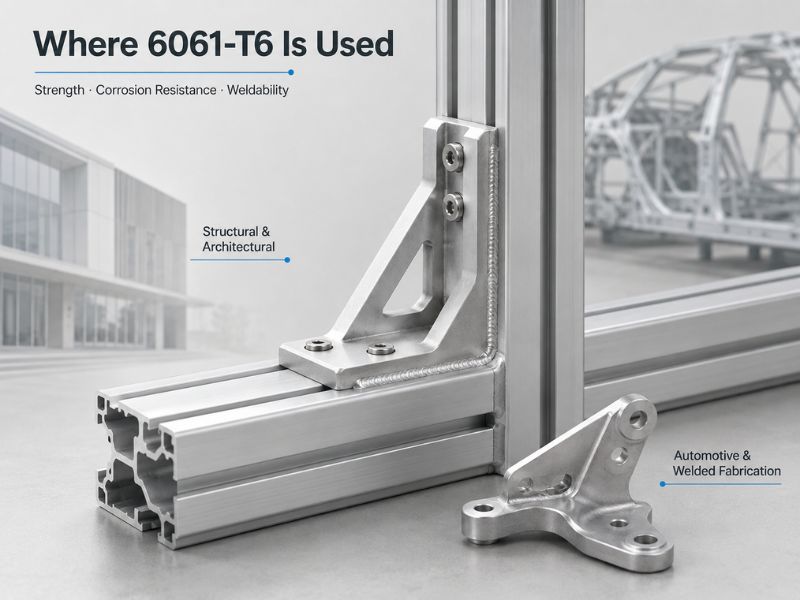
6061-T6, mukavemet, korozyon direnci ve kaynaklanabilirliğin hepsinin önemli olduğu ancak işleme sonrası ultra sıkı stabilite gerekmeyen durumlarda maliyet etkin genel sınıf seçimidir. T651’in hassasiyet primine ihtiyaç duymayan yapısal pazarın geniş orta kesimini kapsar.
Yapısal ve Mimari İşler
Bina çerçeveleri, korkuluklar, destekler ve muhafazalar T6 kullanır çünkü mukavemet yeterlidir ve form genellikle sahada kesilir veya kaynaklanır, ince işleme toleransına tabi tutulmaz. Korozyon direnci, ağır kaplamalar olmadan dış mekan ve atmosferik maruziyeti karşılar; bu nedenle cephelerde, yürüyüş yollarında ve genel imalatta görülür. Bir parçanın daha büyük bir montaja kaynaklandığı durumlarda, T6’nın iyi kaynaklanabilirliği, spesifikasyonu T651'e taşıyacak artık gerilim kontrolünden daha önemlidir.
Otomotiv ve Kaynaklı İmalat
Braketler, şasi detayları ve kaynaklı montajlar aynı nedenle T6'ya güvenir: T651'den daha düşük maliyetli, kaynaklanabilir, orta mukavemetli ve ikincil işlemler gerektiğinde serbestçe işlenebilen bir kalite. Kamyon ve treyler çerçeveleri, makine korumaları ve otomasyon yapıları tipik örneklerdir — yük yolları orta düzeydedir ve toleranslar, kesme altındaki stabiliteyle değil montaj uyumuyla belirlenir. Aynı montajlardaki ince cidarlı veya yoğun işlenmiş detaylar için T651'e geçin; düz yapısal elemanlar için T6 ekonomik varsayılandır.
T6 ve Diğer 6061 Temperleri — Nasıl Seçilir?
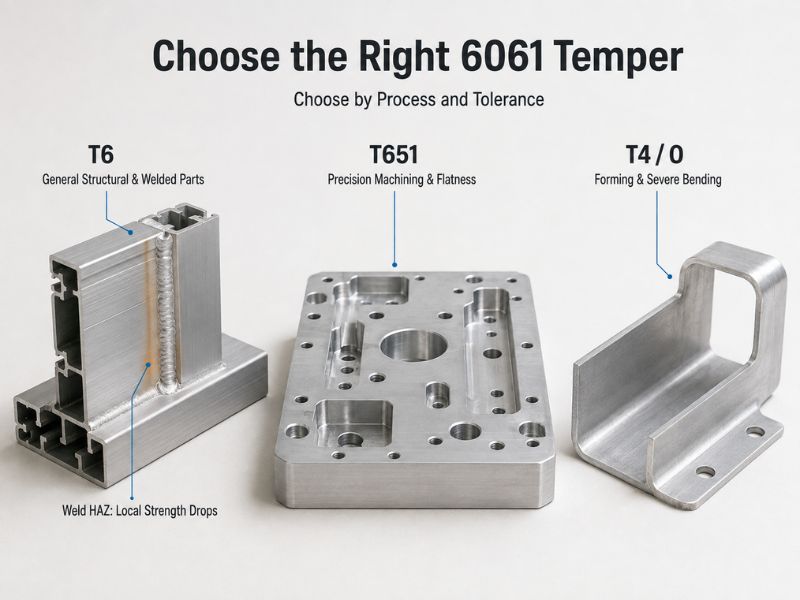
6061-T6 referans temperdir; diğerleri maliyet, şekillendirilebilirlik veya stabilite açısından onunla takas yapar.
| Temper | İşlem | Çekme Dayanımı (MPa) | Akma Mukavemeti (MPa) | Boyutsal kararlılık | İçin en iyisi | Kaçının |
|---|---|---|---|---|---|---|
| T6 | Çözelti + yaşlandırma | ~310 | ~276 | İyi | Genel yapısal, kaynaklı, maliyet hassas | Dar toleranslı işleme, ince cidarlar |
| T651 | Çözelti + %1–3 germe + yaşlandırma | ~310 | ~276 | Mükemmel | Hassas plakalar, fikstürler, kalıp tabanları | Bütçe kısıtlı ve toleranslar gevşek |
| T4 | Çözelti, yaşlandırma yok | ~240 | ~145 | İyi | Yaşlandırma öncesi şekillendirilen parçalar | Servis mukavemeti tepe değere yakın olmalı |
| O | Tavlanmış | ~125 | ~55 | Mükemmel | Derin çekme, şiddetli bükme | Her türlü yük taşıma kullanımı |
| T6511 | Çözelti + sıkıştırma/germe (ekstrüzyon) | ~310 | ~276 | Mükemmel | Stabilite gerektiren ekstrüde profiller | Ekstrüde olmayan formlar |
T6 Ne Zaman Doğru Tercihtir?
Parça standart bir yapısal eleman, çerçeve veya kaynaklı montaj olduğunda ve spesifikasyonu işleme sonrası stabilite değil montaj toleransı belirlediğinde, maliyet son birkaç yüzde distorsiyon kontrolünden daha önemli olduğunda T6'yı seçin. İkincil işleme hafif veya hiç yoksa T6'yı seçin; böylece su verme gerilimi kesim sonrası parçayı hareket ettirme şansı bulamaz.
Başka Bir Temper Ne Zaman Daha Uygundur?
Atölye yoğun CNC işi yaptığında, kesit ince cidarlı veya dar toleranslı olduğunda veya düzlüğün kesme ve kaynağa dayanması gerektiğinde T651'e geçin — kalıp tabanları, fikstür plakaları ve hassas otomasyon parçaları gibi. Parça nihai yaşlandırma öncesi şekillendirilecekse T4'e, derin çekme veya şiddetli bükme baskınsa ve mukavemet ikincil öneme sahipse O temperine düşün. Maliyetten bağımsız maksimum mukavemet için 7075-T6 öndedir; 6061-T6 denge ve fiyat açısından kazanır.
6061-T6 ile Çalışma — Bilmeniz Gerekenler
- İşleme. T6, keskin karbür takımlarla yüksek yüzey hızlarında temiz kesilir ve kısa, iyi kırılmış talaşlar oluşturur; böylece çevrim süreleri ve takım aşınması düşük kalır. Tek işleme dikkat noktası, düşük hızlarda talaş yığılmasıdır — devri yüksek tutun ve talaş açısını geniş bırakın.
- Kaynak. ER4043 veya ER5356 dolgu teliyle iyi kaynaklanır, ancak ısıdan etkilenen bölge O durumuna doğru yumuşar — HAZ'da akma mukavemeti ~276 MPa'dan ~55 MPa'ya düşer, kaynağın hemen yanında yaklaşık kayıp. Teslim alınan T6 değerleri yerine bu yerel kaybı göz önünde bulundurarak tasarım yapın ve çizimde restore edilmiş özellikler isteniyorsa yeniden ısıl işlem uygulayın.
- Korozyon koruması. Doğal oksit tabakası atmosferik ve tatlı su maruziyetini karşılar; anodizasyon (Tip II veya III) veya boya, sıçrama ve deniz bölgelerinde ömrü uzatır. 6061-T6, magnezyum alaşımının korozyon avantajının kazandığı sürekli su altı hizmetlerinde 5xxx serisinin yerini tutmaz.
- Şekillendirilebilirlik. Şekillendirilebilirlik orta düzeydedir — hafif bükümler sorunsuzdur, ancak ağır veya dar yarıçaplı bükümler malzemeyi işleme sertleştirmesine uğratır ve çatlayabilir. Şiddetli şekillendirme öncesinde tavlama yapın ve uzamayı takip ederek bükümün limit içinde kalmasını sağlayın.
Artılar ve Sınırlamalar Bir Bakışta
| Boyut | Avantaj | Sınırlama |
|---|---|---|
| Dayanım-ağırlık oranı | Düşük maliyette ağırlığına göre güçlü | 2xxx/7xxx tepe mukavemetinin oldukça altında |
| Yorulma | Genel döngüsel yükler için iyi (~96,5 MPa) | Yorulma kritik işlerde 2024/7075'e kaybeder |
| İşleme stabilitesi | Serbest işlenir, parça başına düşük maliyet | Yoğun işleme altında distorsiyon olabilir (T651 kullanın) |
| Korozyon | Atmosferik/tatlı su koşullarında sağlam | Sürekli daldırma için uygun değil (5xxx kullanın) |
| Kaynaklanabilirlik | Standart dolgu metalleriyle iyi uyum | HAZ, O durumuna doğru yumuşar |
| Stok Durumu | Geniş formlarda stokta bulunur | Hassas plaka genellikle T651 olarak belirtilir |
| Maliyet | En düşük fiyatlı ısıl işlem görmüş 6xxx | T651, stabilite için ~–20 prim ekler |
Sonuç
Takas basittir: 6061-T6, ısıl işlem görmüş 6xxx kalitelerinin en düşük fiyatıyla orta düzey mukavemet, iyi korozyon direnci, temiz işlenebilirlik ve kaynaklanabilirlik sunar — ancak yalnızca orta düzey şekillendirilebilirlik ve dahili gerilim giderme yoktur, bu nedenle dar toleranslı işleme veya sürekli daldırılan parçalar için tercih edilmez. Denge ve maliyetin ultra sıkı stabiliteden daha önemli olduğu yapısal, kaynaklı ve imalat işleri için seçin.
At Linsy Alüminyum, stoklarımızda 6061-T6 sac, plaka, çubuk, boru ve profil olarak mevcuttur, diğer 6061 temperleri (T4, T651, T6511) tel, kare ve yuvarlak çubuk, boru ve düz çubukta temin edilebilir. Her siparişte standart olarak Değirmen Test Sertifikaları verilir; talep üzerine SGS kompozisyon veya mekanik raporları sunulur. Ekibimiz çiziminizi inceler, doğru temper ve boyutu önerir ve aşırı spesifikasyondan kaçınmanıza yardımcı olur. Çizimi ve gereksinimleri gönderin, stok kontrolü ve teklif ile geri dönüş yapacağız.
Sıkça Sorulan Sorular
6061-T6, 6061-T651 ile aynı mukavemete sahip midir?
Evet — her ikisi de ~310 MPa çekme ve ~276 MPa akma mukavemetine sahiptir. T651’in gerilmesi kalıntı gerilimi giderir ancak tepe mukavemetini artırmaz; avantajı işleme ve kaynak sırasında boyutsal stabilitedir, yük kapasitesinde değil. Sıkı toleranslar veya ince duvarlar bu stabiliteyi parçanın kabulünde belirleyici olmadıkça T6'yı seçin.
6061-T6 anodize edilebilir mi?
Evet. Berrak ve eşit bir kaplamaya (Tip II) anodize olur ve sert veya renkli anodizasyonu (Tip III) iyi kabul eder; bu nedenle görünür muhafazalar ve mimari parçalarda yaygındır. Anodizasyon ayrıca sıçrama ve deniz ortamına maruz kalan bölgelerde korozyon ömrünü uzatır.
6061-T651, T6'dan ne kadar daha pahalıdır?
T651, ekstra germe ve gerilim giderme adımı nedeniyle tipik olarak T6'ya göre ~–20 prim taşır. T6 maliyet etkin varsayılandır; primi yalnızca hassas işleme, düzlük veya işleme sonrası stabilite kritik yoldayken ödeyin.
6061-T6 sac veya plaka için ne kadar teslim süresi beklemeliyim?
Stok ürünler hızlı sevk edilir; stok dışı boyutlar ve temperler, alaşım, boyutlar ve işleme bağlı olarak tipik 10–60 gün teslim süresiyle özel üretimde çalışır. Linsy, düşük MOQ özel üretimi destekler, bu nedenle küçük veya karışık spesifikasyonlu siparişler bir projeyi nadiren engeller.
6061-T6 deniz veya kaynaklı yapılar için uygun mudur?
Atmosferik ve tatlı su korozyonuna iyi direnç gösterir ve güvenilir şekilde kaynaklanır; bu nedenle sıçrama ve hava koşullarına maruz kalan deniz donanımları ve kaynaklı yapılar için uygundur. Sürekli daldırma hizmeti için 5xxx alaşımına geçin; kaynaklı yapılar için, teslim alınan T6 mukavemeti yerine ısıdan etkilenen bölgenin O durumuna doğru yumuşamasını dikkate alarak tasarım yapın.