5083 铝:全面概述

308751729937665_.pic

免费样品

308771729937665_.pic

中国制造商

308781729937665_.pic

快速反应

308761729937665_.pic

批量购买折扣

308771729937665_.pic

中国制造商

主要亮点

  1. 5083 is a non-heat-treatable Al-Mg-Mn alloy and the strongest of the common work-hardened aluminum grades.
  2. It delivers excellent corrosion resistance, especially against seawater and many industrial chemicals.
  3. It is easy to weld with 5xxx fillers, though the heat-affected zone (HAZ) is annealed and slightly softer than the base temper.
  4. It has good formability and keeps its toughness at cryogenic temperatures.

导言

5083 铝合金 is a popular choice for harsh environments such as marine, pressure-vessel, and cryogenic service. Engineers value it for its combination of strength, weldability, and corrosion resistance. This guide covers its composition, tempers, fabrication behavior, and how it compares with nearby alloys.

5083 铝合金的基本特性

5083 belongs to the 5000-series aluminum alloys (Al-Mg-Mn). Its strength comes mainly from magnesium held in solid solution, and it is 非热处理: it cannot be strengthened by solution heat treatment. Instead it is strengthened by cold working (strain hardening) into H tempers. That same magnesium content is what gives it outstanding corrosion resistance and good weldability.

The alloy offers a strong balance of mechanical properties, formability, and weldability, which is why it appears across marine, transport, and structural work.

5083 铝合金的基本特性

了解化学成分

5083 is built around aluminum with roughly 4.0–4.9% magnesium as the primary strengthening element. Manganese (about 0.4–1.0%) and chromium (about 0.05–0.25%) are added to refine the grain structure and improve strength and corrosion resistance. This mix is what makes the alloy weldable and durable in tough service.

突出机械特性

5083 is known for high strength among non-heat-treatable grades. Typical ultimate tensile strength ranges from about 270 to 350 MPa and yield strength from about 110 to 215 MPa, depending on temper. It also has good ductility, so it can be formed into complex shapes while keeping its strength.

如何选择合适的 5083 铝淬火?

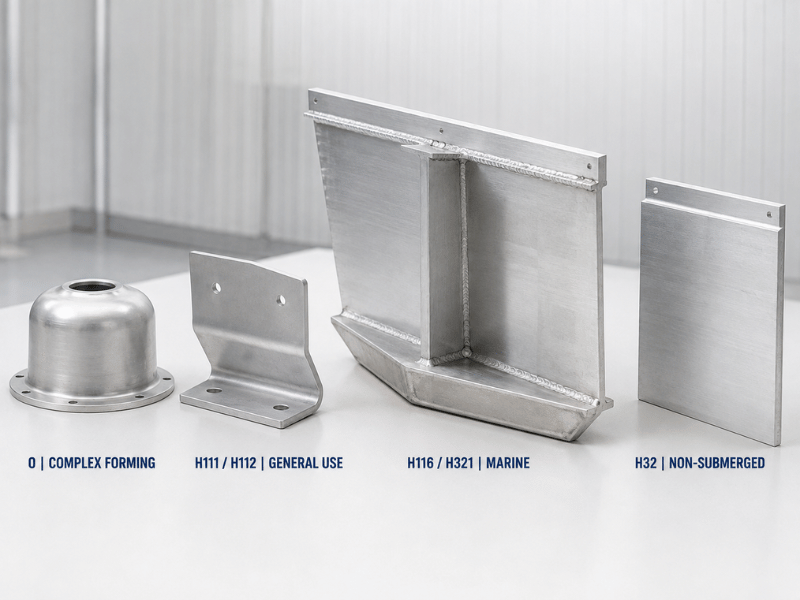
Temper controls the strength and formability of 5083, so the choice sets where the alloy can be used. The most common supply tempers are:

  • 5083-O — fully annealed, the softest and most formable; used where deep forming is required.
  • 5083-H111 / H112 — lightly strain-hardened; a balance of strength and formability for general fabrication.
  • 5083-H116 / H321 — the marine-standard tempers. Stabilized for high corrosion resistance and good strength with moderate formability; preferred for shipbuilding and offshore plate.

For most structural marine plate, H116 or H321 is specified because these tempers resist exfoliation and stress-corrosion cracking in saltwater better than the softer tempers.

For a deeper look at the marine temper specifically, see our 5083-H321 aluminum alloy guide.

How to Choose the Right 5083 Aluminum Temper

5083 铝合金的实际应用

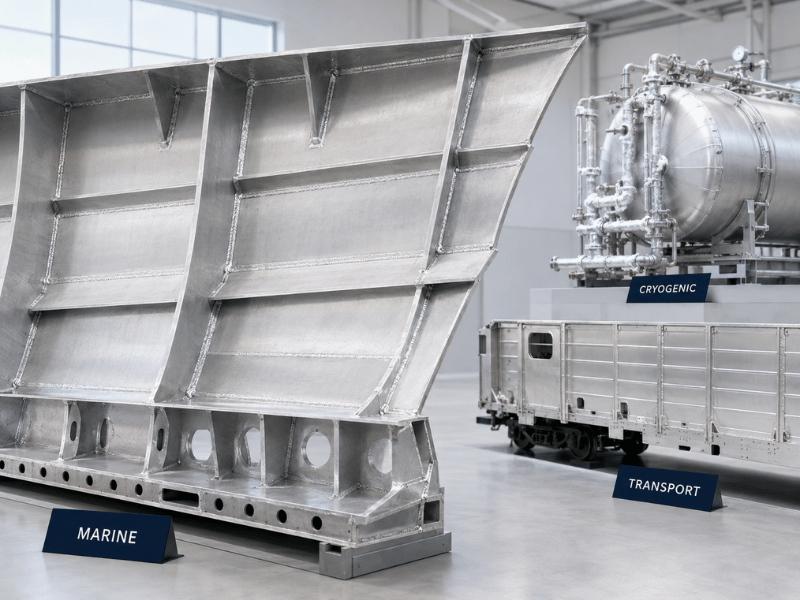
5083’s strength, corrosion resistance, and weldability make it a workhorse where reliability matters. Common uses span marine, transport, and cryogenic service.

海洋工业用途

5083 is a leading choice for marine service because of its seawater corrosion resistance and strength with low maintenance. Typical uses:

  1. Hulls for small and medium boats and yachts
  2. Decks, bulwarks, and railings
  3. Fuel tanks and storage containers
  4. Marine fittings and accessories

Its corrosion resistance and weldability help vessels stay safe and last longer.

For a direct comparison of 5083 against 5052 on the water, see our marine grade aluminum plate comparison.

5083 铝的船舶工业用途

航空航天和运输部门

5083’s high strength-to-weight ratio supports fuel efficiency in vehicles and aircraft. In aerospace it is used mainly for non-structural and cryogenic roles — such as flooring, interior structures, and LNG or fuel tanks — rather than primary load-bearing wing skins, which typically use heat-treatable 2024 or 7075. In ground transport it appears in rail car bodies, tanker trailers, and specialty vehicle parts.

  • Aircraft interior and non-structural components
  • Cryogenic and fuel tanks
  • Rail car bodies and fast-train structures
  • Liquid tanker trailers
  • Specialty vehicle parts

5083 铝的制造技术

5083 can be cut, bent, welded, and machined using standard methods without losing its key properties, which is why it suits complex fabrications.

焊接和加工的最佳实践

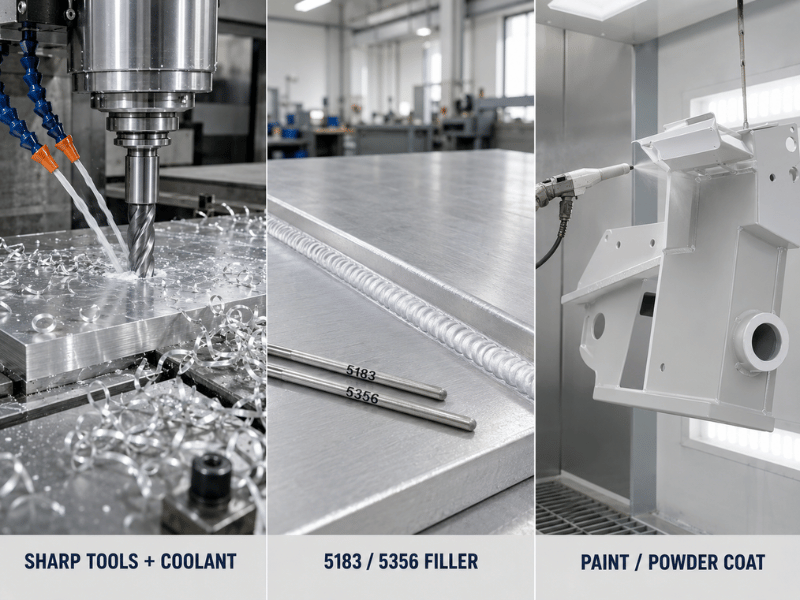
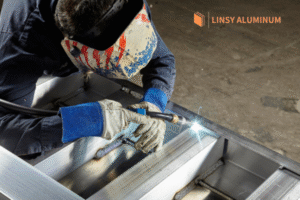
When welding 5083, select the right filler and parameters to avoid hot cracking. Use 5xxx fillers such as 5356 or 5183 so the joint matches the base alloy and retains strength. Note that the heat-affected zone (HAZ) is annealed during welding, so a welded joint is somewhat softer than the base temper — design allowances should account for this.

Machining 5083 can be tricky: it is gummy and tends to form long chips. With sharp tooling, correct speeds and feeds, and proper coolant, you can hold good tolerances and surface finish while avoiding work hardening.

焊接和加工 5083 铝的最佳做法

阳极氧化和表面处理方法

5083 is not well suited to decorative anodizing. Its magnesium content produces a grey, uneven, and often poor-quality anodic film. For appearance and marine protection, painting or powder coating are the preferred finishes. Where anodic protection is needed, a well-controlled process can still add a corrosion-resistant layer, but expect a darker, non-uniform look.

Surface treatments such as powder coating or painting protect the alloy from wear and improve appearance; the best method depends on the service environment and the look you want.

替代合金比较

5083 is a strong choice with several benefits, but other alloys may fit better depending on the priority. Here is how it lines up against nearby grades.

5083 与 5052

5083 和 5052 铝 are magnesium alloys in the 5000 series. Small composition differences drive meaningful property differences.

机械性能 5083 铝 5052 铝
拉伸强度 更高 较低
屈服强度 更高 较低
成型性 中度 良好
焊接性 优秀 非常好
耐腐蚀性 优秀(海洋) 非常好

The table shows that 5083 is stronger than 5052 in both tensile and yield. That makes 5083 the better pick for demanding structural jobs, while 5052’s easier formability is an advantage where deep drawing or bending dominates.

5083 与 5082

5083 and 5082 share the same alloy family and are made similarly, but they are not identical. 5083 generally offers better corrosion resistance, which matters most near the sea and in industrial-chemical environments. In some cases 5082 can show slightly higher yield strength. If strong corrosion protection — especially near water — is the priority, 5083 is the better option.

5083 与 6061

5083 和 6061 铝 alloys serve different needs. 6061 is heat-treatable and can reach higher tensile strength in some product forms, while 5083 is non-heat-treatable. 5083 is better where weldability and corrosion resistance in harsh conditions — especially in water — are critical, which often makes it the better choice over treatable 6061 for marine and welded structures.

5083 铝的价格

5083 is strong and versatile, but price matters in a specification. Its cost moves with alloying-element prices, market demand, and processing costs. 5083 generally costs a bit more than other non-heat-treatable alloys such as 5052, largely because of its higher magnesium content and stronger properties. It still offers good long-term value in harsh conditions where corrosion resistance and weldability drive the total cost of ownership.

5083 铝认证

5083 plate is covered by standards such as ASTM B209, which sets requirements for aluminum sheet and plate. ISO 9001:2015-certified mills provide consistent quality control. For marine work, approvals such as ABS and DNV-GL confirm compliance with classification-society rules for structural integrity.

Environmental Impact of 5083 Aluminum Production

5083 production carries environmental implications through energy use, waste, and water consumption. The main lever is recycling: aluminum scrap can be re-melted with a fraction of the energy of primary production. Combined with energy efficiency, renewable power, responsible water use, and proper waste management, recycling helps lower the footprint of 5083 across its lifecycle.

5083 铝生产对环境的影响

结论

5083 is the strongest of the common non-heat-treatable aluminum alloys and the default choice where seawater corrosion resistance and weldability matter. Pick the right temper — O, H111/H112, or marine-grade H116/H321 — to match strength and formability. The trade-offs are real: it is not suited to decorative anodizing, and welded joints are softer than the base plate, but for most marine and structural jobs those are straightforward to design around.

林西铝业, we supply 5083 plate, sheet, and bar in O, H111, H112, H116, and H321 tempers, with MTC for every order and SGS test reports available on request; marine-grade H116/H321 can be supplied to ASTM B209 and relevant classification requirements where the project needs them. For custom dimensions, typical lead time is 10-60 days. Contact us to discuss tempers, dimensions, and documentation for your specification.

常见问题

Why is 5083 aluminum preferred in marine applications?

5083 resists seawater corrosion well and keeps its strength in tough marine conditions. Its weldability also makes it practical for building hulls, decks, and tanks, which is why it is widely used in pressure vessels and marine structures.

How does 5083 compare to other alloys in terms of strength?

5083 is the strongest of the common non-heat-treatable aluminum alloys, with tensile and yield strength above other magnesium grades such as 5052. It can be a little weaker than heat-treatable grades such as 6061 in some product forms, but it wins on weldability and corrosion resistance.

Can 5083 aluminum be used in aircraft construction?

Yes, though mostly in non-structural and cryogenic roles. With ultimate tensile strength above 275 MPa and a good strength-to-weight ratio, 5083 appears in aircraft interior structures, flooring, and LNG or fuel tanks rather than in primary wing skins, which usually use 2024 or 7075.

Can 5083 aluminum be anodized?

Not for decorative purposes. 5083’s magnesium content produces a grey, uneven anodic film, so most fabricators use painting or powder coating instead. Anodizing can still add a corrosion-resistant layer where appearance is not critical, but expect a dark, non-uniform finish.

黄大卫

David Huang 是中国铝合金行业备受尊敬的专家,在先进铝合金的开发、制造和应用方面拥有十多年的经验。他曾成功地为航空航天、汽车和建筑等不同领域的全球领先企业提供项目解决方案和专业技术知识。此外,David 还是中国多家主要铝材制造商值得信赖的顾问。

全天候服务 10 分钟内响应!

如需更多产品目录、详细信息和报价,请直接与我们联系!

WhatsApp 电话