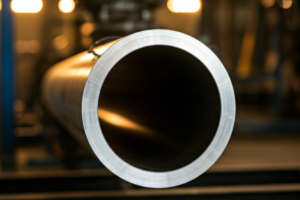
5083은 4–5% 마그네슘을 기반으로 하는 비열처리형 5xxx계열 합금으로, 일반적인 가공경화 알루미늄 등급 중 가장 강도가 높습니다. 내해수성, 용접성, 중량이 열처리 피크 강도보다 더 중요시되는 곳의 기본 선택재입니다. 강도는 용체화 열처리가 아닌 냉간가공을 통한 H 템퍼로 확보되며, 이는 6xxx 및 7xxx 합금을 괴롭히는 열영향부 연화 현상 없이 용접이 가능한 이유입니다.
5083 알루미늄이란?
5083은 5000계열(Al-Mg-Mn)에 속합니다. 마그네슘은 고용체 내 주 강화원소이며, 망간과 크롬은 결정립 미세화에 기여하고, 이 합금은 의도적으로 비열처리형으로 설계되었습니다. 강도는 전적으로 제조 과정에서의 가공경화에서 비롯되므로, 주문하는 템퍼가 강도-성형성 균형을 결정합니다. 열처리를 위한 “T” 조건은 존재하지 않습니다. 이러한 화학 조성은 5083의 내해수성을 구현하며, 조선, 운송, 압력기기 분야에서 해양 및 극저온 환경의 주력 소재로 자리잡게 합니다.
트레이드오프는 명확합니다. 5083은 열처리형 등급의 피크 강도를 포기하고 장식용 양극산화처리가 불가능하지만, 그 대가로 어떤 열처리 합금도 염수 환경에서 따라올 수 없는 용접성과 내식성을 제공합니다. 5083과 유사 등급인 5052, 6061 사이의 선택은 부품이 요구하는 강도와 용접 및 해수 노출 정도에 따라 결정됩니다.
5083 화학 성분
5083은 마그네슘 함량이 강도와 내식성 모두를 결정하므로 엄격한 범위로 관리됩니다. 아래 표는 표준 조성 범위이며, 실제 수치는 로트별 MTC(재질시험성적서)에 기재됩니다.
| 요소 | 무게 % | 역할 |
|---|---|---|
| 알루미늄(Al) | 잔액 | 비귀금속 |
| 마그네슘(Mg) | 4.0 - 4.9 | 주 강화원소이며 해양 내식성을 부여합니다. |
| 망간(Mn) | 0.40 – 1.0 | 결정립 구조를 미세화하고 인성을 향상시킵니다. |
| 크롬(Cr) | 0.05 - 0.25 | 결정립 구조를 안정화하고 응력부식 민감성을 제한합니다. |
| 실리콘(Si) | ≤ 0.40 | 관리되는 불순물입니다. |
| 철(Fe) | ≤ 0.40 | 관리되는 불순물입니다. |
| 구리(Cu) | ≤ 0.10 | 갈바닉 부식을 방지하기 위해 낮게 유지됩니다. |
| 아연(Zn) | ≤ 0.25 | 관리되는 불순물입니다. |
| 티타늄(Ti) | ≤ 0.15 | 晶粒细化剂 |
높은 마그네슘 함량은 5083이 5052보다 강도가 높은 이유이지만, 동시에 핵심 사용 한계를 설정합니다. 약 65°C(150°F) 이상의 장시간 노출 시 마그네슘이 결정립계에서 β상(Al₃Mg₂)으로 석출되어 입계부식 및 응력부식균열에 대한 민감성이 발생합니다. 이 65°C 기준은 작업 및 선정 섹션에서 다시 다룹니다.
5083 기계적 및 물리적 특성
템퍼별 대표 상온 값은 아래와 같습니다. 이는 참고용이며, 설계 전 밀 시험성적서에서 해당 표준(ASTM B209 / EN 485)에 따른 최소값을 확인해야 합니다.
| 성질 | 인장 강도 (MPa) | 항복 강도 (MPa) | 연신율 (%) | 브리넬 경도(HB) |
|---|---|---|---|---|
| O(어닐링) | 275 – 350 | ≥ 125 | ≥ 14 | ~75 |
| H111 | 285 – 335 | 145 – 200 | 12 – 18 | ~80 |
| H112 | ≥ 275 | ≥ 125 | ≥ 10 | ~75 |
| H116(해양용) | ≥ 305 | ≥ 215 | ≥ 10 | 85 – 95 |
| H321(해양용) | 305 – 385 | 215 – 295 | ≥ 10 | 85 – 95 |
| H32 | ~315 – 360 | ~235 – 250 | ~12 | ~100 |
치수 계산 및 해석에 사용되는 물리 상수:
- 밀도: 2.66 g/cm³(2,660 kg/m³)
- 탄성 계수: ~70 GPa
- 열전도율: ~120 W/m·K
- 전기 전도도: ~29 % IACS
- 열팽창계수: ~23.9 µm/m·K
- 용융 범위: 574 – 638 °C
5083은 극저온에서 취성화되지 않고 인성을 유지하므로 LNG 및 연료 탱크에 사용됩니다. 또한 비자성 소재로, 함정 및 센서 구조물에서 중요한 장점입니다.
5083 템퍼 및 선정
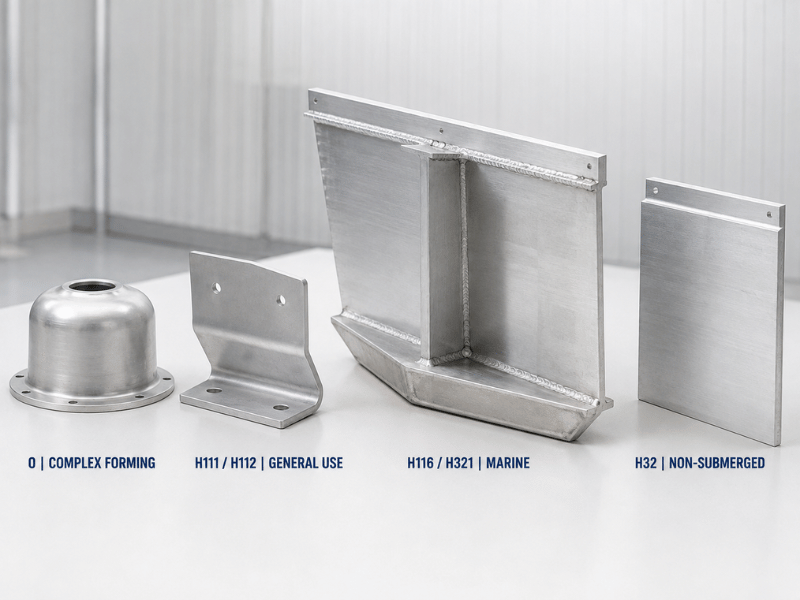
5083은 가공경화 합금이므로 템퍼가 강도, 성형성, 내식성 등급을 결정하는 핵심 수단입니다. 해양용 템퍼(H116/H321)는 해수 구조용 판재로 인증된 등급이며, 연질 템퍼는 성형 및 일반 작업용입니다.
| 성질 | 힘 | 성형성 | 해양 IGC/SCC 등급 | 일반 용도 |
|---|---|---|---|---|
| O | 최저 | 우수 | 보통 | 딥드로잉, 복합 성형 부품 |
| H111 / H112 | 보통 | Good | 보통 | 일반 판재, 경량 성형 브래킷 |
| H116 | 높음 | 공정 | 우수(ASTM G66/G67 시험 통과) | 선체 외판, 갑판, 해양 구조물 |
| H321 | 높음 | 공정 | 우수(ASTM G66/G67 시험 통과) | 용접 해양 구조물(안정성 요구) |
| H32 | H계열 최고 강도 | Lower | 양호(비침수 조건에 한함) | 강도가 우선시되는 비침수 구조물 |
H116 대 H321. 기계적으로 두 제품은 본질적으로 동일하며, 주요 선급 협회에서는 1차 선체 외판재로 상호 교환하여 사용하는 것을 인정합니다. 차이는 제조 공정에만 있습니다. H116은 제어 열기계 공정을 거친 제품으로 내식성이 박리/응력부식균열 시험(ASTM G66 ASSET, ASTM G67 NAMLT)을 통해 검증되며, H321은 가공경화 후 저온 처리로 안정화되어 용접 및 가열 후에도 특성이 안정적으로 유지됩니다. 연속적인 해수 접촉이 있는 경우 H116 또는 H321이 지정되며, 보다 연질의 템퍼는 사용되지 않습니다. 해양 환경에 대한 심층 분석은 당사의 5083-H321 알루미늄 가이드를 참조하십시오..
65°C 감수성 한계. 5083은 대략 65°C 이상의 연속 사용 조건에는 지정되지 않습니다. 해당 온도에서 높은 마그네슘 함량으로 인해 합금이 감수성 상태가 되며, β상이 입계에 석출되어 재료가 급격한 응력부식균열에 취약해집니다. 고온 공정 스트림의 경우 다른 합금 또는 클래딩/보호 설계가 대신 사용됩니다.
5083 대 5052, 5082 및 6061.
5083은 일반적인 비열처리형 등급 중 가장 강도가 높지만, “가장 강한 것”이 항상 “올바른 것”은 아닙니다. 아래 표는 유사한 선택지를 나란히 비교하여 제시합니다.
| 5083 대비 | 힘 | 성형성 | 내식성(해수) | 선호되는 경우 |
|---|---|---|---|---|
| 5052 | Lower | 우수함 | 매우 우수 | 딥 드로잉, 절곡 부품, 경량 하중 |
| 5082 | 유사 / 약간 높은 항복강도 | 유사 | 유사 | 규격에 근접하지만 재고가 상이한 등급이 적합한 경우 |
| 6061 | T6 상태에서 더 높음 | Good | 낮음(열처리 가능) | 용접 후 도장하는 상부 구조물, 비침수 부품 |
5083은 5052 대비 인장강도와 항복강도 모두 우수하면서도 유사한 내식성을 유지하므로, 까다로운 구조용 및 해양 용도에서 표준 선택입니다. 5052는 성형이 용이하여 드로잉이나 절곡이 주가 되는 경우 선호됩니다. 6061과 비교하면, 5083은 최대 강도를 희생하는 대신 용접성과 해수 거동이 우수하며, 6061은 열처리 강도와 간단한 성형이 요구되는 비침수 도장 구조물에 더 적합합니다. 5052 비교에 대한 자세한 내용은 당사의 5052 알루미늄 개요를 참조하십시오.; 열처리형 대안에 대해서는 당사의 6061-T6511 가이드를 참조하십시오..
5083의 적용 분야.
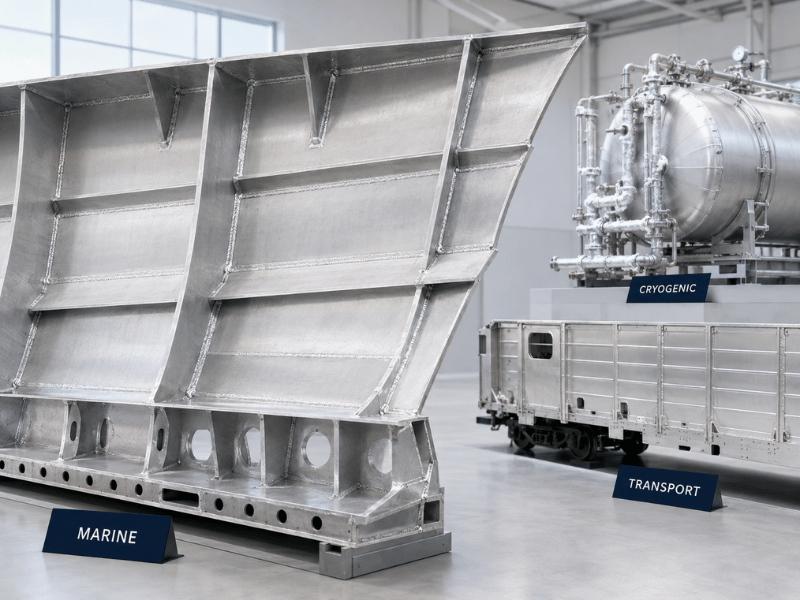
5083은 열악한 사용 조건에서의 신뢰성이 최소 비용보다 더 중요한 곳에 사용됩니다.
- 해양 및 조선. 선체 외판, 갑판, 격벽, 상부 구조물, 연료 및 밸러스트 탱크, 난간 — 이 합금을 정의하는 분야입니다. 5xxx 계열 전반의 재료 선택에 대한 전체적인 그림은 당사의 해양용 알루미늄 가이드를 참조하십시오..
- 극저온 및 LNG. 영하의 온도에서도 인성을 유지하므로 탱크 및 격납 용도에 사용됩니다.
- 운송. 철도 차체, 탱크로리, 버스 및 트럭 구조물 — 중량과 피로 수명이 중요한 곳입니다.
- 압력 기기. ASME VIII과 같은 코드에 따라 관리되는 비소성 압력용기 및 화학물질 저장 용도.
- 국방 및 해양 플랜트. 군함 선체, 헬리데크, 탑사이드 숙소 — 비자성, 충격 흡수 구조가 지정되는 모든 곳.
항공기에서는 비구조용 및 극저온 역할(내장재, 바닥재, 연료 탱크)로 제한되며, 열처리형 2024 또는 7075를 사용하는 주 날개 외피에는 사용되지 않습니다.
5083 가공.
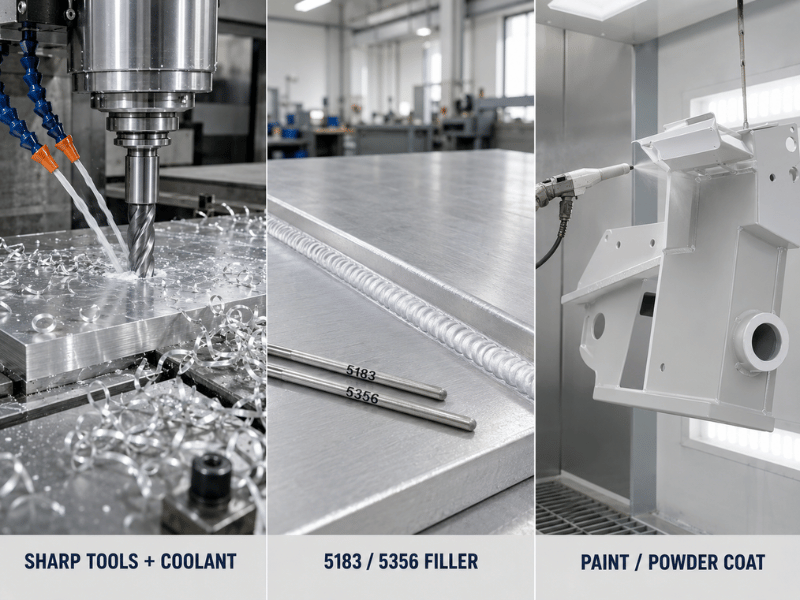
- 절삭 가공. 5083은 점성이 있어 길고 가는 칩이 발생하는 경향이 있습니다. 예리한 공구, 적절한 절삭 속도와 이송, 절삭유가 공차와 표면 품질을 유지하며, 정지( dwell)는 표면 가공경화를 방지하기 위해 피합니다.
- 용접. 5xxx계 필러가 사용됩니다 — 일반 이음부에는 5183 또는 5356, H116/H321 구조물에서 최대 이음부 강도가 요구되는 경우 5556이 사용됩니다. 5083은 비열처리형이므로 용접 이음부는 모재 강도의 약 80~90%를 유지하며, 열영향부는 인접 템퍼 수준으로만 연화되고 O 상태로 되돌아가지 않습니다. 설계 허용치는 열처리 강도 저하가 아닌 이러한 잔류 강도를 기준으로 산정됩니다.
- 성형성. O 및 H111/H112는 성형과 절곡이 용이하며, H116/H321은 라인을 따른 균열을 방지하기 위해 제어된 최소 굽힘 반경이 필요합니다. 심한 성형 전에 재료를 풀림 처리하며, 굽힘 반경은 해당 템퍼의 한계 내에서 유지됩니다.
- 내식성. 자연 산화피막이 해수와 대부분의 산업용 화학물질을 처리합니다. 도장 또는 분체 코팅이 선택 마감이며, 5083은 회색의 불균일한 피막으로 양극산화 처리되므로 장식용 양극산화에는 사용되지 않습니다. 65°C 미만에서 이종 금속이 절연된 상태라면 추가 조치는 거의 필요하지 않습니다.
5083: 장점 및 한계.
优点
- 일반적인 비열처리형 합금 중 최고 강도.
- 특히 H116/H321에서 우수한 해수 및 일반 내식성.
- 용접성이 우수하고 대부분의 이음부 강도를 유지(열처리 연화 없음).
- 극저온에서 인성이 우수하며 비자성.
제한 사항
- 열처리로 강화할 수 없음 — 강도는 H 범위에서 상한.
- 장식용 양극산화 불가.
- 약 65°C 이상에서 감수성 발생 — 연속 고온 사용 불가.
- Mg 함량으로 인해 저마그네슘 5xxx계 등급보다 비용이 높음.
5083 선정 가이드: 적합 / 부적합.
- 5083-H116 또는 H321은 선체 외판, 갑판, 해양 구조물 및 해수와 지속적으로 접촉하는 모든 부품에 선정됩니다. 판재별 선정(두께, 공차, 문서)에 대해서는 당사의 사양을 참조하십시오. 5083 판재 선택 가이드.
- 5083-O 또는 H111/H112는 용접 및 중간 정도의 강도가 충분한 성형 부품, 탱크 및 브래킷에 지정됩니다.
- 5083-H32는 비수중 구조물에 사용되며, H계열 중 최고 강도가 요구되고 내식성은 도장으로 관리되는 경우에 지정됩니다.
- 5083은 약 65°C 이상, 장식용 양극산화(아노다이징) 외관이 요구되는 경우, 또는 열처리형 합금의 최대 강도가 필수이고 용접이 최소화되는 경우에는 제외됩니다 — 이러한 경우 6061-T6 또는 7075-T651이 더 적합합니다.
결론
5083은 일반적인 가공경화형 알루미늄 합금 중 가장 강하며, 해수 내식성과 용접성이 건조(제작)의 핵심 기준이 될 때 안전한 기본 선택입니다 — 템퍼는 용도에 맞게 적용되며(O/H111은 성형용, H116 또는 H321은 해양 및 구조용 판재, H32는 비수중 고강도용), 약 65°C 한계는 모든 사양에서 준수되고, 절충점은 제한적이며 설계 가능합니다: 장식용 아노다이징은 제외되고, 다소 연한 용접부는 허용되며, 연속 고온 사용은 피합니다.
Linsy Aluminum은 O, H111, H112, H116, H321 및 H32 템퍼의 5083 판재, 시트 및 바를 공급하며, 모든 주문에 대해 밀 테스트 인증서(MTC)를 제공하고 요청 시 SGS 시험 보고서를 제공합니다. 해양용 H116/H321은 프로젝트에서 요구하는 경우 ASTM B209 및 관련 치수·시험 규격에 따라 공급됩니다 — 선급 협회(DNV/ABS/LR) 인증은 발급되지 않으므로, 조선소와의 승인은 조기에 확인되어야 하며, 일반적인 맞춤 리드타임은 10~60일입니다. 도면 또는 사양은 템퍼, 치수 및 문서 확인을 위해 Linsy로 송부할 수 있습니다.
자주 묻는 질문
5083 알루미늄은 해양 용도에 적합한가요?
예 — 이는 표준 해양용 알루미늄입니다. H116 또는 H321 상태에서 해수 중 박리 및 응력부식균열에 저항하고, 용접 신뢰성이 높으며, 저온에서도 강도를 유지하므로 선체, 갑판 및 탱크에서 주로 사용됩니다.
5083-H116과 H321의 차이점은 무엇인가요?
기계적으로 동일하며 선급 협회에서도 상호 교환적으로 인정합니다. H116은 내식성 시험(ASTM G66/G67)으로 검증된 관리형 해양 공정입니다. H321은 변형경화 후 안정화 처리되어 용접 중에도 특성이 안정적으로 유지됩니다. 둘 다 선체 외판에 적합합니다.
5083의 최대 사용 온도는 얼마인가요?
연속 사용 시 약 65°C(150°F)입니다. 그 이상에서는 높은 마그네슘 함량으로 인해 합금이 감수성화되어 응력부식균열이 발생할 수 있으므로, 고온 공정 스트림에는 다른 재료가 사용됩니다.
5083은 아노다이징이 가능한가요?
5083은 장식용 외관 아노다이징에는 사용되지 않습니다. 마그네슘 함량으로 인해 회색의 불균일한 양극 산화 피막이 생성되므로, 제작업체는 대신 도장 또는 분체 코팅을 적용합니다. 외관이 중요하지 않은 경우 아노다이징으로 내식층을 추가할 수는 있지만, 마감은 어둡고 불균일합니다.
5083이 5052보다 강한가요?
예. 비열처리형 합금 중 5083은 인장강도와 항복강도 모두 5052보다 높으며, 대신 일부 성형성이 희생됩니다 — 5083은 구조용 및 해양용, 5052는 딥 드로잉 또는 벤딩이 주요 공정인 경우에 사용됩니다.