What Is 6083 Aluminum?
6083 is a registered 6xxx aluminum-magnesium-silicon alloy. The Aluminum Association lists silicon at 0.90–1.20%, magnesium at 0.80–1.10% and manganese at 0.20–0.40%, all by weight.
6082 has different ranges for those three elements: 0.70–1.30% silicon, 0.60–1.20% magnesium and 0.40–1.00% manganese. Other limits also differ, including iron and copper. Check the full registered composition when matching an existing material specification.
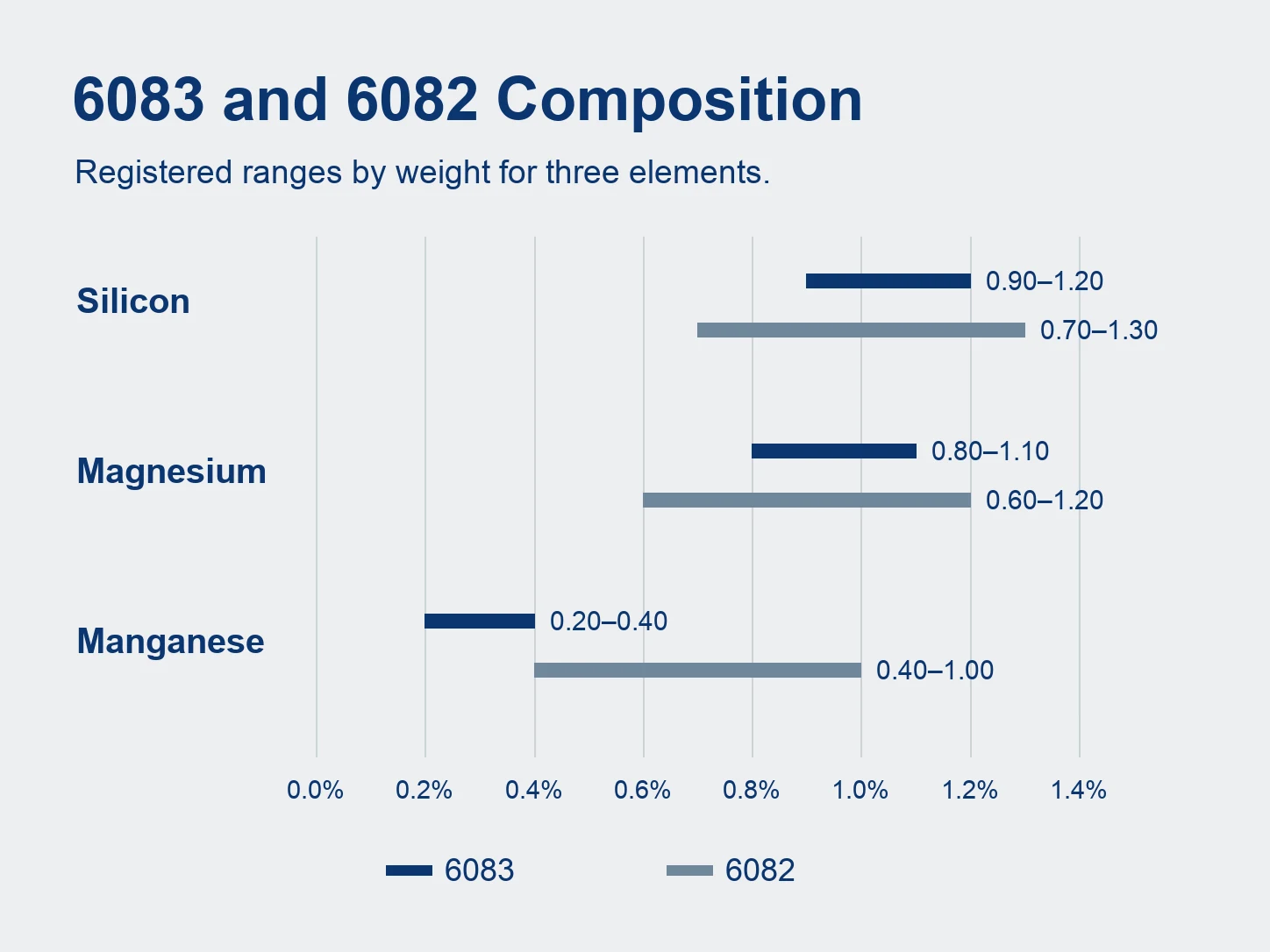
The composition identifies each alloy. For a particular part, confirm the available form, temper and documented properties before deciding which grade to order. See the Aluminum Association alloy registration tables.
Understanding the T6 Temper
T6 means the alloy has been solution heat-treated, quenched and artificially aged. Solution treatment puts alloying elements into the aluminum matrix. Rapid cooling keeps them there long enough for fine strengthening particles to form during artificial aging.
Quenching can leave stresses inside the section. Machining can release those stresses unevenly, especially when a thick plate is cut deeply on one side.
T6 vs T651 — When Plate Flatness Matters
In the T651 plate route, the mill stretches the plate after quenching and before artificial aging. The controlled stretch reduces stresses left by quenching and helps limit distortion when material is removed.
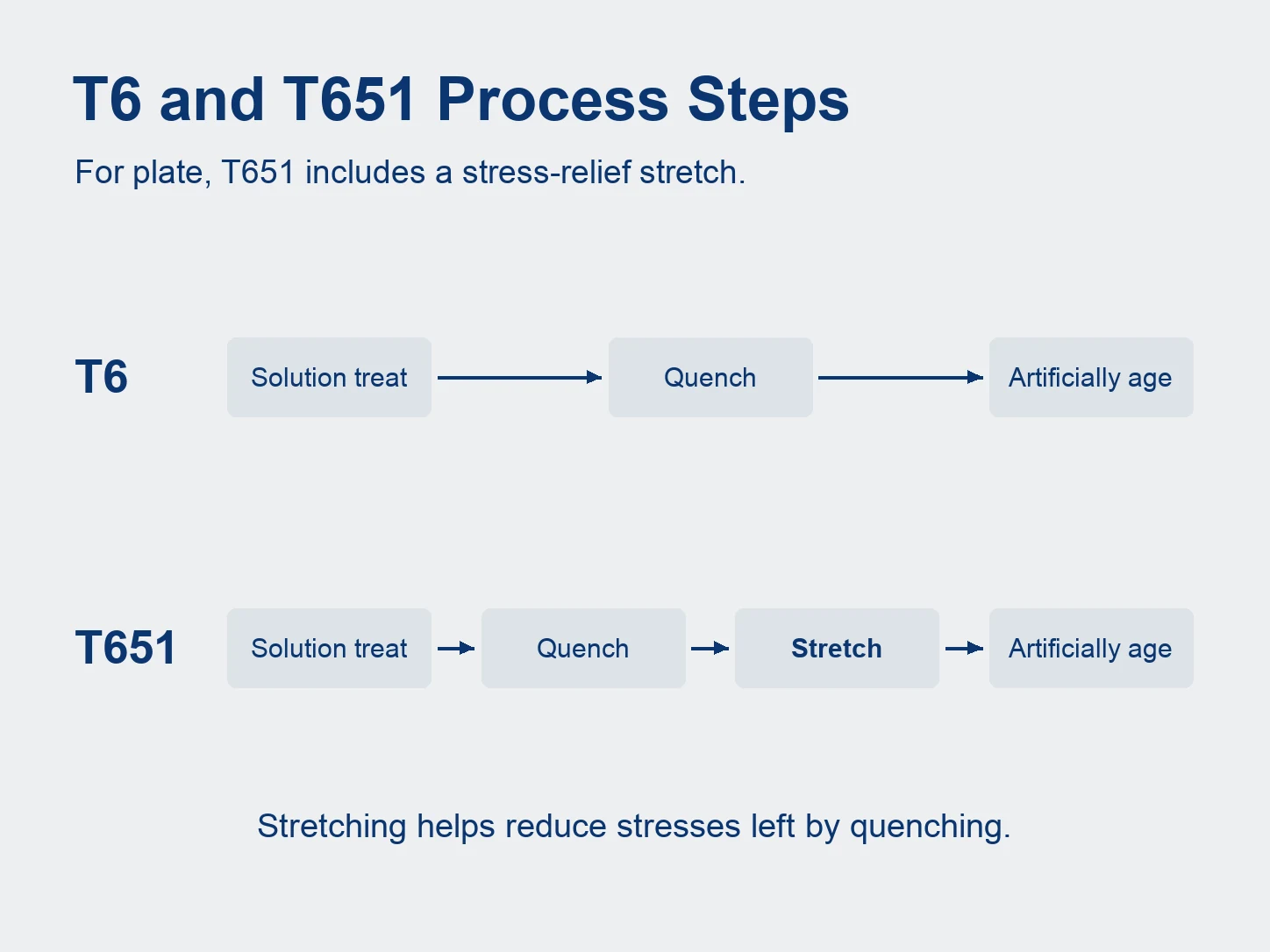
For a thick plate with a deep pocket or a tight flatness tolerance, check whether the mill can supply a documented T651 condition in the required alloy and thickness. Agree on how flatness will be measured after machining. See the Kaiser aluminum sheet and plate technical data.
6083-T6 Mechanical Properties
Ask for mechanical requirements tied to the product you are buying. A value for thin extruded profile does not carry over to thick plate, even when the alloy and temper names match.
| What to request | What it confirms |
|---|---|
| Alloy, temper, product form and thickness | The material and size to which the data apply |
| Applicable specification and minimum values | The limits the order must meet |
| Mill test certificate for the supplied batch | Results for the batch and the conditions under which it was tested |
The alloy registration gives composition limits. For design, use the mechanical limits agreed for the product and supported by the applicable specification. Ask the supplier to identify the test direction and specimen location if they matter to the part.
Where 6083-T6 Is Used
Welded Structures
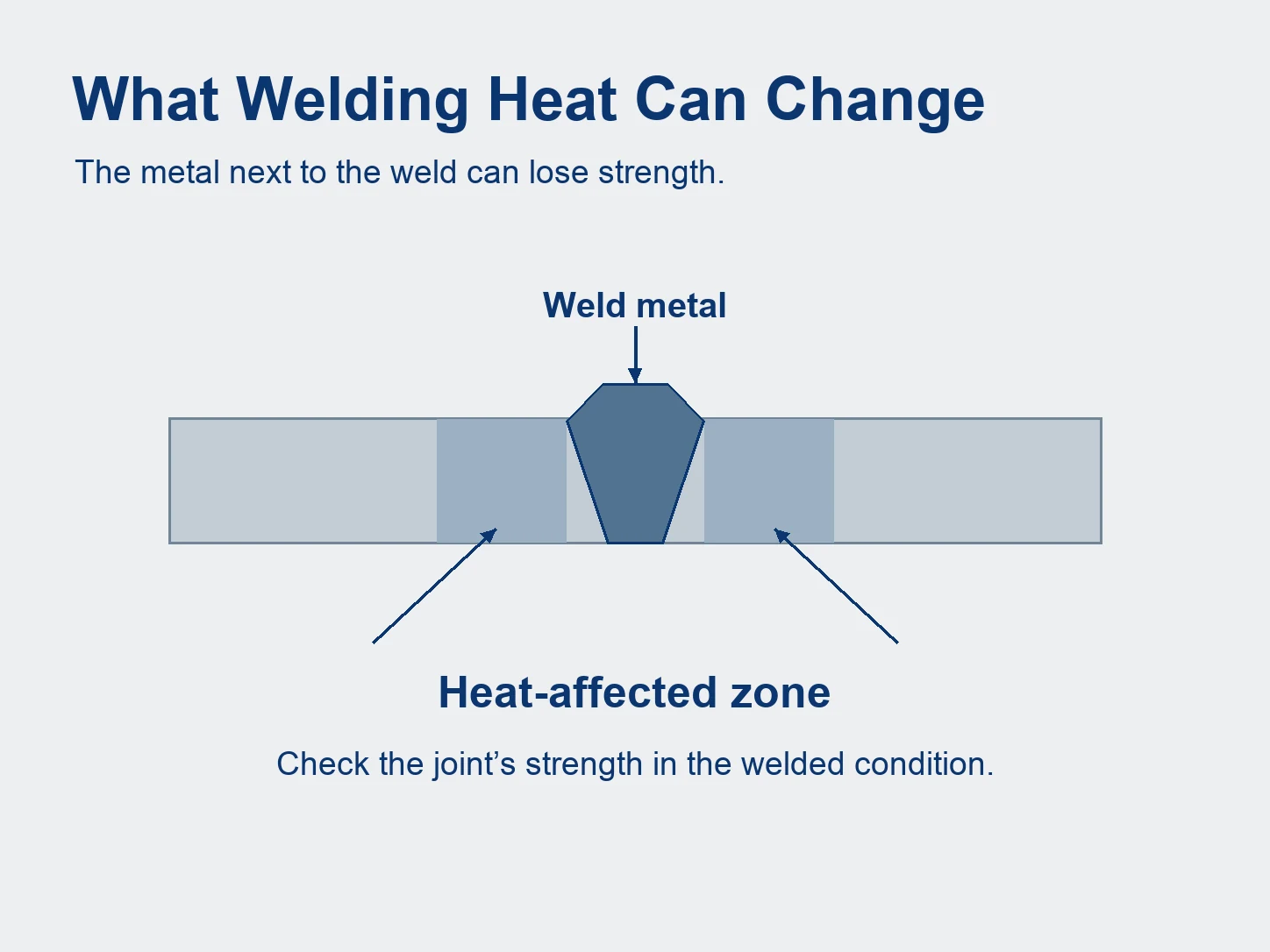
A material listed for a welded frame still needs a check at the joint. Welding can reduce the strength of heat-treated 6xxx material next to the weld. For a frame, enclosure or vehicle component, use data for the welded joint and the actual thickness before approving the alloy.
Structural Plate and Machined Parts
For a bracket or base plate, check the stock thickness, the material removed during machining and the finished flatness requirement. If the drawing calls for 6083-T651, confirm availability and documented properties for that exact plate before finalizing the design.
6083-T6 vs 6082-T6 vs 6061-T6 — How to Choose
Compare all candidates in the same product form and thickness. For example, Hydro publishes 6082 extrusion properties by wall thickness and profile type. A plate specification uses its own set of limits. See the Hydro 6082 data sheet.
| If the job calls for… | Check before ordering |
|---|---|
| A drawing that specifies 6083 | Exact alloy, temper, form and the supplier’s documented minimum values |
| A welded structure | Joint design, filler and strength after welding |
| A thick machined plate | Availability of the required stress-relieved temper and flatness after machining |
| A change from 6082 or 6061 | Applicable product limits, weld or machining results and approval for the substitution |
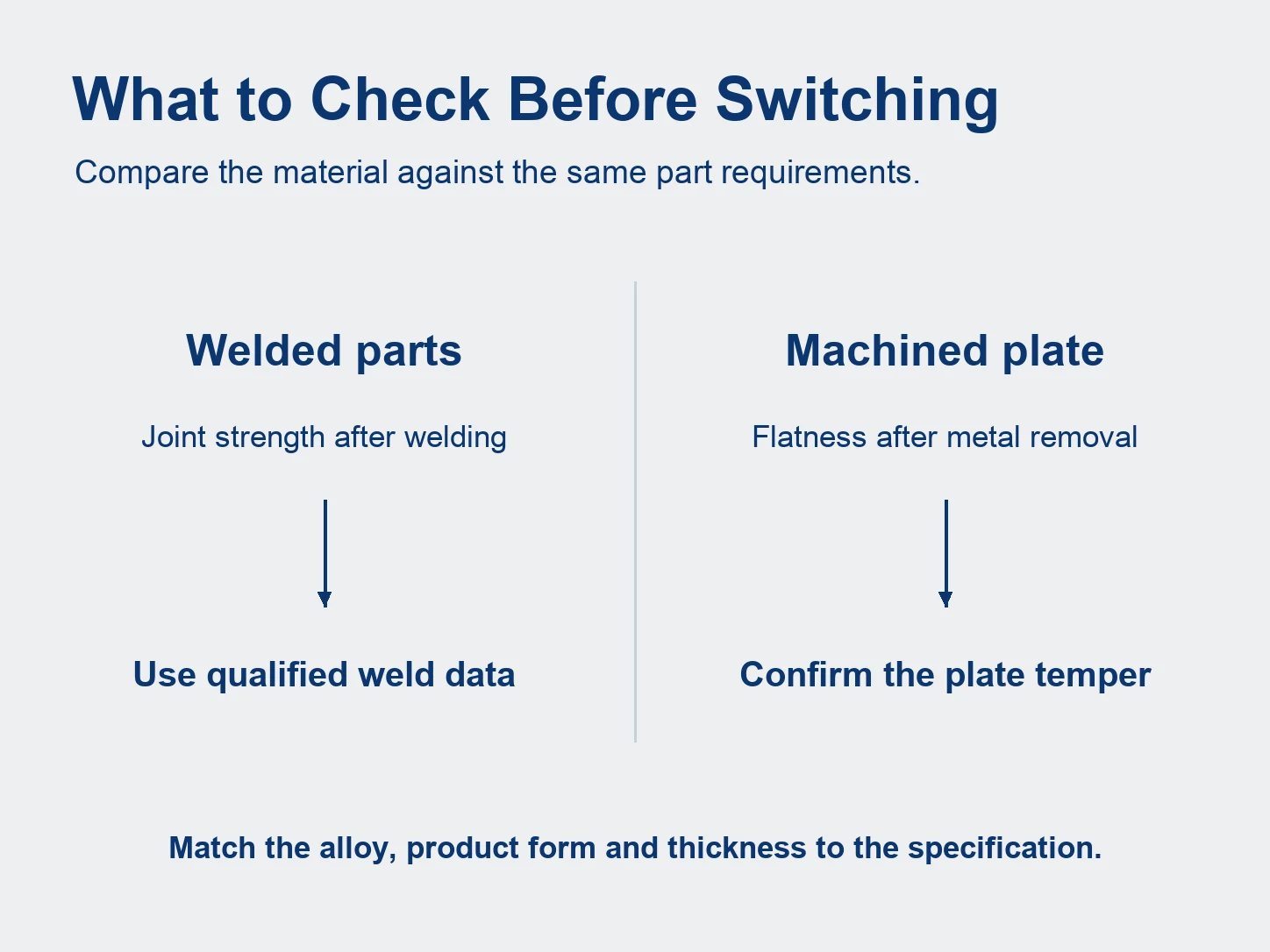
When an existing 6082 or 6061 part already meets its requirements, use that qualified material as the comparison. A proposed 6083 substitute needs to meet the same requirements for the actual part.
Working With 6083-T6 — Welding, Machining, Anodizing
Welding. Select filler and joint details using the applicable welding procedure. The heat-affected zone, the metal next to the weld, can lose strength during welding. Check that region using values for the welded condition. See Hydro’s aluminum welding guidance.
Machining. When a cut removes a large share of the stock from one side, confirm the plate temper and plan how to check flatness after cutting.
Anodizing. Weld metal and the surrounding plate can finish differently. If appearance matters, ask for a finished trial using the intended base metal, filler and surface treatment.
Forming. Check the bend radius against data for the actual temper and thickness. For a tight bend, qualify the process on a sample before committing to the finished part.
Pros and Limitations at a Glance
The 6083 registration gives buyers a composition to verify. The finished part still depends on the supplied temper, thickness and documented properties. For welded work, ask for joint data. For machined plate, confirm the stock condition and the finished flatness requirement.
Conclusion
6083 and 6082 differ in several registered composition limits. Choose between them using the required form and thickness, documented mechanical limits and the way the part will be welded or machined.
Send us the drawing with the alloy, temper, product form, thickness and applicable specification. We can then confirm availability and what documentation can be supplied.
Frequently Asked Questions
Can I substitute 6083 for 6082?
Confirm that the substitution is allowed by the drawing or project specification. Compare the documented product limits and check the welded joint or machined part as applicable.
What strength should I use for 6083-T6?
Use the minimum values required for the specific material and product on the order. Ask for the applicable specification and a mill test certificate for the supplied batch.
Should I order T6 or T651?
For plate that will lose a lot of material during machining, ask whether T651 is available in the required alloy and thickness. The stretching step helps reduce distortion. Specify the finished flatness separately.
What is the minimum order and lead time?
Send the form, temper, dimensions, quantity and finishing requirements for a quote. Confirm availability and lead time for the required size.