What Is 5052-H112?
5052-H112 is 5052 aluminum plate in an as-fabricated temper. H112 is commonly supplied on hot-rolled plate. The product may acquire some strain hardening during shaping, without specific control of that hardening, and must meet the applicable mechanical requirements. Confirm availability in the specified temper and thickness with the mill.
A key ordering difference is the minimum yield strength. The H112 requirements vary by thickness. H32 sheet has its own limits, so check the specification and thickness before using one temper in place of the other.
Formability and weldability make H112 a candidate for rolled and welded shells. The plate and its welded joints both need to meet the requirements of the design.
Understanding the H112 Temper
The H designation covers strain-hardened tempers and related as-fabricated conditions. H32 is quarter-hard and stabilized. H112 applies to products that may acquire some temper during shaping and have applicable mechanical limits or testing requirements. See the Australian Aluminium Council rolled-products manual.
Availability of H32 and H112 depends on the supplier, product form and gauge. Check the quoted condition and supporting specification for the thickness on the drawing.
How H112 Differs From O and H32
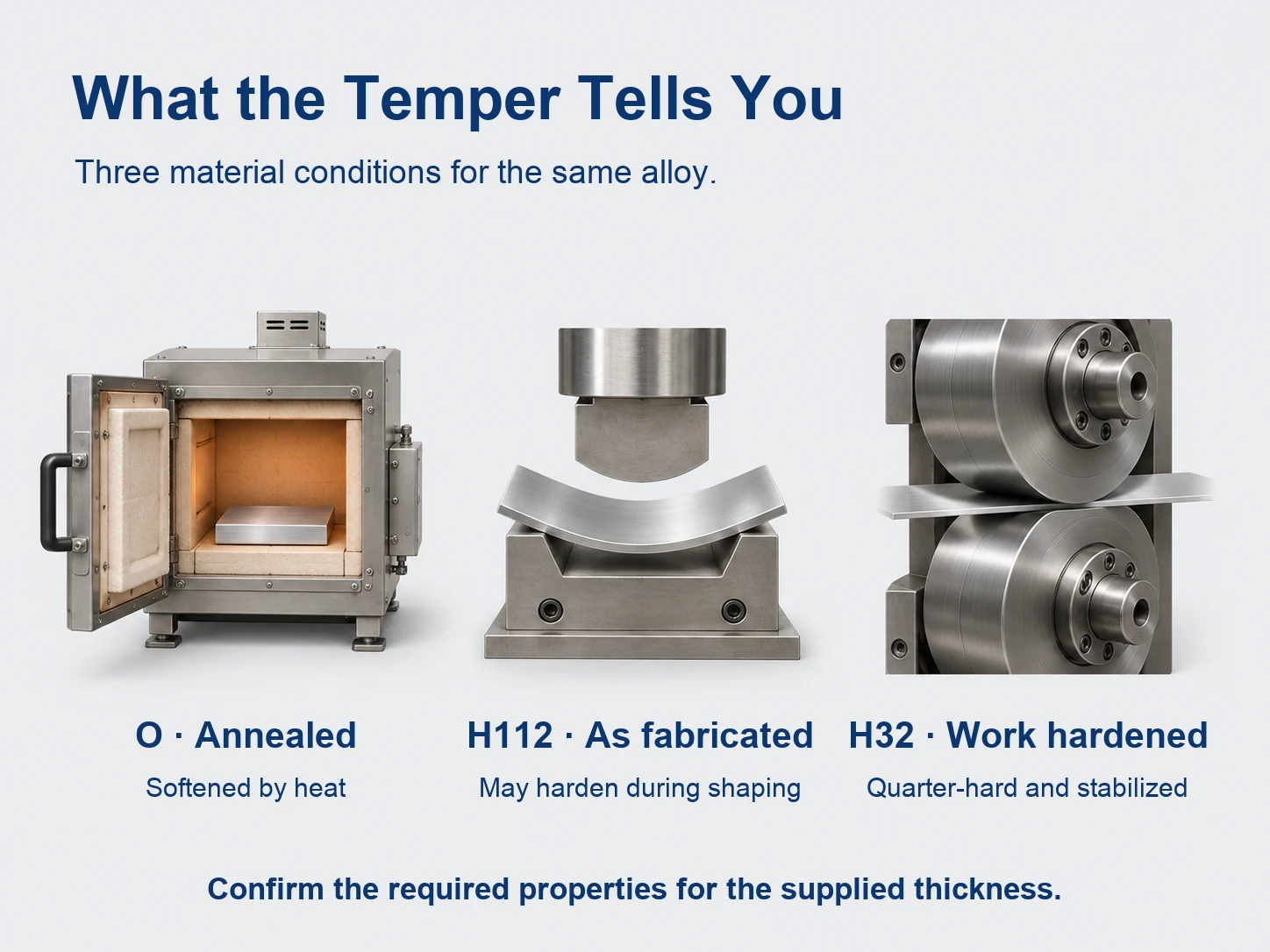
Three conditions, three different jobs.
O is annealed to soften the material for forming.
H32 is strain-hardened to quarter-hard and then stabilized. It is commonly supplied as sheet.
H112 is an as-fabricated condition. Use the mechanical limits of the actual thickness band and specification.
If a drawing relies on H32 minimum properties, verify the design before accepting H112 as a substitute.
5052-H112 Mechanical Properties
ASTM B209 bands the H112 requirement by thickness, and the banding is the point — the numbers fall as the section thickens.
| Thickness (in) | Tensile, min (ksi) | Yield, min (ksi) | Elongation, min |
|---|---|---|---|
| 0.250–0.499 | 28.0 | 16.0 | 7% |
| 0.500–2.000 | 25.0 | 9.5 | 12% |
| 2.001–3.000 | 25.0 | 9.5 | 16% |
The table uses the inch-pound values in ASTM B209/B209M-21a. ksi means thousands of pounds per square inch. If the order uses SI units, use the applicable metric table directly.
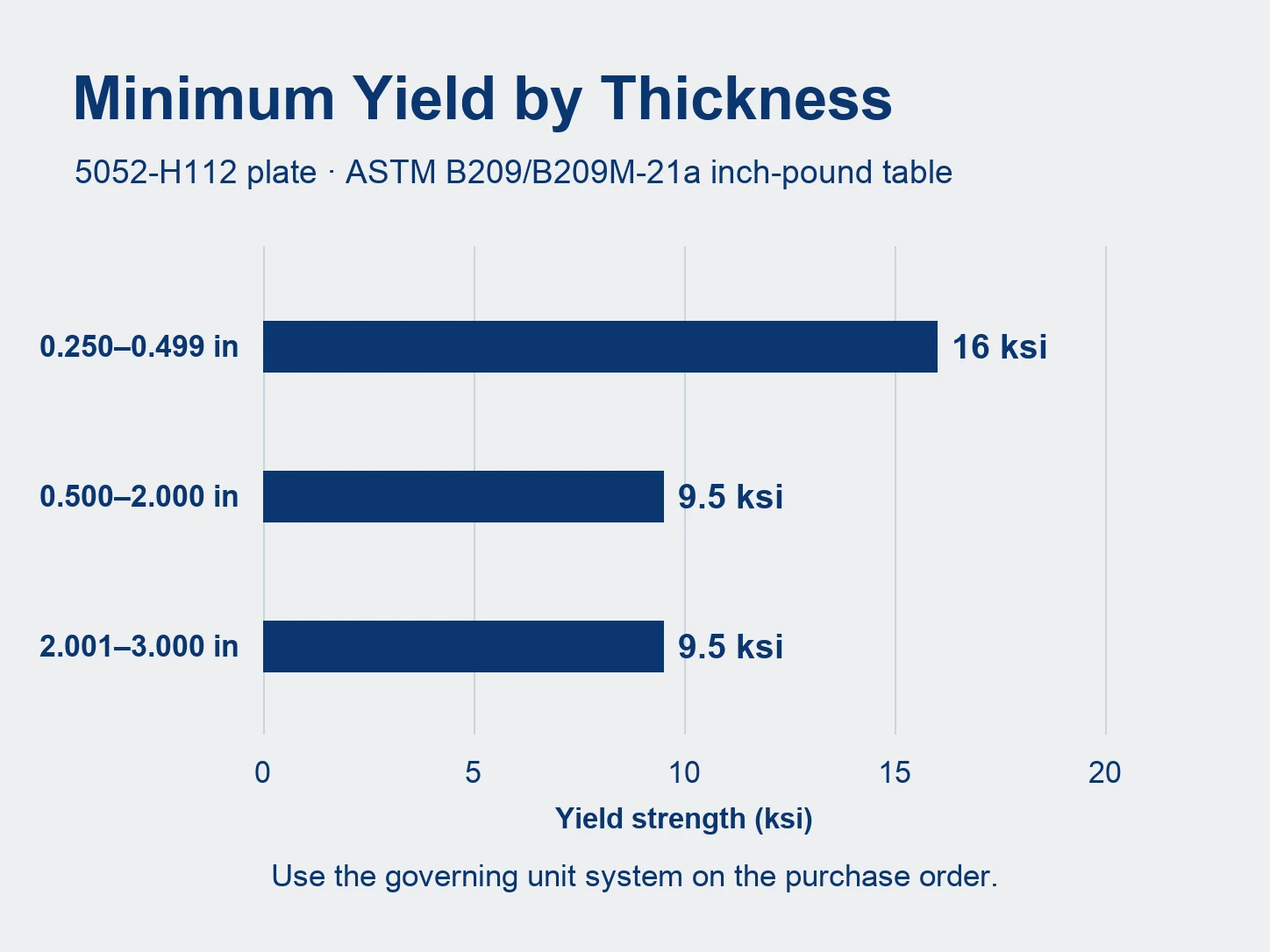
The minimum yield drops from 16.0 ksi in the first thickness band to 9.5 ksi in the next two. The listed minimum elongation rises. Elongation alone does not establish the forming radius of a finished part.
We quote H112 in thicknesses from 6.0 mm to 80 mm. Confirm which standard, unit system and limits apply to the quoted dimensions. Where a thickness is outside the agreed table, specify the acceptance criteria on the order and verify the results on the mill test certificate.
Where 5052-H112 Is Used
Tanks, Silos and Rolled Structures
Tanks, silos, hoppers and ductwork are examples of rolled or welded shells. Confirm the required bend radius and forming procedure for the supplied thickness and temper, then verify the welded joint.
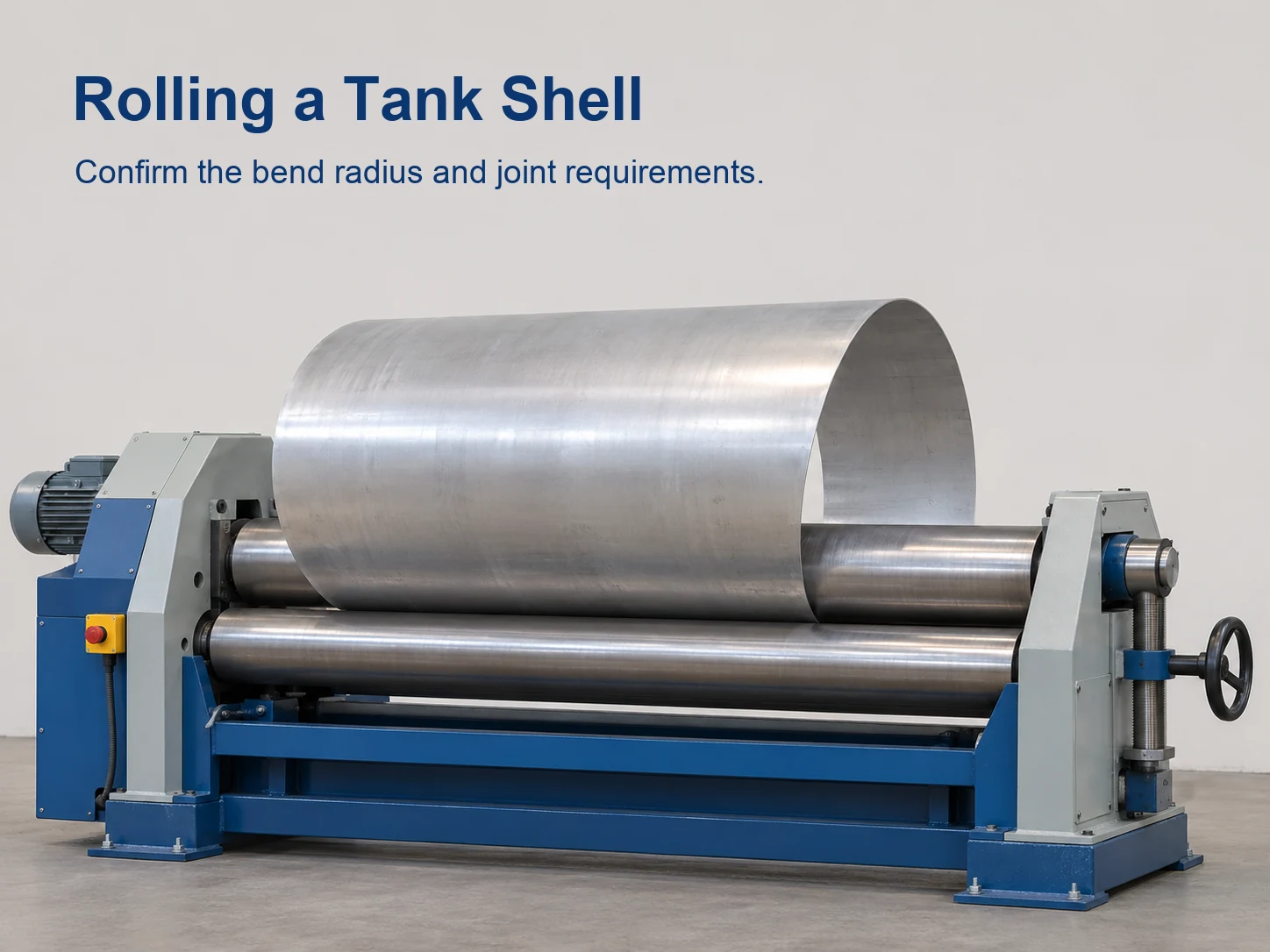
Check the plate, welds and any stiffeners against the actual service loads before selecting a temper.
Marine and Ship Structures
For applications such as decking or marine panels, confirm that the project specification permits the alloy and temper. Hull and other classed structures must meet the governing approval requirements.
For a hull that will be classed and inspected, confirm the acceptance values your surveyor expects before ordering — some specifications call out minimum properties that sit above the B209 floor for the thickness in question.
H112 vs H32 vs H34 for Plate — How to Choose
| H112 | H32 | H34 | |
|---|---|---|---|
| Minimum yield | Depends on thickness band | Check the specified thickness | Check the specified thickness |
| Minimum elongation | Depends on thickness band | Check the specified thickness | Check the specified thickness |
| Material condition | As fabricated | Quarter-hard and stabilized | Half-hard and stabilized |
| Availability | Confirm gauge and mill capacity | Confirm gauge and mill capacity | Confirm gauge and mill capacity |
| Selection focus | Formed or welded plate, subject to design review | General fabrication | Panels needing a harder condition |
| Before substituting | Check required yield and forming | Check formability and availability | Check formability and availability |
Compare the material limits at the actual thickness and under the same specification before selecting a temper.
When H112 Is the Right Call
Consider H112 when it is available at the thickness you need, the plate can be formed and joined as required, and its documented properties meet the design limits.
Ask the mill to confirm the temper and acceptance limits on the quote.
When You Need to Move Up
If H112 falls short of the required strength at the specified thickness, check the section, stiffeners or alternative alloys with the designer. For hull or classed marine work, confirm the approved material with the applicable authority.
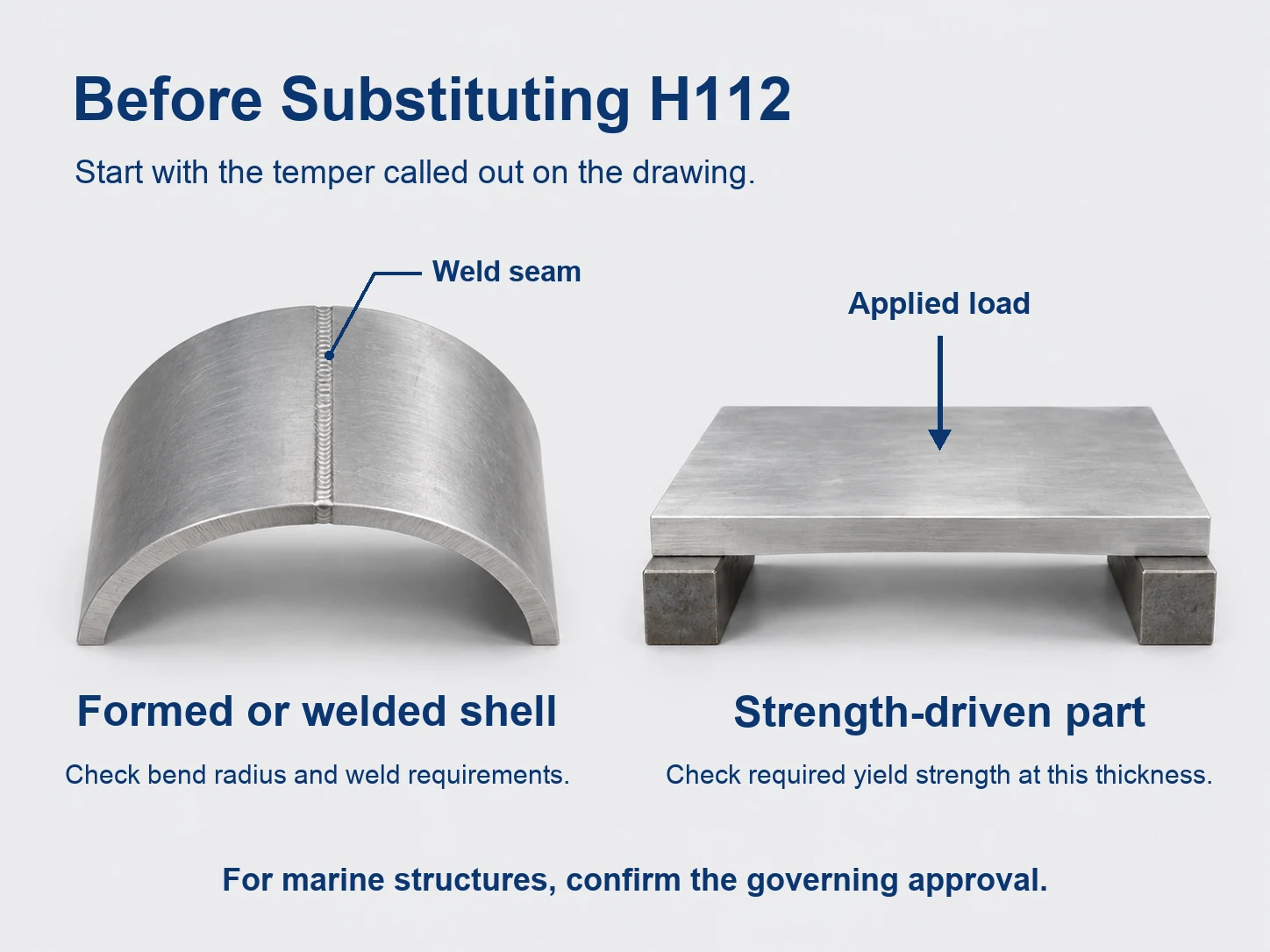
For H32 at a particular plate thickness, confirm availability and properties with the supplier before accepting a substitution.
Working With 5052-H112 — Welding, Rolling, Machining
Welding: Follow the applicable procedure for filler, preheat and joint details. Use documented welded-joint properties where the weld affects the load path.
Rolling: Confirm the bend radius and orientation for the actual plate thickness, temper and tooling before rolling the shell.
Machining: 5052 in any temper is gummy under the cutter, and H112 is softer than H32, so it is worse rather than better for machined parts. Use sharp carbide, positive rake and flood coolant. If the part is machined and needs to hold tolerance, H112 is usually the wrong choice regardless of thickness.
Anodizing: 5052 anodizes well but takes a slightly yellow cast in clear anodize, which is normal for 5xxx alloys. Colour-match a coupon if the part sits next to 6xxx components.
Pros and Limitations at a Glance
| Dimension | Advantage | What it costs |
|---|---|---|
| Formability | Consider for rolled and formed parts | Verify the required radius |
| Weldability | Suitable for evaluation in welded fabrication | Joint design and procedure govern |
| Thickness availability | Available from some mills as plate | Confirm the required gauge and temper |
| Strength | Published limits vary by thickness | Check the limits in the governing unit system |
| Corrosion | Salt-water resistant without coating | Not for high-temperature or acidic service without review |
| Machining | — | Soft and gummy; poor for precision parts |
Conclusion
5052-H112 is an as-fabricated plate temper. Its minimum properties depend on thickness and the governing specification. A part designed using H32 properties needs a fresh check before using H112.
We quote 5052-H112 plate from 6.0 mm to 80 mm. Confirm the applicable requirements for your thickness and check them against the mill test certificate. SGS reports are available on request.
Send us the thickness, the size and what the plate is being built into, and we will confirm the temper and quote against it.
Frequently Asked Questions
Is 5052-H112 as strong as H32?
H112 and H32 have different minimum properties at the thicknesses covered by the specification. Use the table for the temper, thickness and unit system written on the order.
Why is my plate H112 instead of H32?
H112 is commonly supplied on hot-rolled plate. Availability of H32 at a particular thickness depends on the mill and applicable specification, so check before changing the drawing.
Can H112 plate be rolled and welded?
It can be considered for rolled and welded work. Check bend radius, tooling and joint requirements for the material actually supplied.
What is the minimum order and lead time?
Low MOQ, typically 10–60 days depending on thickness and size. We quote H112 plate from 6.0 mm to 80 mm. Confirm the applicable mechanical requirements and the mill test certificate for the size you need.