What Is 5052 Aluminum?
5052 is a 5xxx aluminum-magnesium alloy with 2.2–2.8% magnesium. Strength in the H tempers comes primarily from cold work. H36 and H38 are two high-strength conditions of the same alloy, with less room for forming than the softer tempers.
Understanding the H36 and H38 Tempers
H3 indicates strain hardening followed by stabilization. In this group, H34 is half-hard, H36 is three-quarter-hard and H38 is full-hard. Those designations describe the degree of hardening. They do not specify a percentage reduction in thickness.
How H36 and H38 Differ From H34
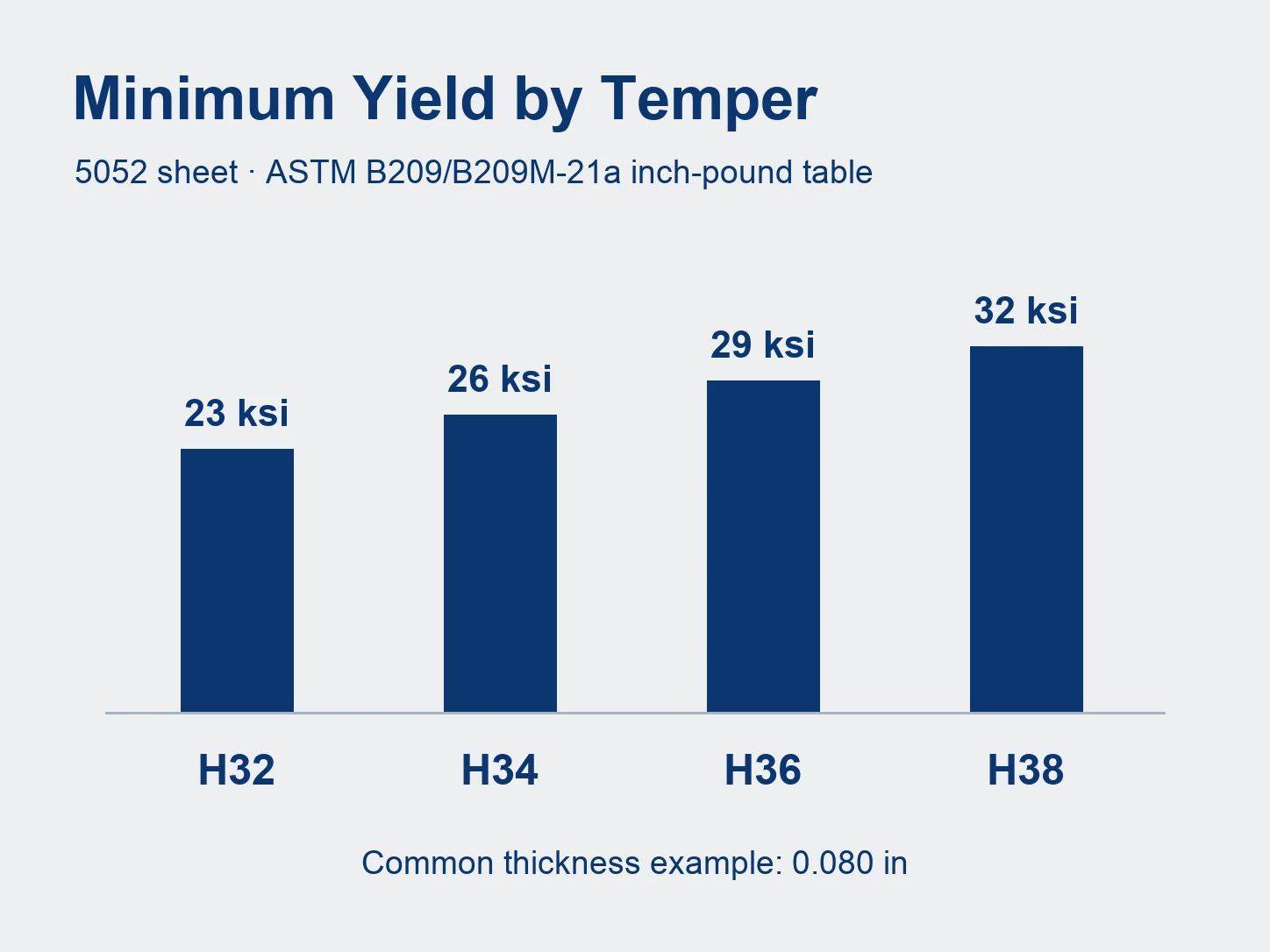
At the same tabulated thickness, the minimum yield rises from H34 to H36 and then H38. Yield strength tells you when the sheet begins to take a permanent set. For a bend or formed part, check the thickness, rolling direction, tooling and actual material rather than estimating a bend radius from the temper name.
5052-H36 and H38 Mechanical Properties
The following values use the inch-pound table in ASTM B209/B209M-21a. ksi means thousands of pounds per square inch. For an order in SI units, use the governing metric table directly.
| Temper | Thickness (in) | Tensile strength (ksi) | Minimum yield (ksi) | Minimum elongation |
|---|---|---|---|---|
| H36 | 0.006–0.007 | 37–44 | 29 | 2% |
| H36 | 0.008–0.031 | 37–44 | 29 | 3% |
| H36 | 0.032–0.162 | 37–44 | 29 | 4% |
| H38 | 0.006–0.007 | 39 minimum | 32 | 2% |
| H38 | 0.008–0.031 | 39 minimum | 32 | 3% |
| H38 | 0.032–0.128 | 39 minimum | 32 | 4% |
At 0.080 in, all four tempers in the chart have a tabulated minimum yield. The values are acceptance limits. A supplier’s typical value describes representative production, and the mill test certificate reports the results for the supplied batch. Design and accept the order against the applicable requirements.
Where 5052-H36 and H38 Are Used
Flat Panels and Covers
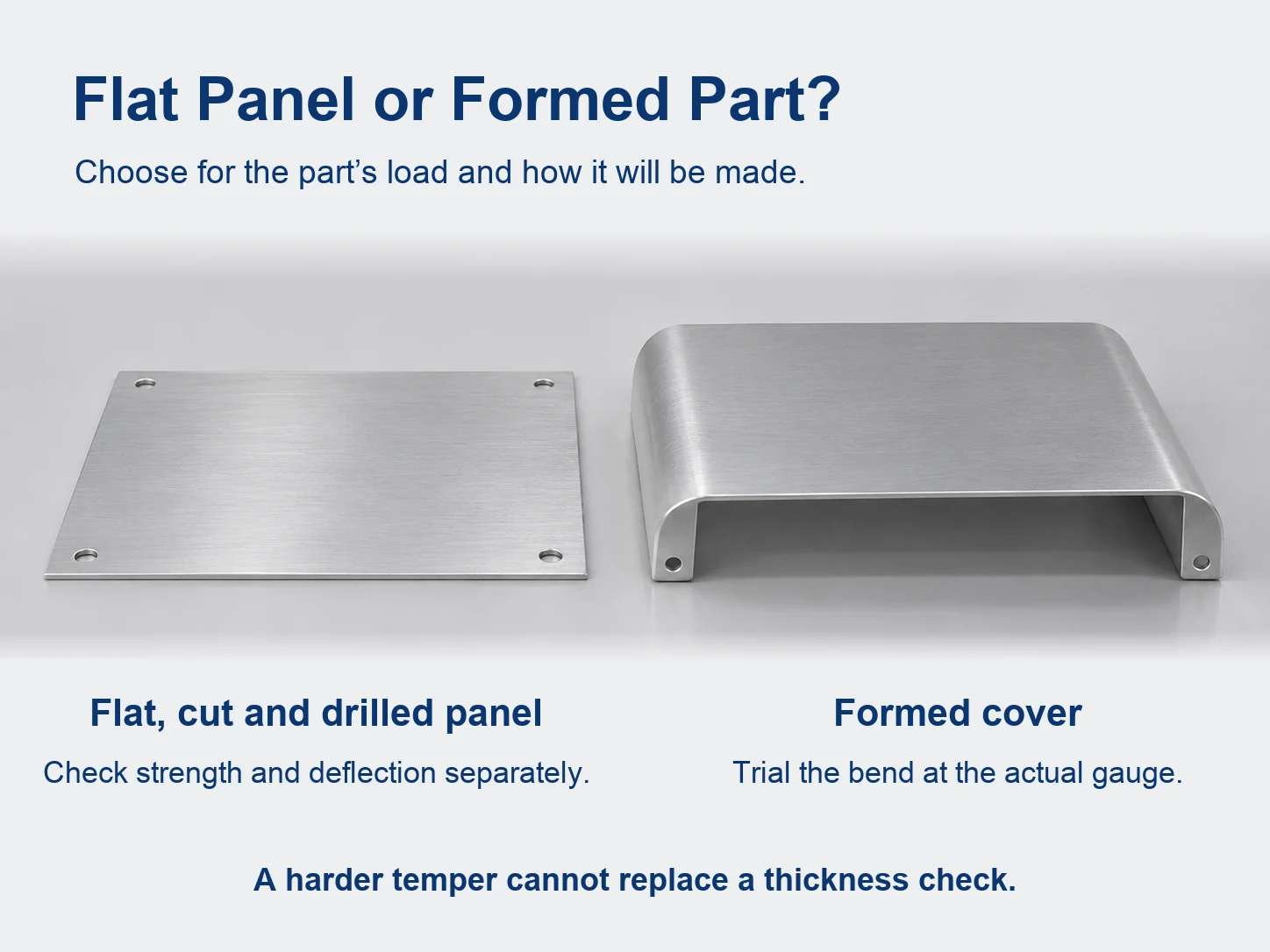
Cut-and-drilled panels and mechanically fastened covers are useful examples when the part needs higher resistance to permanent deformation and has little forming. Check the actual load, span, holes and supports. Where impact or abrasion governs service life, use tests or service data for that duty.
Marine Panels
For marine panels, verify that the project specification accepts the alloy and temper. A higher yield strength alone does not establish suitability for a thinner panel or a classed structure.
H36 vs H38 vs Other 5052 Tempers — How to Choose
When H36 or H38 Is the Right Call
Consider H36 or H38 when a mostly flat part needs higher yield strength and the material can meet the fabrication requirements. If the issue is how far the panel bends under load before it takes a permanent set, check stiffness separately. For the same alloy and panel shape, thickness, span and support have much more influence on elastic deflection than switching from H36 to H38.
When Another Temper Fits Better
If the part needs tighter bends or more forming, evaluate a softer temper. See the 5052-H34 guide and the 5052-H32 guide. Confirm the bend and tolerance on a trial piece before releasing the job.
H24 and H34 Are Both Half-Hard
H24 is strain-hardened and partly annealed. H34 is strain-hardened and stabilized. ASTM B209/B209M groups them together in certain rows. If the drawing names one temper or a particular standard, check the applicable thickness, acceptance limits and permission to substitute.
Working with 5052-H36 and H38 — What You Need to Know
Machining. Check edge quality on a trial piece using the intended tooling, especially where burrs or hole finish matter.
Welding. Heat can soften the cold-worked metal next to a weld. Use the appropriate welding procedure and design the joint using properties for the welded condition. Joint geometry, filler and process affect the result.
Corrosion and finishing. Confirm the service environment and finish requirements. Where appearance matters, finish a sample before committing to the production lot.
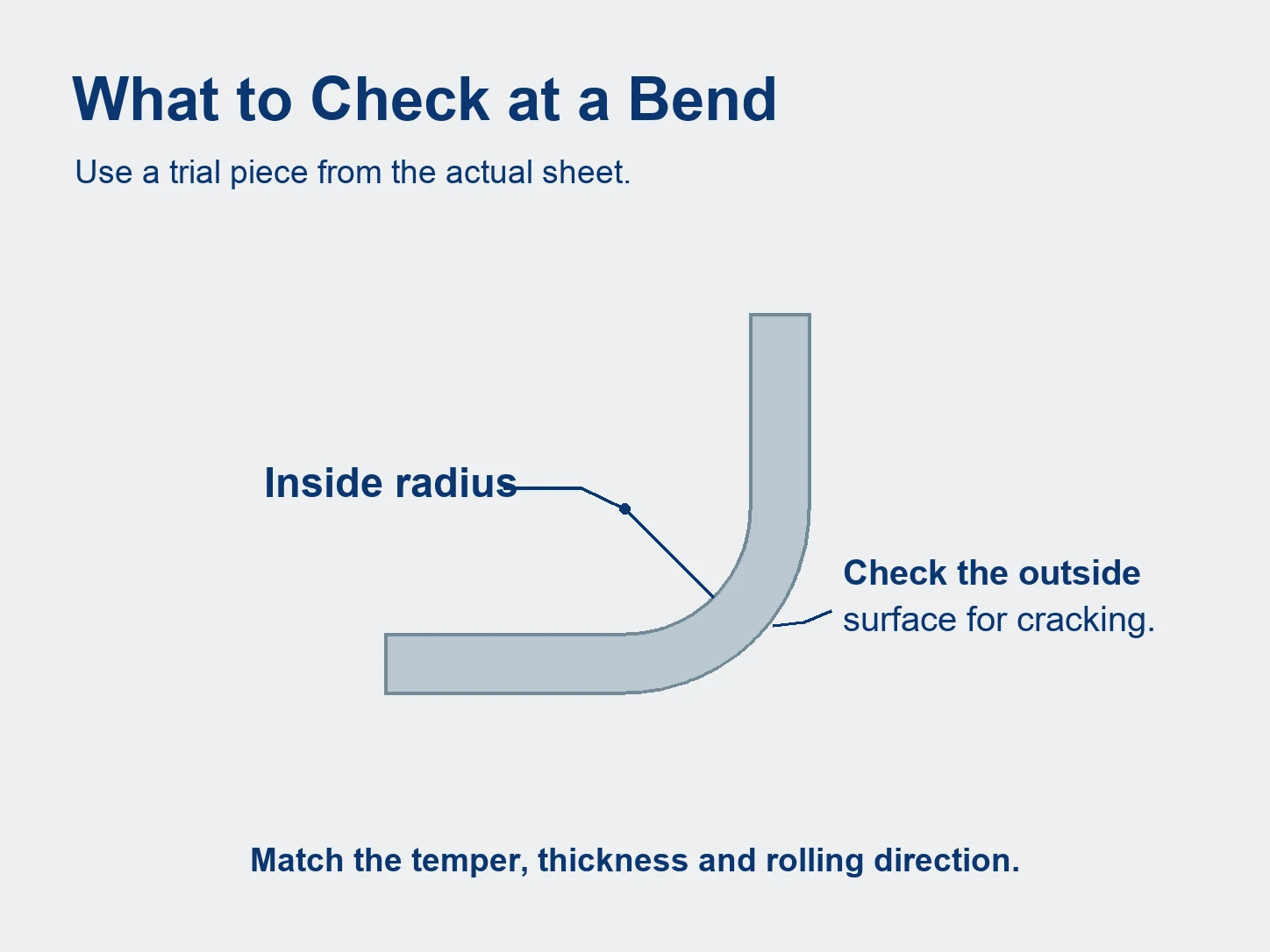
Formability. Use a trial piece from the intended batch and match the drawing’s thickness, rolling direction, tooling and bend angle. Check the actual inside radius and inspect the outside surface for cracks. A tabulated minimum elongation is not a guaranteed bend radius.
Pros and Limitations at a Glance
| Requirement | What to check |
|---|---|
| Higher resistance to permanent deformation | Minimum yield for the actual thickness and temper |
| Limited deflection under load | Panel thickness, span and support |
| Bends or hems | Trial bends with the intended tooling and direction |
| Welded joint | Strength in the welded condition |
| Thickness beyond a standard table | Agreed limits on the order and results on the mill test certificate |
Conclusion
H36 and H38 are high-strength 5052 sheet tempers. Compare their applicable minimum properties, then check deflection, forming and joining separately.
We quote 5052-H38 sheet from 0.3 mm to 6.35 mm and H36 against the requested thickness and quantity. For gauges beyond the governing table, agree the acceptance limits on the order. Ask for the mill test certificate with the batch results.
Send the temper, thickness, quantity and what the part needs to do so we can confirm availability and documentation.
Frequently Asked Questions
Is 5052-H24 the same as 5052-H34?
Both are half-hard. H24 is partly annealed after strain hardening and H34 is stabilized. Check the drawing and specification before substituting.
Can 5052-H36 or H38 sheet be welded?
It can be evaluated for welded work. The weld heat can soften adjacent sheet. Verify the process and the strength of the joint in the welded condition.
Can 5052-H38 be bent after delivery?
Run a trial at the actual gauge, rolling direction and tool radius. For tighter bends, evaluate a softer temper.
What is the minimum order and lead time?
Send the temper, thickness and quantity for a quote. For material outside the applicable table, agree on acceptance limits and certificate requirements before ordering.