6–7 µm에서는 릴이 아무것도 드러내지 않는다. 1235 롤과 8011 롤은 같아 보이고, 무게도 같고, 인쇄도 같다. 합금은 금속이 아니라 카톤에 인쇄되어 있다. 차이는 포장 라인에서 나타나는데, 한 포일은 접히고 접힌 채로 유지되며 다른 포일은 접힘 암 사이에서 다시 펴진다.
1235는 1xxx 상용 순알루미늄 계열의 합금 명칭이며, 이것이 규정하는 것은 성능 수준이 아니라 순도 하한이다: 알루미늄 최소 99.35%, 규소와 철 합계 최대 0.65%. 사양, 형태 및 크기는 다음에 있다 1235 알루미늄 페이지. 라이너 게이지에서 그 순도가 하는 일, 그리고 다른 1xxx 포일이 더 적합한 경우는 다음에서 다룬다.
포일이 접히고 접힌 채로 유지되는 이유
크리즈는 항복강도 효과다
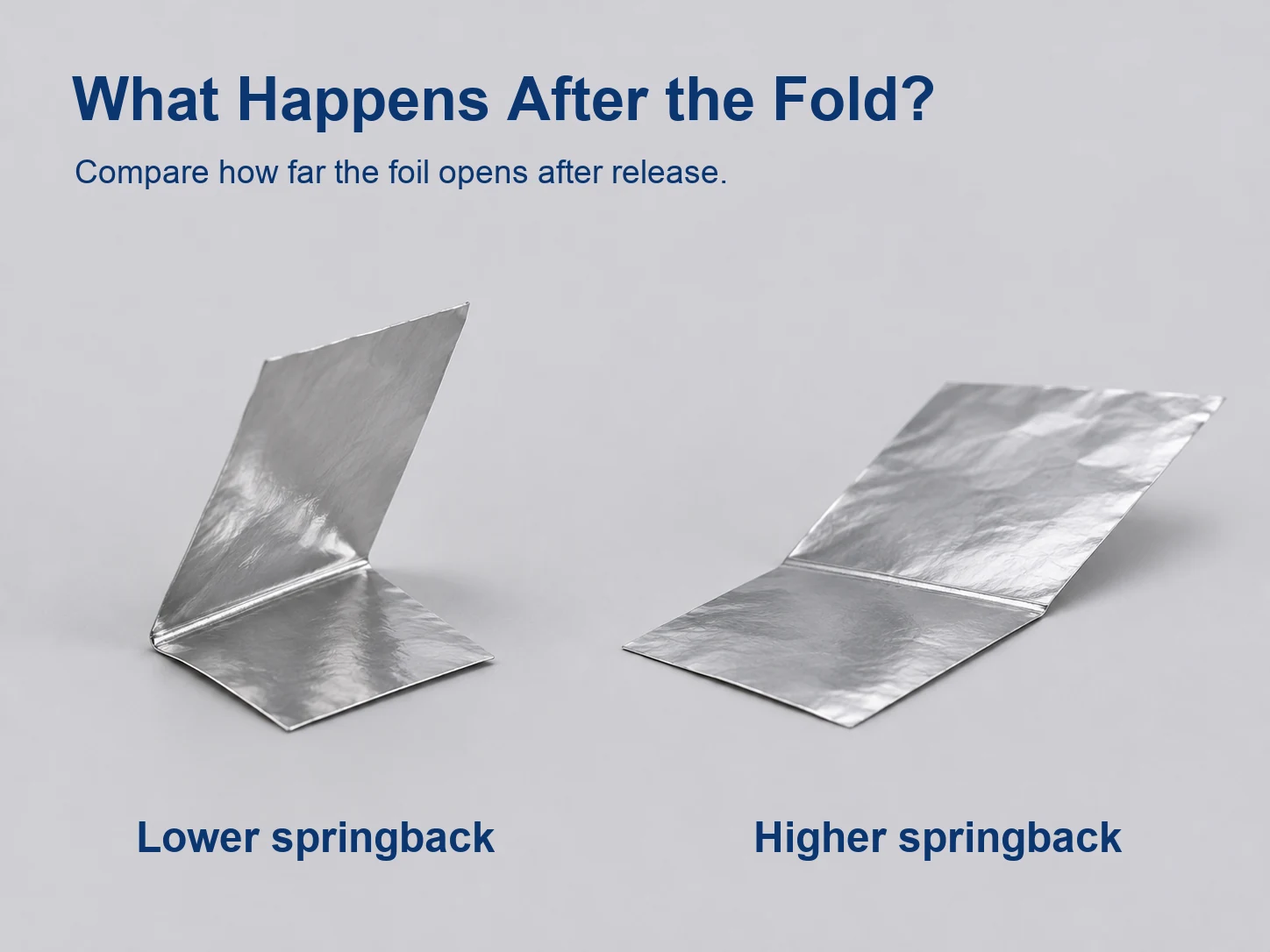
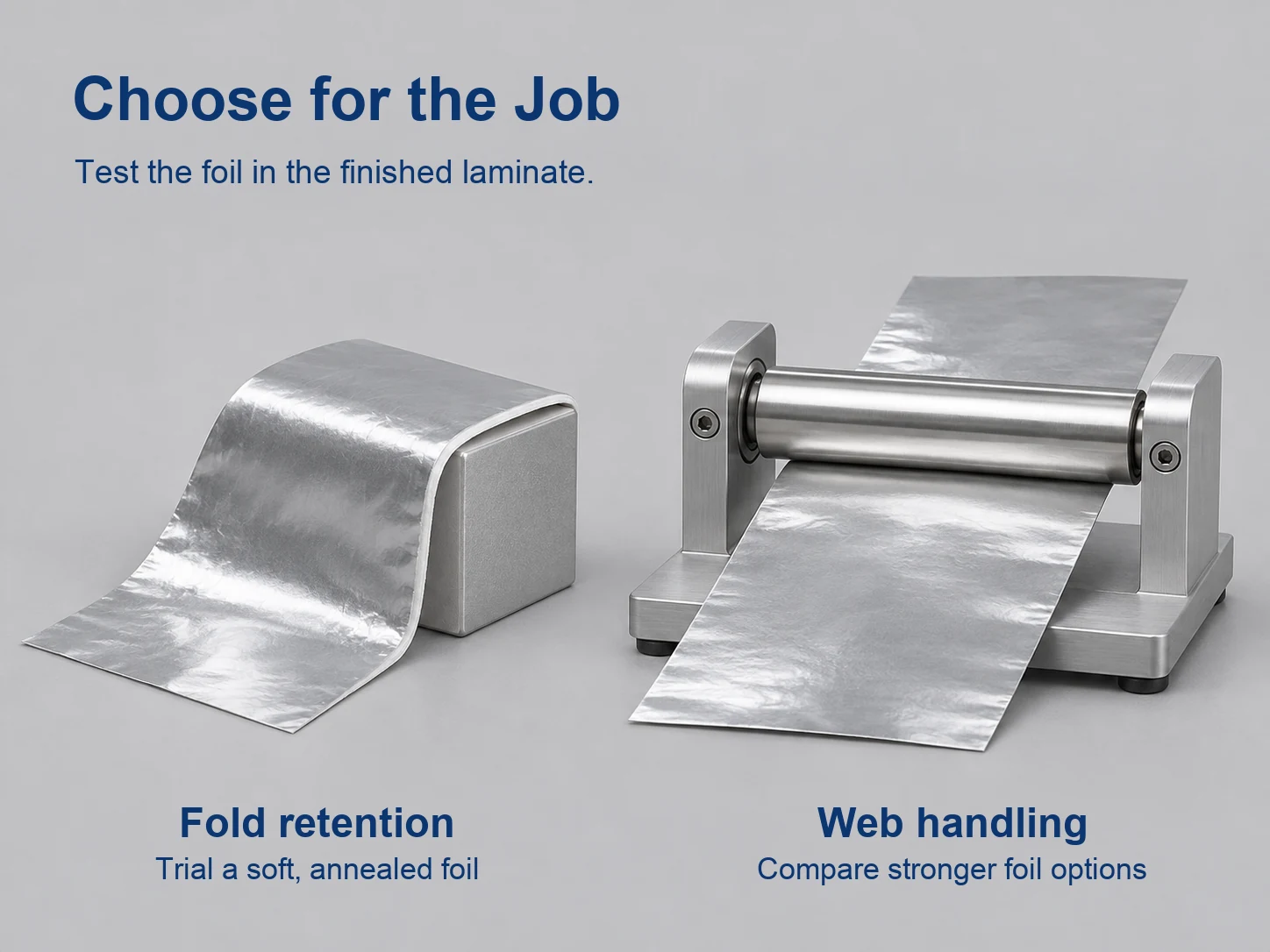
포일이 접힘을 유지하는 것은 굽힘이 금속을 전체 두께에 걸쳐 항복시키기 때문이며, 이후 남는 탄성 회복은 다시 펴지기에 너무 작다. 이 균형은 조질에 따라 달라진다. 어닐링 상태 — O 조질, 포일이 통상 주문되는 조질 — 에서는 항복강도가 충분히 낮아 접힘이 거의 전적으로 영구 변형이 된다.
항복강도를 높이면 균형은 반대 방향으로 움직인다. H 조질 포일은 접히는 동안 접힘에 저항하고 굽힘 전체에 걸쳐 더 많은 회복 가능 변형률을 저장하므로, 접힘력이 해제되면 스프링백한다. 크리즈는 벤치에서는 허용 가능해 보이지만 기계 안에서 펴진다.
그것이 기계 속도에서 주는 것
담배 라이너는 분당 수백 갑의 속도로 갑 주위에 접히고, 닫히고, 그런 다음 흡연자에 의해 다시 열린다. 스프링백하는 포일은 세 가지 모두 실패한다: 단단한 랩을 유지하지 못하고, 갑 가장자리는 날카로운 선을 잃고, 소프트 팩은 첫 담배 후에 재밀봉될 수 없다.
그 각각은 불량 또는 클레임이며, 그 중 어느 것도 납품 검사에서는 나타나지 않는다. 이것이 조질이 합금만큼이나 명시적으로 주문서에 포함되어야 하는 이유다 — 데드 폴드는 어닐링 상태의 특성이지 1235라는 숫자 자체의 특성이 아니다.
6미크론에서 순도가 하는 일
입자가 적을수록 핀홀이 적다
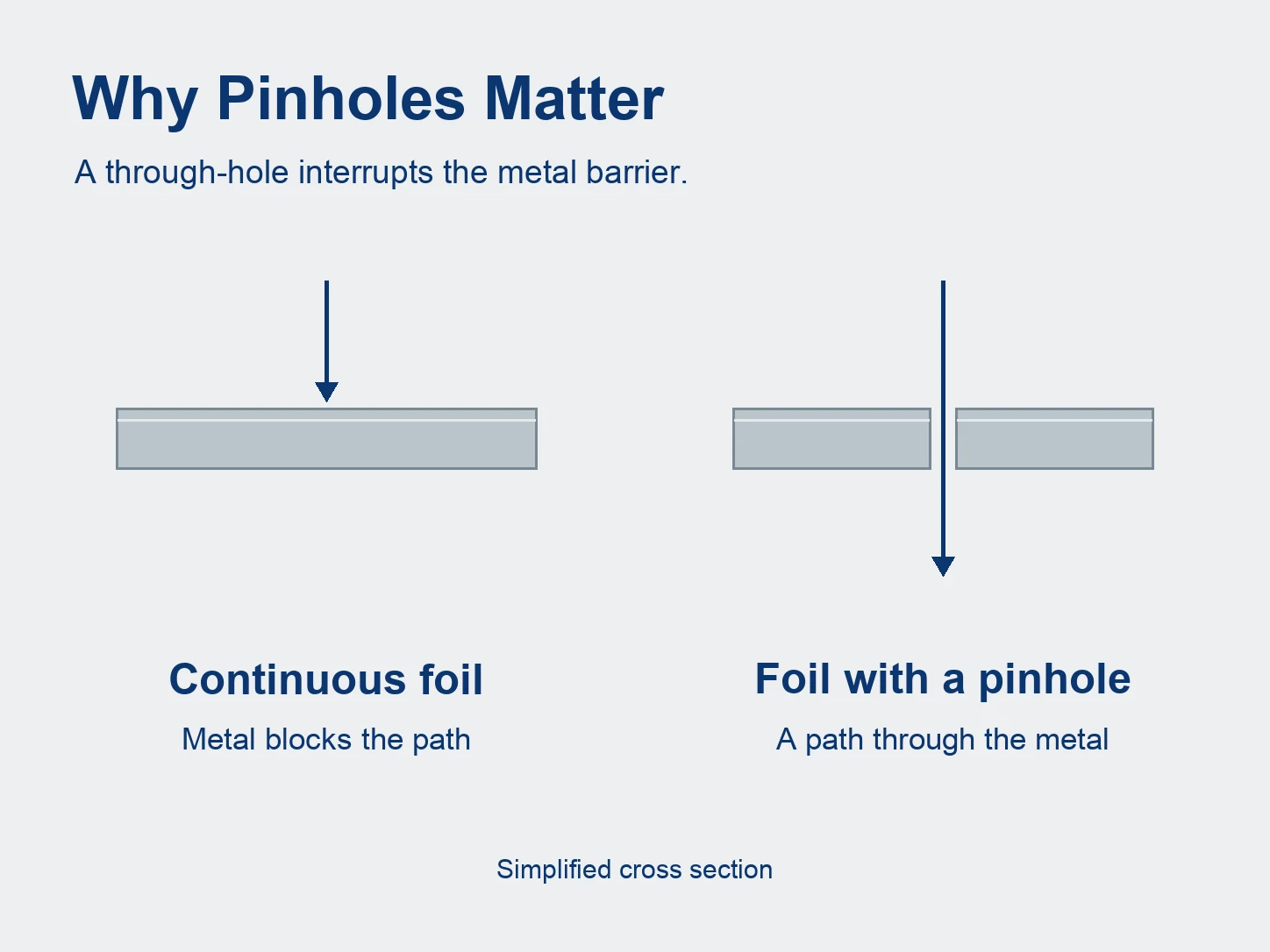
철과 규소는 알루미늄에 완전히 용해되지 않는다. 이들은 조대한 금속간 입자를 형성하며, 6–7 µm에서는 수 마이크로미터 크기의 입자가 벽 두께의 큰 부분을 차지한다. 여러 입자가 서로 가까이 있으면 압연 패스가 얇아지게 하지 않고 찢어지며, 그 결과 핀홀이 생긴다.
따라서 규소와 철의 상한 설정은 그 자체를 위한 순도가 아니다. 이것이 이 합금을 라이너 게이지까지 압연하면서도 배리어로서 기능할 수 있게 하는 것이다. 더 강한 1xxx 포일은 그러한 입자를 더 많이 함유하며, 가장 얇은 게이지를 희생하여 강도를 얻는다.
인쇄를 받아들이고 맛을 남기지 않는 표면
동일한 낮은 합금 함량은 압연 직후 더 깨끗하고 밝은 표면을 제공하며, 이것이 라미네이션, 인쇄 및 엠보싱이 인쇄 필름이 아닌 프리미엄 팩으로 읽히기 위해 필요한 것이다. 그리고 금속에 알루미늄 외에 거의 없으므로, 감싸는 담배와 반응할 수 있는 것도 거의 없다.
두 효과를 함께 붙잡아라: 이들은 한 번은 배리어로, 한 번은 표면으로 두 번 보이는 하나의 원인이다.
담배 라이너의 내부
구조는 포일 플러스 종이다
담배 포장은 1235를 표준으로 만든 응용 분야이며, 포일이 아니라 라미네이트로 운영된다. 6–7 µm의 포일 — 이 응용 분야의 전형적인 상업적 게이지이며 어떤 표준도 고정하지 않는 수치 — 은 라이너 베이스지, 보통 20–25 g/m² 대역에 접합되고, 그런 다음 인쇄 또는 엠보싱되고 포장 기계가 받는 폭으로 슬릿된다.
두 재료는 다른 역할을 한다. 종이는 강성, 불투명도 및 접힘 암이 시트를 제어하는 데 필요한 마찰을 제공하고, 포일은 배리어를 제공한다. 어느 것도 단독으로 작동하지 않는다: 이 게이지의 포일은 너무 흐물흐물하여 단독으로 공급될 수 없고, 포일 없는 종이는 수분을 그대로 통과시킨다.
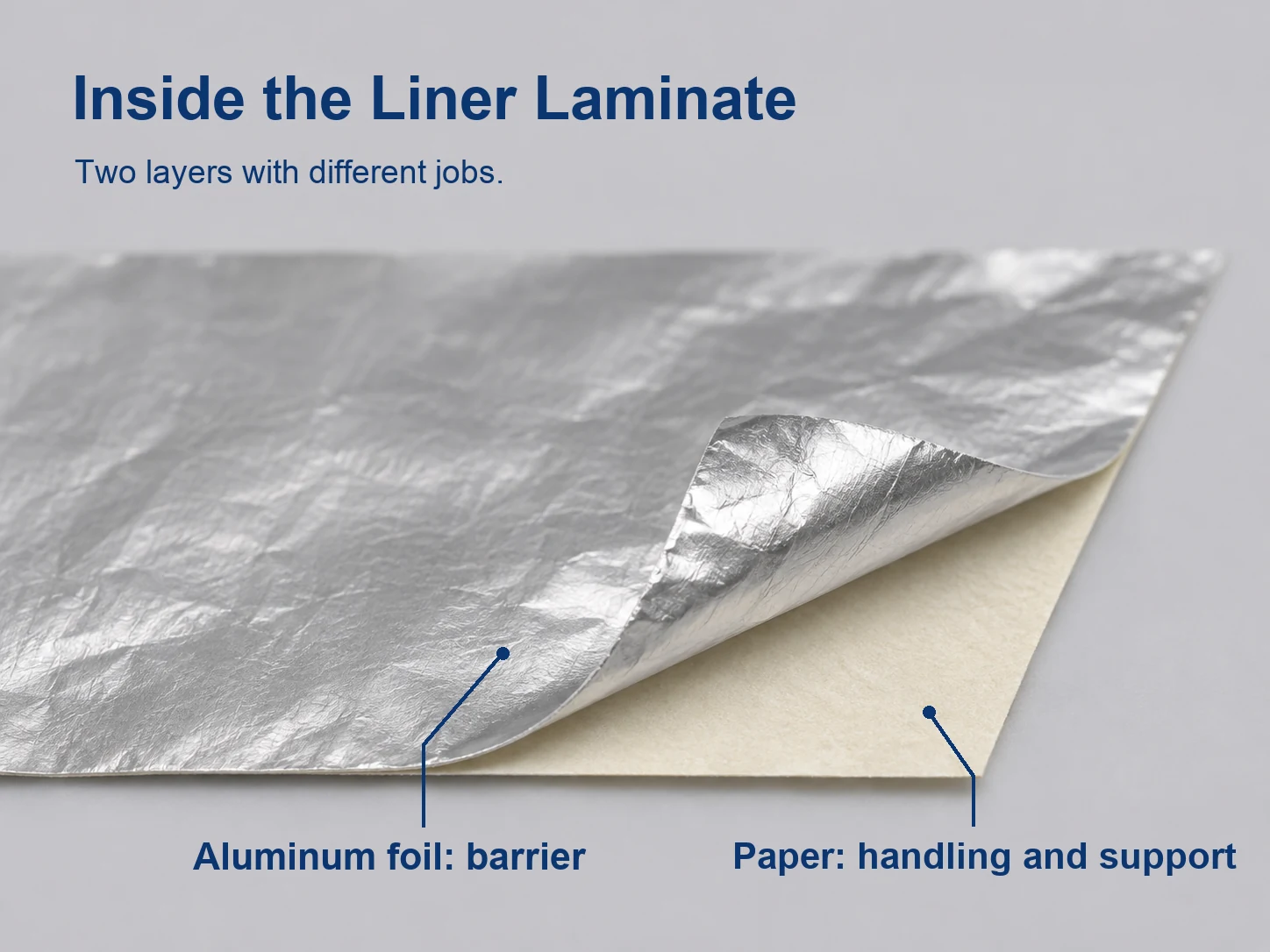
구매자를 사로잡는 한 가지 세부 사항: 이중 압연은 한쪽 면을 광택면으로, 다른 쪽 면을 무광면으로 남기며, 어느 면이 바깥으로 가는지는 주문 결정 사항이다. 통상 광택면이지만, 새틴 룩을 원하는 디자인은 그렇게 명시해야 한다.
포일이 하는 네 가지 역할
- 향 보존. 휘발성 화합물은 다공성인 것을 통해 담배에서 빠져나가며, 연속 금속층은 다공성이 아니다.
- 수분 제어. 팩은 양방향으로 내부 습도를 유지해야 한다 — 건조한 시장에서 마르지 않고, 습한 시장에서 물을 흡수하지 않아야 한다.
- 빛 차단. 자외선은 담배의 오일을 분해한다; 불투명층은 표면에서 이를 막는다.
- 브랜드 표면. 포일은 갑이 열릴 때 구매자가 가장 먼저 보는 것이므로, 인쇄, 엠보싱 및 금속 마감을 담당한다.
담배를 넘어서
동일한 조합 — 얇고, 부드럽고, 깨끗하고, 배리어 — 은 다른 라미네이트로 이어진다. 소형 봉지와 블리스터 리드는 배리어층으로, 케이블 랩은 전자기 차폐로, 테이프는 백킹으로 사용한다. 요구 사항은 제품에 따라 달라지지만, 1xxx 포일을 선택하는 이유는 달라지지 않는다.
1235, 8011 및 1145 중에서 선택하기
각 조성이 주는 것
1235는 부드러운 것이다. 그 순도가 핀홀 없이 접히고, 유지되고, 얇게 압연될 수 있게 하며, 이것이 기본 라이너 포일이 된 이유다.
8011은 의도적인 반대다. 철과 규소가 의도적으로 첨가되어 강도와 강성을 높인다 — 포일이 강화재일 때, 라인 속도가 부드러운 웹에 불리할 때, 또는 라미네이트에 더 많은 바디가 필요할 때 유용하다. 대가는 부드러움과 표면 밝기다.
1145는 더 오래된 고순도 등급으로, 1235보다 순도가 높으며 1235가 이를 대체하기 전의 라이너 포일이었다. 공급이 더 좁고 비용이 더 높은 것이 이것이 대체로 복귀하지 못한 이유다.
| 1235 | 8011 | 1145 | |
|---|---|---|---|
| 铝含量 | 최소 99.35% | 더 낮음 — 철과 규소가 의도적으로 첨가됨 | 1235보다 높음 |
| 조성이 사는 것 | 부드러움, 데드 폴드, 박물 압연 | 강도와 강성 | 1235보다 높은 순도 |
| 비용 | 힘 | 데드 폴드 및 표면 밝기 | 가격 및 공급 가능성 |
| 최적 적용 분야 | 접히고 유지되어야 하는 라이너 또는 랩 | 강화재, 빠른 라인, 더 무거운 라미네이트 | 이미 이를 중심으로 작성된 레거시 사양 |
표 주석: 세 가지 1xxx 포일을 어닐링 조질 및 동일 게이지 대역에서, 동일한 라미네이트 용도로 비교. 각 등급의 조성과 특성은 해당 합금 페이지에 있다.
The choice is dead fold against stiffness — not purity against purity — and only the pack tells you which one it needs.
Go/No-Go
1235 fits when:
- The foil has to fold and stay folded — a liner, a wrap, a re-closable pack.
- The gauge is at the thin end, where a pinhole decides the barrier.
- The surface must stay bright for print or a metallic finish.
- The laminate needs softness more than body.
1235 does not fit when:
- The foil works as a stiffener rather than a wrap.
- Line speed is the constraint and a soft web is the problem.
- The gauge is heavy enough that a stronger alloy does the same job with less metal.
- The specification was written around 1145 and requalifying costs more than the foil.
What the Standard Leaves to You
ASTM B479 Covers Annealed Foil Only
ASTM B479 governs annealed packaging foil, and its scope is narrower than the phrase “packaging foil to B479” suggests: it covers annealed foil from 0.0064 mm up to but not including 0.15 mm. An order for H-temper foil that cites B479 is citing a document that does not govern what it is buying.
That is not a technicality when the application depends on stiffness. Change the temper and the standard, the mechanical expectation and the dead-fold behaviour all change together — and only the first of the three is visible on the paper.
European orders more often name an EN 546 grade. The clauses below are quoted from B479 because they are the ones that decide whether a substitute can be shipped, and that question does not change with the letterhead on the standard.
The Clause That Lets a Producer Choose the Alloy
B479 lists the alloys it covers — 1100, 1145, 1235, 8011, 8079 and 8111 — and then states that unless the purchaser specifies otherwise, the alloy to be supplied is left to the producer.
So an order reading “0.0065 mm foil to ASTM B479” has specified a thickness and a tolerance system. It has not specified a material. It can be filled with 8011, 8079 or 8111, and the delivery will conform to everything the order said.
The remedy is three lines: name the alloy, name the temper, and name the standard the certificate will be read against. The substitution route closes as soon as the first of those is written down.
What to Send With the Enquiry
An enquiry carrying these six lines leaves little room for interpretation:
- 합금 및 템퍼 — 1235 in O temper, unless the design has a reason for H18.
- Gauge and its tolerance — the nominal thickness, and how much deviation the process can absorb.
- Width and slit requirement — the width the packing machine takes, and whether joins are allowed in the roll.
- Which face goes out — bright or matte.
- The laminate it joins — paper weight, film or coating, because the bond is decided at lamination, not at rolling.
- 문서 — MTC as a minimum, and a third-party report where the brand owner’s specification asks for one.
The certificate is the line that matters most and the one that gets dropped when a price is under pressure. By the time the foil has been laminated, printed and packed, the only record of what was rolled is the paperwork. We supply 1235 foil in O and H18, slit or laminated, with an MTC on every order.
결론
1235 is chosen for what its purity takes away — strength and stiffness — and at liner gauge that is the right trade, because the pack needs the foil to fold and hold rather than to carry load. The risk is not picking the wrong alloy; it is ordering a standard without an alloy, which ASTM B479 explicitly allows.
We supply 1235 foil in O and H18, slit or laminated, with an MTC on every order.
Send us the application, the gauge and the slit width, and we will come back with the alloy call, the temper and the documents that go with it.
자주 묻는 질문
Why does my 1235 foil spring back when I fold it?
Because it is not fully annealed. Dead fold depends on low yield strength, so a partially hardened or H-temper roll resists the fold and recovers when the force is released. Check the temper on the certificate before blaming the alloy.
Can I get 1235 foil in H18 instead of O?
Yes, and it is the right call when the foil works as a stiffener. Expect to give up dead fold, and note that ASTM B479 covers annealed foil only — so the mechanical requirement has to be written into the order itself.
What is the minimum order for a slit roll?
It is quoted from alloy, gauge, width and quantity together, so no single figure applies. Send those four with the application and we will confirm what is possible at that specification.
How do I compare 1235 aluminum foil manufacturers?
Read the certificate first: alloy, temper and heat or batch number belong on it. Then look at the surface — 1235 takes a bright, even finish, while a stronger 1xxx foil with iron and silicon reads slightly duller. Compare on those two before you compare on price.