Key Highlights
- The 2024 aluminum round bar offers a high strength-to-weight ratio, making it suitable for demanding applications.
- This grade has good machinability, allowing efficient fabrication and shaping.
- 2024 aluminum round bars are available in various sizes and specifications to meet different project needs.
- Its performance makes it common in aerospace, automotive, and structural industries.
- With high strength and fatigue resistance, 2024 aluminum is a durable choice for structural and aerospace environments.
Introduction
The 2024 aluminum round bar is a popular choice for engineering and manufacturing because of its high strength, good machinability, and fatigue resistance. Its availability in different sizes and tempers suits diverse project requirements. From structural components to machined parts, 2024 round bars deliver reliable performance.
What is 2024 Aluminum?
2024 aluminum alloy is a widely used high-strength alloy known for excellent fatigue resistance. Copper is the primary alloying element, which gives 2024 its impressive strength characteristics.
The copper addition raises hardness and tensile strength, making 2024 suitable where structural integrity matters. Because of its copper content, 2024 has lower corrosion resistance than many other aluminum alloys and often needs surface treatment.
Its strength and versatility make it a preferred option in aerospace, automotive, and general manufacturing. Whether for aircraft components, frameworks, or machined parts, 2024 is a high-performance material.
Different Types of Aluminum Bar
Aluminum bars come in several types, each suited to specific applications. Understanding the forms helps you pick the right material.
- Round Bar: Circular cross-section; versatile for shafts, axles, and structural components.
- Square Bar: Square cross-section; stable for frames, supports, furniture legs, and machine parts.
- Flat Bar: Rectangular cross-section; used in brackets, supports, and general fabrication.
When choosing a bar, weigh strength, machinability, and corrosion resistance against the alloy grade (2024 or 7075), temper (T3, T4, T6), and size.
Key Differences Between Round Bar, Square Bar, and Flat Bar

| Feature | Round Bar | Square Bar | Flat Bar |
| Shape | Cylindrical | Square cross-section | Rectangular cross-section |
| Strength | Moderate | High | High |
| Machinability | Excellent | Good | Excellent |
| Common Uses | Shafts, axles, bushings | Structural frames, furniture legs | Brackets, supports, trim pieces |
| Best For | Rotating parts or parts requiring smooth motion | Load-bearing structures | Structural support or flat surfaces |
The main difference is shape, which drives the application. Round bars machine well for cylindrical parts such as shafts and axles. Square bars give stability for structural and framing work.
Flat bars suit flat surfaces and connections. All three are available across aluminum alloys with specific strength, corrosion, and machinability profiles, so the alloy choice depends on the application.
How to Choose the Right Type of Aluminum Bar For Your Project
No.1: When to Choose Aluminum Round Bar
- When you need cylindrical parts like shafts, axles, or rods.
- When smooth motion or rotation is required.
- For components that benefit from excellent machinability.
- Applications where moderate strength is enough, such as bushings or connectors.
- Projects requiring precise dimensions and round geometries.
Match your project’s shape, strength, and machinability needs to decide whether a round bar fits.
No.2: When to Choose Aluminum Flat Bar
- For framing, supports, or structural components.
- When a stable, even surface is necessary.
- Suitable for brackets, base plates, and decorative elements.
- Versatile for mounting and joining parts.
Pick the bar shape that meets your project’s specific requirements for efficient results.
No.3: When to Choose Aluminum Square Bar
- For right-angle connections or framework construction.
- Ideal for furniture, architectural trim, or window frames.
- Provides a clean, modern appearance.
- Suited to projects needing uniform dimensions.
- Easy to weld and join at precise angles.
Tailor your choice to shape, strength, and function to ensure performance and durability.
Step-by-Step Guide to Selecting the 2024 Aluminum Round Bar
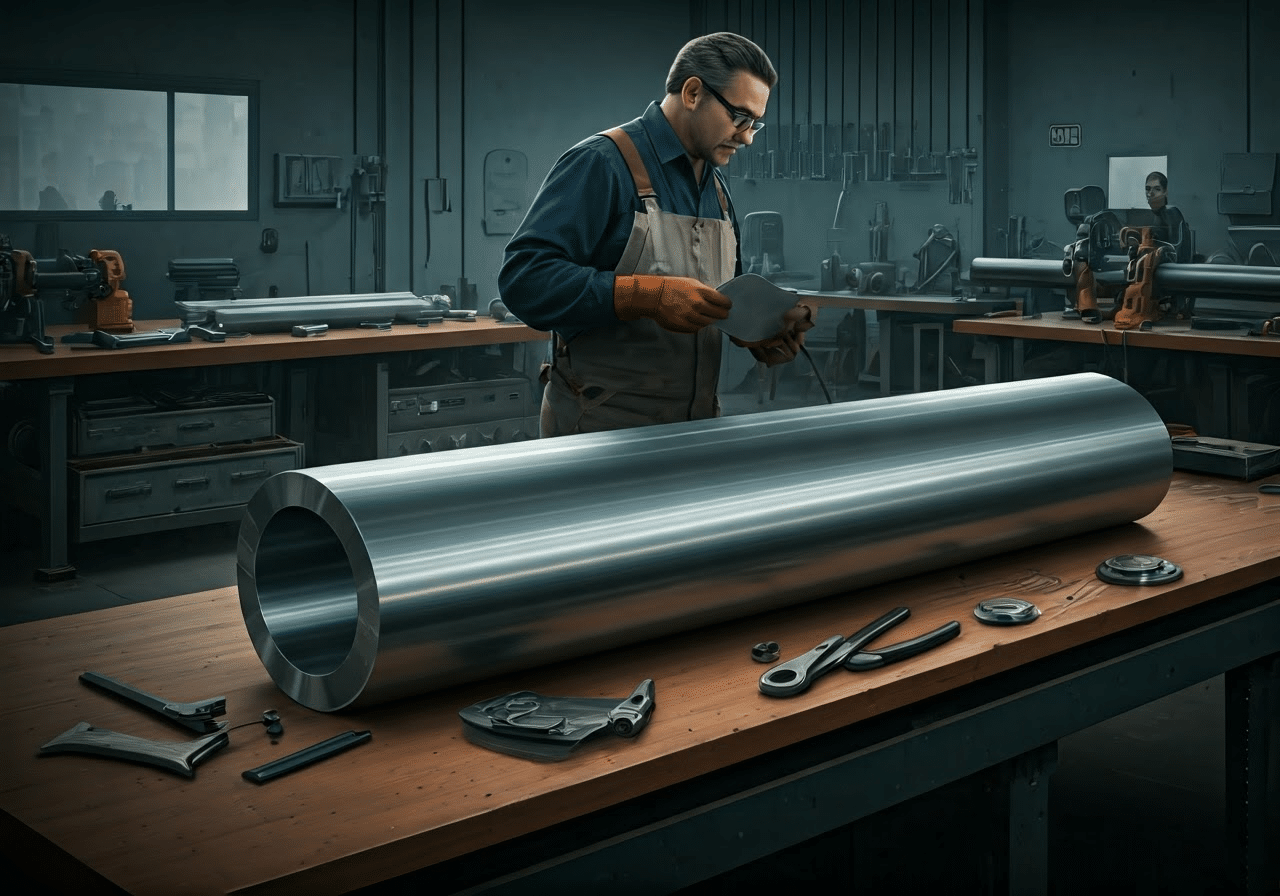
Choosing a 2024 aluminum round bar is easier with a systematic approach. Work through your requirements, specifications, and sizes to align the material with your project goals.
The right material supports the success and service life of your project. Understand the key considerations to choose a 2024 round bar that meets your needs.
Step 1: Determine Your Project Requirements
Assess whether your project needs high strength and fatigue resistance. If the part sees cyclic loading or high stress (e.g., aircraft fittings), 2024 aluminum round bar is an excellent choice.
Step 2: Determine Your Project Machinability Needs
If your project needs precision machining into complex shapes like gears or shafts with a high surface finish, the good machinability of 2024 round bar helps.
Step 3: Consider Corrosion Resistance
2024 aluminum has relatively poor corrosion resistance because of its copper content. If the part will face harsh environments, plan for surface treatments such as anodizing or cladding.
Step 4: Calculate Required Size and Dimension
Make sure the diameter and length of the round bar match your project specifications.
Step 5: Choose the Right Temper for Your Project
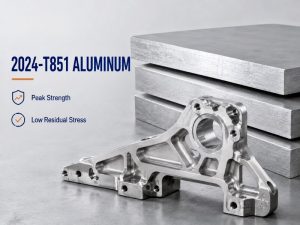
Based on strength and stress-relief needs, choose among tempers like T3, T351, T4, and T6. Each temper changes mechanical properties and performance. For a broader view, see our 2024 vs 7075 comparison guide.
| Temper | 2024-T351 | 2024-T3 | 2024-T6 | 2024-T4 |
| Ultimate Tensile Strength | 470 MPa | 400–430 MPa | 483 MPa | 469 MPa |
| Yield Strength | 280 MPa | 270–280 MPa | ~400 MPa | ~324 MPa |
| Elongation at Break | 13–20% | 10–15% | ~10% | ~20% |
| Fatigue Resistance | Good | Good | Higher than T3 and T4 | Similar to T3 |
| Ductility | Moderate | Moderate | Low | High |
Conclusion
Selecting the right aluminum bar—such as the 2024 aluminum round bar—directly affects your project’s performance and service life. Assess strength, machinability, and corrosion needs, then match the temper and dimensions to the application. A methodical selection process helps you get a material that meets specifications without overspending.
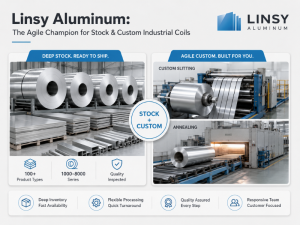
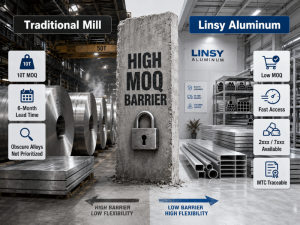
Linsy Aluminum is a Shenzhen-based aluminum factory with over 20 years of experience. We supply 2024 aluminum in multiple forms—including bar, plate, tube, wire, coil, profile, and block—across the 1000–8000 series, with standard in-stock sizes and low-MOQ custom production. In-house CNC machining, welding, laser cutting, and surface finishing support ready-to-use parts, and every order ships with an MTC under our ISO 9001 / 14001 / 45001 system.
Contact Linsy Aluminum to discuss your 2024 aluminum round bar requirements, or request SGS test reports for your order.
Frequently Asked Questions
What are the primary benefits of using 2024 aluminum round bars?
2024 aluminum round bars combine high strength, good machinability, and ready stock availability. Note that 2024 has relatively low corrosion resistance due to its copper content, so surface treatment is often used in harsh environments.
How do I determine the correct size and specification for my project?
Consider your load-bearing and machinability needs, then confirm the diameter, length, and temper against your drawings. Standard sizes are typically available from stock to meet deadlines.
Can 2024 aluminum round bars be customized for specific projects?
Yes. 2024 round bars can be customized in size and specification. Linsy Aluminum supports low-MOQ custom production for non-stock items, with typical lead times of 10–60 days, plus in-house machining and finishing.