Qu'est-ce que l'aluminium 4032 ?
4032 is a wrought aluminum-silicon alloy containing 11.0–13.5% silicon, with copper, magnesium and nickel. Its relatively low thermal expansion and wear characteristics make it useful for parts such as forged pistons. Confirm thermal clearance using the actual geometry, operating temperatures and mating material. The silicon-rich particles can also increase tool wear during machining.
Understanding the T6 and T651 Tempers
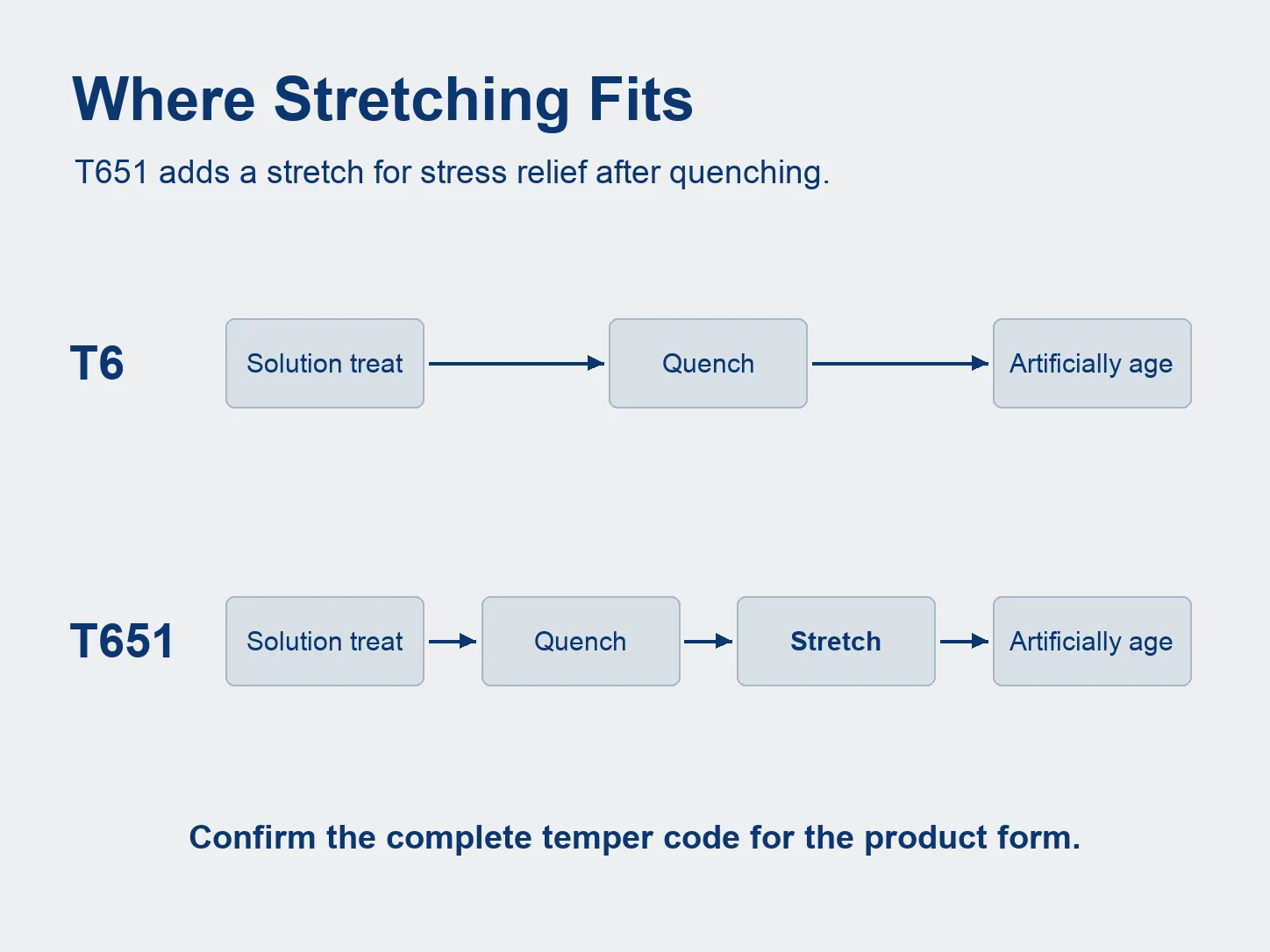
T6 is solution heat treatment followed by quenching and artificial aging. T651 includes controlled stretching after quenching and before aging. Stretching helps relieve built-in stress and can reduce distortion during machining.
How the Stretch Shows Up on a Certificate
Check the complete temper code, product form and governing specification. Extruded products stress-relieved by stretching may use T6510 or T6511 under the applicable designation system. These codes distinguish whether minor straightening is permitted. Some forgings can have separately specified stress relief. Confirm what the mill can certify for the exact 4032 form and dimensions. See the ASM reference on temper designations.
4032-T6 and T651 Mechanical Properties
There is no fixed yield-strength difference between the two temper codes. A typical result for one product is a reference point. To accept a particular order, use the specification limits for the product form, dimensions and temper, then verify the results on the mill test certificate.
| What to verify | Where to check |
|---|---|
| Alloy, full temper, product form and size | Purchase order and mill test certificate |
| Minimum tensile strength, yield strength and elongation | Applicable product specification |
| Measured results for the supplied batch | Mill test certificate |
| Finished flatness or bore tolerance | Trial machining and inspection after unclamping |
Où chaque état de revenu est utilisé
Forged Pistons and Reciprocating Parts
4032-T6 has been used in forged piston applications. Confirm the specification for the blank and the machining allowance for features such as ring grooves and the skirt. A suitable operating temperature depends on loads, cooling, geometry and duty cycle. See this documented 4032-T6 piston application.
Parts That Hold Tolerance After Heavy Cuts
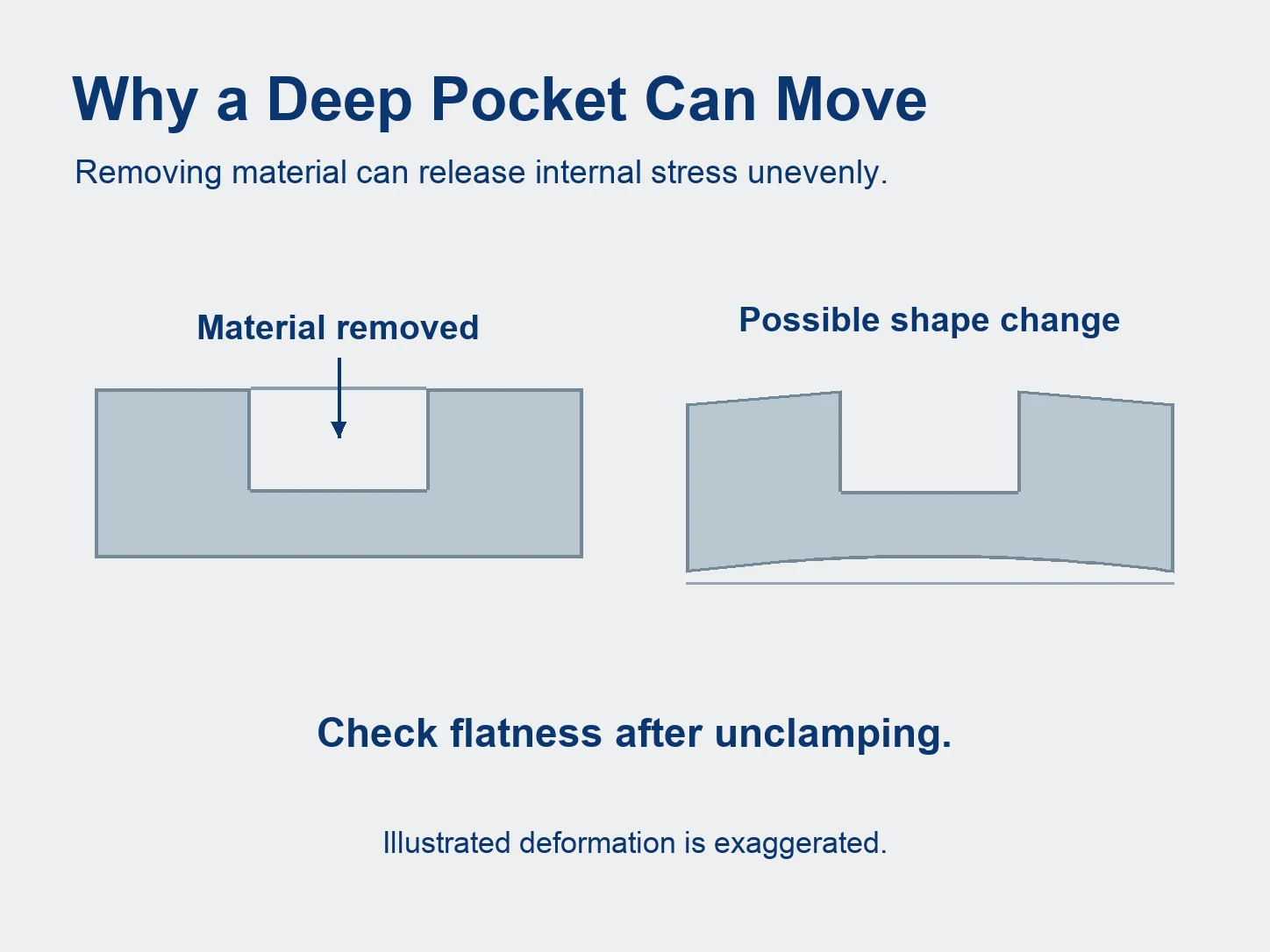
A deep pocket, thin rib or off-center bore can release internal stress unevenly. For those geometries, ask whether certified stress-relieved stock is available for the required form. Trial the cut and measure the part after unclamping.
T6 vs T651 — How to Choose
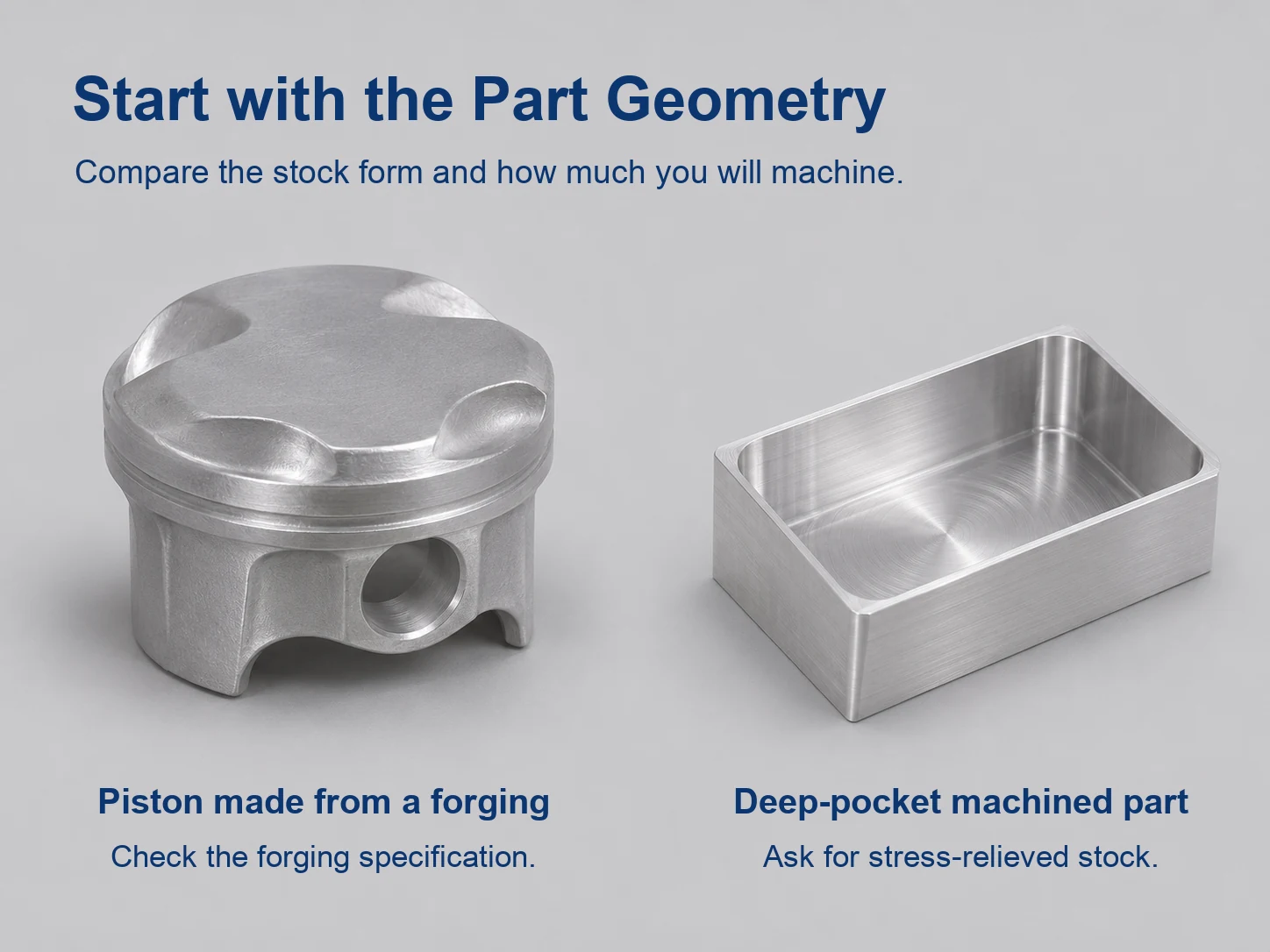
Start with the form on the drawing. A near-net forging that needs only light finishing and a block that will lose much of its stock have different sourcing and machining requirements.
| Question | Vérifier avant de commander |
|---|---|
| Does the drawing require a near-net forging? | The specified forging temper and any separately specified stress relief |
| Will a deep pocket remove stock unevenly? | Availability of stress-relieved stock certified for that form |
| Are thin walls or tight tolerances involved? | Dimensions after unclamping a trial part |
| Does the quote list a stretched bar or tube? | The full temper code and governing product specification |
When T6 Is Enough
Consider the specified T6 condition for a forging that needs light finishing, where the process already holds the dimensions on the drawing.
When to Ask for Stress-Relieved Stock
Evaluate stress-relieved stock for deep or one-sided cuts. The location of the cut and the geometry of the remaining walls matter as well as how much metal is removed.
Working with Both Tempers
Usinage. Choose tooling and cutting conditions for the actual stock and finish requirements. Check critical dimensions after the part is unclamped.
Soudage. The method, joint geometry, welding procedure and service duty determine suitability. Welding heat can alter properties beside the joint. For a piston or another critical part, follow the manufacturer’s approved repair procedure.
Anodizing and coating. Qualify the coating on actual material if the drawing specifies appearance or wear performance.
Forming before heat treatment. Verify the forming and heat-treatment sequence for the stock. Allow for finishing if treatment can move critical surfaces.
Avantages et limites en un coup d'œil
| Exigence | Ce qu'il faut vérifier |
|---|---|
| Thermal clearance | Operating temperatures, mating material and geometry |
| Wear and tool life | Service and machining tests for the duty |
| Flatness after cutting | Stock condition, pocket geometry and dimensions after unclamping |
| Welding or repair | An approved procedure and the properties needed in service |
| Ordering | Form, dimensions, full temper code and certified properties |
Conclusion
Choose the 4032 aluminum product by the form on the drawing and the machining that remains. For a forging, confirm the specified condition. For a deep-pocket or thin-walled part, ask about certified stress-relieved stock and verify the result on a trial part.
Send the form, dimensions, planned machining and governing specification so we can confirm availability and documentation.
Questions fréquemment posées
Is 4032-T651 stronger than 4032-T6?
Compare the specified mechanical properties for the actual product forms and dimensions. The temper codes describe processing and do not establish a universal strength difference.
Can 4032 be supplied in a stretch-relieved temper as bar or plate?
Ask the mill for the full available temper code, specification and certificate for the exact form and dimensions you need.
Can 4032-T6 be welded or repaired?
Assess the joining method and required performance in service. For a critical part, use the component manufacturer’s approved procedure.
Quel est la quantité minimale de commande et le délai de livraison ?
Send the form, dimensions, quantity and certificate requirements for a quote. Availability depends on the combination of form, size and temper.