Introduction
L'acier galvanisé et aluminium l'aluminium sont deux matériaux largement utilisés dans la construction, la fabrication et les applications industrielles. L'acier galvanisé est un acier au carbone recouvert d'une couche de zinc qui assure une protection anticorrosion par sacrifice. L'aluminium est un métal léger doté d'une résistance naturelle à la corrosion sur toute son épaisseur et d'une excellente formabilité.
Qu'est-ce que l'acier galvanisé ?
L'acier galvanisé est un acier au carbone recouvert d'une couche de zinc pour prévenir la corrosion. La couche de zinc agit comme une barrière physique et assure une protection cathodique : si le revêtement est rayé, le zinc se corrode en premier, se sacrifiant pour protéger l'acier sous-jacent. Cela fait de l'acier galvanisé un choix pratique pour les applications structurelles extérieures où la résistance et une résistance modérée à la corrosion sont toutes deux requises.
Le processus de galvanisation
La méthode de galvanisation la plus courante est la galvanisation à chaud. La surface de l'acier est d'abord nettoyée pour éliminer les huiles, graisses et rouilles, ce qui est essentiel pour l'adhérence du revêtement. L'acier nettoyé est ensuite immergé dans du zinc fondu à environ 450 °C (840 °F) jusqu'à ce qu'une liaison métallurgique se forme entre le zinc et l'acier.
Cette liaison crée une couche d'alliage zinc-fer, et à mesure que l'acier refroidit, une couche externe de zinc pur se solidifie au-dessus. Ces couches combinées assurent la protection anticorrosion qui rend l'acier galvanisé durable dans les environnements extérieurs.
Principales propriétés de l'acier galvanisé
L'acier galvanisé offre une résistance à la traction élevée (généralement 400 à 550 MPa) et une excellente capacité de charge structurelle. Le revêtement de zinc résiste efficacement à la rouille dans des conditions atmosphériques normales. Cependant, le revêtement est une couche de surface — il peut être consommé avec le temps, en particulier dans les environnements acides ou à forte salinité. Les bords coupés et les trous de fixation perdent leur protection de zinc, et le soudage de l'acier galvanisé produit des fumées dangereuses d'oxyde de zinc nécessitant une ventilation adéquate.
Qu'est-ce que l'aluminium ?
L'aluminium est un métal léger, blanc argenté, avec une densité d'environ 2,7 g/cm³ — environ un tiers de celle de l'acier. Ses principaux avantages sont une résistance naturelle à la corrosion, une conductivité thermique élevée et une facilité de fabrication. Ces propriétés en font un matériau privilégié dans les industries aérospatiale, automobile, de la construction, de l'électronique et de l'emballage.
Définition et caractéristiques
Contrairement à l'acier galvanisé, la résistance à la corrosion de l'aluminium n'est pas un revêtement de surface — c'est une propriété intrinsèque du matériau. Exposé à l'air, l'aluminium forme une fine couche d'oxyde transparente et auto-réparatrice : si elle est rayée, l'oxyde se reforme presque instantanément. Cette protection sur toute l'épaisseur signifie que l'aluminium ne dépend pas d'une couche de revêtement consommable pour sa résistance à la corrosion.
L'aluminium peut être allié à des éléments tels que le cuivre, le magnésium, le silicium et le zinc pour produire des alliages couvrant les séries 1000 à 8000. Ces alliages offrent une large gamme de résistances à la traction (d'environ 90 MPa à plus de 400 MPa), de niveaux de résistance à la corrosion et de caractéristiques de formabilité, permettant aux ingénieurs de sélectionner l'alliage approprié pour chaque application.
Principales différences entre l'acier galvanisé et l'aluminium
Solidité et durabilité
L'acier galvanisé présente une résistance à la traction et une limite d'élasticité supérieures à celles de la plupart des alliages d'aluminium, ce qui en fait le choix le plus résistant pour les applications structurelles à fortes charges. Les alliages d'aluminium peuvent atteindre des rapports résistance/poids élevés — certains alliages de la série 7000 dépassent 500 MPa — mais l'aluminium pur et les alliages commerciaux courants sont généralement moins résistants que l'acier de construction.
| Propriété | Acier galvanisé | Aluminium |
|---|---|---|
| Résistance à la traction | ~400-550 MPa | ~90-400 MPa |
| Limite d'élasticité | ~250-300 MPa | ~40-275 MPa |
Comparaison des poids
La densité de l'aluminium est environ un tiers de celle de l'acier galvanisé (2,7 contre 7,85 g/cm³), ce qui lui confère un avantage de poids significatif. Cela réduit les coûts de transport, simplifie la manutention et l'installation, et fait de l'aluminium le choix privilégié pour les applications où le poids est un facteur critique, telles que les composants aérospatiaux, les panneaux de carrosserie automobile et les équipements portables.
| Propriété | Acier galvanisé | Aluminium |
|---|---|---|
| Densité | ~7,85 g/cm³ | ~2,7 g/cm³ |
Résistance à la corrosion
Les deux matériaux résistent à la corrosion, mais par des mécanismes différents. L'acier galvanisé repose sur un revêtement de zinc qui assure une protection par sacrifice : le zinc se corrode de préférence à l'acier, prolongeant la durée de vie de l'acier. L'aluminium forme une couche d'oxyde stable et auto-réparatrice qui protège l'ensemble du matériau, et non seulement la surface.
La différence clé réside dans la longévité. Les revêtements de zinc sont consommables — après des années d'exposition, en particulier aux pluies acides, aux polluants industriels ou aux embruns marins salés, la couche de zinc se dégrade et expose finalement l'acier sous-jacent. La résistance à la corrosion sur toute l'épaisseur de l'aluminium offre un avantage dans les applications extérieures ou marines à long terme où la dégradation du revêtement de zinc est une préoccupation. Cela dit, la protection par zinc de l'acier galvanisé fonctionne de manière fiable dans de nombreux environnements extérieurs standard et reste une stratégie de protection anticorrosion rentable.
Conductivité thermique
L'aluminium a une conductivité thermique élevée (environ 205 à 235 W/m·K), ce qui en fait un matériau efficace pour les dissipateurs thermiques et les échangeurs de chaleur. L'acier galvanisé a une conductivité thermique nettement inférieure (environ 50 W/m·K), ce qui peut être avantageux dans les applications où la rétention de chaleur est souhaitée. Pour les applications telles que les dissipateurs thermiques, les radiateurs et les boîtiers électroniques, l'aluminium est le choix évident.
Applications de l'acier galvanisé par rapport à l'aluminium
Le choix entre ces matériaux dépend des exigences spécifiques de votre projet : besoins en résistance, contraintes de poids, exposition environnementale et budget.
Industrie de la construction
L'acier galvanisé est largement utilisé pour les charpentes structurelles, les toitures, les garde-corps, les clôtures et les conduits d'aération où une résistance élevée et une protection anticorrosion sont requises. L'aluminium est utilisé pour les cadres de fenêtres, les murs-rideaux, les panneaux de toiture et les revêtements architecturaux où sa légèreté et sa résistance naturelle à la corrosion réduisent la charge structurelle et les besoins de maintenance.
Industrie automobile
L'industrie automobile utilise les deux matériaux de manière extensive. Les panneaux de carrosserie et les composants structurels en acier galvanisé offrent une protection contre les chocs et une durabilité à un coût matériel inférieur. Les panneaux de carrosserie en aluminium, les blocs moteur, les roues et les composants de châssis réduisent le poids du véhicule, améliorant l'efficacité énergétique et réduisant les émissions.
Applications marines
Les environnements marins présentent des défis uniques. L'eau salée accélère la consommation des revêtements de zinc sur l'acier galvanisé — une fois la couche de zinc épuisée, l'acier sous-jacent se corrode. La couche d'oxyde auto-réparatrice de l'aluminium offre une protection durable dans les conditions d'eau salée, faisant des alliages d'aluminium de qualité marine spécifiques (séries 5000 et 6000) le choix standard pour les coques de bateaux, les quais, les plateformes offshore et les éléments architecturaux côtiers.
Avantages et inconvénients de chaque matériau
Avantages et inconvénients de l'aluminium
- Pour : Léger (un tiers de la densité de l'acier), résistance naturelle à la corrosion sur toute l'épaisseur, couche d'oxyde auto-réparatrice, conductivité thermique élevée, excellente formabilité et usinabilité, recyclable sans perte de propriétés, large gamme d'alliages pour des propriétés adaptées.
- Cons : Résistance inférieure à celle de l'acier pour la plupart des alliages, coût par unité de volume plus élevé sous certaines formes, sensible à la corrosion galvanique en contact avec des métaux dissemblables sans isolation appropriée.
Avantages et inconvénients de l'acier galvanisé
- Pour : Résistance à la traction et capacité de charge élevées, coût matériel initial inférieur, protection par sacrifice du zinc prolongeant la durée de vie, largement disponible, méthodes de fabrication bien établies.
- Cons : Lourd (près de trois fois la densité de l'aluminium), le revêtement de zinc est une couche consommable qui se dégrade avec le temps, les bords coupés et les trous de fixation perdent la protection de zinc, le soudage produit des fumées de zinc dangereuses, formabilité limitée par rapport à l'aluminium.
Conclusion
L'acier galvanisé et l'aluminium jouent chacun des rôles distincts. L'acier galvanisé offre une résistance élevée et une protection par sacrifice du zinc à un coût initial inférieur, ce qui le rend bien adapté aux charpentes structurelles, aux applications à fortes charges et aux environnements où la dégradation du revêtement de zinc est lente. Ses principales limites sont le poids, la consommation éventuelle du revêtement (en particulier dans les environnements marins ou acides) et les sous-produits de soudage dangereux.
L'aluminium offre une proposition de valeur différente : une résistance à la corrosion sur toute l'épaisseur qui ne dépend pas d'une couche de surface consommable, un tiers du poids, et la capacité d'adapter les propriétés sur une large gamme d'alliages. Pour les projets où la réduction de poids, la durabilité extérieure à long terme, la conductivité thermique ou la formabilité sont des priorités, l'aluminium est le candidat le plus fort.
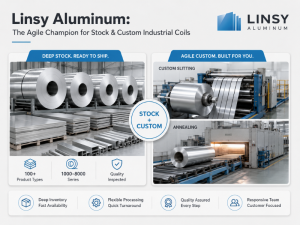
Aluminium Linsy Linsy est une usine d'aluminium basée à Shenzhen avec plus de 20 ans d'expérience dans l'industrie. L'entreprise fournit des plaques, tôles, barres, tubes, fils, bobines, profilés et blocs d'aluminium sur l'ensemble des séries d'alliages 1000 à 8000. Linsy combine une fourniture directe d'usine, un stock disponible et une production personnalisée à faible quantité minimale de commande avec un usinage CNC interne, du soudage TIG et MIG, de la découpe laser et de la finition de surface — y compris l'anodisation, le polissage, la finition brute et le revêtement par poudre. Les commandes personnalisées sont livrées en 10 à 60 jours, et chaque expédition comprend un certificat d'essai des matériaux (MTC). L'installation détient les certifications de systèmes de management ISO 9001, ISO 14001 et ISO 45001, avec des rapports d'essai SGS disponibles sur demande moyennant un coût supplémentaire.
Contactez Linsy Aluminum dès aujourd'hui pour discuter de vos besoins en aluminium et demander un devis.
Questions fréquemment posées
Quel matériau est le plus résistant à la corrosion — l'acier galvanisé ou l'aluminium ?
Les deux matériaux résistent à la corrosion par des mécanismes différents. L'acier galvanisé dépend d'un revêtement de zinc qui se sacrifie pour protéger l'acier en dessous ; ce revêtement est efficace dans des conditions atmosphériques normales mais se consomme avec le temps. L'aluminium forme une couche d'oxyde auto-réparatrice inhérente au matériau lui-même — elle se reforme si elle est rayée et ne s'épuise pas avec le temps. Dans les applications extérieures ou marines à long terme où la dégradation du revêtement est une préoccupation, la résistance à la corrosion sur toute l'épaisseur de l'aluminium offre un avantage mesurable.
Quel est le plus résistant — l'acier galvanisé ou l'aluminium ?
L'acier galvanisé est plus résistant que la plupart des alliages d'aluminium en termes de résistance absolue à la traction et de limite d'élasticité, atteignant généralement 400 à 550 MPa contre 90 à 400 MPa pour les alliages d'aluminium courants. Cependant, la densité nettement inférieure de l'aluminium signifie qu'il atteint souvent un rapport résistance/poids supérieur pour les applications où le poids est contraint.
Comment les coûts se comparent-ils entre l'acier galvanisé et l'aluminium ?
L'acier galvanisé a généralement un coût matériel par livre inférieur à celui de l'aluminium. Cependant, les comparaisons de coûts totaux doivent tenir compte de la fabrication, du transport, de l'installation et de la maintenance à long terme. La légèreté de l'aluminium peut réduire les coûts d'expédition et de manutention, et sa résistance naturelle à la corrosion élimine le besoin de re-revêtement périodique que l'acier galvanisé peut éventuellement nécessiter.
L'acier galvanisé peut-il être peint ?
Oui, l'acier galvanisé peut être peint, mais le processus nécessite une préparation spécifique. La surface de zinc doit être soigneusement nettoyée et apprêtée avec un apprêt compatible avec le zinc avant l'application de la peinture. Sans préparation appropriée, l'adhérence de la peinture sera médiocre et le revêtement se décollera prématurément.
Quand dois-je choisir l'acier galvanisé plutôt que l'aluminium ?
Choisissez l'acier galvanisé lorsque la résistance absolue élevée est la priorité, que l'application implique de lourdes charges structurelles et que l'environnement permet une longévité raisonnable du revêtement de zinc (conditions extérieures standard, non marines). Choisissez l'aluminium lorsque la réduction de poids est critique, que l'application exige une performance anticorrosion à long terme dans des environnements marins ou agressifs, que la conductivité thermique est nécessaire, ou que des opérations complexes de formage et d'usinage sont requises. Pour de nombreux projets, la décision se résume à savoir si l'économie de poids et la longévité anticorrosion importent plus que la résistance brute et le coût matériel initial.