How to Choose 5083 Aluminum Plate: Temper, Thickness, Surface & Application

308751729937665_.pic

무료 샘플

308771729937665_.pic

중국 제조업체

308781729937665_.pic

빠른 응답

308761729937665_.pic

대량 구매 할인

308771729937665_.pic

중국 제조업체

주요 특징

  • 5083 is a non-heat-treatable Al-Mg-Mn plate: strength comes from magnesium plus cold work, not heat treatment.
  • Pick the temper by job: O for forming, H111 or H112 for balance, H116 or H321 for marine and corrosion-critical plate.
  • Match thickness, finish, and weld plan to the service condition; 5083 is not suited to decorative anodizing.
  • Confirm tempers, documentation, and lead time with the supplier before ordering; MTC and SGS reports are standard controls.

소개

5083 알루미늄 플레이트 is the workhorse 5xxx marine and structural grade: high strength for a non-heat-treatable alloy, dependable seawater corrosion resistance, and clean weldability. The selection usually comes down to temper, thickness, surface, and how the plate will be used. This guide covers each of those choices so the plate you order fits the job instead of fighting it.

5083 알루미늄 합금의 이해

5083 알루미늄 합금열처리 불가. Its strength comes from magnesium and manganese held in solid solution, plus any cold work from the temper, not from solution heat treatment. That is why 5083 stays strong as supplied and does not need a heat-treat cycle to reach service properties.

Magnesium is the element that drives both strength and corrosion resistance, especially in chloride environments. That combination is what places 5083 in marine, cryogenic, and pressure-service work rather than in heat-treated structural grades such as 6061.

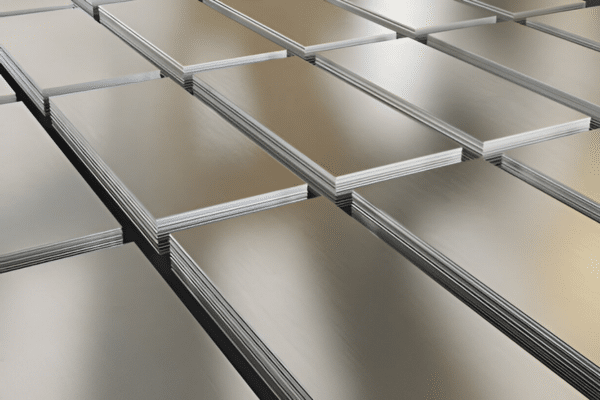
Understanding 5083 aluminum alloy composition and properties

주요 속성 및 이점

The property that matters most for plate is high strength without heat treatment, so it carries load and resists deflection in hulls, tanks, and structural members. It also keeps toughness at cryogenic temperatures, which is why it appears in LNG and low-temperature service.

Corrosion resistance comes from the magnesium content, not from thermal conductivity. 5083 stands up to seawater and many industrial chemicals, so maintenance stays low in harsh service. Welding is straightforward, but the heat-affected zone is annealed and slightly softer than the base plate, so the joint design should allow for that reduction.

다른 알루미늄 합금과의 비교

For forming and corrosion work, 5083 behaves close to 5052 but is stronger, which makes it the better pick when the structure must carry real load. It is not the grade to specify where thermal conductivity drives the design; heat exchangers and electronics that need rapid heat transfer usually call for higher-conductivity grades such as 1050, 1060, or 3003 instead. Machining is only fair because the alloy is gummy and work-hardens, so if precise machining dominates the job, another grade may be easier to process.

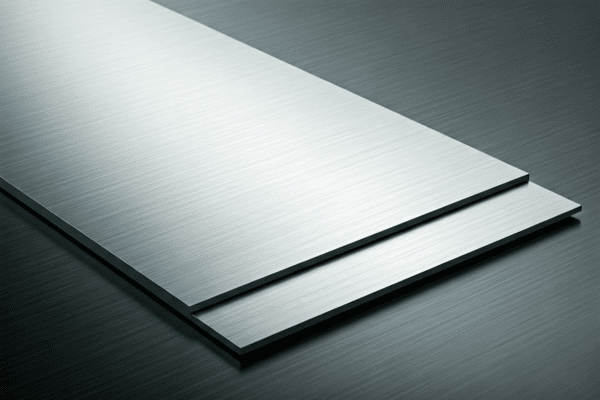
Comparison of 5083 aluminum with other aluminum alloys

How to Choose the Right 5083 Plate

Start from the service condition, not from a single line on a spec sheet. The four choices below cover most orders:

  • 성질 — choose O for maximum formability, H111 or H112 for a balance of strength and workability, and H116 or H321 (see the 5083-H321 guide) for marine or corrosion-critical plate where exfoliation resistance matters.
  • Thickness and form — use plate for structural members and thicker flat sections; use sheet for formed or bent parts. Confirm width, length, and flatness tolerances against the drawing before release.
  • Surface and finish — plan for painting or powder coating, because 5083 is not suited to decorative anodizing; the result is usually uneven and darker than 6xxx grades.
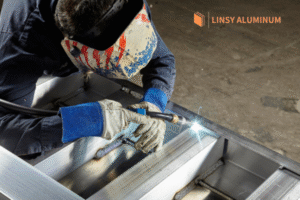
  • Welding plan — pair the plate with a 5xxx filler such as 5356 or 5183, and design the joint for a slightly softer heat-affected zone.
  • Application fit — for marine grade aluminum work, confirm the temper and any society approval the specification calls for; for automotive and cryogenic service, check low-temperature toughness and weight targets.

5083 Plate Applications

5083 plate is specified wherever strength, seawater resistance, and weldability matter more than machinability or anodized appearance. Typical uses include shipbuilding, pressure vessels, rail cars, storage tanks, and armor plate.

자동차 산업

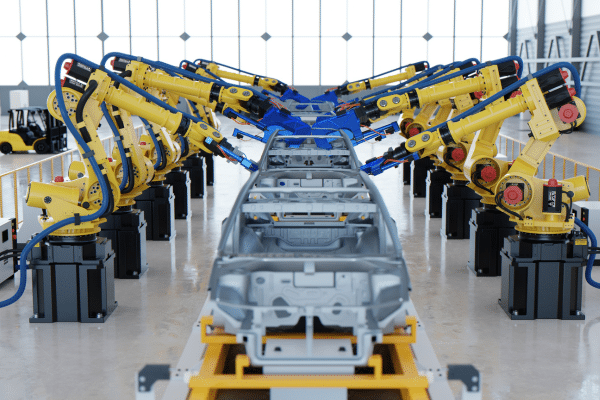
Vehicle programs use 5083 to cut weight without losing strength, which helps fuel economy in combustion cars and driving range in electric vehicles. The same strength-to-weight balance applies to rail cars, storage tanks, and structural enclosures.

5083 aluminum plate used in automotive and transport structures

조선 산업

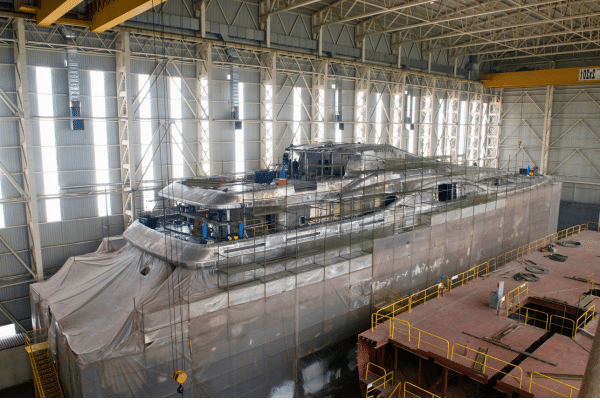
5083 is the standard hull and superstructure plate for a reason: it welds cleanly, resists seawater corrosion, and stays tough at low temperatures. It appears in LNG carriers, decks, and armor plating where long service life in water is required.

5083 aluminum plate in shipbuilding and marine structures

For the full property picture and equivalent grades, see the 5083 aluminum overview.

결론

5083 plate earns its place through strength, seawater corrosion resistance, and clean weldability, which is why it shows up in marine, automotive, and cryogenic work. The trade-off is that it is non-heat-treatable, only fairly machinable, and not suited to decorative anodizing — all manageable with the right temper, filler, and finish choice.

Linsy Aluminum supplies 5083 plate and sheet in O, H111, H112, H116, and H321 tempers, with MTC for every order and SGS test reports available on request at extra cost. Our typical custom lead time is 10-60 days depending on alloy, dimensions, and processing, and we hold ISO 9001, ISO 14001, and ISO 45001. Contact us to confirm thicknesses, tempers, and documentation for your project.

자주 묻는 질문

5083 알루미늄이 해양 애플리케이션에 이상적인 이유는 무엇입니까?

5083 resists seawater corrosion, including the chloride attack that drives marine degradation, and it stays tough at very low temperatures without becoming brittle. That combination is why it is the default plate for hulls, decks, and LNG service.

5083 알루미늄은 용접 프로젝트에서 어떤 성능을 발휘합니까?

5083 welds easily with standard processes and a 5xxx filler such as 5356 or 5183. The joint stays strong, but the heat-affected zone is annealed and slightly softer than the base plate, so design the connection with that reduction in mind.

Which 5083 Temper Should I Choose for Plate?

Pick O when you need maximum formability, H111 or H112 for a general strength-and-workability balance, and H116 or H321 for marine or corrosion-critical service where exfoliation resistance matters most. Match the temper to the forming and corrosion demands of the part.

Can 5083 Aluminum Plate Be Anodized?

5083 can be anodized, but the coating is usually uneven and darker than on 6xxx grades, so it is not chosen for decorative anodizing. Most projects use painting or powder coating for appearance and extra corrosion protection.

데이비드 황

데이비드 황은 중국 알루미늄 합금 업계에서 매우 존경받는 전문가로, 고급 알루미늄 합금의 개발, 제조 및 적용 분야에서 10년 이상의 경력을 쌓았습니다. 그는 항공우주, 자동차, 건설 등 다양한 분야의 선도적인 글로벌 기업에 프로젝트 솔루션과 기술 전문 지식을 성공적으로 제공한 입증된 실적을 보유하고 있습니다. 또한 중국 내 여러 주요 알루미늄 제조업체의 신뢰할 수 있는 자문위원이기도 합니다.

연중무휴 서비스 | 10분 이내 응답!

더 많은 카탈로그, 세부 정보 및 견적을 원하시면 직접 문의해 주세요!

WhatsApp 전화