7075 알루미늄이란 무엇인가?
7075은 아연, 마그네슘, 구리를 기반으로 하는 7xxx계 합금으로, MgZn₂ 석출물이 주요 강화상이며, 석출 경화를 통해 다른 일반적인 전신 알루미늄이 따라올 수 없는 수준의 강도를 얻어 고하중, 중량 critical 구조물에서 독보적인 위치를 차지합니다. 이 최대 강도는 이 합금이 얻고자 하는 트레이드오프의 결과이지만, 강도를 높이는 동일한 아연-rich, 구리 함유 화학 조성이 7075의 내식성을 낮추고 용융 용접을 사실상 불가능하게 만듭니다.
이러한 강도의 대가는 사용 환경에서 나타납니다: 습한 환경, 해양 환경 또는 염화물 환경에서 피크 시효된 7075는 지속적인 인장 하중 하에서 균열이 발생할 수 있으며, 이는 응력 부식 균열(SCC)이라 불리는 파괴 모드로 어떤 코팅으로도 완전히 제거할 수 없습니다. 7075는 의도적으로 과시효된 템퍼인 T73으로 이 위험에 대응하며, 피크 강도의 일부를 포기하여 부식과 긴 사용 수명이 설계를 결정하는 곳에서 합금을 신뢰할 수 있게 만듭니다. T73 또는 응력 제거된 변형인 T7351 중 선택은 다음 섹션에서 설명합니다.
T73 템퍼의 이해
“T73”은 재료가 용체화 열처리, 급랭된 후, 과시효 2단계 인공 시효 공정을 거친 것을 의미합니다. 합금은 Zn/Mg/Cu를 고용체에 용해시키기 위해 가열되고, 과포화 상태로 포집하기 위해 급랭된 후, 2단계로 시효됩니다 — 석출물을 조대화하는 고온 단계와 그 뒤를 잇는 저온 안정화 단계입니다. 과시효는 의도적으로 재료를 피크 강도 너머로 끌어가 결정립계 석출물이 조대하고 전기화학적으로 비활성하게 만들어 입계 SCC의 구동력을 감소시킵니다. T73을 정의하는 단계는 바로 이 두 번째 과시효 단계이며, 이것이 T73을 피크 시효된 T6와 구분합니다.
사용자가 포기하는 것은 T6 강도의 약 12–15% (UTS 505 vs 572 MPa; 항복 435 vs 503 MPa)이지만, 얻는 것은 결정적입니다: SCC 저항성이 보통(T6)에서 우수로 도약하고, 염수 분무 수명이 T6의 500–1000시간 대비 약 1500–2000시간에 달하며, 파괴 인성이 T6의 약 20–24 대비 약 28–33 MPa·√m로 상승하고, 연신율이 향상되어 재료가 덜 취성이고 더 손상 허용적이 됩니다. 부식 환경에 노출되거나 반복 하중을 받는 모든 부품에 대해 이 트레이드오프는 거의 항상 가치가 있습니다.
T73 자체는 리튬계 응력 제거되어 있으므로, 과도하게 가공된 T73 플레이트는 재료가 제거됨에 따라 여전히 변형될 수 있습니다. 이 격차가 “51” 변형이 존재하는 이유입니다: T7351은 급랭 후 1.5–3% 스트레치를 추가하여 T73의 과시효 내식성과 T651의 가공 안정성을 결합합니다. T7351은 두꺼운 가공 플레이트의 항공우주 표준이며, 내식성과 CNC 가공 후 치수 안정성이 모두 필요할 때 선택됩니다.
| 요소 | 일반적인 범위 (7075) |
|---|---|
| 아연(Zn) | 5.1–6.1% |
| 마그네슘(Mg) | 2.1–2.9% |
| 구리(Cu) | 1.2–2.0% |
| 크롬(Cr) | 0.18–0.28% |
| 실리콘(Si) | 최대 0.40% |
| 철(Fe) | 최대 0.50% |
| 망간(Mn) | 최대 0.30% |
| 티타늄(Ti) | 최대 0.20% |
| 알루미늄(Al) | 잔액 |
화학 조성은 다른 모든 7075 템퍼와 동일하며, 차이는 전적으로 열처리에 있고 배합에 있지 않습니다. 아연은 주요 강화를 제공하고, 구리는 경도를 추가하며, 크롬은 SCC 저항성을 향상시킵니다. T73은 단순히 석출물 구조를 조작하여 구리로 인한 부식 취약성이 더 이상 부품의 수명을 좌우하지 않도록 합니다.
T73이 T6와 다른 점
T6는 단일 인공 시효 단계(~120 °C)에서 피크 시효되어 최대 강도에 도달하며, SCC 저항성은 보통 수준입니다. T73은 추가 과시효 단계를 거쳐 약 12–15% 낮은 UTS와 항복을 감수하고 합금을 SCC 저항성 및 인성 있게 만듭니다. 조성은 동일하며 열처리만 다릅니다. 부식이 문제이고 부품이 긴 사용 수명을 견뎌야 할 때 T73이 승리하고, 강도가 전부이고 환경이 건조하고 통제된 경우 T6가 우위를 점합니다. 피크 강도, 응력 제거 측면의 제품군은 저희를 참조하세요 7075-T651 완전 가이드.
7075-T73 기계적 물성
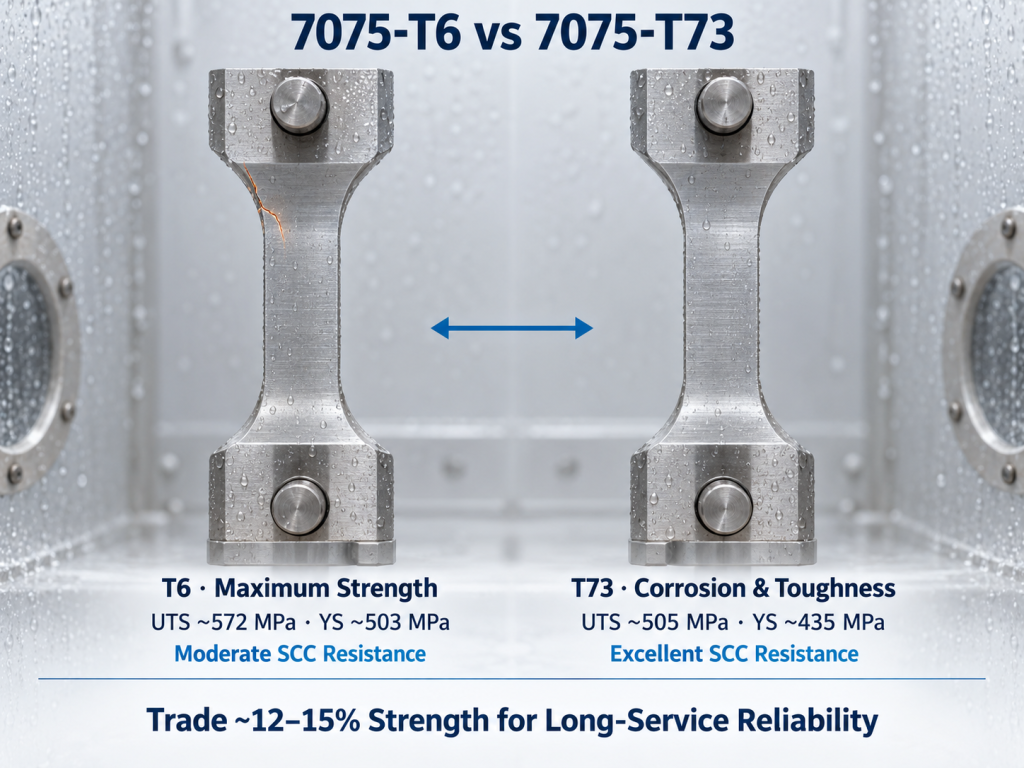
7075-T73은 피크 강도의 일부를 내식성과 인성과 교환합니다 — 아래 수치는 플레이트, 시트, 바에 대한 일반적인 값입니다.
| 속성 | 7075-T73 | 7075-T6 (참조) |
|---|---|---|
| 밀도 | 2.81g/cm³ | 2.81g/cm³ |
| 최대 인장 강도 | ~505 MPa (73 ksi) | ~572 MPa (83 ksi) |
| 항복 강도 (0.2% 오프셋) | ~435 MPa (63 ksi) | ~503 MPa (73 ksi) |
| 파단 신율 | 13% | 11% |
| 피로 강도 | ~130–150 MPa | ~160 MPa |
| 브리넬 경도 | ~135 HB | 약 150 HB |
| 탄성(영) 계수 | ~71.7 GPa | ~71.7 GPa |
| 전단 강도 | ~290 MPa | ~331 MPa |
| 파괴 인성 (KIC) | ~28–33 MPa·√m | ~20–24 MPa·√m |
| 열 전도성 | ~130W/m-K | ~130W/m-K |
| 전기 전도성 | ~33–40% IACS | ~33% IACS |
| 열팽창 계수 | 23 µm/m·K | 23 µm/m·K |
~435 MPa 항복 강도가 가장 중요한 수치입니다: T6의 503보다 약 15% 낮지만, 여전히 6061-T6 항복의 약 2.4배이며 모든 6xxx 등급보다 훨씬 높습니다. 이 감소로 얻는 것은 파괴 인성(~28–33 vs ~20–24 MPa·√m)과 보통이 아닌 우수한 SCC 저항성이므로, T73 부품은 T6보다 균열과 부식을 훨씬 잘 견딥니다. 밀도, 탄성 계수, 열팽창은 합금 수준의 물성으로 모든 7075 템퍼에서 동일하며, 강도와 부식 거동만 열처리에 따라 변합니다. 합금 간 비교는 저희를 참조하세요 6061 vs 7075 비교 가이드.
7075-T73의 사용처
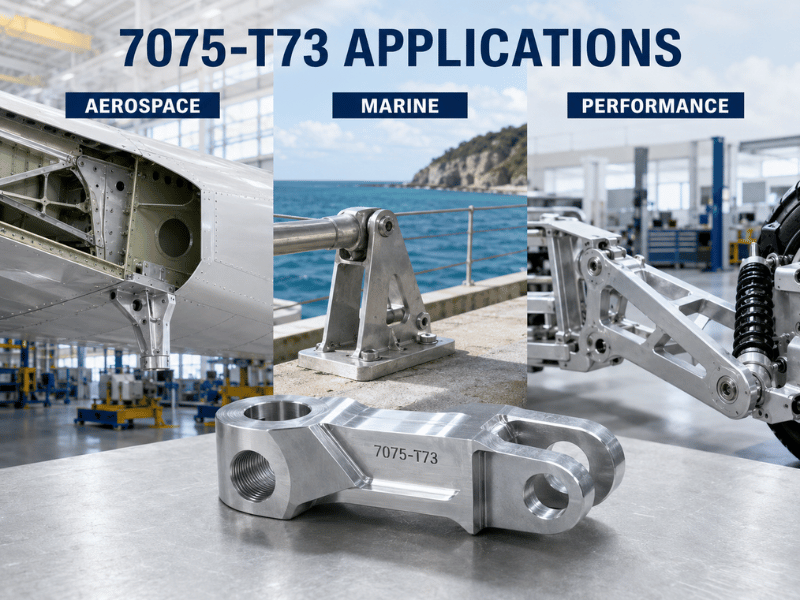
7075-T73은 SCC, 파괴 인성 또는 긴 사용 수명이 설계를 결정하는 곳, 그리고 사용자가 T6보다 약 15% 낮은 강도를 감수할 수 있는 곳에서 그 자리를 얻습니다. T6와 T651이 건조하고 보호되며 강도가 중요한 역할에 남겨둔 7075 범위의 부식 노출, 손상 허용 측면을 담당합니다.
부식성 또는 반복 하중 환경의 항공우주 구조물
윙 스킨과 플랭크, 동체 프레임, 격벽, 착륙 장치 부품, 헬리콥터 로터 부품은 T73을 사용하는데, 과시효 구조가 수십 년의 비행 동안 SCC와 균열 성장에 저항하기 때문입니다. 이들은 고가치이고 검사가 어려운 구조물로 단 하나의 부식 유발 균열도 허용되지 않으므로, T73의 인성과 SCC 여유는 잃은 피크 강도보다 더 가치가 있습니다. 이러한 역할의 가공 두꺼운 플레이트에는 T7351이 일반적인 사양입니다.
해양, 해상 및 습한 환경 하드웨어
선박 및 보트 구조물, 해상 플랫폼 브래킷, 해양 항공기 부품, 해안 인프라는 T73을 사용하는데, 우수한 SCC 및 박리 저항성이 T6를 균열시킬 염화물 노출을 견디기 때문입니다. T73(또는 가공 부품의 경우 T7351)이 T6 대신 선택되는 것은 바로 환경이 습하기 때문이며, T6가 포기하는 강도는 온전하게 유지되는 대가입니다. 항공우주와 해양을 넘어, T73은 강도와 내식성이 모두 요구되는 고성능 스포츠 용품 및 자동차 부품에도 나타납니다.
T73 vs 다른 7075 템퍼 — 선택 방법
7075-T73은 과시효, 부식 우선 옵션이며, 다른 템퍼는 강도를 다른 우선순위(가공 안정성, 피크 강도 또는 성형성)와 교환합니다.
| 성질 | 처리 방법 | UTS (MPa) | 항복 강도 (MPa) | SCC 저항성 | 최상의 대상 | 피해야 할 경우 |
|---|---|---|---|---|---|---|
| T73 | 용체화 + 과시효 (스트레치 없음) | ~505 | ~435 | 우수 | 부식성, 해양, 장수명 구조물 | Tight-tolerance 가공 두꺼운 플레이트 (응력 제거 없음) |
| T7351 | 용체화 + 스트레치 + 과시효 | ~505 | ~435 | 우수 | 부식성 + 정밀 가공 플레이트 | 최고 강도가 요구됨 |
| T651 | 용체화 처리 + 스트레치 + 피크 시효 | ~572 | ~503 | 보통 | 건조하고 보호된 정밀 가공 플레이트 | 습기, 해양 또는 염화물 노출 |
| T6 | 용체화 처리 + 피크 시효 | ~572 | ~503 | 보통 | 최대 강도, 건조/제어 환경 | 부식 또는 반복 하중 사용 환경 |
| O | Annealed | ~250 | ~110 | Good | 성형, 블랭킹, 심한 굽힘 | 모든 하중 지지 용도 |
T73이 적합한 경우
부품이 지속적인 습도, 염수 분무 또는 염화물에 노출되어 코팅으로 완전히 보호할 수 없을 때 T73을 선택하십시오 — 약 12–15%의 항복강도를 포기하는 대신 수 배 더 우수한 SCC 저항성과 T6 대비 약 2–3배의 염수 분무 수명을 얻습니다. 부품이 반복 하중을 받거나 장기 사용 수명(항공기 기체, 착륙 장치)에 걸쳐 균열 성장을 견뎌야 할 때 T73을 선택하십시오 — 높은 파괴 인성과 손상 허용치가 최대 강도보다 중요합니다.
다른 템퍼가 더 적합한 경우
부품이 두꺼운 플레이트에서 가공될 때 T7351로 업그레이드하십시오 그리고 부식이 발생하는 경우 — T73의 SCC 저항성에 더해 CNC 가공 중 뒤틀림을 방지하는 스트레치 단계를 유지합니다. 환경이 건조하고 보호되며 강도 또는 가공 안정성이 결정을 주도할 때는 T6 또는 T651을 유지하십시오 — T73은 포기할 필요 없는 강도를 손실시킬 뿐입니다. 융합 용접 또는 tight radius 성형이 필요한 부품에는 7075를 전혀 사용하지 마십시오: 6061-T6가 용접과 성형이 훨씬 우수합니다 (참조: 6061-T6 완전 가이드), 그리고 O 열처리 상태만이 심한 성형에 적합한 7075 상태입니다.
7075-T73 작업 — 알아야 할 사항
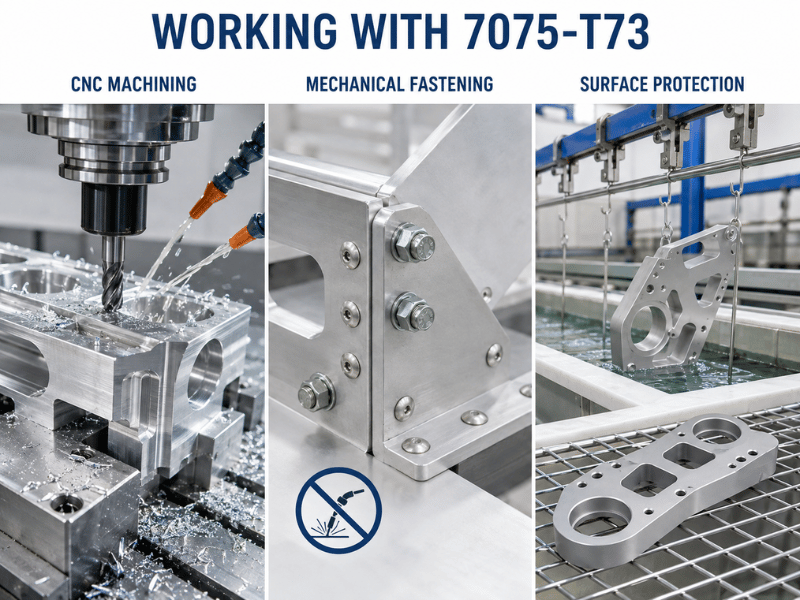
- 절삭 가공. T73은 가공성이 우수합니다 — 표면이 약간 더 부드러워 T6보다 공구 마모가 약간 적고, 과시효 처리로 잔류 응력이 낮아져 절삭 중에도 공차를 유지합니다. 날카로운 초경 공구와 충분한 냉각수 흐름을 사용하십시오; 금형, 치공구, 항공기 기체 작업에 깨끗한 표면을 기대할 수 있으며, 응력 제거되지 않은 T6보다 치수 안정성이 우수합니다.
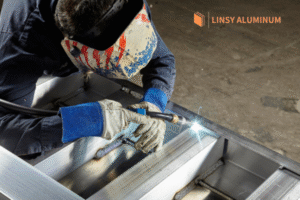
- 용접. 7075는 융합 용접에 권장되지 않습니다 — 아크 공정은 고온 균열을 일으키고, 용접부를 40–50% 연화시키며, 사용 중 SCC를 유발하는 잔류 응력을 남깁니다. 구조적 접합에는 리벳팅, 볼팅 또는 접착 본딩을 설계하십시오; 마찰 교반 용접(FSW)은 비핵심 심에서 대부분의 모재 강도를 유지할 수 있지만, 융합 용접된 7075 하중 경로는 재사용해서는 안 됩니다.
- 내식성. T73은 이미 우수한 SCC 및 박리 저항성을 가지고 있어 T6보다 보조 보호가 덜 필요합니다 — 그러나 극한 해양 환경에서는 여전히 아노다이징(Type II 또는 III), 크로메이트 변환 코팅(Alodine), 클래딩 또는 도장을 지정하십시오. T73은 코팅만으로 부식 위험을 감당할 수 없을 때 선택해야 하는 temper입니다.
- 성형성. T73은 성형성이 낮고 tight radius 굽힘에서 균열이 발생합니다; O temper에서 성형한 후 성형 완료 후 완성된 형상을 T73으로 열처리하십시오 — T73을 직접 성형할 수 있다고 기대하지 마십시오. 과시효 상태는 냉간 가공이 아닌 열처리에 의해 고정됩니다.
장점 및 한계 요약
| 치수 | 이점 | 제한 사항 |
|---|---|---|
| 강도 대 중량비 | 높음 (~435 MPa 항복강도, ~6061-T6의 2.4배) | T6/T651 피크 대비 ~15% 낮음 |
| SCC 저항성 | 우수함 (염수 분무 1500–2000시간) | 극한 해양 환경에서는 여전히 코팅 필요 |
| 파괴 인성 | ~28–33 MPa·√m, 균열에 대한 허용치 양호 | — |
| 가공 | 양호; T6보다 낮은 잔류 응력 | T7351로 지정되지 않는 한 응력 제거되지 않음 |
| 내식성 | 우수한 박리 + SCC 저항성 | 이를 얻기 위해 최대 강도를 포기 |
| 용접성 | 비핵심 접합부에 FSW 적용 가능 | 융접 권장되지 않음 |
| 가용성 | 플레이트, 시트, 바, 튜브로 재고 보유 | 박벽 및 특수 압출재는 덜 일반적 |
결론
트레이드오프는 명확합니다: 7075-T73은 T6 최대 강도의 약 12–15%를 포기하는 대신 우수한 응력 부식 균열 저항성, 높은 파괴 인성, 더 나은 손상 허용치를 제공합니다 — 부식, 반복 하중 또는 긴 사용 수명이 제작을 결정할 때는 올바른 선택이며, T6 또는 T651이 우세한 건조하고 강도가 중요한 역할에서는 잘못된 선택입니다. 염화물이나 습도가 관련된 경우 T73 또는 T7351을 선택하십시오; 환경이 제어되고 최대 강도 또는 가공 안정성이 결정을 주도할 때 T6 또는 T651을 선택하십시오.
에서 린시 알루미늄, 당사는 7075-T73을 플레이트, 시트, 바, 튜브로 재고 보유하고 있으며, T7351 및 기타 7075 temper(T6, T651)를 다양한 형태로 공급 가능합니다. 모든 주문에는 Mill Test Certificate가 동봉되며, SGS 성분, 기계적 물성 및 초음파(후판) 보고서를 요청 시 제공합니다. 당사 팀은 도면을 검토하고, 과잉 사양 지정 전에 SCC 위험을 표시하며, 부품 가공 여부에 따라 T73 대 T7351을 추천합니다. 도면과 요구사항을 보내주시면 등급 적합성 검토와 견적을 회신해 드립니다.
자주 묻는 질문
7075-T73은 T6보다 약합니까?
예, 약 12–15% 정도입니다 — UTS는 ~572에서 ~505 MPa로, 항복강도는 ~503에서 ~435 MPa로 떨어집니다. 얻는 것은 SCC 저항성(우수 대 보통), 파괴 인성(~28–33 대 ~20–24 MPa·√m), 더 나은 손상 허용치이므로, 부식성 또는 장수명 부품에는 낮은 강도가 올바른 트레이드오프입니다.
7075-T73 vs T7351: 어느 것을 선택해야 합니까?
둘 다 동일한 과시효 내부식성을 가지고 있습니다; T7351은 1.5–3% 응력 제거 스트레치를 추가합니다. 부품이 두꺼운 플레이트에서 CNC 가공될 때 T7351을 선택하십시오, 스트레치가 재료 제거 시 뒤틀림을 방지하기 때문입니다. 성형 또는 마감이 가볍고 가공 안정성이 결정 요인이 아닐 때 일반 T73을 선택하십시오.
7075-T73은 용접할 수 있습니까?
융합 용접으로는 불가합니다. 아크 공정은 열간 균열을 일으키고 용접부를 40–50% 연화시키며 사용 중 SCC 위험을 남기므로, 구조용 7075 접합부는 리벳, 볼트, 또는 접착으로 체결합니다. 마찰 교반 용접은 비핵심 심에 적용 가능하며 대부분의 모재 강도를 유지하지만, 융합 용접된 7075 하중 경로는 재사용해서는 안 됩니다.
7075-T73은 해양 또는 야외 사용에 적합합니까?
예 — 염화물 환경에서 우수한 SCC 및 박리 저항성으로 인해 해양, 해상 및 해안 사용에 선호되는 7075 temper입니다. 극한 노출에서는 여전히 아노다이징, Alodine 또는 도장이 도움이 되지만, T6와 달리 코팅만으로 위험을 감당할 수 없기 때문에 특별히 지정됩니다.
Linsy는 7075-T73을 재고 보유하고 있으며, 리드 타임은 어떻게 됩니까?
예. 재고 플레이트, 시트, 바, 튜브는 재고에서 출하됩니다; 비재고 사이즈 및 temper(T7351 포함)는 합금, 치수 및 가공에 따라 일반적으로 10–60일의 리드 타임으로 맞춤 생산됩니다. Linsy는 낮은 MOQ 맞춤 생산을 지원하므로, 혼합 사양 또는 구하기 어려운 7075 주문이 프로젝트를 지연시키는 경우는 거의 없습니다.