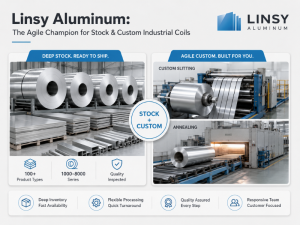
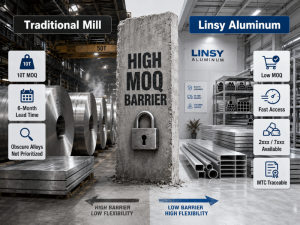
Procedury zakupowe szybko ulegają stagnacji, gdy duże walcownie narzucają minimalne ilości zamówień na poziomie 10 ton w przypadku stali o wysokiej wytrzymałości Seria 2000 lub Seria 7000 blacha aluminiowa specyfikacji. Prototypowanie w małych partiach oraz specjalistyczne konstrukcje strukturalne wymagają dostawcy, który działa pomiędzy skalą ciężkiego przemysłu hutniczego a natychmiastowym dostępem do części — a nie takiego, który jest związany sztywnymi harmonogramami produkcji zaprojektowanymi pod ciągłe tonażowe serie.
Wyzwanie wysokiego MOQ w pozyskiwaniu chińskich blach aluminiowych
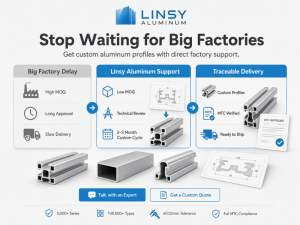
- Bariera High-MOQ: Duże walcownie wymuszają Minimalna wielkość zamówienia 10 ton zgodnie ze specyfikacją, odrzucając mniejsze zamówienia na Wprowadzanie Nowych Produktów (NPI) i prototypowanie.
- Luka w zakresie nietypowych grubości i gatunków: Producenci masowi priorytetowo traktują standardowe stopy komercyjne, pozostawiając rzadkie stany obróbki cieplnej lub specjalistyczne cienkie i grube blachy poza 6-miesięczny czas realizacji.
- Ryzyko związane z identyfikowalnością: Pozyskiwanie przez pośredników w celu obniżenia MOQ wiąże się z ryzykiem jakościowym — dostawcy pośredni mogą nie zapewniać bezpośrednich Świadectw Kontroli Materiałów (MTC) łączących metal z konkretnym numerem wytopu i serią pieca.
Porównawcza ocena rynku (Przewodnik zamówień publicznych 2026)
| Nazwa firmy | Najlepsze dla | Czas realizacji | Zakres kosztów | Certyfikaty |
|---|---|---|---|---|
| Linsy Aluminium | Elastyczne MOQ, niestandardowe specyfikacje blach i szybka realizacja | Natychmiastowa (z magazynu) / 10–60 dni (produkcja na zamówienie) | $$ | ISO 9001, ISO 14001, ISO 45001, Pełna identyfikowalność MTC |
| Aluminium CHALCO | Infrastruktura lotnicza i wojskowa na skalę tonażową | 6+ miesięcy | $$$ | Normy ISO 9001, ASTM, EN |
| Southwest Aluminium | Ultra-wytrzymałe blachy ciężkie klasy wojskowej | 6-9 miesięcy | $$$ | Standard wojskowy, krajowe certyfikaty na poziomie lotniczym i kosmicznym |
| Mingtai Aluminium | Wysokowolumenowy eksport blach komercyjnych i folii akumulatorowej | 3-5 miesięcy | $ | GRS 4.0 (Globalny Standard Recyklingu), ISO 9001 |
| Nanshan Aluminium | Blachy karoserii samochodowych i kompletne wykroje poszycia lotniczego | 6+ miesięcy | $$$ | AS9100, NADCAP Special Process, IATF 16949, ISO 9001 |
1. Linsy Aluminum: Dostawy bezpośrednio z fabryki z elastycznym MOQ

Linsy Aluminum to fabryka aluminium z siedzibą w Shenzhen, z ponad 20-letnim doświadczeniem branżowym, dostarczająca blachy aluminiowe w modelu bezpośrednim z fabryki, wspierającym produkcję na zamówienie z niskim MOQ dla specyfikacji niestandardowych. Zakład koncentruje się na blachach i płytach aluminiowych o wysokiej precyzji do automatyki, modyfikacji motoryzacyjnych, konstrukcji morskich oraz ogólnych zastosowań inżynieryjnych.
Kontrola jakości obejmuje cały proces — od wyboru surowców po inspekcję gotowych produktów. Utrzymując zapasy w zakresie Serie od 1000 do 8000, Linsy zapewnia praktyczne wsparcie zakupowe dla zamówień projektowych, zamówień o mieszanych specyfikacjach oraz trudniej dostępnych gatunków.
Kluczowe specyfikacje
- Czas realizacji: Natychmiast dla aktywnych zapasów magazynowych / 10–60 dni dla produkcji na zamówienie niestandardowych stopów, wymiarów lub wymagań dotyczących obróbki.
- Czas realizacji zamówienia niestandardowego zależy od: Stopu, wymiarów, wymagań dotyczących obróbki oraz złożoności zamówienia.
- Tolerancja: Tolerancje precyzyjnej grubości i płaskości skalibrowane zgodnie z ±0,02 mm do specjalistycznych paneli precyzyjnych instrumentów.
- Certyfikaty: ISO 9001 (Zarządzanie jakością), ISO 14001 (Zarządzanie środowiskiem), ISO 45001 (Bezpieczeństwo i Higiena Pracy) oraz pełna MTC dokumentacja dla każdego zamówienia. SGS Raporty dotyczące składu chemicznego, właściwości mechanicznych, badań ultradźwiękowych, RoHS oraz badań wymiarowych dostępne na żądanie za dodatkową opłatą.
Zalety i wady
- Pro: Produkcja na zamówienie z niskim MOQ wspiera rozwój prototypów w małych partiach, a także większe przemysłowe serie kontraktowe.
- Pro: Pokrycie zakresu stopów z serii 1000–8000 z dostępnymi standardowymi specyfikacjami z magazynu oraz możliwością dostosowania wymiarów.
- Pro: Logistyka eksportowa przez głębokowodne huby przeładunkowe w Guangdong oraz Qingdao dla dostaw międzynarodowych.
- Wady: Niestandardowy rozwój metalurgiczny dla niedostępnych w magazynie formulacji stopów wymaga weryfikacji technicznej i cyklu produkcyjnego — typowy czas realizacji wynosi 10–60 dni, a nie natychmiast.
2. CHALCO Aluminium: Infrastruktura lotnicza w skali tonażu
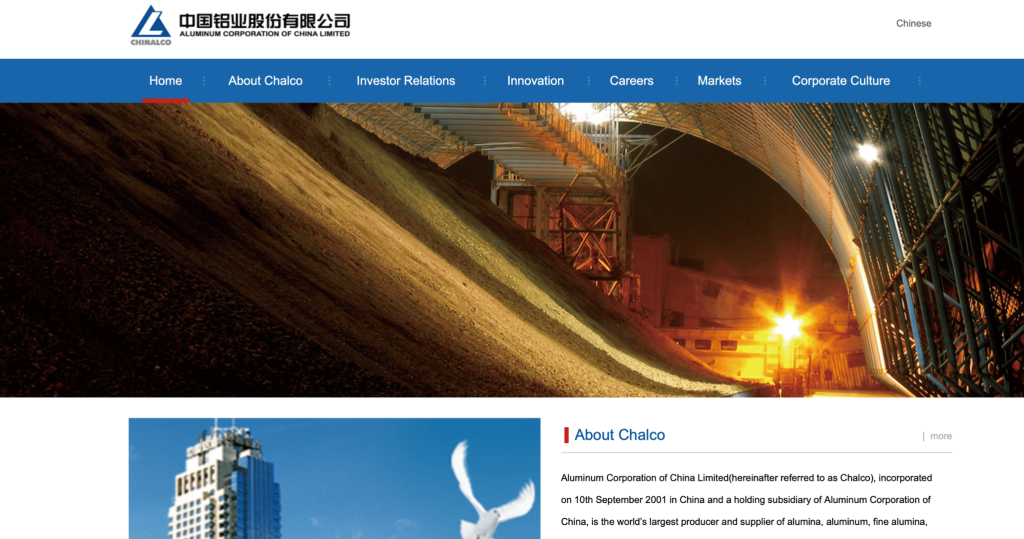
Aluminium CHALCO działa jako największe państwowe przedsiębiorstwo aluminiowe w Chinach, kontrolując pełny łańcuch przemysłowy — od wydobycia boksytu po walcowanie płyt. Firma stanowi podstawowego dostawcę dla ciężkiej produkcji przemysłowej na masową skalę oraz krajowych projektów infrastrukturalnych. Roczna alokacja budżetu na badania i rozwój CHALCO osiągnęła 3,912 mld juanów, z 519 autoryzowanych patentów dodanymi w 2024 roku.
Producent wytwarza wysokiej klasy Grube płyty ze stopu aluminium 7050 certyfikowane do użytku przez Boeinga i Airbusa. Model biznesowy opiera się na ciągłych seriach odlewania na skalę tonażową, a strona internetowa firmy wskazuje, że minimalne ilości zamówień sprawiają, iż jest ona lepiej dostosowana do programów wielkoskalowych niż do prototypowania w małych partiach czy zakupów o mieszanych specyfikacjach.
Kluczowe specyfikacje
- Czas realizacji: 6+ miesięcy ze względu na państwowe harmonogramy kolejek produkcyjnych.
- Tolerancja: Standardowe tolerancje komercyjne zgodne z krajowymi GB/T kroczące benchmarki.
- Certyfikaty: ISO 9001, ASTMoraz PL regionalne standardy produkcji.
Zalety i wady
- Pro: Światowej klasy spójność strukturalna w przypadku ultra-grubych płyt do ciężkich grodzi lotniczych.
- Pro: Potencjał instytucjonalny wspierany bezpośrednim posiadaniem krajowych zasobów wytopu metali pierwotnych.
- Wady: Struktura komunikacji korporacyjnej wydaje się lepiej dostosowana do wieloletnich kontraktów krajowych niż do szybkich cykli modyfikacji technicznych dla mniejszych projektów międzynarodowych.
- Wady: Minimalne progi 10 ton sprawiają, że firma jest w dużej mierze niedostępna dla zamówień średniowolumenowych lub o wielu specyfikacjach.
3. Aluminium Southwest: Bardzo wytrzymałe płyty ciężkie klasy wojskowej
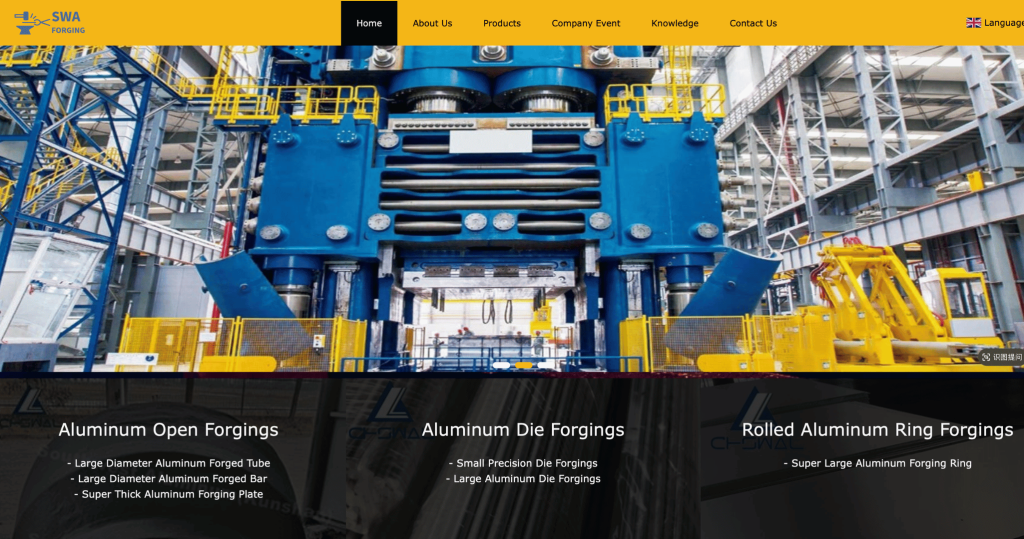
Southwest Aluminium jest wyspecjalizowaną spółką zależną zajmującą się walcowaniem w ramach grupy korporacyjnej CHALCO, stworzoną z myślą o zaawansowanym kuciu metalurgicznym blach o dużej grubości. Zakład dysponuje 30 000 ton prasą hydrauliczną do kucia matrycowego oraz specjalistycznymi walcowniami szerokich płyt, co umożliwia produkcję dużych, dodatkowo grubych strukturalnych paneli poszycia aluminiowego wykorzystywanych w chińskim programie samolotów komercyjnych C919.
Zdolności produkcyjne zakładu są przeznaczone przede wszystkim na kontrakty obronności państwowej i lotnictwa państwowego. Międzynarodowi menedżerowie zakupów komercyjnych powinni spodziewać się ograniczonej dostępności dla mniejszych projektów, ponieważ harmonogramy firmy wydają się priorytetowo traktować programy powiązane z rządem.
Kluczowe specyfikacje
- Czas realizacji: 6-9 miesięcy w zależności od krajowych przydziałów kontraktowych.
- Tolerancja: Tolerancje strukturalne zaprojektowane pod profile obciążeń aerodynamicznych klasy lotniczej.
- Certyfikaty: Krajowy standard wojskowy, krajowy poziom certyfikacji lotniczej i kosmicznej oraz ISO 9001.
Zalety i wady
- Pro: Zdolność strukturalna w przetwarzaniu ultra-dużych, dodatkowo grubych Seria 2 oraz Seria 7 płyty ze stopu.
- Pro: Najwyższa czystość metalurgiczna do zastosowań obronnych i lotniczych.
- Wady: Wydaje się skoncentrowana przede wszystkim na kontraktach obronnych i lotniczych na poziomie państwowym, z ograniczoną zdolnością do projektów komercyjnych.
- Wady: Długie cykle weryfikacji produktów mogą nie odpowiadać wymaganiom elastycznych łańcuchów dostaw międzynarodowych nabywców.
4. Mingtai Aluminium: Eksport wysokonakładowych arkuszy handlowych
Mingtai Aluminium jest dominującym przetwórcą z sektora prywatnego z roczną zdolnością produkcyjną wynoszącą 1,4 mln ton blach, taśm i folii aluminiowych. Firma należy do czołowych chińskich eksporterów produktów klasy komercyjnej płyta aluminiowa dla przemysłu motoryzacyjnego, opakowań komercyjnych oraz konstrukcji fotowoltaicznych.
Mingtai utrzymuje agresywną strukturę kosztową dzięki zintegrowanym pętlom recyklingu w ramach zielonej produkcji, z aktywną zdolnością przetwarzania aluminium z recyklingu przekraczającą 1 milion ton w 2025 roku. Zmniejsza to zużycie energii surowcowej o około 95% w porównaniu do tradycyjnego wytapiania boksytu z metali pierwotnych.
Kluczowe specyfikacje
- Czas realizacji: 3-5 miesięcy dla standardowych komercyjnych partii produkcyjnych.
- Tolerancja: Standardowe przemysłowe tolerancje walcowania zoptymalizowane pod kątem tłoczenia z dużą prędkością i formowania karoserii samochodowych.
- Certyfikaty: GRS 4.0 (Globalny Standard Recyklingu) i ISO 9001.
Zalety i wady
- Pro: Konkurencyjne ceny surowców dla kontraktów masowych w kontenerach.
- Pro: Elastyczne ustalenia wysyłkowe wspierające przesyłki mniejsze niż pełny kontener (LCL) ładunek dla nabywców o średnim wolumenie.
- Wady: Oferta produktowa na stronie internetowej koncentruje się na arkuszach blachy klasy komercyjnej — nabywcy poszukujący materiałów o wysokiej precyzji zgodnej ze specyfikacjami lotniczymi lub wojskowymi mogą uznać zakres produktów za węższy niż w przypadku wyspecjalizowanych hut pełnoasortymentowych.
- Wady: Kosmetyczne wykończenie powierzchni może się różnić w przypadku wielkoseryjnej produkcji klasy komercyjnej.
5. Nanshan Aluminum: Arkusze karoserii samochodowych oraz pełne półfabrykaty blach lotniczych
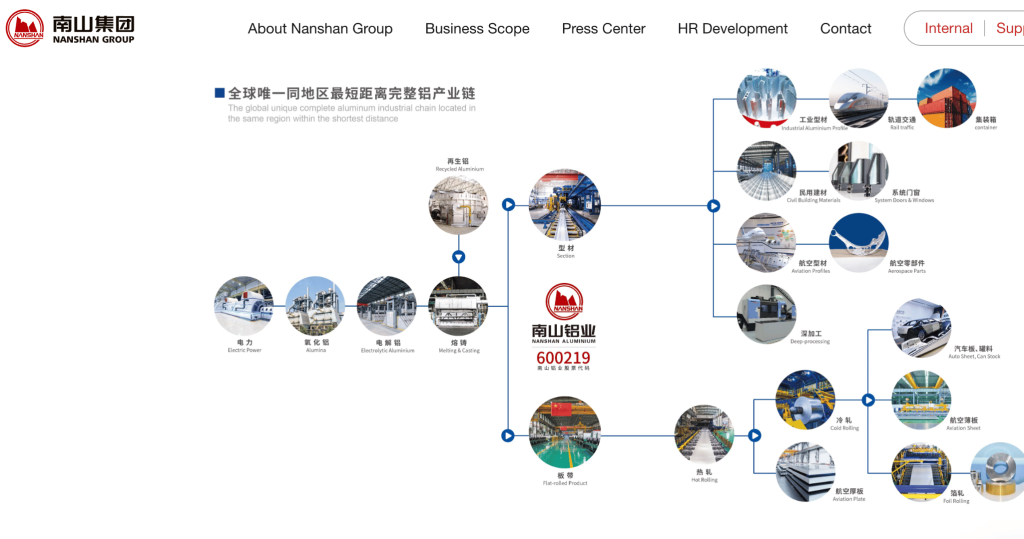
Nanshan Aluminium prowadzi wysoce zintegrowany regionalny cykl przemysłowy, który grupuje wytwarzanie energii cieplnej, rafinację tlenku glinu, walcowanie płyt oraz recykling w obrębie jednej strefy produkcyjnej. Taki układ umożliwia najkrótszy łańcuch transportowy dla produkcji wysokiej klasy blach lotniczych. Zakład jest zweryfikowanym dostawcą pierwszego szczebla krytycznych elementów konstrukcyjnych z aluminium dla Airbus, Boeing i COMAC.
Firma kładzie strategiczny nacisk na produkcję niskoemisyjną. Jej zaawansowane pętle recyklingowe odnotowują emisje na poziomie 0,58 tony CO₂ na tonę przetworzonego metalu. Lotniczy profil działalności oraz wieloletnie zobowiązania kontraktowe oznaczają, że minimalne wielkości zamówień wydają się lepiej dopasowane do wielkoskalowych programów motoryzacyjnych i lotniczych.
Kluczowe specyfikacje
- Czas realizacji: 6+ miesięcy ze względu na wieloletnie kontrakty korporacyjne.
- Tolerancja: Wysokoprecyzyjne tolerancje blach lotniczych zapewniające minimalny opór aerodynamiczny i zgodność z profilem opływu.
- Certyfikaty: AS9100 Jakość w lotnictwie, NADCAP specjalna certyfikacja procesu, IATF 16949 Motoryzacja i ISO 9001.
Zalety i wady
- Pro: W pełni identyfikowalne międzynarodowe certyfikaty lotnicze obejmujące każdą partię walcowanych blach.
- Pro: Zielony profil produkcji, który zmniejsza zużycie energii pierwotnej o 90% poprzez recykling w obiegu zamkniętym.
- Wady: Minimalne wielkości zamówień wydają się lepiej dopasowane do wielkoskalowych programów przemysłowych — średniej wielkości firmy inżynieryjne oraz projekty na etapie NPI mogą napotkać ograniczoną dostępność.
- Wady: Wydłużone zaległości w realizacji zamówień mogą ograniczać zdolność firmy do reagowania na pilne zakłócenia w dostawach dla nowych klientów.
Normy techniczne dotyczące importu chińskich blach aluminiowych
Pozyskiwanie specjalistycznych blach aluminiowych od dostawców zagranicznych wiąże się z ryzykiem jakościowym, które można ograniczyć poprzez weryfikację kluczowych wskaźników metalurgicznych przed podpisaniem umów dostaw.
Weryfikacja wewnętrznego naprężenia szczątkowego
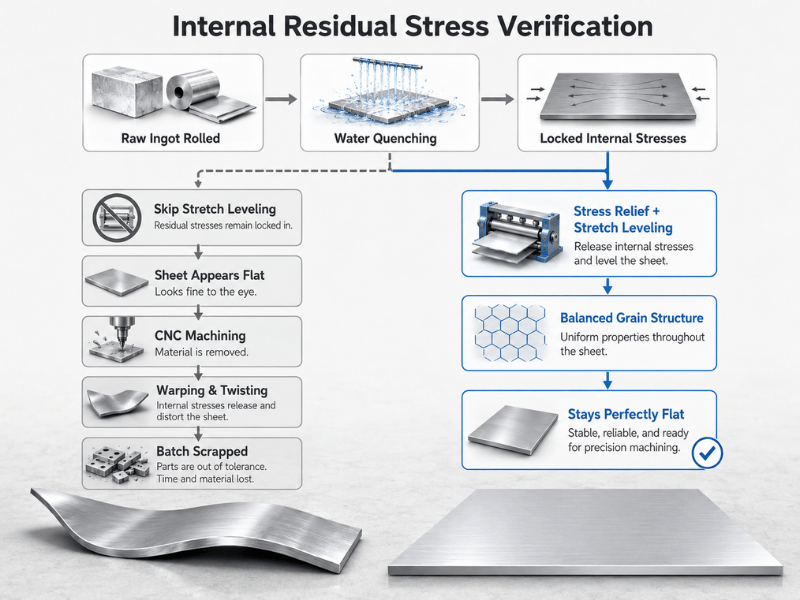
Średnie i grube płyty aluminiowe (Seria 5, Seria 6oraz Seria 7) często kumulują naprężenia wewnętrzne podczas szybkiej fazy chłodzenia wodnego. Jeśli huta pominie prostowanie rozciąganiem, naprężenia szczątkowe pozostają zablokowane w matrycy metalowej.
Gdy technik CNC usuwa materiał powierzchniowy z niewyrównanej blachy, naprężenia te uwalniają się natychmiast — płyta wypacza się, skręca lub wygina, powodując złomowanie wysokowartościowych obrobionych elementów. Fabryki, które przepuszczają każdą grubą blachę przez piece do odprężania starzeniowego oraz mechaniczne prostownice rozciągające, eliminują to ryzyko.
Tolerancje wymiarów i płaskości
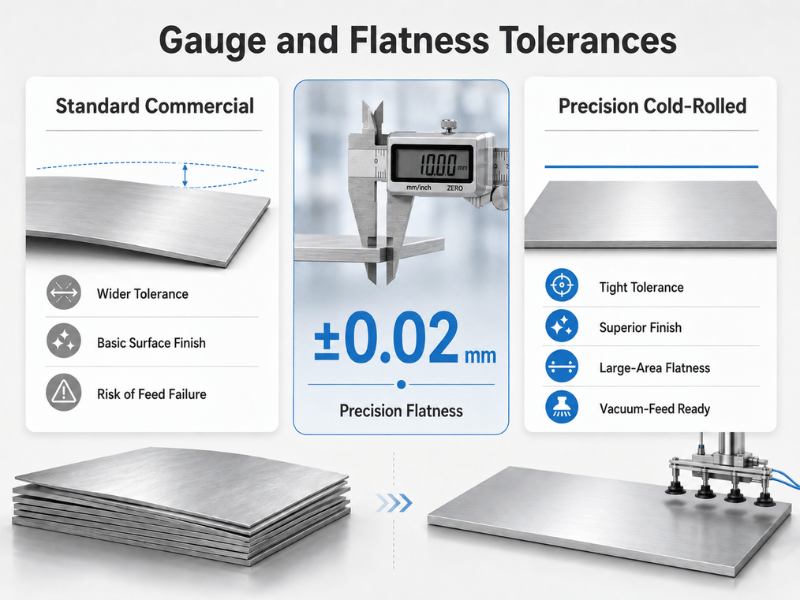
Blachy aluminiowe walcowane na zimno oferują lepsze tolerancje grubości i wykończenie powierzchni w porównaniu z alternatywami walcowanymi na gorąco. W zastosowaniach obejmujących zautomatyzowane oprzyrządowanie montażowe lub obudowy elektroniczne, standardowe tolerancje handlowe mogą być niewystarczające. Określenie wąskich ograniczeń precyzyjnych (takich jak ±0,02 mm) pomaga zapewnić, że blachy pozostają płaskie na dużych powierzchniach i zapobiega awariom podawania próżniowego na zautomatyzowanych liniach produkcyjnych.
Identyfikowalność materiału i audyty numerów wytopu
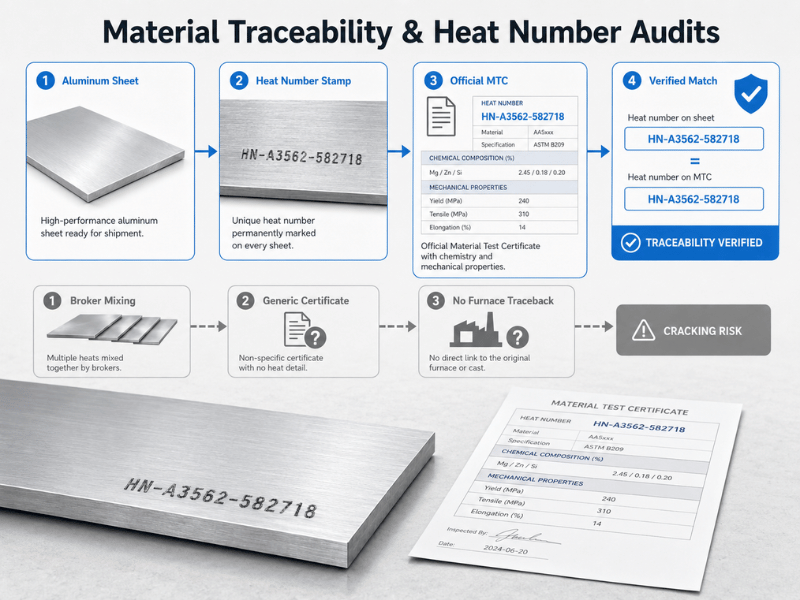
Każdej dostawie blach o wysokiej wydajności powinien towarzyszyć oficjalny certyfikat badań materiałowych (MTC) zawierający dokładny skład chemiczny (zawartość Mg, Zn, Si) oraz parametry wytrzymałości mechanicznej (granicę plastyczności, wytrzymałość na rozciąganie, wydłużenie).
The numer wytopu na certyfikacie MTC musi odpowiadać znakowi naniesionemu atramentowo lub grawerowanemu na dostarczonych blachach. Pośrednicy, którzy mieszają partie lub dostarczają ogólne certyfikaty, uniemożliwiają identyfikację metalu do autentycznego pieca hutniczego — pozostawiając łańcuch dostaw narażony na nieoczekiwane uszkodzenia mechaniczne przy cyklicznych obciążeniach przemysłowych.
Wnioski
Chińska podaż blach aluminiowych obejmuje dwa odrębne poziomy: ogromne walcownie państwowe zoptymalizowane pod ciągłą produkcję tonażową oraz elastycznych dostawców działających bezpośrednio z fabryk, przeznaczonych do zamówień projektowych o zróżnicowanej specyfikacji. Kompromis jest jasny: duże walcownie zapewniają spójność strukturalną w przypadku bardzo grubych płyt oraz certyfikaty klasy lotniczej, ale ich minimalne progi zamówień na poziomie 10 ton i czasy realizacji przekraczające 6 miesięcy czynią je w dużej mierze niedostępnymi dla prototypowania, projektów na etapie NPI lub zamówień wielospecyfikacyjnych poniżej progów tonażu przemysłowego.
Linsy Aluminum wypełnia tę lukę. Dzięki ponad 20-letniemu doświadczeniu, pokryciu gatunków stopów z serii 1000–8000 stopów, produkcji niestandardowej o niskim MOQ z typowymi czasami realizacji 10–60 dni, oraz pełnej dokumentacji MTC dla każdego zamówienia, Linsy zapewnia praktyczny kanał zaopatrzenia dla nabywców potrzebujących standardowych i niestandardowych specyfikacji blach bez zobowiązywania się do tonażu na skalę walcowni.
Jeśli Twój obecny projekt wymaga niestandardowych wymiarów blach, określonych gatunków stopów aluminium, lub dodatkowego wsparcia w zakresie obróbki, skontaktuj się z naszym zespołem technicznym w celu przeglądu specyfikacji i wyceny.
Skontaktuj się ze specjalistą Linsy Aluminum
Często zadawane pytania techniczne dotyczące zakupów
P: Dlaczego komercyjne huty odmawiają produkcji mniej niż 10 ton arkuszy nieznanego stopu?
A: Przemysłowe walcownie konfigurują linie ciągłego odlewania i walcowania na gorąco do produkcji o dużym tonażu. Koszty konfiguracji, przestoje związane ze zmianą walców oraz odpady materiałowe generowane podczas ponownej kalibracji hydraulicznego nacisku szczeliny walcowniczej dla małej partii sprawiają, że serie poniżej 10 ton są finansowo nieopłacalne. Fabryki takie jak Linsy rozwiązują ten problem, utrzymując szeroki stan magazynowy w standardowych gatunkach, co pozwala im dostarczać mniejsze, niestandardowe partie z istniejących zapasów lub realizować produkcję niestandardową o niskim MOQ bez ponownego uruchamiania pełnego cyklu wytopu pierwotnego.
P: Jakie podstawowe wady powodują pękanie wysokowytrzymałych blach serii 7 podczas zginania?
A: Pękanie podczas precyzyjnego gięcia na prasach krawędziowych wynika zazwyczaj z dwóch głównych przyczyn: gruboziarnistej struktury granic ziaren spowodowanej niewłaściwym starzeniem odprężającym lub gięcia blachy równolegle do kierunku walcowania zamiast prostopadle do niego. Jeśli blacha zawiera drobne defekty porowatości wodorowej pochodzące z pierwotnego odlewania wlewka, może ulec ścinaniu pod wpływem naprężeń zginających. Wymaganie pełnej kontroli ultradźwiękowej oraz autentycznego MTC bezpośrednio z fabryki pomaga zapobiec przedostawaniu się tych kruchych trybów uszkodzeń na linię produkcyjną.
P: Jak Linsy Aluminum obsługuje zamówienia na blachy niestandardowe lub spoza standardowego asortymentu?
A: Linsy utrzymuje zapasy stopów z serii 1000–8000 dla typowych specyfikacji blach. W przypadku pozycji niestandardowych dostępna jest produkcja niestandardowa o niskim MOQ z typowym czasem realizacji 10–60 dni, w zależności od stopu, wymiarów i wymagań dotyczących obróbki. Oznacza to, że większość niestandardowych specyfikacji blach wysyłana jest znacznie wcześniej niż w przypadku 6-miesięcznych kolejek typowych dla walcowni wielkotonażowych.
P: Dlaczego zgodność z normą ISO 14001 w zakresie zarządzania środowiskowego jest istotna dla międzynarodowych zakupów aluminium?
A: Globalne ramy regulacyjne, w tym europejskie mechanizmy dostosowywania cen na granicach z tytułu emisji CO₂ oraz korporacyjne wymogi zrównoważonego rozwoju, w coraz większym stopniu wymagają udokumentowanej odpowiedzialności środowiskowej w całym łańcuchu dostaw. Certyfikat ISO 14001 wskazuje, że zakład przetwórczy działa zgodnie z wymogami dotyczącymi oczyszczania odpadów, kontroli emisji oraz energooszczędnych procesów produkcyjnych. Pozyskiwanie materiałów z certyfikowanego zakładu pomaga międzynarodowym nabywcom zarządzać długoterminową zgodnością regulacyjną i unikać nieoczekiwanych kar importowych.
P: Jakie dokumenty powinny towarzyszyć każdej dostawie blach aluminiowych?
A: Co najmniej MTC (certyfikat badań materiałowych) zawierający skład chemiczny i właściwości mechaniczne, z numerami wytopów powiązanymi z fizycznym oznakowaniem na każdej blasze. W przypadku projektów z dodatkowymi wymaganiami badawczymi, Raporty z badań SGS obejmujące skład chemiczny, właściwości mechaniczne, kontrolę ultradźwiękową, zgodność z RoHS/REACH oraz kontrolę wymiarową, są dostępne na życzenie za dodatkową opłatą.