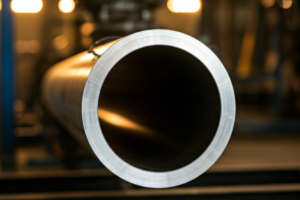
What Is 5052 Aluminum?
5052 is a 5xxx-series alloy with magnesium (2.2–2.8%) as its primary alloying element. It is a non-heat-treatable Al-Mg alloy that gains strength only through strain hardening, not precipitation heat treatment — which keeps it among the most corrosion-resistant and formable wrought aluminum alloys.
That chemistry is also why 5052 cannot be strengthened by heat treatment the way 2024 or 6061 can, so its strength ceiling is set by how much cold work the temper applies — and exactly why the temper you choose, especially for formed or welded parts, matters more than the alloy itself.
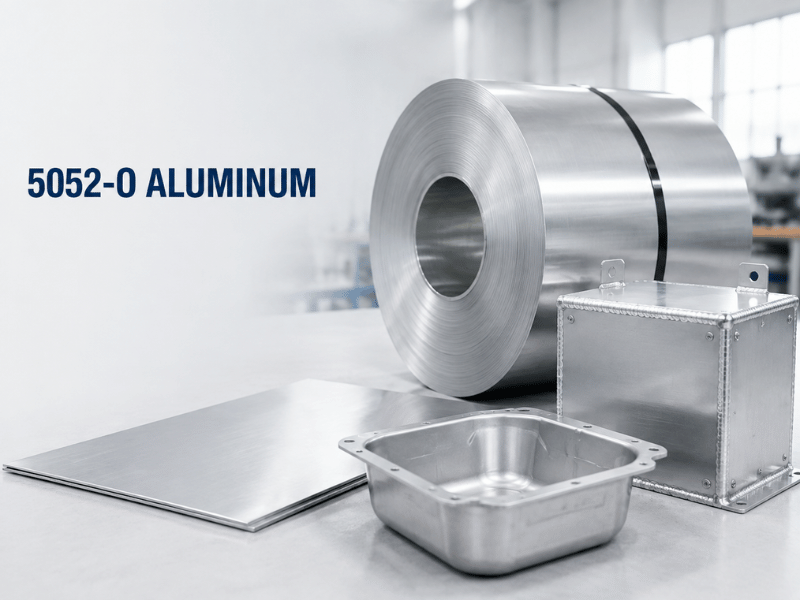
Understanding the -O Temper
The -O temper means the alloy is annealed, or fully softened. It is produced by heating the wrought product to the annealing temperature (about 343°C / 650°F) and cooling it slowly, which removes the effects of any prior cold work and leaves the material in its most ductile state. For 5052, -O is the softest and most formable condition in the family and serves as the starting point before strain-hardening into the H3x tempers.
Because -O carries no strain-hardening, it has the lowest strength and the highest elongation of all 5052 tempers. That is the trade built into the condition: you give up load capacity to gain the ability to bend, draw, and shape without cracking. For parts that are formed first and welded second, -O is usually the safest base material.
Annealing also relieves residual stresses left by rolling or drawing. That matters after fabrication because a stress-free blank distorts less during machining and warps less around a weld, so downstream tolerances are easier to hold.
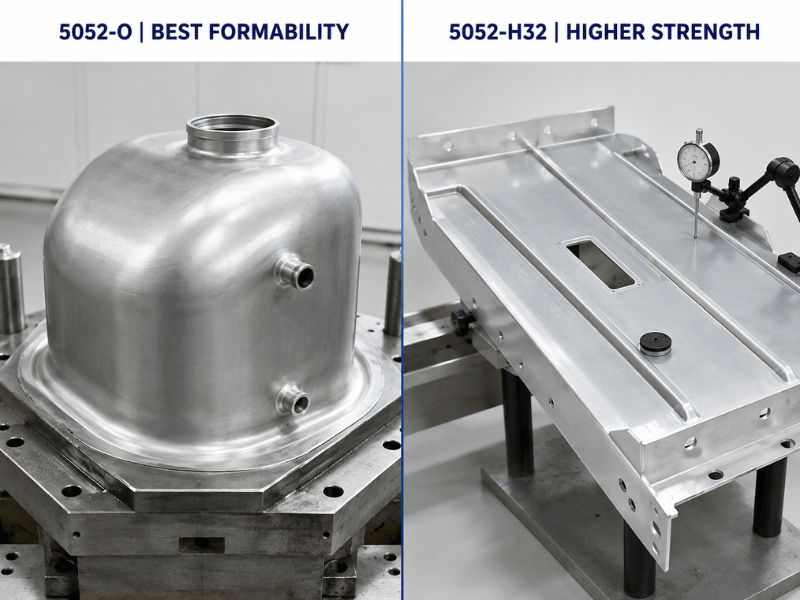
How -O Differs from H32
H32 is -O plus roughly 1/4-hard strain hardening and stabilization, which lifts yield strength from about 90 MPa to 193 MPa. The extra cold work also cuts elongation from roughly 25% to 12–15%, so H32 bends on wider radii and cracks more easily on tight formed features. Choose -O when the part needs deep drawing or tight-radius bends; choose H32 when a stiffer panel can carry load at a thinner gage and only light forming is involved. For the full picture across the family, see the 5052-H32 guide.
5052-O Mechanical Properties
| Property | 5052-O (typical) | 5052-H32 (reference) |
|---|---|---|
| Density | 2.68 g/cm³ | 2.68 g/cm³ |
| Ultimate tensile strength | 193 MPa (28 ksi) | 228 MPa (33 ksi) |
| Yield strength (0.2% offset) | 90 MPa (13 ksi) | 193 MPa (28 ksi) |
| Elongation at break | 22–25% | 12–15% |
| Modulus of elasticity | 68–70 GPa (10,200 ksi) | 68–70 GPa |
| Fatigue strength (5×10⁸ cycles) | 110 MPa (16 ksi) | 117 MPa (17 ksi) |
| Shear strength | 124 MPa (18 ksi) | 124 MPa (18 ksi) |
| Brinell hardness | 47 HB | 60 HB |
| Thermal conductivity | 138 W/m·K | 138 W/m·K |
| Melting range | 607–649°C | 607–649°C |
Yield strength is the number that defines most -O selections. At 90 MPa it is the lowest in the 5052 family — the price of the highest ductility (22–25% elongation) and the best formability. Read that as a go/no-go limit: if the part must carry structural load at minimum weight, -O is the wrong call and a strain-hardened temper or a 6xxx alloy belongs in the spec instead.
Where 5052-O Is Used
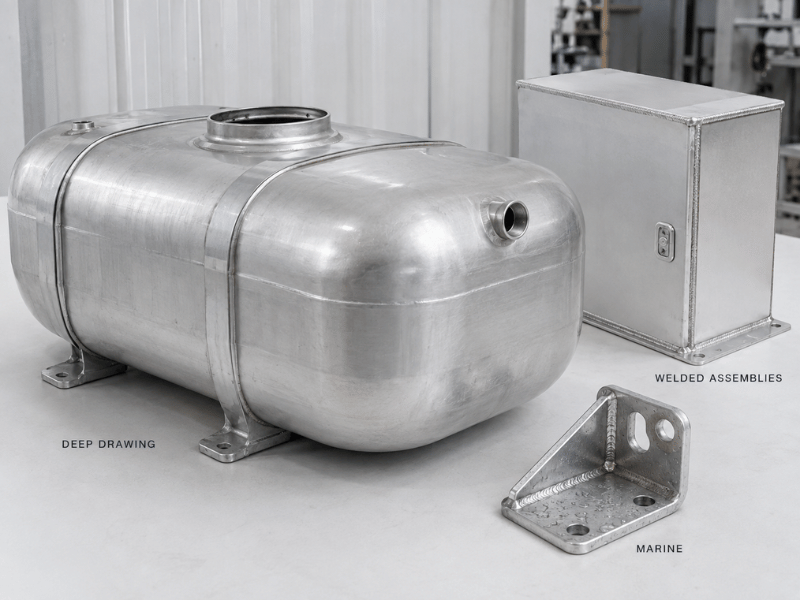
Forming- and Welding-Intensive Fabrication
5052-O is the default base for parts shaped before loading. Deep-drawn fuel tanks, pressure vessels, complex sheet-metal enclosures, and intricate marine hardware all start from -O because the blank survives tight radii and post-weld correction without cracking. Where a component is welded after forming, the soft condition also keeps heat-affected-zone (HAZ — the band beside the weld that softens and can distort) distortion manageable.
Marine and Corrosion-Exposed Service
Boat hull components, saltwater-exposed brackets, ship fittings, and outdoor enclosures rely on 5052-O where corrosion resistance matters more than peak strength. The Al-Mg chemistry resists saltwater pitting far better than copper-bearing 2024 or 6061, so -O parts hold up in splash zones and bilge areas without heavy coating. For load-bearing marine structure, H32 or H34 usually takes over once stiffness sets the gage.
-O vs Other 5052 Tempers — How to Choose
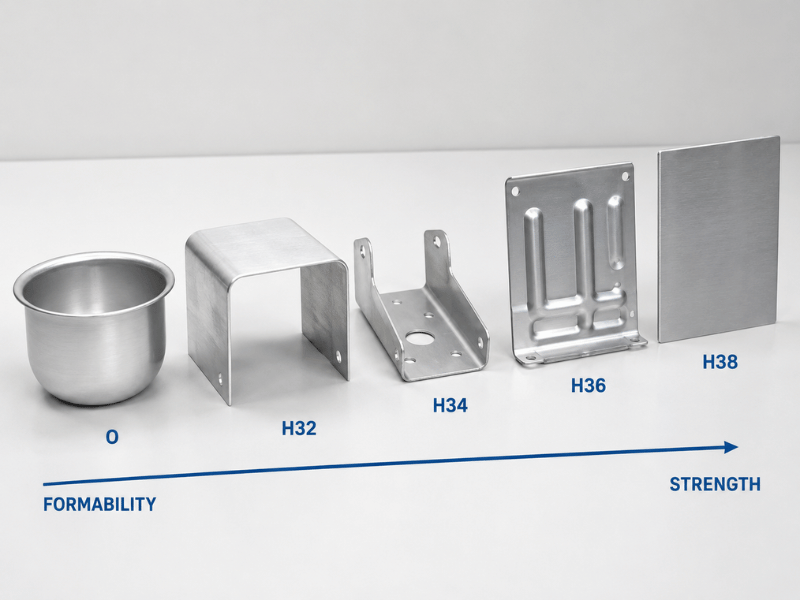
| Temper | Treatment | UTS (typical) | Yield (typical) | Best for | Avoid when |
|---|---|---|---|---|---|
| O | Annealed, fully soft | 193 MPa | 90 MPa | Deep drawing, complex forming, welded assemblies | Any load-bearing use |
| H32 | 1/4 hard + stabilized | 228 MPa | 193 MPa | Formed and welded sheet parts | You need maximum strength |
| H34 | 1/2 hard + stabilized | 262 MPa | 214 MPa | Stiff, load-bearing sheet with light bends | Tight bend radii are required |
| H36 | 3/4 hard + stabilized | 276 MPa | 241 MPa | Panels needing higher yield | Any forming is involved |
| H38 | Full hard + stabilized | 290 MPa | 255 MPa | Flat, rigid, non-formed parts | The part gets bent at all |
When -O Is the Right Call
- The part needs deep drawing, tight-radius bends, or post-weld shaping, operations that would crack a harder temper.
- The assembly is welded after forming and you want the lowest HAZ distortion and the widest forming window.
When Another Temper Fits Better
- H32 — you need a stiffer formed panel but still want to bend it; the 1/4-hard condition adds yield with only a modest formability loss.
- H34 — the part is mostly flat and load-bearing; the thinner, stiffer sheet replaces a thicker -O blank. The 5052-H34 sheet guide details its limits.
- H36 / H38 — the geometry is fixed and non-formed; pick the highest yield the drawing allows.
Working with 5052-O — What You Need to Know
Machining 5052-O is straightforward but gummy. The soft, ductile structure tends to build up on the cutting edge (built-up edge — a smear of workpiece material that sticks to the tool and ruins finish), so use sharp tools, positive rake, and generous coolant; avoid interrupted cuts that let the chip weld to the flute.
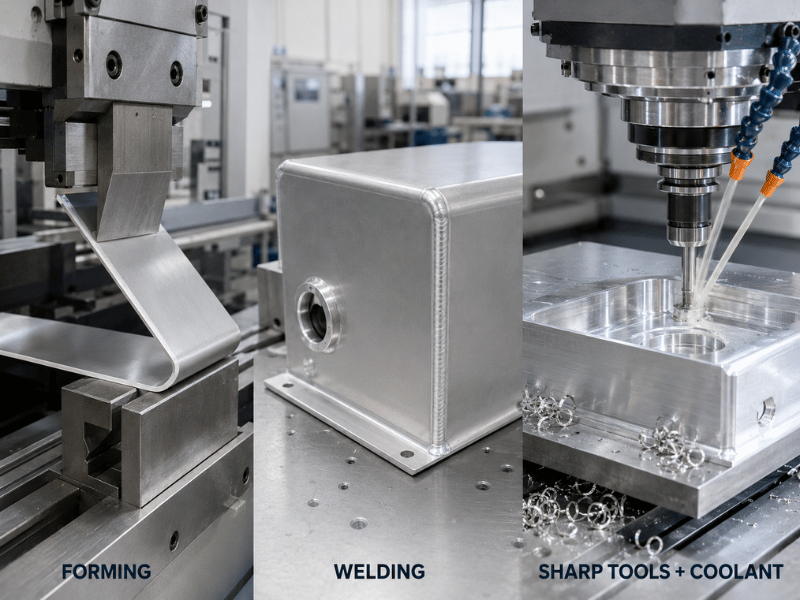
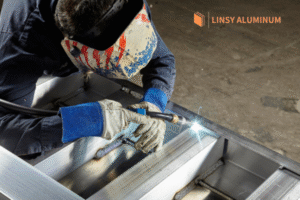
Welding is a 5052-O strength. Gas tungsten arc (GTAW) and gas metal arc (GMAW) both produce sound joints with 5xxx fillers such as ER5356; match the filler to the service environment rather than to the base temper, since the weld itself is essentially -O after cooling.
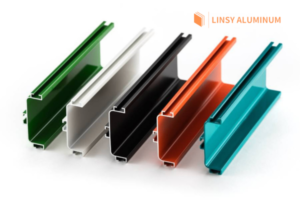
Corrosion protection is largely built in. The Al-Mg surface forms a stable oxide film that shrugs off saltwater, so most -O parts need no coating; where appearance or abrasion resistance matters, anodizing or a powder coat (RAL 9016) is available, and PVC protective film guards the surface in transit.
Formability is where -O wins. Minimum bend radii are the tightest in the family — often a radius equal to the sheet thickness on a well-set press brake — and the high elongation tolerates deep draws that would split H3x stock. Keep bends perpendicular to the rolling direction where the drawing allows, since that orientation cracks less.
Pros and Limitations at a Glance
| Dimension | Advantage | Limitation |
|---|---|---|
| Formability | Tightest bend radii, deepest draws in the 5052 family | — |
| Weldability | Excellent with GTAW/GMAW and 5xxx fillers | Weld zone cools to ~-O softness, lowering local strength |
| Corrosion (saltwater) | Excellent; resists pitting far better than 2xxx/6xxx | Keep Mg under 3%; avoid sustained high-temp stress |
| Strength-to-weight | Enough for non-load envelopes | Lowest yield (90 MPa) of the family |
| Fatigue | Good (110 MPa) for a soft temper | Below H32/H34 under heavy cyclic load |
| Machining stability | Low residual stress, minimal warp | Gummy chip, needs sharp tools and coolant |
| Availability | Stocked across sheet, plate, bar, tube, wire | — |
| Cost | Competitive non-heat-treatable option | Not a substitute where high strength is required |
Conclusion
5052-O trades strength for the best formability and weldability in the 5052 family — a deliberate choice for parts that are shaped and welded before they ever carry load. Its limit is clear: at 90 MPa yield it is not a structural temper, so pairing it with the right downstream support matters more than the alloy alone.
That trade is easy to manage when your supplier covers the full 5052 range and the associated processing. Linsy Aluminum operates a Shenzhen factory with 20+ years of experience and supplies 5052 in sheet, plate, bar, tube, wire, coil, profile, and block forms across O, H32, and H34 tempers. Linsy provides in-house CNC machining, TIG and MIG welding, laser cutting, and surface treatments such as anodizing and powder coating, ships an MTC with every order, and holds ISO 9001, 14001, and 45001 certifications. SGS test reports are available upon request for an additional fee, and custom 5052 orders have a 10–60 day lead time.
If your project needs 5052-O in a specific form, temper, or machined condition, explore Linsy’s 5052 aluminum products or contact Linsy Aluminum to request a quote tailored to your specification.
Frequently Asked Questions
What does the -O temper mean on 5052?
O means annealed and fully softened. It is the lowest-strength, highest-ductility condition in the 5052 family and the starting point before strain hardening into H32–H38.
Can 5052-O be heat-treated to increase strength?
No. 5052 is a non-heat-treatable Al-Mg alloy, so heat treatment cannot raise its strength. Extra strength is only achieved with strain-hardened tempers (H32, H34, H36, H38); if you need more strength, specify a harder temper or a 6xxx alloy such as 6061-T6.
Is 5052-O good for welding?
Yes. It welds well with GTAW and GMAW using 5xxx fillers like ER5356, and the soft condition keeps heat-affected-zone distortion low. The weld itself cools to roughly -O softness, so design around the lower local strength.
How does 5052-O compare with 6061-T6?
5052-O resists saltwater corrosion far better and forms/welds more easily, but its 90 MPa yield is well below 6061-T6’s ~276 MPa. Choose 5052-O for marine and formed parts; choose 6061-T6 when strength and stiffness are the priority. See the 5052 vs 6061 guide for the full trade-off.
What bend radius can 5052-O take?
Among the tightest in the family — often a radius equal to the sheet thickness on a well-set press brake. That is why -O is the pick for deep draws and tight formed features that would crack in H32 or H34.
What lead time should I expect for custom 5052-O?
For non-stock sizes and tempers, custom 5052 production typically runs 10–60 days depending on alloy, dimensions, and processing. Linsy ships an MTC with every order and can arrange SGS reports on request.