Key Highlights
- 5052 and 6061 are both magnesium-bearing alloys, but their chemistry gives them very different strengths.
- 6061 is heat-treatable and gains strength from tempering; 5052 is non-heat-treatable and strengthens through cold working.
- 5052 wins on corrosion resistance (especially marine) and fatigue strength; 6061 wins on tensile strength, hardness, and machinability.
- This guide compares composition, physical properties, weldability, and cost so you can pick the right grade for your job.
Introduction
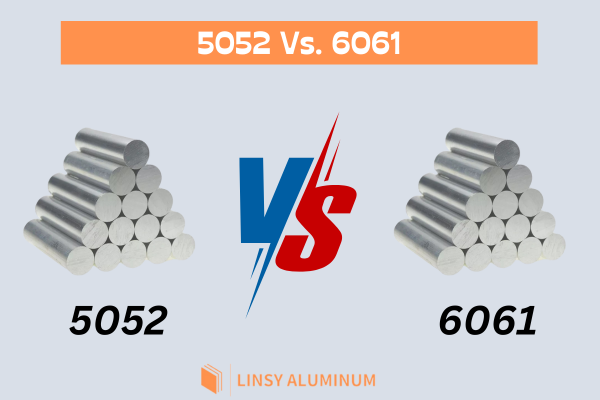
Aluminum alloys are everywhere in manufacturing because they are strong and light. Engineers tune properties by adding elements like magnesium, silicon, and copper, which lets them build alloys for specific jobs. This article compares two of the most common: 5052 and 6061. Both offer good tensile strength and corrosion resistance, but they suit different applications.
Introduction to 5052 and 6061 Aluminum Alloys
5052 aluminum alloy belongs to the 5xxx series. Its main alloying element is magnesium, which gives it strong corrosion resistance, especially in marine environments thanks to its low copper content. 5052 is non-heat-treatable; it strengthens through cold working.
6061 aluminum alloy belongs to the 6xxx series. It pairs magnesium with silicon, which gives it moderate strength and good corrosion resistance plus excellent machinability. Unlike 5052, 6061 can be heat-treated to push its mechanical properties higher.
Introduce 5052 and 6061 Aluminum
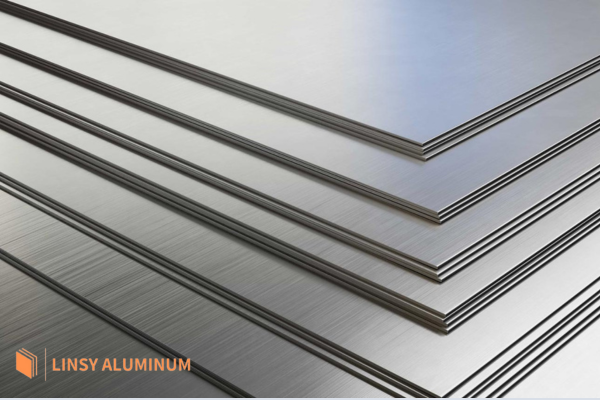
5052 is a non-heat-treatable grade with excellent saltwater corrosion resistance. Its strength, weldability, and formability make it ideal for sheet metal work, particularly marine applications.
6061 is a heat-treatable, versatile material that machines and welds well. It has moderate strength, is easy to source, and is affordable, which makes it a favorite across industries.
Both alloys are lighter than many steels, so they suit jobs where strength matters but weight must stay low.
Common Applications of 5052 and 6061 Aluminum
5052 sees heavy use wherever corrosion resistance is the priority.
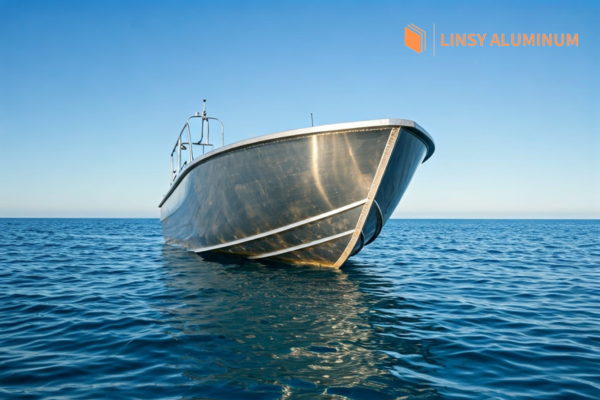
- Boat hulls and marine parts
- Pressure vessels
- Medical equipment that must be sterilized
6061 is valued for its balance of weight, strength, and workability. Typical uses include:
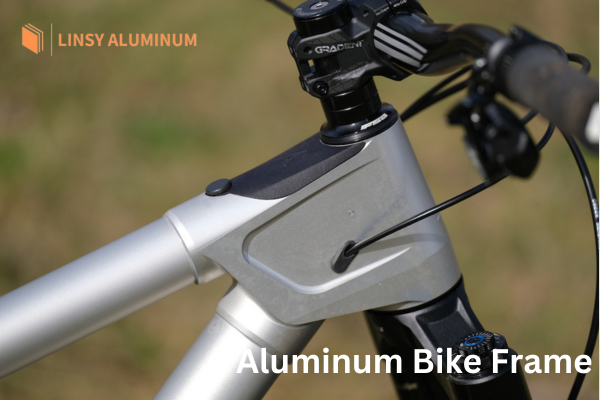
- Bicycle frames
- Aircraft parts
- Electronic enclosures
Both alloys also appear in buildings, signage, and automotive parts, which shows how broadly they apply.
Chemical Composition Difference
The two alloys differ mainly in their added elements. 5052 leans on magnesium and chromium, which boost rust resistance (especially in salt water) and make welding easy. 6061 leans on magnesium and silicon, a mix that allows heat treatment and better formability than 5052, though 6061 trails 5052 on corrosion resistance.
|
Element |
5052 Aluminum |
6061 Aluminum |
|
Aluminum (Al) |
Remainder |
95.85-98.56% |
|
Magnesium (Mg) |
2.2-2.8% |
0.8-1.2% |
|
Silicon (Si) |
≤0.25% |
0.4-0.8% |
|
Iron (Fe) |
≤0.4% |
≤0.7% |
|
Copper (Cu) |
≤0.1% |
0.15-0.4% |
|
Manganese (Mn) |
≤0.1% |
≤0.15% |
|
Chromium (Cr) |
0.15-0.35% |
0.04-0.35% |
|
Zinc (Zn) |
≤0.1% |
≤0.25% |
|
Titanium (Ti) |
– |
≤0.15% |
Physical Properties Difference
The table below compares the physical properties of 5052 and 6061:
|
Property |
5052 Aluminum |
6061 Aluminum |
|
Density |
2.68 g/cm³ |
2.70 g/cm³ |
|
Tensile Strength |
210-260 MPa |
290-310 MPa |
|
Yield Strength |
130 MPa |
240 MPa |
|
Elongation at Break |
6-12% |
12-20% |
|
Modulus of Elasticity |
70.3 GPa |
68.9 GPa |
|
Thermal Conductivity |
138 W/m-K |
151-167 W/m-K |
|
Hardness Brinell |
61 HB |
95 HB |
|
Fatigue Strength |
117 MPa |
lower than 5052 Aluminum |
The physical properties of 5052 and 6061 show clear differences that drive their applications.
6061 generally exhibits higher tensile and yield strength and greater hardness than 5052, which suits structural parts that must carry load. 5052, however, has higher fatigue strength and modulus of elasticity, plus superior formability and weldability, and better corrosion resistance, while 6061 has higher thermal conductivity. That is why 5052 is preferred for marine and forming work and 6061 for extrusions, machining, and structural components.
Strength and Durability Differences
6061, especially in T6, beats 5052 on tensile strength, which suits heavy-load situations. But 5052 has the edge on fatigue strength.
Fatigue strength measures how well a material survives repeated loads. 5052’s high fatigue strength makes it ideal where vibration, bending, or constant stress occur.
When choosing, match the property to the job: pick 6061 for high tensile strength, and 5052 when the part sees cyclic loading or constant stress.
Corrosion Resistance Comparison
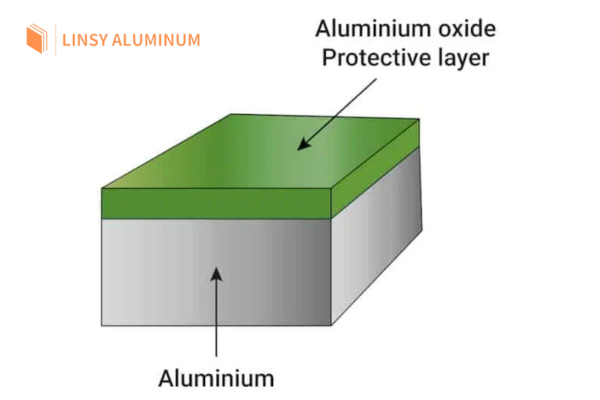
Both alloys resist corrosion well, but 5052 is the better choice for marine and saltwater use because of its low copper content, which reduces salt-induced corrosion.
6061 resists corrosion well for general use but not as well as 5052 against saltwater.
For tough weather, chemical, or marine service, 5052 is usually the safer pick.
Weldability and Machinability
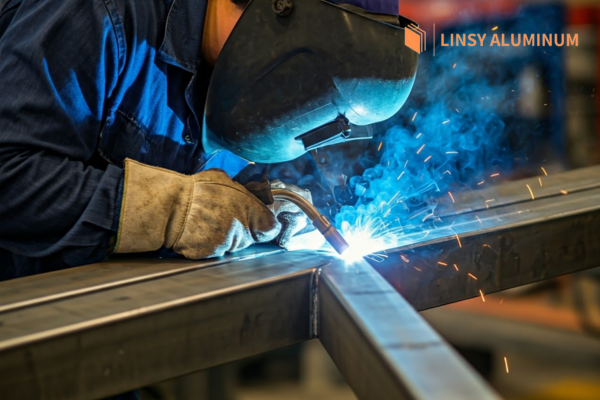
Both weld cleanly and make durable joints. 6061 may need post-weld heat treatment, which can cause distortion and add a straightening step; 5052 holds its shape better after welding, which simplifies fabrication.
On machinability, 6061 is the stronger choice. It produces short chips that clear easily, allowing faster cuts and better finishes. 5052 is more ductile and makes longer, stringier chips that can shorten tool life and rough the surface.
When tight tolerances and precise machining matter, 6061 is the better fit.
Choosing the Right Alloy for Your Project
The choice depends on your application. If you need strength, workability, and low cost, 6061 fits, and its range of tempers adapts to many needs. If corrosion resistance (especially marine) is the priority, 5052 wins on weldability and formability. Know each alloy’s strength, formability, and corrosion profile before you commit.
When to choose 5052 Aluminum
If you need corrosion resistance, 5052 is the call. It is ideal for marine settings where salt attacks materials, perfect for boat building, marine tools, and coastal structures. Its easy formability suits detailed designs like custom tanks or pressure vessels.
Its weldability with low distortion makes it popular for complex jobs, and its slightly lower density than 6061 helps when weight matters.
5052 lags 6061 on tensile strength, but its fatigue strength and corrosion resistance make it the better option for specific, demanding applications.
When to choose 6061 Aluminum
6061 is a versatile, strong, workable, and reasonably priced alloy for jobs that need structural integrity, especially parts that must be machined.
Its thermal conductivity suits heat sinks, electronic enclosures, and temperature-control parts. Heat treatment tunes its mechanical properties, which makes 6061 a practical, flexible choice.
6061 resists rust less well than 5052 in marine use, but it still protects well for most common applications.
Conclusion
The trade-off is clear: 5052 leads on corrosion resistance, fatigue strength, formability, and weldability stability, while 6061 leads on strength, hardness, and machinability. Choose 5052 for marine, pressure-vessel, and forming work; choose 6061 for structural, machined, and heat-dissipating parts.
At Linsy Aluminum, we stock both 5052 and 6061 across common tempers and shapes, with SGS test reports available on request at extra cost. Our engineers review your drawing and recommend the lowest-cost grade that still meets the spec, so you do not overspecify material. Tell us your application and we will quote the right alloy and temper. Get a Quote
Frequently Asked Questions
Which is better, 6061 or 5052?
Neither is universally better. 6061 is stronger and easier to machine; 5052 resists corrosion better and welds with less distortion. Pick based on whether strength or corrosion/formability drives your design.
What are the disadvantages of 6061 aluminum?
Next to some 7000-series alloys, 6061 has lower yield strength, and it can fatigue under repeated stress. It may also distort during heat treatment, which adds a post-weld or post-heat straightening step.
What aluminum is stronger than 6061?
7075 is generally stronger than 6061 because its zinc content raises tensile and fatigue strength. For the highest strength-to-weight in welded structures, 7075 is often the next step up.
What is 5052 aluminum good for?
5052 excels where corrosion resistance matters, especially marine. Its formability makes it a strong choice for marine parts, pressure vessels, and components that must resist wear and salt.