Co je hliník 2024?
2024 je hliníková slitina řady 2000 s mědí jako hlavním legujícím prvkem (3,8–4,91 TP3T Cu, dále 1,2–1,81 TP3T Mg a 0,3–0,91 TP3T Mn). Pevnost získává precipitačním vytvrzováním — řízeným tepelným cyklem, který v hliníkové mřížce vytváří submikroskopické shluky mědi — nikoli tvářením za studena. Výsledkem je jedna z nejpevnějších hliníkových slitin dostupných ve tvářené formě, s pevností v tahu srovnatelnou s měkkou ocelí při přibližně jedné třetině hustoty.
Právě obsah mědi je také důvodem, proč slitina 2024 koroduje snadněji než slitiny řady 5xxx nebo 6xxx. V praxi se materiál téměř vždy dodává jako alcladový plech (čistý hliník metalurgicky spojený s povrchem) nebo je chráněn eloxováním či nátěrem. Právě tento poměr pevnosti k hmotnosti činí slitinu 2024 výchozí volbou pro draky letadel a vysoce výkonné stroje — a přesně proto záleží na zvoleném temperu, zejména u tvářených dílů, více než na samotné slitině.
Porozumění temperu T4
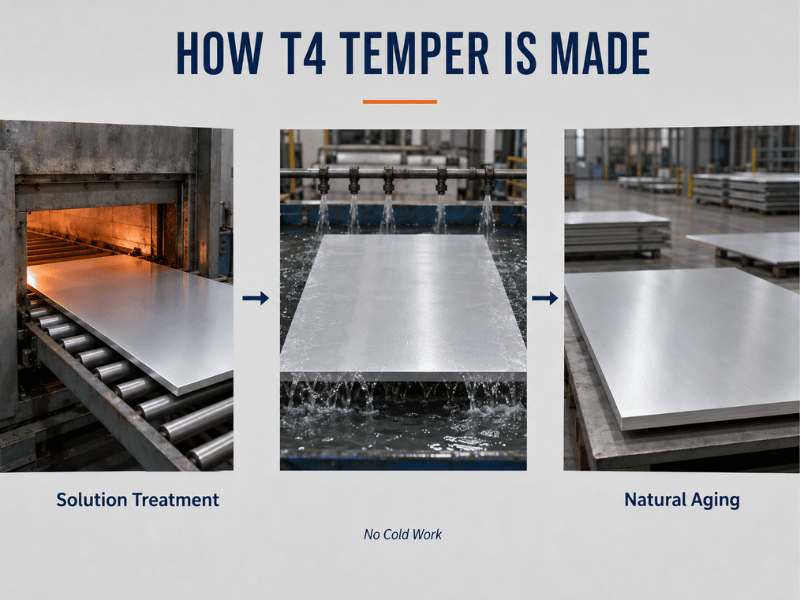
Úplné označení “T4” popisuje dvoustupňové tepelné zpracování aplikované po odlití slitiny, zpracování do konečného tvaru (plech, deska, tyč nebo trubka) a roztokovém žíhání.
- Rozpouštěcí žíhání. Slitina se zahřeje na přibližně 493 °C (920 °F), aby se precipitáty bohaté na měď rozpustily do homogenního tuhého roztoku. Při této teplotě jsou atomy mědi plně rozptýleny v hliníkové matrici. Materiál je poté rychle ochlazen — obvykle ve studené vodě — aby se měď zachytila v přesyceném tuhém roztoku. Pokud by slitina chladla pomalu, měď by precipitovala jako hrubé, slabě vázané částice; rychlé ochlazení tomu zabraňuje.
- Přirozené stárnutí. Ochlazený materiál se ponechá při pokojové teplotě po dobu několika dní. Během tohoto období atomy mědi difundují na krátké vzdálenosti hliníkovou mřížkou a shlukují se na rovinách {100}, čímž vytvářejí koherentní zóny známé jako Guinier-Prestonovy (GP) zóny. Tyto zóny napínají okolní mřížku a brání pohybu dislokací, což je mechanismus zvyšující pevnost. Proces stárnutí dosahuje téměř maximální pevnosti po přibližně 4–5 dnech a pokračuje pomalu po měsíce, přičemž praktické konstrukční vlastnosti se stabilizují během prvního týdne.
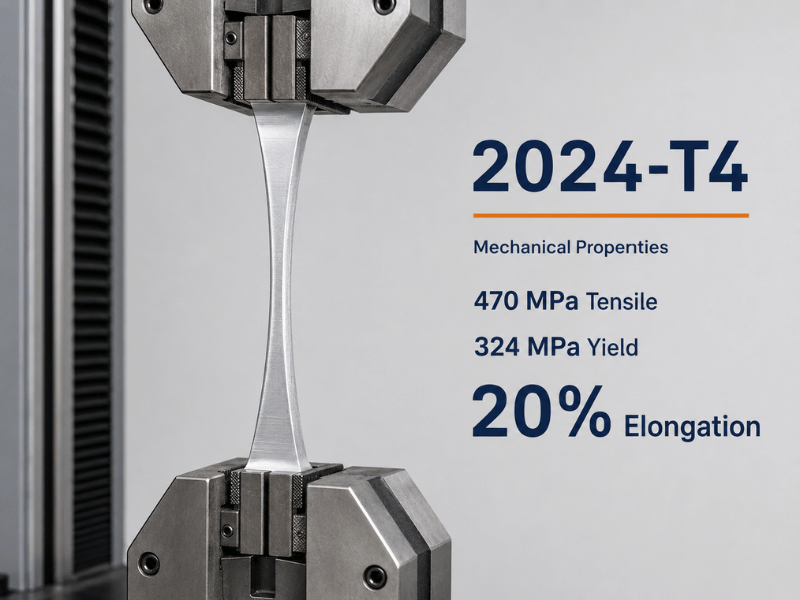
Výsledkem je temper, který kombinuje vysokou pevnost v tahu (~470 MPa UTS) s nejvyšší tažností z běžně specifikovaných temperů slitiny 2024 — typicky 19–201 TP3T prodloužení na 50 mm. Tato tažnost je přímým důsledkem toho, co T4 nezahrnuje: žádný krok tváření za studena a žádné protahování pro odstranění pnutí. Materiál si zachovává plnou tvařitelnost čerstvě ochlazeného stavu při zachování plné pevnosti po vytvrdnutí.
Jak se T4 liší od T3
T3 je temper nejbližší T4. Oba jsou roztokově žíhány a přirozeně stárnuty. Rozdíl spočívá v jediném zpracovatelském kroku: T3 prochází řízenou redukcí tvářením za studena (typicky 1–31 TP3T) po ochlazení a před přirozeným stárnutím. Toto tváření za studena přidává deformační zpevnění — více dislokací v mřížce — což mírně zvyšuje pevnost v tahu a na mezi kluzu, ale snižuje tažnost a tvařitelnost.
Pro díl, který bude tvářen, ohýbán nebo tvarován tažením po tepelném zpracování, je T4 praktičtější volbou. Absence tváření za studena znamená, že se materiál deformuje rovnoměrněji a snese menší poloměry ohybu před prasknutím. Pro díl, který bude použit ve stavu válcovaném nebo taženém bez dalšího tváření, může být mírná výhoda pevnosti T3 výhodnější. Průvodce 2024-T3 guide podrobněji popisuje postup tváření za studena.
Mechanické vlastnosti 2024-T4
| Majetek | Hodnota | Poznámky |
|---|---|---|
| Hustota | 2,78 g/cm³ | Typické pro řadu 2xxx |
| Mez pevnosti v tahu | 470 MPa (68 ksi) | Podélný směr, pokojová teplota |
| Mez kluzu v tahu (0,2 % offset) | 324 MPa (47 ksi) | Řídí většinu konstrukčních výpočtů |
| Prodloužení při přetržení | ~19–201 TP3T | Při měrné délce 50 mm; nejvyšší mezi tempery slitiny 2024 |
| Modul pružnosti | 73,1 GPa (10 600 ksi) | Přibližně jedna třetina oceli |
| Mez únavy (5×10⁸ cyklů) | ~140 MPa (20 ksi) | Hladký vzorek, R = −1 |
| Smyková pevnost | 285 MPa (41 ksi) | Důležité pro návrh spojovacích prvků a nýtových spojů |
| Tvrdost podle Brinella | 120 HB | Zatížení 500 kg, kulička 10 mm |
| Elektrická vodivost | 30% IACS | Nízká pro hliník — specifikujte pro pevnost, ne pro vedení proudu |
Mez kluzu 324 MPa je hodnota, která řídí většinu konstrukčních návrhů. To, co odlišuje T4 od ostatních temperů slitiny 2024, není hodnota meze kluzu — T351 dosahuje stejných 325 MPa — ale tažnost. Při ~201 TP3T si T4 zachovává přibližně o 30–401 TP3T vyšší tažnost než T351 (~12–151 TP3T) a téměř dvojnásobnou tažnost ve srovnání s T6 (~8–101 TP3T). Tento rozdíl se přímo projevuje ve tvařitelnosti: plech T4 lze ohnout na menší poloměr nebo dále tvarovat tažením před prasknutím než stejnou slitinu v temperu T3, T351 nebo T6.
Kde se 2024-T4 používá
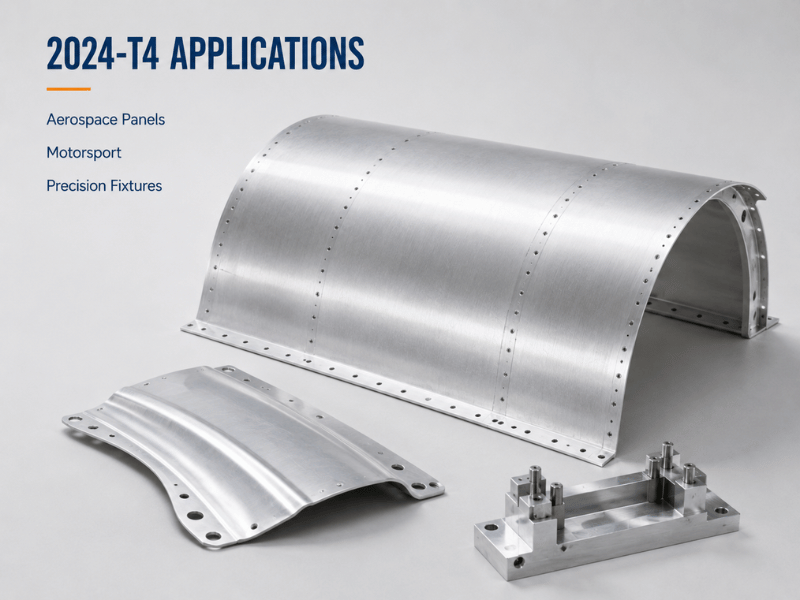
Kombinace vysoké pevnosti, odolnosti proti únavě a vynikající tažnosti činí T4 standardním temperem pro tvářené letecké plechy a pro aplikace, kde musí být materiál tvarován po tepelném zpracování.
Letecké a kosmické konstrukce
Primární oblast použití. Křídelní potahy, trupové panely a konstrukční kryty jsou často tvářeny z plechu 2024-T4 v alcladovém stavu. Tvářecí operace — ohýbání na ohraňovacím lisu, tvarování tažením nebo válcování profilů — využívají vysokou tažnost T4 k dosažení složitých kontur bez praskání. Po vytvarování si díl zachovává plnou pevnost temperu po vytvrdnutí.
Spodní potahy křídel a trupové potahy jsou během každého letu vystaveny tahově dominantním únavovým cyklům. 2024-T4 poskytuje únavovou odolnost potřebnou pro dlouhou životnost při zachování hmotnosti přibližně na jedné třetině ekvivalentního ocelového návrhu. Alcladová vrstva chrání proti korozi, která by jinak omezila životnost holé slitiny ve vlhkém prostředí nebo prostředí s obsahem solí.
Pro obráběné konstrukční součásti — přepážky, fitinky, konzoly — je obvykle preferován T351 před T4, protože protažení pro odstranění pnutí zabraňuje deformacím při obrábění. Role T4 spočívá specificky ve tvářeném plechu a tenkých deskách, kde záleží více na tvařitelnosti než na stabilitě při obrábění. Pro širší srovnání slitin mezi sebou analýza 2024 vs 7075 analysis popisuje, kdy která rodina slitin nachází uplatnění.
Další vysoce namáhané aplikace
- Motorsport a výkonná vozidla. Karosářské panely, komponenty zavěšení a konstrukční konzoly tvářené z plechu 2024-T4 se používají v závodních a vysoce výkonných aplikacích, kde záleží na úspoře hmotnosti a materiál musí být tvarován do složitých geometrií.
- Přesné nástroje a přípravky. Montážní přípravky a kontrolní přípravky, které vyžadují kombinaci tvařitelnosti (pro přizpůsobení konturovaným dílům) a tuhosti, těží z plechu T4 ve středních tloušťkách.
- Vojenské a obranné aplikace. Konstrukční kryty, přístupové panely a tvářené kryty, kde se vyžaduje jak poměr pevnosti k hmotnosti, tak tvařitelnost.
T4 vs ostatní tempery slitiny 2024 — jak vybrat
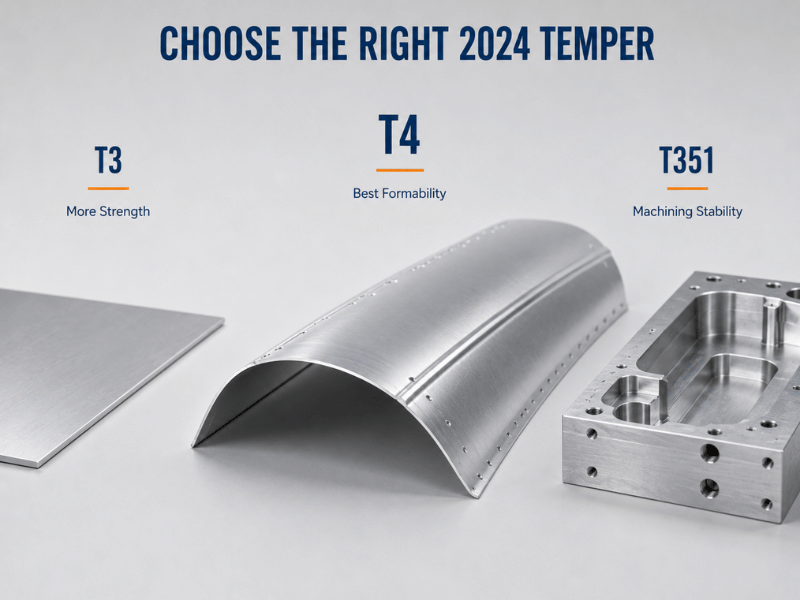
Slitina 2024 je dostupná v několika temperech, z nichž každý je optimalizován pro jinou výrobní cestu. Níže uvedená tabulka mapuje hlavní možnosti podle typických výběrových kritérií.
| Temperament | Zpracování | Mez pevnosti (MPa) | Mez kluzu (MPa) | Prodloužení | Nejlepší pro | Vyhnout se, když |
|---|---|---|---|---|---|---|
| T4 | Roztok + přirozené stárnutí | 470 | 324 | ~20% | Tvářený plech a tenké desky vyžadující maximální tažnost | Obrábění silných průřezů (bez odstranění pnutí) |
| T3 | Rozpouštěcí žíhání + tváření za studena + přirozené stárnutí | 483 | 345 | ~18% | Tenký plech vyžadující maximální pevnost se střední tvařitelností | Hluboké tváření nebo malé poloměry ohybu |
| T351 | Rozpouštěcí žíhání + tažení + přirozené stárnutí | 470 | 325 | ~12–151 TP3T | Tlustostěnné obráběné součásti, únavově kritické konstrukce | Tvářecí operace (nižší tažnost) |
| T6 | Rozpouštěcí žíhání + umělé stárnutí | 483 | 393 | ~8–101 TP3T | Aplikace s maximální statickou pevností | Únavově kritické konstrukce (nižší lomová houževnatost) |
| T3511 | Stejně jako T351, pro protlačované profily | 425 | 310 | ~10% | Protlačované tyče, profily a trubky | Plochý plech nebo deska (T4 nebo T351 je ekvivalentem podle formy produktu) |
Kdy je T4 správnou volbou
- Díl bude tvářen, ohýbán nebo tvarován tažením po tepelném zpracování. Tažnost T4 ~201 TP3T a absence zbytkových pnutí z tváření za studena poskytují nejširší okno tvařitelnosti ze všech temperů slitiny 2024. Poloměry ohybu 1,5t až 3t jsou praktické pro ohyby 90° ve středních tloušťkách.
- Aplikace upřednostňuje tažnost a odolnost proti praskání před absolutní mezí kluzu. T4 dosahuje stejné meze kluzu jako T351 (324–325 MPa) při zachování výrazně vyšší tažnosti, což je důležité pro díly vystavené nárazům nebo díly, které musí snést mírnou deformaci bez porušení.
Kdy se hodí jiné temperování
- Díl bude výrazně obráběn z tlusté desky. T4 nemá krok odstranění pnutí, takže v materiálu zůstávají zbytková pnutí z ochlazování. Asymetrické odebírání materiálu — hluboké kapsy, jednostranné frézování — uvolní tato pnutí a způsobí deformaci dílu. 2024-T351 je standardní volbou pro obráběné konstrukční součásti.
- Prioritou je maximální statická pevnost. Umělé stárnutí T6 zvyšuje mez kluzu na 393 MPa — přibližně o 201 TP3T více než T4 — ale za cenu tažnosti a lomové houževnatosti. Pro čistě statické zatěžovací aplikace bez únavových obav průvodce 2024-T6 guide popisuje tento kompromis.
- Tenký plech vyžadující maximální pevnost. Krok tváření za studena u T3 přidává mírný přírůstek pevnosti, který může být užitečný u tenkých plechů, kde záleží na každém kilonewtonu. Nevýhodou je snížená tvařitelnost.
Práce s 2024-T4 — co potřebujete vědět
Obrábění. 2024-T4 dobře se obrábí ostrými karbidovými nástroji při vysokých otáčkách vřetena a středních posuvech. Materiál vytváří krátké, čisté třísky a zachovává dobrou kvalitu povrchu. Avšak protože T4 zachovává zbytková pnutí z ochlazování, výrazné odebírání materiálu z jedné strany desky nebo plechu může způsobit rozměrové pohyby. Pro přesně obráběné díly ze silného polotovaru přejděte na T351. Pro operace na úrovni plechu — ořezávání, vrtání, lehké frézování — je T4 dostatečně stabilní.
Svařování. Tavné svařování slitiny 2024-T4 se nedoporučuje. Slitina je náchylná k horkému praskání v oblasti svaru a tepelně ovlivněná zóna (TOZ) ztrácí zpevňující účinek precipitačního zpracování a v blízkosti svaru se vrací k téměř žíhaným vlastnostem. Praktickými metodami spojování jsou nýtování, šroubování, lepení nebo třecí svařování s promícháváním. Třecí svařování s promícháváním zachovává více pevnosti základního materiálu, protože špičková teplota zůstává pod prahem roztokového žíhání, ale vyžaduje specializované zařízení a kvalifikaci procesu.
Protikorozní ochrana. Holý 2024-T4 bude v provozu korodovat – rychleji než slitiny 5xxx nebo 6xxx a výrazně rychleji ve slané vodě nebo vlhkém prostředí. Tři ochranné strategie pokrývají většinu aplikací:
- Alclad. Tenká vrstva komerčně čistého hliníku (obvykle slitina 1230 nebo 1100) je válcovaná za tepla na oba povrchy. Plátování funguje jako obětovaná anoda a chrání jádro. Alclad 2024-T4 je standardem pro letecké plechy.
- Eloxování. Anodická oxidace v kyselině sírové (MIL-A-8625 Typ II) vytváří řízenou oxidovou vrstvu, která zlepšuje odolnost proti korozi a přilnavost nátěrů. Tvrdá anodizace (Typ III) je možná, ale může snížit únavovou životnost, pokud není řádně utěsněna.
- Chemická konverzní vrstva a nátěr. Chromátová konverzní vrstva (Alodine) následovaná epoxidovým základním nátěrem a polyuretanovým vrchním nátěrem je standardním ochranným systémem pro obráběné díly z 2024.
Tvářitelnost. T4 nabízí nejlepší tvařitelnost ze standardních stavů slitiny 2024. V čerstvě zakaleném stavu (před dokončením přirozeného stárnutí) lze materiál tvářet s ještě větší volností. Po úplném vytvrzení jsou praktické poloměry ohybu 1,5t až 3t pro 90° ohyby u středních tlouštěk. U složitých tvarů vyžadujících výraznou deformaci by mělo být tváření dokončeno dříve, než materiál dosáhne plné pevnosti po vytvrzení – obvykle do několika hodin po zakalení.
Výhody a omezení na první pohled
| Faktor | Výhoda | Omezení |
|---|---|---|
| Poměr pevnosti k hmotnosti | Konkurenceschopný s měkkou ocelí při třetinové hustotě | Mez kluzu nižší než u 7075-T6 nebo 2024-T6 |
| Únava | Vynikající únavová životnost v tahově dominantních cyklech | Citlivost na vruby při únavě vyžaduje pečlivý detailní návrh |
| Tvarovatelnost | Nejvyšší tažnost mezi stavy slitiny 2024 (~20% prodloužení) | Okno pro tváření se zužuje po dokončení přirozeného stárnutí |
| Stabilita při obrábění | Dobrá kontrola třísek a kvalita povrchu při operacích na úrovni plechu | Žádné odpevnění – těžké obrábění silných polotovarů způsobuje deformace |
| Odolnost proti korozi | Přijatelné s alcladem nebo ochranným nátěrem | Holá slitina není vhodná pro nechráněný provoz |
| Svařitelnost | Svařitelná třecím svařováním s promícháváním | Není tavně svařitelná — horké praskání a ztráta pevnosti v TOZ |
| Dostupnost | Standardní letecký válcovaný výrobek v podobě plechu a tenkých desek | Silné desky se obvykle specifikují jako T351, nikoli T4 |
Závěr
2024-T4 zaujímá specifickou pozici ve spektru stavů hliníku: poskytuje plnou pevnost a únavovou odolnost rodiny slitin 2024 při zachování nejvyšší tažnosti ze všech standardních stavů 2024. Tato kombinace z něj činí výchozí volbu pro tvářené letecké plechy a jakékoli aplikace, kde musí být materiál tvarován po tepelném zpracování. Kompromis je stejně jasný – T4 nemá žádný krok odpevnění, takže není vhodným stavem pro silně obráběné silnostěnné součásti, a stejně jako všechny varianty 2024 vyžaduje protikorozní ochranu v provozu.
Společnost Linsy Aluminum dodává 2024 hliníková slitina ve formě plechu, desek, tyčí, trubek a drátů ve stavech T3, T4, T351 a T851. Přímá dodávka z výroby s dokumentací MTC u každé objednávky a protokoly SGS na vyžádání znamenají, že materiál dorazí s plnou vysledovatelností – žádné zprostředkovatelské mezery, žádné neznámé zdroje z hutí. Výroba na zakázku s nízkým minimálním množstvím objednávky podporuje nestandardní rozměry s typickou dodací lhůtou 10–60 dní.
Kontaktujte společnost Linsy Aluminum ještě dnes pro projednání vašich požadavků na 2024-T4 a vyžádání cenové nabídky.
ČASTO KLADENÉ DOTAZY
Jaký je rozdíl mezi 2024-T4 a 2024-T3?
Oba stavy jsou rozpouštěcím žíháním a přirozeně stárnuty. T3 přidává řízenou redukci za studena (1–3% prodloužení) po zakalení, což mírně zvyšuje pevnost, ale snižuje tažnost. T4 vynechává tváření za studena, což mu dává přibližně 20% prodloužení oproti T3 s ~18%. Zvolte T4 pro tvářené díly, které vyžadují maximální tvařitelnost; zvolte T3 pro tenké plechy, kde je okrajový nárůst pevnosti důležitější než schopnost tváření.
Lze 2024-T351 eloxovat?
Ano. Eloxování v kyselině sírové (Typ II dle MIL-A-8625) je nejběžnější specifikací. Výsledná vrstva oxidu zlepšuje odolnost proti korozi a poskytuje základ pro přilnavost nátěru. Tvrdé eloxování (Typ III) je také možné, ale může snížit únavovou životnost, pokud není řádně řízeno — křehká vrstva oxidu může působit jako místo iniciace trhliny při cyklickém zatížení. Specifikujte utěsněné eloxování pro díly kritické z hlediska únavy.
Lze 2024-T4 svařovat?
Ne – ne tavným svařováním. Slitina 2024 je náchylná k horkému praskání v oblasti svaru a tepelně ovlivněná zóna se vrací téměř k žíhaným vlastnostem, čímž ztrácí pevnost dosaženou precipitačním vytvrzením. Nýtování, šroubování a lepení jsou standardní metody spojování. Třecí míchací svařování je životaschopnou alternativou pro tupé spoje silných průřezů, protože zůstává pod teplotou rozpouštěcího žíhání, ale vyžaduje specializované zařízení a kvalifikaci procesu.
Jaká je typická dodací lhůta pro desky 2024-T351?
Standardní dodací lhůty z hutí pro desky 2024-T351 se pohybují od 4 do 12 týdnů v závislosti na tloušťce a množství. Letecký materiál s plnými hutními certifikáty se obvykle nachází na delším konci spektra. Spolupráce s dodavatelem, který drží skladové zásoby běžných tlouštěk, může výrazně zkrátit efektivní dodací lhůtu. Vždy ověřte, zda uvedená dodací lhůta zahrnuje cyklus protahování a přirozeného stárnutí — některé kratší nabídky vylučují plnou dobu stárnutí a dodávají materiál, který bude po převzetí dále zpevňovat.
Jak si 2024-T4 stojí ve srovnání s 2024-T351 při obrábění?
T351 je lepší volbou pro obráběné součásti. T351 zahrnuje odpevňovací protažení (1–3% prodloužení po zakalení), které redistribuuje zbytková pnutí z kalení po celém průřezu. T4 nemá žádné odpevnění, takže zbytková pnutí zůstávají. Když odeberete materiál z jedné strany desky T4, tato pnutí se uvolní nerovnoměrně a součást se deformuje. Pro operace na úrovni plechu – ořezávání, vrtání, lehké frézování – je T4 stabilní. Pro hluboké frézování kapes nebo asymetrické odebírání materiálu ze silných polotovarů přejděte na T351.
Lze 2024-T4 použít v mořském prostředí?
Ne bez nepřetržité ochranné úpravy. Holý 2024 koroduje rychle při vystavení slané vodě – rychleji než mořské slitiny řady 5xxx, jako jsou 5083 nebo 5052. Alclad 2024-T4 s kompletním nátěrovým systémem může přežít v nadpalubním nebo chráněném mořském prostředí, ale vyžaduje pravidelnou údržbu. Pro ponořené aplikace nebo aplikace v zóně postřiku zvolte slitinu 5xxx nebo 6xxx. 2024-T4 nemá místo v konstrukci trupu nebo paluby.
Jaká je typická dodací lhůta pro plech 2024-T4?
Standardní dodací lhůty z hutí pro plech 2024-T4 se pohybují od 4 do 12 týdnů v závislosti na tloušťce, šířce a množství. Letecký materiál Alclad s plnými hutními certifikáty se obvykle pohybuje na delším konci spektra. Spolupráce s dodavatelem, který drží skladové zásoby běžných tlouštěk, může výrazně zkrátit efektivní dodací lhůtu. Vždy si ověřte, zda uvedená dodací lhůta zahrnuje období přirozeného stárnutí – některé kratší nabídky dodávají materiál, který ještě nedosáhl plné pevnosti po vytvrzení.