Key Highlights
- Aluminum alloy 5052 is a versatile material: it is strong, corrosion resistant, and easy to form.
- This alloy performs especially well in marine environments because it resists saltwater corrosion.
- Its light weight and strength make it popular in automotive and aerospace applications.
- Aluminum 5052 also has good weldability and machinability, so it fits a wide range of manufacturing methods.
- It is available in several tempers, which lets you tune its properties for different jobs.
Introduction
5052 aluminum alloy is a strong, workable material with good corrosion resistance and wear toughness. Those qualities make it a common choice across many industries. The Aluminum Association classifies it in the 5000 series, where magnesium is the main alloying element that drives its strength. It welds readily and offers dependable mechanical properties, which is why it appears in appliances, structures, and marine hardware.
To use it well, you need to understand its specifications, impurity limits, and tempers. These details matter for meeting specific mechanical-property requirements. This alloy stays stable at room temperature and in seawater, which is another reason it is a dependable choice. The sections below cover what makes 5052 unique, how its composition behaves, and where it fits across different fields.
Understanding Aluminum Alloy 5052
Aluminum alloy 5052 belongs to the 5000 series, where magnesium is the key component. This alloy carries about 2.5% magnesium plus a small amount of chromium, which give it its distinctive properties.
5052 is not like heat-treatable alloys. It does not gain strength from heating; instead, it is strengthened by cold working, which shapes the metal at room temperature and changes its structure. That makes the alloy tougher, although heavily cold-worked tempers also become a bit less formable.
Key Characteristics and Properties
Aluminum alloy 5052 suits demanding jobs. It resists corrosion well, especially in marine settings, because magnesium helps form a protective oxide layer that blocks saltwater and air.
The magnesium content also gives 5052 good fatigue strength, so it tolerates repeated stress without failing. That matters for parts exposed to vibration, such as aircraft and vehicle components.
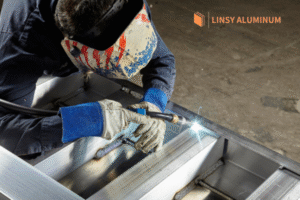
5052 welds easily with common methods, which makes fabrication simpler and broadens its uses.
Chemical Composition Breakdown
The character of 5052 comes from its ingredients. Magnesium is the main addition: at roughly 2.5%, it raises strength, improves corrosion resistance, and aids weldability.
5052 also contains small amounts of other elements. Chromium is typically around 0.25% and helps boost corrosion resistance, while minor silicon and manganese add strength and improve workability.
The exact chemistry can vary slightly by grade and supplier, but magnesium, chromium, silicon, and manganese levels stay in a consistent range. That consistency is what lets the alloy hold its key properties from order to order.
How To Choose The Right Temper?
Choosing the right temper is one of the most important decisions when working with 5052. A temper is a treatment that sets the alloy’s final properties. The tempers you will see most often for 5052 come from the H (strain-hardened) series: H32, H34, and H38.
The “H” means the alloy was cold worked to raise strength, and the number (32, 34, 38) shows how hard the temper is – a higher number means a stronger, stiffer temper. The “3” indicates a stabilized condition that holds those properties over time. For rolled flat stock, our 5052 H32/H34 aluminum sheet covers the most common tempers and is a practical starting point for selection.
Practical Applications of Aluminum Alloy 5052
5052 combines strength, corrosion resistance, and easy formability, so it shows up in many fields, from heavy equipment to sensitive electronic parts. The sections below review where it performs best.
Industrial Uses
In industrial settings, 5052 is a strong choice for corrosion resistance and toughness under difficult conditions. Typical marine and structural uses include:
- Boat hulls and parts: Its seawater corrosion resistance makes it ideal for hulls, decks, and other marine components.
- Chemical tanks and containers: Good chemical resistance makes it safe for storing and moving aggressive substances.
- Processing equipment: 5052 is used in food-processing tools, where cleanliness and rust protection are critical.
- Building parts: Its formability supports architectural and decorative panels.
- Truck and trailer bodies: The light weight and corrosion resistance help cut fuel use and maintenance.
- Appliances: Easy forming and good strength suit refrigerators, washers, and dishwashers.
Benefits in Automotive and Aerospace Industries
5052 is not limited to factories. Its weldability, corrosion resistance, and strength-to-weight ratio make it useful in cars and aircraft.
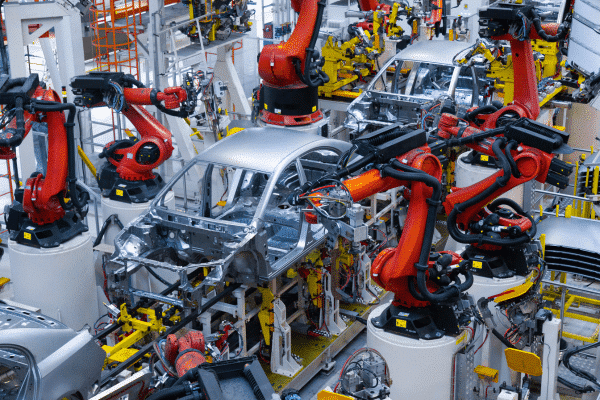
In automotive work, 5052 appears in:
- Body panels: Light, strong panels reduce weight and improve fuel efficiency.
- Fuel tanks: Corrosion resistance keeps fuel safe in storage and transit.
- Interior parts: It supports detailed designs while staying structurally sound.
In aircraft, 5052 is valued for being light and corrosion resistant:
- Aircraft skin and panels: Its strength-to-weight balance helps lower aircraft weight and improve efficiency.
Comparing With Other Alloys
5052 is often compared with alloy 6061 and alloy 7075. 5052 leads on corrosion resistance and welds easily, with strong fatigue strength. By contrast, 6061 offers higher tensile strength and suits structural builds, while 7075 is very strong but less corrosion resistant than 5052. Knowing these differences helps you pick the right alloy for the job.
5052 vs 6061
Moving beyond the 5000 series, 6061 is heat treatable, which gives it more flexibility for strength-tuning. Both 5052 and 6061 resist corrosion and are easy to work with, but they differ in strength and response to heat treatment.
6061 gains more tensile strength after heat treatment than 5052, which makes it a good fit for high-strength parts such as aircraft structures and bicycle frames.
6061 resists corrosion well, but not to the level of 5052 in marine settings. 5052’s higher magnesium content gives it better saltwater protection. For a full side-by-side breakdown, read our 5052 vs 6061 aluminum guide.
5052 vs 5082 vs 5083
The 5000 series includes several magnesium-bearing alloys: 5052, 5082, and 5083. They share magnesium as the key element, but differ slightly in chemistry and therefore in performance.
The table below compares these alloys:
| Alloy | Magnesium Content (%) | Tensile Strength (MPa) | Typical Use |
|---|---|---|---|
| 5052 | 2.2 – 2.8 | 228 – 331 | Marine use, appliances, general sheet metal |
| 5082 | 4.0 – 4.9 | 276 – 393 | Marine grade, pressure vessels, structures |
| 5083 | 4.0 – 4.9 | 290 – 414 | High-strength marine, armored plating, cryogenic tanks |
As the table shows, 5082 and 5083 carry more magnesium and therefore more strength than 5052. 5052 suits general sheet metal where medium strength is enough, while 5082 and 5083 fit heavier-duty jobs such as shipbuilding and pressure vessels.
The Price Of 5052 Aluminum
5052 is widely used because of its corrosion resistance and strength at a reasonable cost relative to other aluminum alloys. Price is driven by market demand, raw-material availability, manufacturing route, order quantity, and supplier pricing. Keep these factors in mind when budgeting so you get the best value for your project.
Certification of 5052 Aluminum
When buying 5052, verify quality against recognized industry standards. Certifications and specifications confirm that the material meets your requirements.
Bodies such as the Aluminum Association set and maintain alloy standards for composition and properties. Choose suppliers who follow ASTM specifications – for example, ASTM B209 covers aluminum and aluminum-alloy sheet and plate.
Also review the Safety Data Sheet (SDS) for handling, storage, and hazard information. This helps you use the material safely and effectively.
Conclusion
5052 is a versatile, corrosion-resistant alloy that performs well in marine, automotive, and general sheet-metal work. Its main trade-off is strength: 5052 is non-heat-treatable, so it cannot reach the tensile strength of heat-treated grades like 6061 or 7075, and the cold-worked tempers that add stiffness reduce formability.
Linsy Aluminum is a Shenzhen-based manufacturer with over 20 years of experience, supplying 5052 in plate, bar, tube, wire, coil, profile, and block forms across the 1000-8000 series. We deliver custom 5052 parts with a lead time of 10-60 days, backed by in-house CNC machining, welding, laser cutting, and surface treatments such as anodizing. Every order ships with a material test certificate (MTC), and our production holds ISO 9001, ISO 14001, and ISO 45001 certification, with SGS test reports available on request at extra cost.
Contact Linsy Aluminum to discuss your 5052 specification and request a tailored quote.
Frequently Asked Questions
Why is Aluminum Alloy 5052 preferred for marine applications?
5052 resists corrosion strongly, especially in marine settings, because magnesium and chromium help form a stable protective layer that blocks seawater and impurities from attacking the metal.
How does 5052 aluminum compare to other alloys in terms of strength?
5052 is strong thanks to its magnesium content, but it is not as strong as some heat-treated alloys. Its high fatigue strength still makes it a solid choice for parts under regular stress.
Can Aluminum Alloy 5052 be welded, and if so, how?
5052 welds easily. Common methods such as gas metal arc welding (GMAW) and tungsten inert gas welding (TIG) join it well, and the magnesium content helps the process. No pre-heating is needed, which keeps welding quick and simple.
What finishes are recommended for Aluminum Alloy 5052?
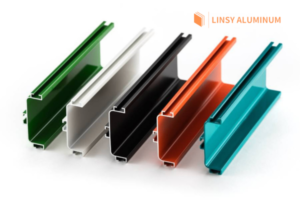
Anodizing builds a thicker oxide layer that improves corrosion resistance and durability. Powder coating and other finishes can also protect the surface and improve appearance.