Điểm nổi bật chính
-
2219 aluminum alloy is renowned for its high strength, excellent weldability, and impressive performance across a broad temperature range.
-
This alloy is extensively used in demanding aerospace applications, such as fuel tanks and aircraft structural components.
-
Its notable characteristics are its exceptional fracture toughness and remarkable corrosion resistance.
-
The alloy’s composition primarily consists of aluminum, with copper as its major alloying element, which contributes to its robust mechanical properties.
-
Adding elements such as manganese, zinc, vanadium, and titanium further enhances its strength and weldability.
-
2219 aluminum alloy is offered in various product forms, such as bars, sheets, plates, and forgings, showcasing its versatility in manufacturing.

Giới thiệu
2219 aluminum alloy is a premium choice for high-strength applications, particularly in aerospace. Its unique mechanical properties make it a top contender for use in challenging environments. This comprehensive guide will explore the properties, advantages, and applications of 2219 aluminum alloy, focusing on its significance in structural applications.
What Is 2219 Aluminum Alloy
Hợp kim nhôm 2219 belongs to the heat-treatable aluminum alloy family, celebrated for its exceptional strength and impressive corrosion resistance. This alloy is renowned for retaining its strength even at elevated temperatures, making it particularly well-suited for demanding applications.
Its superior strength stems from carefully adding copper as the primary alloying element, complemented by smaller additions of manganese, zinc, vanadium, and titanium. These alloying elements work synergistically to boost 2219 aluminum’s strength, weldability, and overall performance, solidifying its position as a leading material in demanding industries like aerospace.
Chemical Compositions of 2219 Aluminum
|
Yếu tố |
Nội dung (%) |
|---|---|
|
Aluminum, Al |
Balance (91.5 to 93.8%) |
|
Copper, Cu |
5.8 to 6.8 |
|
Iron, Fe |
0.3 max. |
|
Magnesium, Mg |
0.02 max. |
|
Manganese, Mn |
0.2 to 0.4 |
|
Silicon, Si |
0.2 max. |
|
Titanium, Ti |
0.02 to 0.10 |
|
Vanadium, V |
0.05 to 0.15 |
|
Zinc, Zn |
0.1 max. |
|
Zirconium, Zr |
0.10 to 0.25 |
|
Residuals |
0.15 max. |
The remarkable properties of 2219 aluminum alloy can be attributed to its finely tuned chemical makeup. Aluminum (Al) forms the base of this alloy, comprising the most significant percentage. Copper (Cu) is the primary alloying element, present in significant quantities, and plays a crucial role in enhancing the alloy’s strength.
Furthermore, manganese (Mn) is added to improve the alloy’s strength and machinability, while additions of elements like zinc, titanium (Ti), and vanadium further elevate its strength and weldability. These alloying elements work in concert to enhance specific properties, such as thermal stability and corrosion resistance.
Key Physical Properties of 2219 Aluminum

|
Tài sản |
Giá trị |
Ghi chú |
|---|---|---|
|
Tỉ trọng |
2.84 g/cm³ |
Lightweight for its strength. |
|
Điểm nóng chảy |
~543–643°C (1,009–1,189°F) |
Range depends on temper and alloy mix. |
|
Độ dẫn nhiệt |
116–130 W/m·K (T6 temper) |
Good heat dissipation. |
|
Độ dẫn điện |
30–34% IACS (T6 temper) |
Moderate conductor, typical for Al. |
|
Nhiệt dung riêng |
0.864 J/g·K |
The energy is needed to raise the temperature. |
|
Hệ số giãn nở nhiệt |
22.3 µm/m·K (20–100°C) |
How much it expands with heat. |
2219 aluminum alloy is sought after for its impressive mechanical properties, making it suitable for demanding applications. Notably, it exhibits high tensile and yield strength, indicating its ability to withstand significant loads without permanent deformation.
One of its standout features is its ability to perform well within a wide temperature range. This characteristic makes it ideal for applications where components are subjected to extreme thermal conditions.
The combination of high strength, good ductility, and an acceptable temperature range makes 2219 aluminum versatile. This alloy boasts good fracture toughness, increasing its reliability in critical applications where the risk of crack propagation is a significant concern.
Pros and Cons of 2219 Aluminum
|
Ưu điểm |
Nhược điểm |
|---|---|
|
Tỷ lệ sức mạnh trên trọng lượng cao |
Higher cost compared to other alloys |
|
Excellent performance at high temperatures |
Susceptible to stress corrosion cracking in some conditions |
|
Khả năng hàn tốt |
Lower corrosion resistance without proper treatment |
|
Great fatigue resistance |
Not as extrudable as 6000-series alloys |
|
Ideal for aerospace applications |
Limited availability in some markets |
On the plus side, it’s super strong because of its lightweight, which is why it’s a star in aerospace—like building rocket parts that won’t weigh a spaceship down. It also holds up great in hot conditions (think engines or space travel) and resists wearing out over time (that’s the fatigue resistance). Plus, it’s easy to weld, so manufacturers love working with it.
But there are downsides: it costs more than some other aluminum options, so it’s not the cheapest choice. It can crack under stress if not handled right, and without coatings, it’s not the best at fighting rust. It’s also harder to shape into thin tubes or profiles (not as “extrudable”) compared to alloys like 6063, and you might not find it everywhere
Comparing 2219 Aluminum to Other Alloys
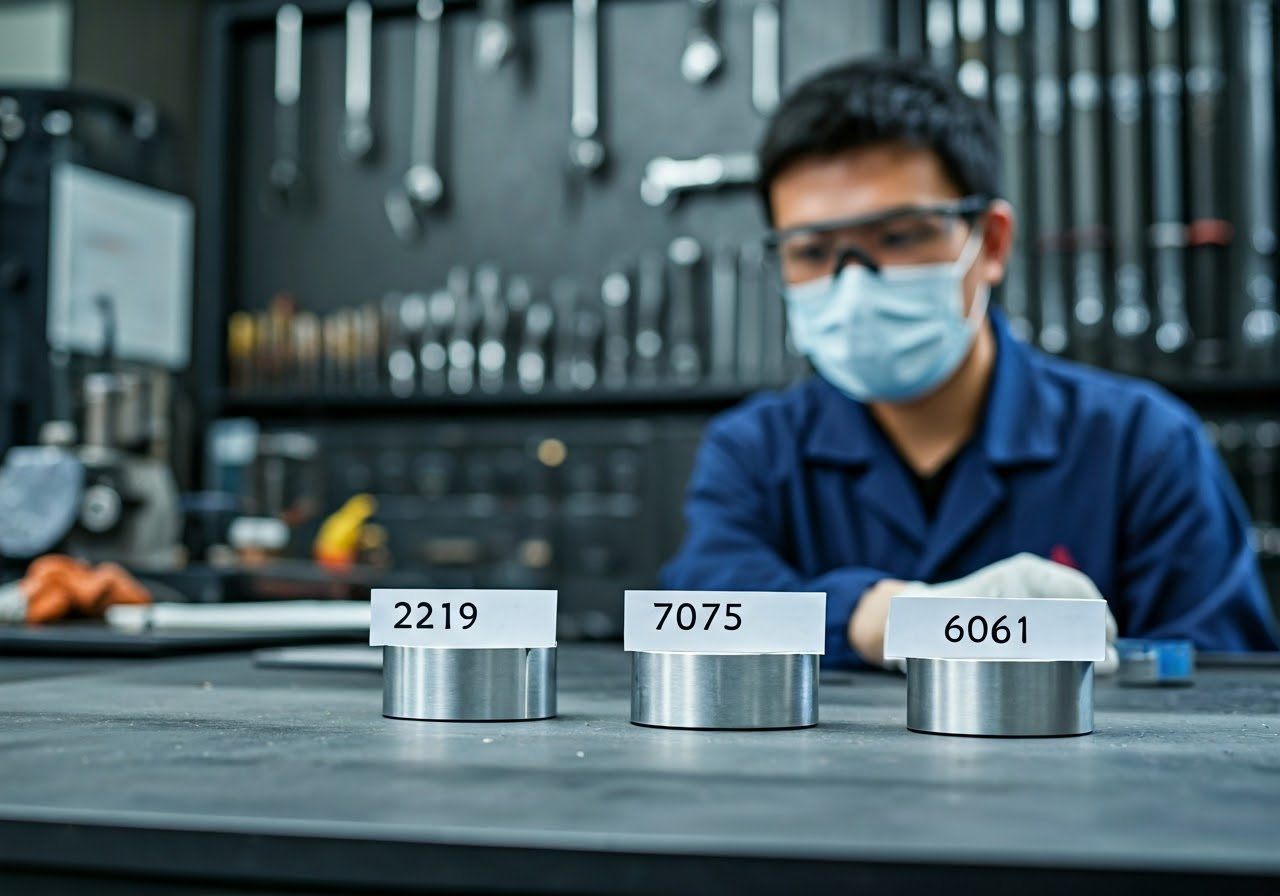
While 2219 aluminum alloy enjoys widespread use, it’s essential to understand how it compares to other popular aluminum alloys to make informed material selections. Comparing 2219 to alloys like 2024, 7075, and 6061, each recognized for its strengths, reveals insights into their suitability for specific applications. These comparisons consider corrosion resistance, strength, weldability, machinability, and overall suitability for specific tasks.
2219 vs. 2024 Aluminum Alloy

|
Thuộc tính/Tính năng |
Hợp kim nhôm 2219 |
Hợp kim nhôm 2024 |
|---|---|---|
|
Thành phần chính |
Al + 6.3% Cu |
Al + 4,4% Cu + 1,5% Mg |
|
Sức mạnh |
High (e.g., 414 MPa in T6) |
Very high (e.g., 470 MPa in T3) |
|
High-Temperature Performance |
Excellent (up to 643°C melting) |
Moderate (weaker at high heat) |
|
Khả năng chống ăn mòn |
Moderate (needs treatment) |
Kém (cần ốp/lớp phủ) |
|
Khả năng hàn |
Tốt |
Kém (dễ nứt) |
|
Sử dụng điển hình |
Aerospace (rocket tanks) |
Vỏ máy bay, các bộ phận cấu trúc |
2219 and Nhôm 2024 are both strong aluminum alloys, but they’re built for different jobs. 2219 has more copper and shines when things get hot—like in rocket fuel tanks—because it stays tough at high temperatures. 2024, with magnesium added, is a bit stronger overall and great for aircraft parts like wings, but it struggles with heat and rusts more easily unless coated. 2219 welds nicely, while 2024 doesn’t, so if you need to join pieces, 2219 wins. Pick 2219 for heat-heavy projects; go with 2024 for raw strength in cooler conditions.
2219 vs. 7075 Aluminum Alloy

|
Thuộc tính/Tính năng |
Hợp kim nhôm 2219 |
Hợp kim nhôm 7075 |
|---|---|---|
|
Thành phần chính |
Al + 6.3% Cu |
Al + 5,6% Zn + 2,5% Mg |
|
Sức mạnh |
High (e.g., 414 MPa in T6) |
Extremely high (e.g., 570 MPa in T6) |
|
High-Temperature Performance |
Excellent (up to 643°C melting) |
Moderate (softens above 400°C) |
|
Khả năng chống ăn mòn |
Moderate (needs treatment) |
Trung bình (tốt hơn năm 2024) |
|
Khả năng hàn |
Tốt |
Kém (không khuyến khích) |
|
Sử dụng điển hình |
Aerospace (high-temp parts) |
Military, aircraft frames |
2219 and Nhôm 7075 are powerhouses, but they’re not twins. 7075, packed with zinc, is one of the strongest aluminum alloys out there—perfect for military gear or plane frames where brute strength matters most. 2219 isn’t quite as strong but rules at high temperatures, making it a go-to for spacecraft parts. 7075 doesn’t weld well, while 2219 does, giving 2219 an edge in fabrication. Corrosion-wise, they’re similar—both need help to fight rust. Choose 7075 for max strength; pick 2219 if heat’s a factor.
2219 vs. 6061 Aluminum Alloy
|
Thuộc tính/Tính năng |
Hợp kim nhôm 2219 |
Hợp kim nhôm 6061 |
|---|---|---|
|
Thành phần chính |
Al + 6.3% Cu |
Al + 1% Mg + 0,6% Si |
|
Sức mạnh |
High (e.g., 414 MPa in T6) |
Trung bình (ví dụ: 310 MPa trong T6) |
|
High-Temperature Performance |
Excellent (up to 643°C melting) |
Moderate (weaker above 400°C) |
|
Khả năng chống ăn mòn |
Moderate (needs treatment) |
Good (naturally resistant) |
|
Khả năng hàn |
Tốt |
Excellent (very versatile) |
|
Sử dụng điển hình |
Aerospace (rocket components) |
General use (frames, pipes) |
2219 and Nhôm 6061 are like apples and oranges. 2219 is a heavy-duty alloy with tons of copper, built for high strength and hot environments—like rockets or jet parts. 6061, with magnesium and silicon, is less strong but super easy to work with and resists rust better, so it’s everywhere: bikes, boats, you name it. Both weld well, but 6061 is the champ there. 2219 costs more and needs coatings for corrosion, while 6061 is cheaper and tougher against the elements. Go 2219 for extreme jobs; stick with 6061 for everyday stuff.
Phần kết luận
In conclusion, understanding the properties, applications, and comparisons of 2219 Aluminum Alloy is crucial for informed decision-making in various industries. Its unique characteristics make it a valuable material for specific needs. Whether you are considering its strength, weldability, or specific applications, knowing how it stands out against other alloys can guide your choices effectively. If you have further questions or need specific guidance on utilizing 2219 Aluminum Alloy, don’t hesitate to contact our experts for tailored assistance.
Tại sao nên chọn Linsy Aluminum
Là một trong những thương hiệu nhôm hàng đầu và là nhà cung cấp hàng đầu tại Trung Quốc, Nhôm Linsy nhấn mạnh chất lượng và độ tin cậy trong tất cả các sản phẩm của mình. nhà máy nhôm ở Trung Quốc Sản xuất hợp kim nhôm hiệu suất cao, đáp ứng những yêu cầu khắt khe nhất của ngành. Với cam kết hướng đến sự hoàn hảo, chúng tôi cung cấp độ chính xác, độ bền và các tùy chọn phù hợp để đáp ứng nhu cầu cụ thể của dự án, khẳng định vị thế là đối tác đáng tin cậy cho các doanh nghiệp trên toàn cầu đang tìm kiếm giải pháp nhôm vượt trội. NHẬN BÁO GIÁ
Những câu hỏi thường gặp
How does 2219 aluminum compare to other alloys in terms of strength?
2219 aluminum alloy exhibits high strength, tensile strength, and yield strength, though other alloys like 7075 can surpass it in this regard. However, 2219 stands out with its balance of strength, mechanical properties, and corrosion resistance, making it a compelling option for various applications.
What are the primary applications of 2219 aluminum alloys in the industry?
2219 aluminum alloy finds its niche in demanding applications, primarily within the aerospace industry. Its use in crafting fuel tanks for rockets and forming the skin of supersonic aircraft highlights its strength and good fracture toughness in high-stress, high-temperature environments.
Can 2219 aluminum be welded, and if so, what techniques are recommended?
Yes, 2219 aluminum is weldable, although precautions are necessary. Recommended techniques include inert gas welding and resistance welding. Using conventional methods with proper base lubrication and immediate cold-water quenching after welding is crucial to mitigate potential issues.