铝与不锈钢:专家比较

308751729937665_.pic

免费样品

308771729937665_.pic

中国制造商

308781729937665_.pic

快速反应

308761729937665_.pic

批量购买折扣

308771729937665_.pic

中国制造商

主要亮点

  • Aluminum is lightweight (one-third the density of stainless steel) with high thermal conductivity — ideal for aerospace, automotive, and heat exchange applications.
  • Stainless steel offers superior strength and excellent corrosion resistance — the preferred choice for construction, medical equipment, and high-temperature environments.
  • Both metals resist corrosion through different mechanisms, so key deciding factors are weight, strength requirements, operating temperature, and budget.

导言

Choosing the right metal for your project is critical in engineering, manufacturing, and construction. Two of the most common options are aluminum and stainless steel — both corrosion-resistant metals with distinct properties that affect performance, cost, and manufacturability. Aluminum is lightweight with high thermal and electrical conductivity. Stainless steel is tough, durable, and handles high temperatures well. This guide compares aluminum and stainless steel across strength, weight, corrosion resistance, thermal properties, cost, and applications to help you decide which material fits your requirements.

Key Differences Between Aluminum and Stainless Steel

Although both metals resist corrosion and are widely used across industries, they differ significantly in strength, weight, thermal behavior, and cost. Understanding these differences will help you choose the right material for your application.

A. Strength Comparison

Stainless steel is substantially stronger than aluminum. Its high tensile and yield strength make it ideal for load-bearing structures such as bridges, buildings, and heavy machinery. Many stainless steel grades are designed for even higher strength levels, performing well under demanding conditions.

不锈钢.png

Some 铝合金 can achieve respectable strength, but they rarely match stainless steel in absolute terms. However, aluminum offers an excellent strength-to-weight ratio, meaning it can deliver strong structural performance at a fraction of the weight — a critical advantage in weight-sensitive applications.

不锈钢强度.png
财产 铝质 不锈钢
拉伸强度(兆帕) 90-400 520-1100
屈服强度(兆帕) 40-275 250-800

B. Weight Comparison

Weight comparison between aluminum and stainless steel

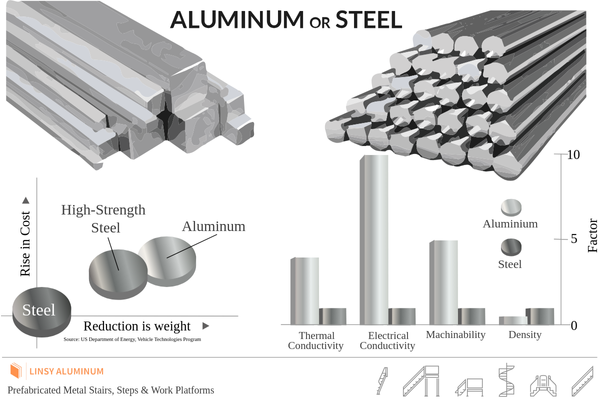
A key advantage of aluminum is its low density. Aluminum weighs about one-third as much as stainless steel (2.7 g/cm³ vs 7.9 g/cm³). This property is critical in aerospace and automotive applications, where lighter vehicles improve fuel efficiency and overall performance.

Aluminum’s combination of low weight and adequate strength makes it suitable for aircraft components, bicycle frames, and portable equipment. When designing load-bearing structures, the threefold weight difference between aluminum and stainless steel affects structural design, support requirements, and transportation logistics.

财产 铝质 不锈钢
密度 2.7 克/立方厘米 7.9 克/立方厘米

C. Corrosion Resistance

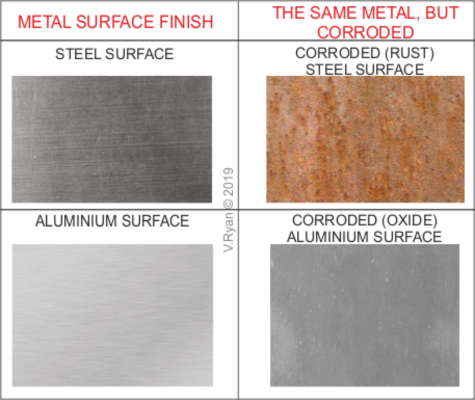
Both aluminum and stainless steel provide good corrosion resistance, but through different mechanisms. Aluminum forms a self-protective oxide layer when exposed to air, which prevents further oxidation under normal conditions.

Stainless steel vs aluminum corrosion resistance comparison

Stainless steel contains chromium, which forms a non-porous passive barrier against rust — even in aggressive environments. Stainless steel generally offers better corrosion protection in harsh conditions such as saltwater exposure or acidic environments. However, specific aluminum alloys (such as 5xxx marine-grade) perform well in marine applications where stainless might experience pitting from chlorides.

财产 铝质 不锈钢
耐腐蚀性 Good (Self-passivating oxide layer) Excellent (Chromium oxide barrier)

D. Thermal Conductivity

Stainless steel vs aluminum thermal conductivity comparison

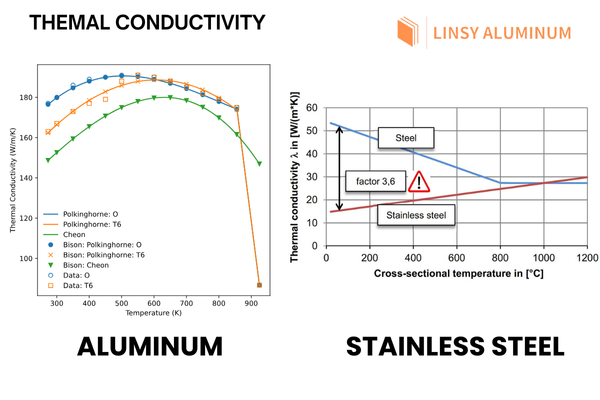
Aluminum conducts heat far better than stainless steel, which is essential for rapid heat dissipation. Electronics rely on aluminum’s efficient heat transfer to prevent overheating and maintain optimal performance. Aluminum cookware spreads heat evenly, minimizing hot spots. Stainless steel retains heat well, making it a better choice for insulation, containers, and high-temperature structural parts where heat retention is desired.

财产 铝质 不锈钢
导热性 高(~205 W/mK) 低(~15 W/mK)

E. Heat Resistance

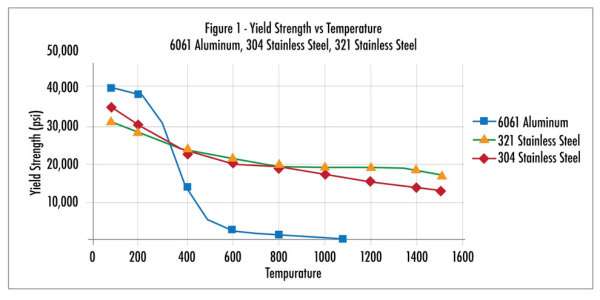
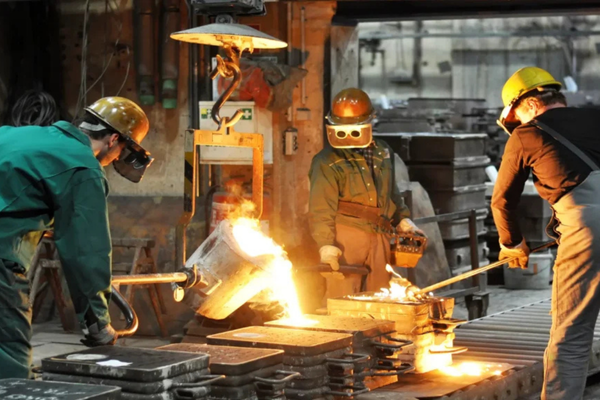
Stainless steel handles high temperatures with stability. It maintains structural integrity in hot conditions and is commonly used in furnaces, ovens, exhaust systems, and industrial processing equipment. Stainless steel retains both its strength and corrosion resistance under sustained high-temperature exposure.

高温下的不锈钢.png

Aluminum transfers heat efficiently but melts at a significantly lower temperature than stainless steel. Aluminum is not recommended for prolonged exposure to extreme heat.

财产 铝质 不锈钢
耐热性 Up to ~200°C (400°F) Up to ~815°C (1500°F)

Applications: Where Each Material Excels

A.航空航天业

In aerospace, material selection must balance weight and strength. Aluminum is the dominant choice — it provides the structural integrity needed for aircraft components while keeping weight low enough for efficient flight. Its corrosion resistance extends component lifespan and reduces maintenance costs.

B.建筑业

Construction demands durability, load-bearing capacity, and visual appeal. Stainless steel excels here: it resists weathering, offers multiple architectural finishes, and supports tall structures with minimal upkeep. Its long service life makes it cost-effective over decades, and its modern aesthetic complements a wide range of architectural styles.

C.汽车行业

The automotive industry increasingly relies on lightweight materials to meet fuel efficiency standards without compromising safety. Aluminum’s combination of strength, low weight, and corrosion resistance makes it a preferred material for engine components, body panels, wheels, and structural parts in modern vehicles.

Pros and Cons

铝的利与弊.png

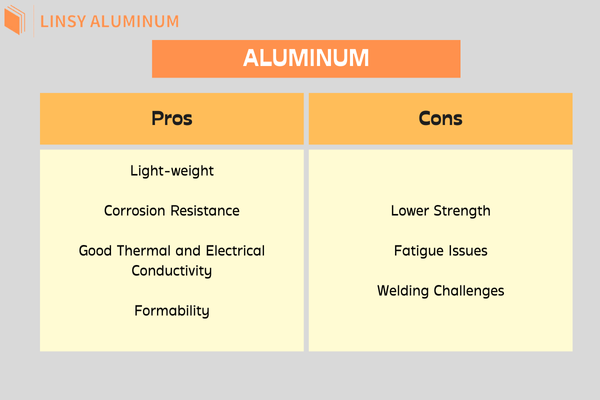
Aluminum Advantages

  • 重量轻 One-third the density of stainless steel, ideal for weight-sensitive designs.
  • 高导热性 Excellent for heat exchangers, cookware, and electronic housings.
  • Corrosion resistant: Self-passivating oxide layer protects against atmospheric corrosion.
  • Easily machined and formed: Lower tooling cost and faster production compared to stainless steel.
  • Recyclable: Aluminum can be recycled repeatedly without loss of properties.

Aluminum Limitations

  • Lower absolute strength: Cannot match stainless steel in heavy load-bearing applications.
  • Lower heat resistance: Melting point and high-temperature performance are limited.
  • More susceptible to chlorides: Can corrode faster than stainless in marine or chemical environments unless using marine-grade alloys.
  • Higher thermal expansion: May require design accommodations for temperature fluctuations.
不锈钢的优缺点.png

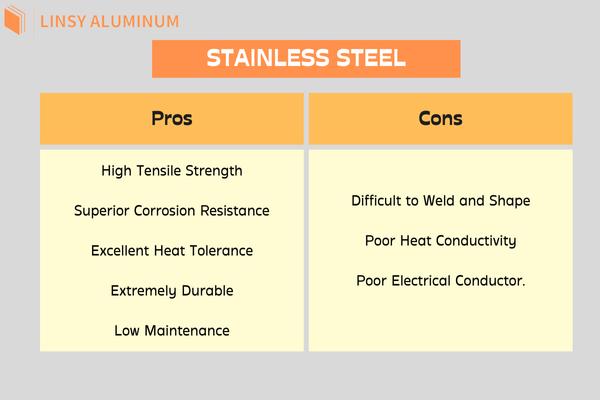
Stainless Steel Advantages

  • 强度高: Tensile strength up to 1100 MPa — ideal for structural and safety-critical applications.
  • 卓越的耐腐蚀性: Chromium oxide barrier protects even in harsh chemical and saltwater environments.
  • Superior heat resistance: Maintains properties at temperatures up to 815°C.
  • Durable and long-lasting: Low maintenance over decades of service.

Stainless Steel Limitations

  • Heavy: Three times the density of aluminum — adds significant structural and transportation cost.
  • Poor thermal conductivity: Not suitable for heat dissipation applications.
  • Harder to machine and form: Higher tooling cost and slower production speeds.
  • Higher cost: Some stainless grades and forms are more expensive than aluminum alternatives.

结论

Aluminum and stainless steel each serve distinct roles in engineering and manufacturing. The core trade-off is simple: aluminum offers lightweight construction, high thermal conductivity, and easier fabrication — at the expense of lower absolute strength and heat resistance. Stainless steel delivers superior strength, heat tolerance, and excellent corrosion protection — but at three times the weight and with higher machining difficulty.

For projects where weight, thermal performance, or manufacturability are the priority, aluminum is the better choice. For structural, high-temperature, or chemically aggressive applications, stainless steel is the proven option.

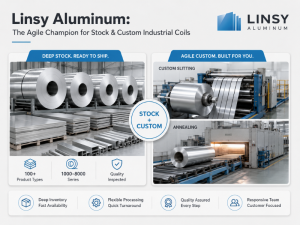
林西铝业, a Shenzhen-based aluminum factory with 20+ years of industry experience, supplies 1000-8000 series aluminum in plate, sheet, bar, tube, wire, coil, profile, and block forms. The factory operates under ISO 9001, ISO 14001, and ISO 45001 certified management systems, with SGS test reports available on request and material test certificates (MTC) issued with every order. In-house processing includes CNC machining, TIG and MIG welding, laser cutting, anodizing, polishing, mill finish, and powder coating. Custom production lead time is 10-60 days with low-MOQ options available.

立即联系Linsy Aluminum,讨论您的铝材需求并获取报价。.

常见问题

Which is lighter — aluminum or stainless steel?

Aluminum is about one-third the weight of stainless steel (density 2.7 g/cm³ vs 7.9 g/cm³). This makes aluminum the clear choice for weight-sensitive applications such as aircraft, automotive body panels, and portable equipment.

Which material is stronger?

Stainless steel is significantly stronger than aluminum, with tensile strengths ranging from 520-1100 MPa compared to 90-400 MPa for aluminum alloys. However, aluminum offers a better strength-to-weight ratio, meaning it can deliver adequate structural performance at much lower weight.

Is aluminum cheaper than stainless steel?

Cost depends on the specific alloy grade, form, and quantity. Generally, aluminum is less expensive per kilogram as a raw material. However, stainless steel can be more cost-effective in applications where its higher strength allows for thinner sections. Processing costs also differ — aluminum is easier to machine and form, which can reduce fabrication expenses.

How do aluminum and stainless steel compare in corrosion resistance?

Both materials resist corrosion through different mechanisms. Aluminum forms a self-protective oxide layer when exposed to air. Stainless steel relies on its chromium content to create a passive barrier. Stainless steel generally performs better in harsh chemical or saltwater environments, but specific aluminum alloys (such as 5xxx marine-grade) can also handle marine exposure well.

When should I choose aluminum over stainless steel?

Choose aluminum when weight reduction is a priority, when you need high thermal or electrical conductivity, or when easy machinability and formability are important. Common applications include aerospace components, heat exchangers, automotive parts, electronic housings, and marine structures using marine-grade alloys.

Is aluminum safe for food contact and medical applications?

Certain aluminum alloys are FDA-approved for food contact and are widely used in cookware, food packaging, and processing equipment. For medical implants and surgical instruments, stainless steel (particularly 316L grade) is the standard due to its superior biocompatibility and resistance to repeated sterilization. Aluminum is rarely used for implant-grade medical devices but is common in external medical equipment housings.

黄大卫

David Huang 是中国铝合金行业备受尊敬的专家,在先进铝合金的开发、制造和应用方面拥有十多年的经验。他曾成功地为航空航天、汽车和建筑等不同领域的全球领先企业提供项目解决方案和专业技术知识。此外,David 还是中国多家主要铝材制造商值得信赖的顾问。

全天候服务 10 分钟内响应!

如需更多产品目录、详细信息和报价,请直接与我们联系!

WhatsApp 电话