Einführung
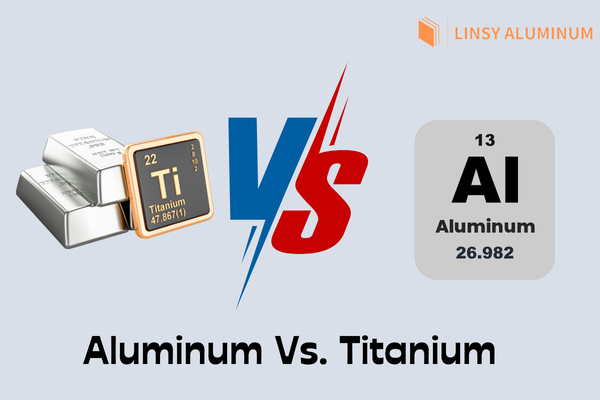
Aluminium und Titan sind beide leichte, feste und korrosionsbeständige Metalle. Sie nehmen jedoch sehr unterschiedliche Positionen im Materialmarkt ein. Titan kostet 10–30 Mal mehr pro Kilogramm als Aluminium, und jedes Metall dominiert spezifische Anwendungen, in denen seine einzigartige Kombination von Eigenschaften die besten Ergebnisse liefert.
Dieser Leitfaden vergleicht Aluminium und Titan anhand der Dimensionen, die für die Materialauswahl am wichtigsten sind: physikalische Eigenschaften, Verhältnis von Festigkeit zu Gewicht, Korrosions- und Temperaturbeständigkeit sowie Bearbeitbarkeit. Das Ziel ist es, Ingenieuren und Einkaufsteams zu helfen, zu identifizieren, welches Material für ihre Anwendung geeignet ist – nicht welches Material absolut gesehen “besser” ist.
Aluminium vs. Titan: Vergleich der wichtigsten Eigenschaften
Physikalische Eigenschaften
|
Eigentum |
Aluminium |
Titan |
|
Schmelzpunkt |
~660 °C |
~1668 °C |
|
Zugfestigkeit |
70-700 MPa (variiert je nach Legierung) |
900-1200 MPa (variiert je nach Sorte) |
|
Korrosionsbeständigkeit |
Hervorragend (bildet schützende Oxidschicht) |
Außergewöhnlich (beständig gegen Salzwasser, Säuren und Laugen) |
Beide Metalle haben ein hohes Verhältnis von Festigkeit zu Gewicht und bilden ihre eigenen passiven Oxidschichten. Titans höherer Schmelzpunkt und seine breitere chemische Beständigkeit machen es zur Standardwahl für extreme Umgebungen. Aluminiums geringere Kosten und einfachere Verarbeitung machen es zur praktischen Wahl für die meisten kommerziellen Anwendungen.
Verhältnis Stärke/Gewicht
|
Eigentum |
Aluminium |
Titan |
|
Verhältnis Stärke/Gewicht |
~158 kN-m/kg |
~187 kN-m/kg |
|
Zugfestigkeit |
140-690 MPa |
345-1.380 MPa |
|
Dichte |
~2,7 g/cm³ |
~4,5 g/cm³ |
|
Kosten |
Niedriger (Rohstoffpreisbildung) |
Höher (10–30x Aluminium pro kg) |
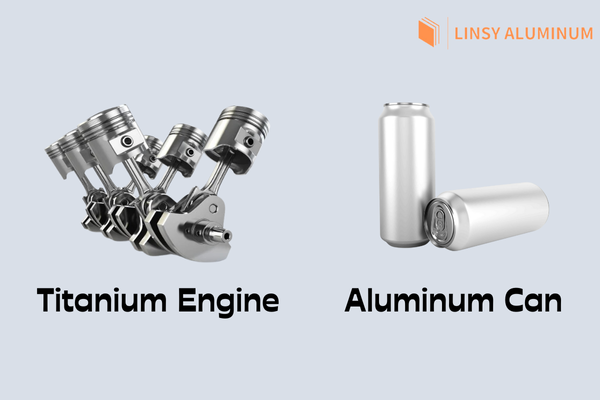
Titan erreicht ein höheres Verhältnis von Festigkeit zu Gewicht als Aluminium, weshalb es in Luftfahrtriebwerken und hochfesten Strukturkomponenten vorkommt. Titan ist jedoch etwa 60 % dichter als Aluminium. Für Anwendungen, bei denen absolute Gewichtseinsparungen wichtiger sind als die maximale Zugfestigkeit – wie Flugzeughäute, Karosserieteile im Automobilbau und Gehäuse für Unterhaltungselektronik – liefert Aluminium bessere Ergebnisse zu einem Bruchteil der Materialkosten.
Korrosions- und Temperaturbeständigkeit
|
Eigentum |
Aluminium |
Titan |
|---|---|---|
|
Schutzschicht |
Aluminiumoxid-Schicht (Al₂O₃); weniger wirksam in Säuren und Laugen |
Titandioxid-Schicht (TiO₂); beständig gegen Luft, Wasser, Säuren und Laugen |
|
Typische Umgebungen |
Allgemeiner Zweck; mäßige korrosive Belastung (Verpackung, Bauwesen) |
Marine, chemische Verarbeitung, medizinische Implantate, Tiefsee-Hardware |
Die Korrosionsbeständigkeit von Titan übertrifft die von Aluminium in aggressiven chemischen Umgebungen, einschließlich Salzwasser, starken Säuren und Laugen, bei weitem. Die Oxidschicht von Aluminium bietet in atmosphärischen und Süßwasserbedingungen ausreichenden Schutz, erfordert jedoch für anspruchsvollere Belastungen eine Eloxierung oder Beschichtungen.
|
Eigentum |
Aluminium |
Titan |
|---|---|---|
|
Schmelzpunkt |
~660°C |
~1668°C |
|
Beibehaltung der Stärke |
Verliert Festigkeit über ~200 °C |
Behält Festigkeit bis ~600 °C |
|
Wärmeleitfähigkeit |
~205-235 W/m-K |
~6-20 W/m-K |
|
Anwendungen |
Kühlkörper, Radiatoren, Wärmetauscher (hohe Wärmeleitfähigkeit) |
Luftfahrtriebwerke, Abgaskomponenten (Erhalt der Festigkeit bei hohen Temperaturen) |
Empfehlungen
- Wählen Sie Aluminium, wenn: Die Anwendung erfordert gute Korrosionsbeständigkeit unter moderaten Bedingungen oder hohe Wärmeleitfähigkeit (z. B. Elektronikkühlung, Kfz-Radiatoren).
- Wählen Sie Titan, wenn: Das Projekt erfordert außergewöhnliche Korrosionsbeständigkeit oder dauerhafte Leistung bei erhöhten Temperaturen (z. B. Luftfahrtriebwerkskomponenten, Marine-Hardware, chemische Prozessausrüstung).
Bearbeitbarkeit

Die Bearbeitbarkeit ist eine der größten praktischen Unterschiede zwischen diesen beiden Metallen. Aluminium lässt sich mit Standardwerkzeugen bei hohen Geschwindigkeiten sauber schneiden. Titan widersteht der Bearbeitung aufgrund seiner geringen Wärmeleitfähigkeit, seiner Neigung zur Kaltverfestigung und seiner Tendenz zum Fressen an Schneidwerkzeugen.
|
Eigentum |
Aluminium |
Titan |
|
Leichte Bearbeitbarkeit |
Hoch: weich, schnelle Schnittgeschwindigkeiten, minimaler Werkzeugverschleiß |
Niedrig: erfordert langsame Geschwindigkeiten, spezielle Werkzeuge und Kühlung |
|
Oberfläche |
Glatte Oberflächen mit Standardwerkzeugen erreichbar |
Anspruchsvoll – Risiko von Fressen und Aufbauschneiden an Werkzeugen |
|
Kosten der maschinellen Bearbeitung |
Niedrig: schnellere Zykluszeiten und geringerer Werkzeugverbrauch |
Hoch: langsame Geschwindigkeiten, häufiger Werkzeugwechsel, zusätzliche Kühlung |
|
Anwendungen |
Großserienproduktion, Automobilteile, Unterhaltungselektronik |
Luftfahrtkomponenten, medizinische Implantate, Hochleistungsanwendungen |
Empfehlungen
- Wählen Sie Aluminium: Wenn Geschwindigkeit, Wirtschaftlichkeit und einfache Bearbeitung die primären Projektfaktoren sind.
- Wählen Sie Titanium: Wenn das Bauteil extremen Belastungen oder rauen Umgebungen standhalten muss und die höheren Bearbeitungskosten pro Teil durch die Leistungsanforderungen gerechtfertigt sind.
So wählen Sie zwischen Aluminium und Titan
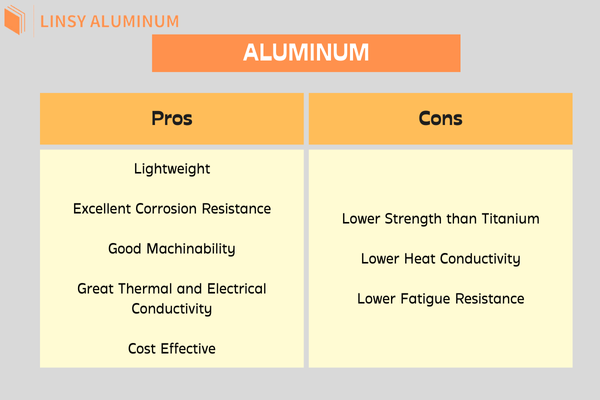
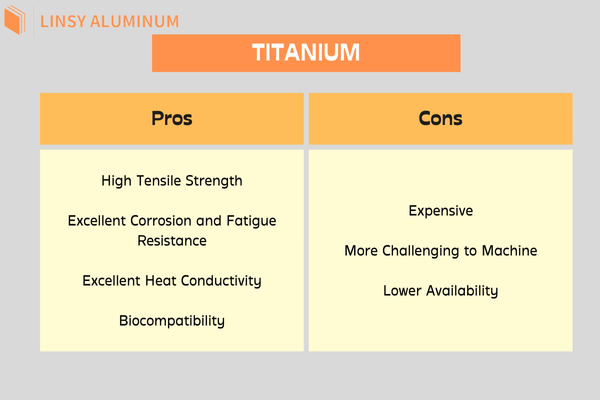
Die Materialauswahl ist ein Kompromiss zwischen Leistungsanforderungen und Projektbeschränkungen. Es gibt kein universell “besseres” Metall – nur das Metall, das zu Ihrer spezifischen Situation passt.
Wählen Sie Titan, wenn:
- Ihre Anwendung arbeitet in extremen Umgebungen: Luftfahrtriebwerke, Tiefsee-Hardware, chemische Verarbeitung oder medizinische Implantate.
- Biokompatibilität ist eine harte Anforderung.
- Das Budget erlaubt 10–30x höhere Materialkosten und die zusätzlichen Bearbeitungsausgaben.
Wählen Sie Aluminium, wenn:
- Leichtbau und Wirtschaftlichkeit sind primäre Treiber (z. B. Fahrzeugkomponenten, Unterhaltungselektronik, Baumaterialien).
- Hohe Wärme- oder elektrische Leitfähigkeit ist erforderlich.
- Ihr Fertigungsprozess erfordert schnelle Bearbeitung, einfaches Schweißen und flexibles Umformen – ohne die speziellen Werkzeuge, die Titan erfordert.
Schlussfolgerung
Aluminium und Titan erfüllen jeweils wesentliche Rollen in der modernen Fertigung, aber sie gehören zu unterschiedlichen Bereichen des Materialspektrums. Titan zeichnet sich in Anwendungen aus, in denen seine extreme Korrosionsbeständigkeit, Hochtemperaturfestigkeit und Biokompatibilität seine Kosten rechtfertigen – Luftfahrtriebwerke, chirurgische Implantate und Tiefseeausrüstung. Für die anderen 95 % der Fertigung, in denen Budget, Umformbarkeit und Materialverfügbarkeit stärker wiegen, ist Aluminium die pragmatische Wahl.
Linsy-Aluminium Linsy ist eine Aluminiumfabrik mit Sitz in Shenzhen mit über 20 Jahren Branchenerfahrung und liefert Platten, Bleche, Stangen, Rohre, Draht, Spulen, Profile und Blöcke in Legierungen der Serien 1000 bis 8000. Ob Sie Lagermaterial aus dem Bestand oder kundenspezifische Produktion mit geringer Mindestbestellmenge und einer Lieferzeit von 10–60 Tagen benötigen, Linsy bietet Direktlieferung ab Werk, unterstützt durch die Managementsysteme ISO 9001, ISO 14001 und ISO 45001. Jede Bestellung umfasst ein Materialprüfzertifikat (MTC), und SGS-Prüfberichte sind auf Anfrage erhältlich.
Zu den internen Fähigkeiten gehören CNC-Bearbeitung, TIG-Schweißen (GTAW), MIG-Schweißen (GMAW), Laserschneiden und Oberflächenveredelung – einschließlich Eloxieren, Polieren, Walzhaut, Pulverbeschichtung nach RAL 9016 und PVC-Schutzfolie.
Kontaktieren Sie Linsy Aluminum noch heute, um Ihre Aluminiumanforderungen zu besprechen und ein Angebot anzufordern.
Weitere Vergleiche:
Häufig gestellte Fragen
Was kostet mehr, Aluminium oder Titan?
Titan kostet 10–30 Mal mehr als Aluminium pro Kilogramm. Dieser Preisunterschied spiegelt Titans höhere Gewinnungs- und Raffinationskosten, die begrenztere globale Lieferkette und den energieintensiven Kroll-Prozess wider, der zur Herstellung von Titanschwamm verwendet wird. Die geringeren Kosten von Aluminium resultieren aus reichlich vorhandenem Bauxiterz und einer ausgereiften, hochskalierten Schmelzinfrastruktur.
Wann ist Titan den Aufpreis gegenüber Aluminium wert?
Titan rechtfertigt seine Kosten in Anwendungen, in denen ein Versagen nicht akzeptabel ist und Aluminium nicht leisten kann: Luftfahrtriebwerkskomponenten, die über 400 °C arbeiten, chirurgische Implantate, die Biokompatibilität erfordern, Tiefsee-Hardware, die Salzwasser bei extremen Drücken ausgesetzt ist, und chemische Prozessausrüstung, die starke Säuren verarbeitet. Für diese Anwendungsfälle ist Titan nicht “teuer” – es ist das einzige Material, das funktioniert. Für Anwendungen, in denen die Eigenschaften von Aluminium ausreichen, ist der Aufpreis selten gerechtfertigt.
Welches Metall bietet bessere Korrosionsbeständigkeit?
Titan bietet überlegene Korrosionsbeständigkeit, insbesondere in Salzwasser, starken Säuren und Laugen. Seine passive TiO₂-Schicht ist chemisch robuster als die Al₂O₃-Schicht von Aluminium. Aluminium bietet gute Korrosionsbeständigkeit in atmosphärischen und Süßwasserumgebungen, aber Eloxieren oder Schutzbeschichtungen werden in aggressiveren Bedingungen notwendig, in denen Titan ohne zusätzliche Behandlung korrosionsbeständig wäre.
Warum ist Titan schwerer zu bearbeiten als Aluminium?
Die geringe Wärmeleitfähigkeit von Titan hält Wärme an der Schneidkante zurück, was zu schnellem Werkzeugverschleiß führt. Es verfestigt sich auch kalt und neigt zum Fressen – es haftet an Schneidwerkzeugen und reißt sie auf, anstatt sauber zu scheren. Diese Eigenschaften erfordern langsame Schnittgeschwindigkeiten, starre Aufspannungen und reichlich Kühlmittel. Aluminium lässt sich leicht mit Standardwerkzeugen bei hohen Geschwindigkeiten bearbeiten, weshalb bearbeitete Aluminiumteile in der Serienproduktion weitaus häufiger vorkommen.
Welches Metall ist leichter, Aluminium oder Titan?
Aluminium ist leichter. Aluminium hat eine Dichte von etwa 2,7 g/cm³, während Titan etwa 4,5 g/cm³ beträgt – etwa 60 % dichter. Die höhere Festigkeit von Titan kann jedoch manchmal dünnere Wandstärken ermöglichen, was den Gewichtsnachteil in festigkeitskritischen Konstruktionen teilweise ausgleicht. Für Anwendungen, bei denen das absolut minimale Gewicht Priorität hat und die Festigkeitsanforderungen moderat sind, ist Aluminium die leichtere Wahl.
Wie kann ich Titan und Aluminium unterscheiden?
Titan fühlt sich bei gleichem Volumen deutlich dichter an und erzeugt einen dunkleren grauen Oberflächenton im Vergleich zu Aluminiums hellerem silbernem Erscheinungsbild. Titan entwickelt nicht den matten grauen Oxidfilm, der häufig auf Aluminium zu sehen ist. Titan hat auch eine viel geringere elektrische Leitfähigkeit und erzeugt weiße Funken beim Schleifen, während Aluminium nicht funkt. Ein einfacher Dichtetest – Wiegen eines bekannten Volumens – bietet die zuverlässigste Identifizierung vor Ort.