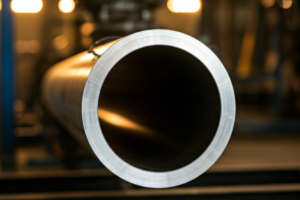
7075-T651, 7075’in en yüksek mukavemetli, gerilim giderme işlemi uygulanmış temperidir — parçanın çelik benzeri yükü çok daha düşük bir ağırlıkla taşıması gerektiğinde mühendislerin başvurduğu alüminyum kalitesidir. Bu kılavuz, T651 tanımının ne anlama geldiğini, gerçek değerleri, T6 ve korozyona dayanıklı temperlerle nasıl karşılaştırıldığını ve mukavemetinin nerede karşılığını verdiğini ele alır — böylece T651'in en yüksek mukavemetinin ve işleme stabilitesinin, korozyon ve birleştirme sınırlamalarına değip değmeyeceğine karar verebilirsiniz.
7075 Alüminyum Nedir?
7075, çinko, magnezyum ve bakır üzerine kurulu bir 7xxx serisi alaşımdır; burada MgZn₂ çökeltisi ana mukavemetlendirme fazıdır; çökelme sertleşmesi yoluyla, diğer hiçbir yaygın dövme alüminyumun eşleşemediği bir mukavemet seviyesine ulaşır ve bu da onu yüksek yük, ağırlık açısından kritik yapılar için kendi sınıfına yerleştirir. Bu en yüksek mukavemet, alaşımın kazanmak için tasarlandığı ödündür — ancak mukavemeti sağlayan aynı çinko açısından zengin, bakır içeren kimya, 7075'i aynı zamanda daha az korozyona dayanıklı ve füzyon yöntemleriyle pratikte kaynaklanamaz hale getirir.
Bu mukavemetin bedeli dar bir işleme penceresidir: 7075 korozyondan korunmalı ve kaynak yerine bağlama elemanlarıyla birleştirilmelidir; seçtiğiniz temper, işlenmiş parçanın ne kadar kalıntı gerilme taşıdığını belirler. Tam da bu kalıntı gerilme sorunu — ve parçanızın ağır işleme sonrası sıkı boyutsal stabilite gerektirip gerektirmediği — T651 temperini hassas işler için varsayılan tercih haline getirir; bunu bir sonraki bölüm açıklamaktadır.
T651 Temperini Anlamak
“T651”, malzemenin çözeltiye alınarak ısıl işleme tabi tutulduğu, su verildiği, gerilim giderme için çekildiği ve ardından yapay olarak yaşlandırıldığı anlamına gelir. Alaşım, Zn/Mg/Cu'yu katı çözelti içinde çözmek için ısıtılır, aşırı doymuş halde hapsetmek için su verilir, plakada kilitli kalan su verme gerilmelerini gidermek için %1–3 oranında çekilir ve ardından MgZn₂ çökeltilerinin en yüksek mukavemeti geliştirmesi için yaşlandırma sıcaklığında tutulur. Çekme işlemi, T651'i düz T6'dan ayıran adımdır.
Bu çekme işlemi, her tezgâh operatörü için önem taşıyan tek bir görevi yerine getirir: malzeme çıkarıldığı anda parçanın toleranstan çıkmasına neden olacak kalıntı gerilmeyi ortadan kaldırır. Kalın 7075 plakada, su verme, CNC işleme sırasında bitmiş bir bileşeni çarpıtabilecek kadar yüksek iç gerilme bırakır; T651 bunu önceden giderir, böylece parça kesimden sonra şeklini korur. Kalın, işlenmiş plaka için havacılık spesifikasyonları bu nedenle T6 yerine T651 talep eder.
7075’in kimyası, T651'in alüminyum mukavemet tablosunun zirvesine yerleşmesinin nedenidir — çinko (%5,1–6,1) birincil mukavemetlendirme elementidir, magnezyum çökelme reaksiyonunu mümkün kılar ve bakır sertlik katar; krom (%0,18–0,28) ise gerilme-korozyon çatlamasına karşı direnci artırır. Bunların hiçbiri bedava gelmez: bakır ayrıca 6xxx alaşımlarına kıyasla korozyon davranışını düşürür; bu, her 7075 uygulamasının tasarımında etrafından dolaşması gereken kısıtlamadır.
| Element | Tipik aralık (7075) |
|---|---|
| Çinko (Zn) | 5.1–6.1% |
| Magnezyum (Mg) | 2.1–2.9% |
| Bakır (Cu) | 1.2–2.0% |
| Krom (Cr) | 0.18–0.28% |
| Silisyum (Si) | Maks. %0,40 |
| Demir (Fe) | Maks. %0,50 |
| Manganez (Mn) | Maks. %0,30 |
| Titanyum (Ti) | Maks. %0,20 |
| Alüminyum (Al) | Denge |
T651'in T6'dan Farkı
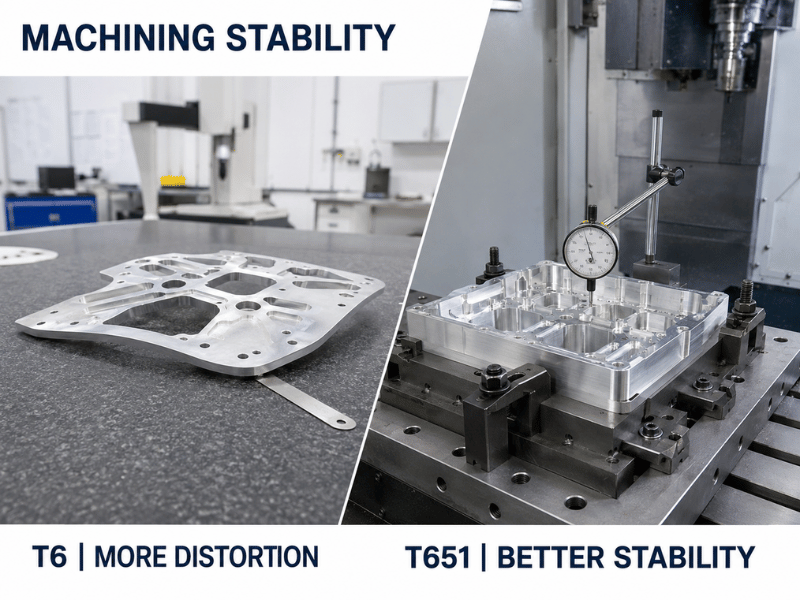
T6 ve T651 esasen aynı en yüksek mukavemete ulaşır — T651 çekmesi su vermeden sonra ve yaşlandırmadan önce gerçekleşir, dolayısıyla nihai sertliği veya akma dayanımını değiştirmez. Değişen şey kalıntı gerilmedir: T651 çok daha az taşır, bu nedenle ağır işlenmiş bir plaka düz ve boyutsal olarak stabil kalır; T6 ise malzeme çıkarılmasıyla iç gerilme serbest kaldıkça çarpılabilir. İnce kesitler ve hafif işlenen parçalar için T6 yeterlidir ve biraz daha ucuzdur; kalın plaka, fikstürler ve CNC işleminden sonra sıkı toleranslarda tutulan her parça için T651 daha güvenli spesifikasyondur. T651-T6 ve T73 karşılaştırmasının tam dökümü aşağıdaki karşılaştırma tablosunda yer almakta olup korozyon odaklı alternatif kılavuzumuzda ele alınmaktadır. 7075-T73 özellik kılavuzu.
7075-T651 Mekanik Özellikleri
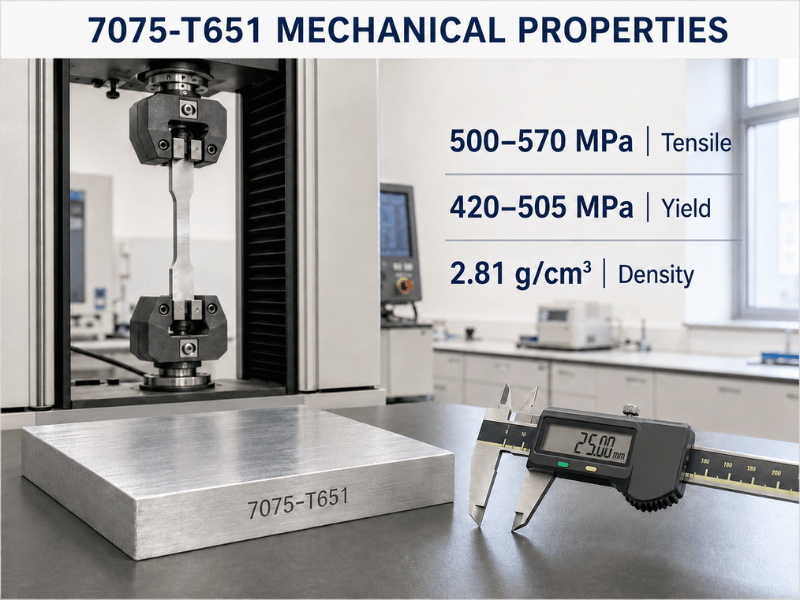
7075-T651, yaygın olarak stoklanan en güçlü alüminyum temperidir — aşağıdaki değerler plaka, çubuk ve blok için tipiktir.
| Mülkiyet | Tipik değer (7075-T651) |
|---|---|
| Yoğunluk | 2,81 g/cm³ |
| Çekme mukavemeti | ~572 MPa (83 ksi) |
| Akma mukavemeti (%0,2 ofset) | ~503 MPa (73 ksi) |
| Kopma uzaması | 11% |
| Yorulma mukavemeti | ~160 MPa |
| Brinell sertliği | ~150 HB |
| Elastik (Young) modülü | ~71,7 GPa |
| Kesme mukavemeti | ~331 MPa |
| Termal iletkenlik | ~130 W/m-K |
| Elektriksel iletkenlik | ~ IACS |
| Termal genleşme katsayısı | 23 µm/m·K |
~503 MPa akma dayanımı en çok önem taşıyan değerdir: 6061-T6'nın akma dayanımının yaklaşık 1,8 katı ve 2024-T3'ün yaklaşık üzerindedir; bu nedenle 7075, uçak gövdelerinde ve takım tezgâhlarında çeliğin yerini alır. Bu mukavemetin bedeli korozyon ve birleştirme davranışıdır — 7075 füzyonla kaynaklanamaz ve herhangi bir ıslak veya klorür ortamında yüzey koruması gerektirir. ~160 MPa yorulma dayanımı döngüsel yüklemeyi hâlâ iyi destekler, ancak alaşım yaklaşık olarak 6061 kadar rijittir (elastisite modülü ~71,7 GPa), dolayısıyla 7075 mukavemet-ağırlık oranında kazanır, rijitlikte değil. Alaşımlar arası genel görünüm için kılavuzumuza bakın. 6061 vs 7075 karşılaştırma rehberimize.
7075-T651 Nerede Kullanılır
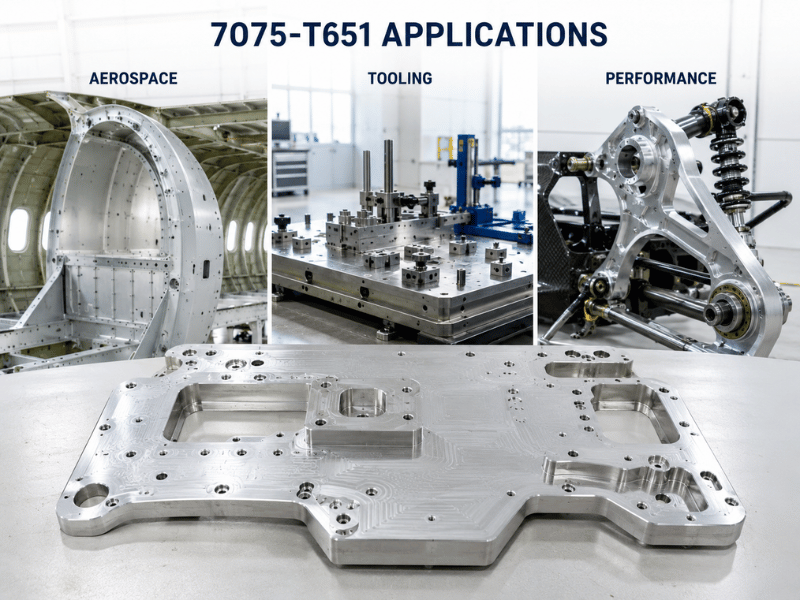
7075-T651, en yüksek mukavemetin ve işleme sonrası sıkı toleransların yapımı belirlediği ve kullanıcının parçayı korozyondan koruyabildiği ve bağlama elemanlarıyla birleştirebildiği her yerde yerini hak eder. 6061 ve 6063'ün çok yönlülük ve maliyete bıraktığı alüminyum yelpazesinin yüksek yük, hassas işlenmiş ucuna sahiptir.
Havacılık ve Hassas İşlenmiş Yapılar
Kanat kirişleri, gövde çerçeveleri, bölmeler, iniş takımı bileşenleri ve işlenmiş bağlantı parçaları T651 kullanır çünkü gerilim giderme işlemi uygulanmış plaka derin cep frezeleme boyunca toleransı korur. Kalıp ve takım yapımcıları da T651 plakaya başvurur: temiz bir yüzey elde edecek şekilde işlenir, kısa serili enjeksiyon veya şişirme kalıpları için cilalanır ve malzeme çıkarıldıktan sonra boyutsal olarak stabil kalır. Bunlar kuru, korunmuş, mukavemet açısından kritik ortamlardır — tam da T651’in en yüksek mukavemetinin doğru araç olduğu ve korozyon hassasiyetinin alaşım seçimiyle değil kaplamayla yönetildiği yerlerdir.
Yüksek Performanslı Otomotiv, Savunma ve Takım Tezgâhı
Yarış süspansiyon kolları, şasi plakaları, şanzıman muhafazaları ve bisiklet kadroları, maksimum yükte kütleyi azaltmak için T651 kullanır. Savunma ve zırh uygulamaları aynı mukavemet-ağırlık avantajından yararlanır. Ortak nokta, işlenen, cıvatalanan veya yapıştırılan — kaynaklanmayan — ve tuzlu su yerine havada çalıştırılan bir parçadır. Sürekli neme, deniz hizmetine veya klorür ortamlarına maruz kalan herhangi bir bileşen için T651'den kaçının; bunlar için aşırı yaşlandırılmış 7075-T73/T7351 temperlerine veya bir 5xxx/6xxx kalitesine geçin.
T651 vs Diğer 7075 Temperleri — Nasıl Seçilir
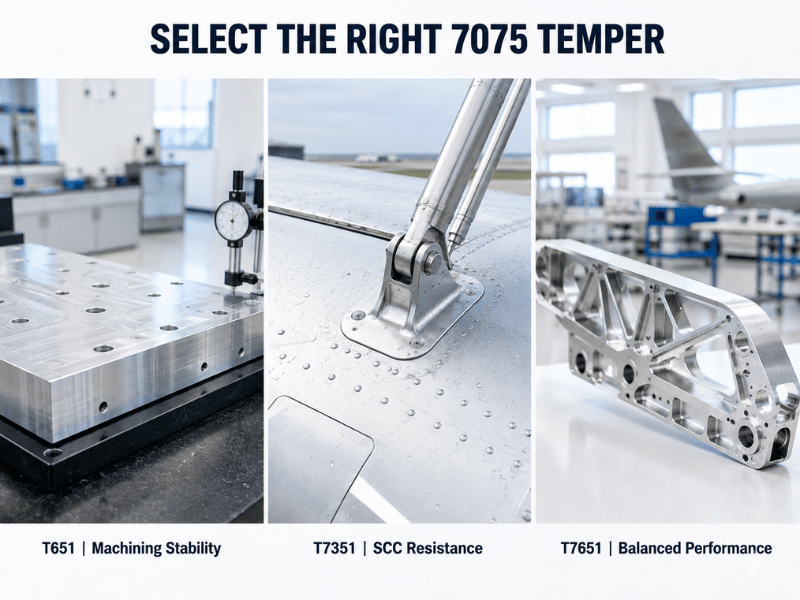
7075-T651 en yüksek mukavemetli, gerilim giderme işlemi uygulanmış seçenektir; diğer temperler mukavemeti korozyon direnci veya şekillendirilebilirlik karşılığında takas eder.
| Temper | İşlem | Çekme Dayanımı (MPa) | Akma Mukavemeti (MPa) | SCC direnci | İçin en iyisi | Kaçının |
|---|---|---|---|---|---|---|
| T651 | Çözelti + çekme + yaşlandırma | ~572 | ~503 | Orta düzeyde | Hassas işlenmiş plaka, fikstürler, kuru hava yapıları | Nemli, deniz veya klorür maruziyeti |
| T6 | Çözelti + yaşlandırma | ~572 | ~503 | Orta düzeyde | Genel yüksek mukavemet, ince kesitler | Sıkı toleranslı işlenmiş kalın plaka |
| T73 / T7351 | Çözelti + çekme + aşırı yaşlandırma | ~505 | ~435 | Mükemmel | Nemli/tuzlu havacılık, denizcilikle temaslı parçalar | En yüksek mukavemet gereklidir |
| T76 / T7651 | Çözelti + çekme + dengeli aşırı yaşlandırma | ~510 | ~420 | İyi | Yarı açık kaplamalar, dengeli yük + korozyon | Maksimum mukavemet gereklidir |
| O | Tavlanmış | ~250 | ~110 | İyi | Şekillendirme, kesme, zorlu bükümler | Her türlü yük taşıma kullanımı |
T651 Ne Zaman Doğru Tercihtir
Parça kalın plakadan işlendiğinde veya ağır malzeme çıkarılmasından sonra sıkı toleransları koruması gerektiğinde T651'yi seçin — çekme adımı onu çarpılmaktan koruyan şeydir. Parça kuru, korunmuş, mukavemet açısından kritik bir ortamda (uçak gövdesi iç yapıları, takım tezgâhları, yarış bileşenleri) yaşadığında ve korozyon alaşım değişimiyle değil kaplamayla yönetildiğinde T651'yi seçin.
Başka Bir Temper Ne Zaman Daha Uygundur?
Parça sürekli neme, tuzlu suya veya klorüre maruz kaldığında ve tam olarak korunamadığında T73 veya T7351'e geçin — kat kat daha iyi SCC direnci karşılığında ~–15 akma dayanımından feragat edersiniz. Yarı açık yapılarda hem makul mukavemet hem de iyileştirilmiş korozyon gerektiğinde T76/T7651'e başvurun. Füzyonla kaynaklanması veya sıkı yarıçaplarla şekillendirilmesi gereken herhangi bir parça için 7075'i tamamen bırakın: 6061-T6 çok daha iyi kaynaklanır ve şekillendirilir (bkz. 6061-T6 tam kılavuzu), ve O temperi şiddetli şekillendirmeye uygun tek 7075 durumudur.
7075-T651 ile Çalışmak — Bilmeniz Gerekenler
- İşleme. T651 işlemeye mükemmel uygundur — yüksek hızda keser, kısa kırık talaşlar oluşturur ve germe adımı kalıntı gerilimi zaten giderdiği için toleransı korur. 7075'in CNC plaka ve kalıp işlerinde favori olmasının nedeni budur; keskin karbür takımlar ve iyi soğutucu akışı kullanın ve daha yüksek ilerlemelerde 6061'den daha iyi yüzey kalitesi bekleyin.
- Kaynak. 7075 füzyon kaynağı için önerilmez — ark işlemleri sıcak çatlamaya neden olur, ısıdan etkilenen bölgeyi –50 yumuşatır ve serviste gerilme korozyonlu çatlamaya davet eden kalıntı gerilim bırakır. Yapısal bağlantılar için perçinleme, cıvatalama veya yapıştırıcı ile birleştirme tasarlayın; kaynağın kaçınılmaz olduğu durumlarda sürtünme karıştırma kaynağı (FSW) temel mukavemetin 'ından fazlasını korur, ancak bir 7075 yük yolunun füzyon onarımı servise dönmemelidir.
- Korozyon koruması. T651 yalnızca orta düzeyde korozyon direncine sahiptir ve zirve yaşlandırılmış durumda SCC'ye hassastır, bu nedenle açık yüzeyleri koruyun: anodizasyon (Tip II veya III), kromat dönüşüm kaplaması (Alodine), kaplama veya boya. Deniz veya klorür servisindeki her şey için yalnızca kaplamaya güvenmek yerine T73/T7351 belirtin.
- Şekillendirilebilirlik. T651 zayıf şekillendirilebilirliğe sahiptir ve dar yarıçaplı bükülmelerde çatlar; büyük bükülme yarıçapları kullanın ve geri yaylanma için plan yapın. Gerçek şekillendirme O temperine aittir, parça şekillendirmeden sonra T6 veya T73'e ısıl işlem görür — T651'i doğrudan şekillendirmeyi beklemeyin.
Artılar ve Sınırlamalar Bir Bakışta
| Boyut | Avantaj | Sınırlama |
|---|---|---|
| Dayanım-ağırlık oranı | Herhangi bir yaygın alüminyumun en yükseği (~503 MPa akma) | 6xxx sınıflarının çok üzerinde maliyet |
| İşleme stabilitesi | T651 gerilim giderilmiş, CNC sonrası düz kalır | T651, T6'ya göre germe/işleme primi taşır |
| Yorulma | ~160 MPa döngüsel havacılık yüklerini destekler | Korozyonlu ortamlarda gerilme durumunda SCC riski |
| Korozyon | Kuru serviste kaplama ile yönetilebilir | En iyi ihtimalle orta düzeyde; 5xxx/6xxx'ten farklı olarak koruma gerektirir |
| Kaynaklanabilirlik | Kritik olmayan bağlantılar için FSW uygulanabilir | Füzyon kaynağı önerilmez |
| Stok Durumu | Plaka, çubuk ve blok olarak stoklanır | İnce cidar ve özel ekstrüzyonlar daha az yaygındır |
| SCC direnci | Kuru, korumalı parçalar için T651'de iyidir | Zirve yaşlandırılmış temperler ıslak serviste T73/T7351 gerektirir |
Sonuç
Ödünleşim açıktır: 7075-T651 size herhangi bir stok alüminyumun sunduğu en yüksek mukavemeti artı hassas parçaları toleransta tutan işleme stabilitesini verir — ancak korozyon koruması ve bağlanmış (kaynaklanmamış) bağlantılar gerektirir ve herhangi bir ıslak veya klorür ortamında yanlış tercihtir. Parça işlenmiş, yük-kritik ve korumalı olduğunda bunu seçin; korozyon söz konusu olduğunda T73/T7351'i ve kaynak veya şekillendirme yapıyı belirlediğinde 6061'i seçin.
At Linsy Alüminyum, 7075-T651'i plaka, çubuk, blok ve boru olarak stokluyoruz, diğer 7075 temperleri (T6, T73/T7351) formlar arasında mevcuttur. Her sipariş bir Değirmen Test Sertifikası ile gönderilir ve talep üzerine SGS kompozisyon, mekanik ve ultrasonik (kalın plaka) raporları mevcuttur. Ekibimiz çiziminizi inceler, doğru temperi ve boyutu önerir ve aşırı spesifikasyon yapmadan önce SCC riskini işaretler. Çizimi ve gereksinimleri gönderin, size bir sınıf uygunluk incelemesi ve teklif döndüreceğiz.
Sıkça Sorulan Sorular
7075-T651, 7075-T6'dan daha mı güçlü?
Esasen aynı. Her ikisi de ~572 MPa çekme ve ~503 MPa akma değerine ulaşır; T651 germesi yaşlandırmadan önce gerçekleşir ve nihai mukavemeti değiştirmez. Gerçek fark kalıntı gerilimdedir — T651 ağır işleme boyunca boyutsal olarak stabil kalır, T6 ise gerilim serbest bırakıldıkça çarpılabilir, bu nedenle T651 hassas işlenmiş plaka için spesifikasyondur.
7075-T651 kaynaklanabilir mi?
Füzyon kaynağı ile değil. Ark işlemleri sıcak çatlamaya neden olur, kaynak bölgesini –50 yumuşatır ve serviste SCC riski bırakır, bu nedenle yapısal 7075 bağlantıları perçinlenir, cıvatalanır veya yapıştırılır. Sürtünme karıştırma kaynağı kritik olmayan dikişler için çalışabilir ve temel mukavemetin çoğunu korur, ancak füzyon kaynaklı bir 7075 yük yolu servise dönmemelidir.
T651 mi yoksa T73 mü seçmeliyim?
Korozyonun kaplama ile yönetildiği kuru, korumalı, mukavemet-kritik parçalar için T651'i seçin. Parça sürekli neme, tuz spreyine veya klorüre maruz kaldığında T73 veya T7351'i seçin — SCC direnci için ~–15 akma değerinden feragat edersiniz, ki bu kat kat daha iyidir, bu nedenle havacılık dış ve denizcilikle ilgili parçalar aşırı yaşlandırılmış temperleri spesifiye eder.
7075-T651 deniz veya dış mekan kullanımı için uygun mu?
Yalnızca güçlü koruma ile, ve o zaman bile T651 deniz servisi için zayıf bir varsayılandır çünkü zirve yaşlandırılmış 7075 klorürde SCC'ye hassastır. Gerçek deniz veya kıyı maruziyeti için T73/T7351 belirtin veya 5xxx sınıfına geçin; T651 kuru, kaplanmış, hava aracı içi veya takım rolleri için uygundur.
Linsy 7075-T651 stokluyor mu ve teslim süresi nedir?
Evet. Stok plaka, çubuk, blok ve boru envanterden gönderilir; stokta olmayan boyutlar ve temperler alaşım, boyutlar ve işleme bağlı olarak tipik 10–60 gün teslim süresiyle özel üretimde çalışır. Linsy düşük-MOQ özel üretimi destekler, bu nedenle karışık spesifikasyonlu veya bulunması daha zor 7075 siparişleri nadiren bir projeyi bloke eder.