Key Highlights
- What it is: An electrochemical process that grows a hard, integrated aluminum oxide layer—not a surface coating—for lasting protection, forming a protective oxide film through the anodization process.
- Built-in durability: Boosts corrosion and wear resistance by 2–3x vs. raw aluminum, dramatically extending part life.
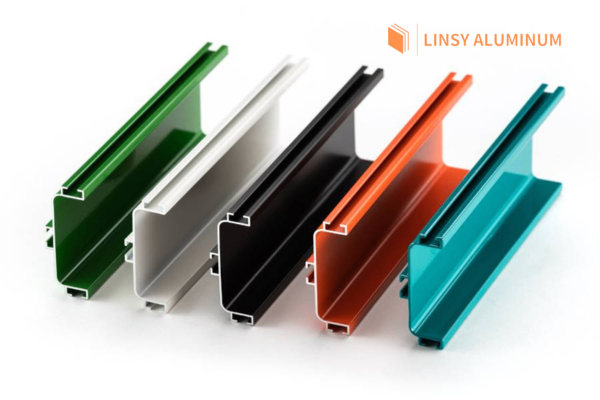
- Color that lasts: Choose from black, silver, bronze, gold—or custom colors—with gloss levels from matte to high-shine. Unlike paint, the color won’t chip or peel.
-
- Type II (Standard): Ideal for architectural, consumer, and decorative parts—great color + good protection.
- Type III (Hard Anodize): For extreme wear—used in aerospace, automation, and industrial gear.
Two main types:
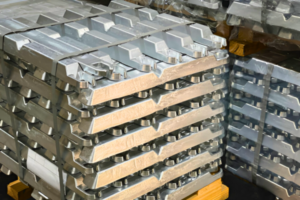
- Success starts with the metal: Over 70% of anodizing defects come from poor base material or surface prep. That’s why we supply certified 6063/6061 with Mill Test Reports—and control every step in-house.
Introduction
You’ve seen it—on water bottles, bike frames, and electronics. That tough, colorful finish? It’s anodized aluminum. Anodizing doesn’t just add color. It makes the surface more complicated, more corrosion-resistant, and longer-lasting.
But things can go wrong: uneven color, peeling, or early rust. Often, the problem isn’t the anodizing—it’s the aluminum itself or how it was prepared.
At Linsy, we start with high-quality, anodizing-grade metal and control every step. So your finish looks great—and lasts.
How Aluminum Anodizing Works
Aluminum naturally forms a thin anodized layer oxide layer when exposed to air—but it’s soft, uneven, and offers limited protection. Anodizing enhances this anodized layer through a controlled electrolytic process, turning the surface into something far tougher, more uniform, and ready for color.

First, the part is cleaned to remove oils and dirt. A clean surface is key to a good finish. Then it goes through etching to smooth the surface and remove minor flaws. This helps create an even base for the next steps.
After etching, a rinse removes any remaining metal residues. This ensures that the oxide layer forms evenly on the aluminum.
The primary step is anodizing: the part is placed in an acid bath, and an electric current is passed through it. This creates a strong, thick layer of aluminum oxide that grows from within the metal itself. It’s much tougher than paint or plating. This new oxide layer has tiny holes (pores), which can hold dye during the coloring stage. The dye fills these pores, making colors that last without peeling or chipping.
Finally, the part is sealed by soaking in hot water. This closes the pores, locking in the color and protecting the surface from damage.
Why Anodizing Is the Smart Choice for Your Aluminum Parts
If you’re designing a product that needs to look premium and survive real-world use, anodizing isn’t just an option—it’s the standard for top brands.
✅ Lasts Longer, Looks Better
Unlike paint or powder coating, anodizing doesn’t sit on top—it grows from the aluminum surface itself. That means:
- No peeling, chipping, or flaking—even after years of handling
- Colors stay vibrant in sunlight, humidity, or salty air
- Surface resists scratches from keys, tools, or daily wear
✅ Total Design Control
Want matte black for a sleek tech gadget? Or brushed silver for architectural trim? Anodizing gives you:
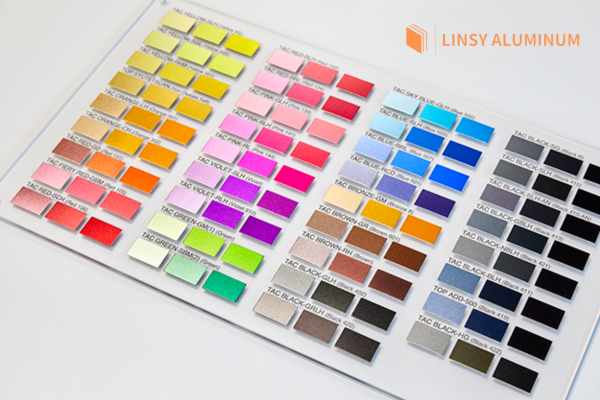
- 100+ color options (including custom brand matches)
- Consistent finishes across large production runs
- Natural metallic feel—no plastic-like coating
✅ Built-In Performance
Beyond looks, anodized parts deliver real engineering benefits:
- Corrosion resistance for outdoor or marine use
- Electrical insulation for electronic housings
- Eco-friendly process—no heavy metals or VOCs
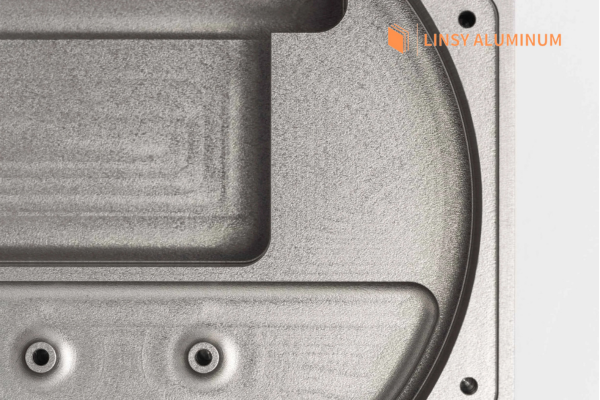
At Linsy, we don’t just run parts through a tank.
We start with certified 6061/6063 aluminum, control every step in-house, and test every batch for color match and coating thickness. So you get a finish that performs—and looks—exactly as promised.
Which Anodizing Type Is Right for Your Product?
When it comes to anodizing, Type II and Type III cover 95% of industrial needs—but they serve very different purposes. Here’s how to choose:
Type II: For Looks That Last (Standard Sulfuric Acid Anodizing)
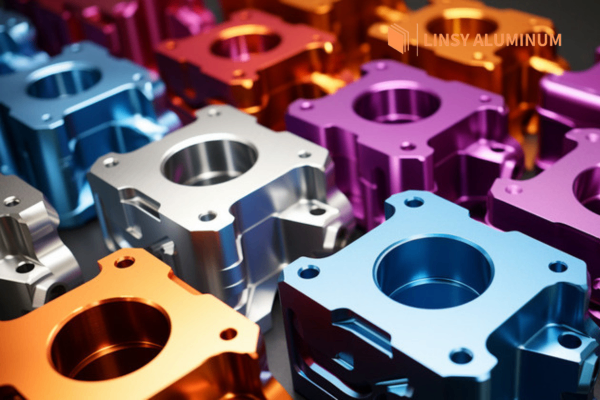
- Best for: Consumer electronics, architectural trim, lighting, water bottles, branding parts
-
- Wide color range (black, red, blue, gold, custom Pantones) with different colors available
- Smooth, consistent finish with matte to glossy options
- Good corrosion resistance for indoor or mild outdoor use
Why choose it?
-
- Not ideal for high-wear surfaces (e.g., sliding parts, tools)
- Coating thickness typically 5–25 μm
Limitations:
✅ Go with Type II if: Aesthetics, brand color matching, and cost efficiency matter most.
Type III: For Extreme Durability (Hard Anodizing / Hard Coat)
- Best for: Aerospace components, hydraulic pistons, military gear, automation parts, marine hardware
-
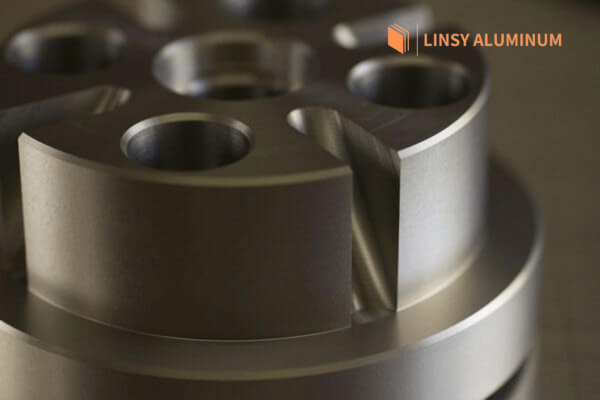
- Rigid surface (up to 60–70 Rockwell C)—resists scratches, abrasion, and galling
- Superior corrosion protection in salt spray, chemicals, or high-temp environments
- Coating thickness up to 50–100 μm (adds slight dimensional change—design accordingly)
Why choose it?
-
- Limited color options (mostly black, dark bronze, gray—bright colors don’t absorb well)
- Higher cost and longer processing time
Limitations:
✅ Go with Type III if: Your part faces heavy wear, friction, or harsh environments—and longevity trumps vibrant color.
Type II vs. Type III Anodizing: Quick Comparison
|
Feature |
Type II – Standard Anodizing |
Type III – Hard Anodizing |
|---|---|---|
|
Primary Purpose |
Aesthetics + moderate protection |
Maximum wear & corrosion resistance |
|
Typical Thickness |
5–25 μm |
25–100 μm (often 50+ μm) |
|
Surface Hardness |
~200–300 HV |
400–600+ HV (can exceed tool steel) |
|
Color Options |
✅ Full range: black, red, blue, gold, custom Pantones |
⚠️ Limited: mostly black, dark bronze, gray (bright colors fade or won’t take) |
|
Finish Appearance |
Smooth, uniform, matte to glossy |
Matte, slightly rougher texture |
|
Wear Resistance |
Good for light/normal use |
Excellent – ideal for sliding, high-friction parts |
|
Corrosion Resistance |
Good for indoor/mild outdoor |
Superior – withstands salt spray, chemicals, high temps |
|
Dimensional Change |
Minimal (often negligible) |
Noticeable – may affect tight tolerances |
|
Cost |
Lower |
Higher (due to longer cycle, more energy) |
|
Common Applications |
Consumer electronics, water bottles, architectural trim, lighting, branding parts |
Aerospace, military, hydraulic components, industrial machinery, marine hardware |
Color Options for Anodized Aluminum
Anodizing isn’t just about protection—it’s a powerful way to add permanent, chip-free color to aluminum products. At Linsy, we offer two main coloring approaches to suit your design and performance needs:
|
Coloring Type |
Best For |
Color Range |
UV Resistance |
|---|---|---|---|
|
Standard Dye |
Branding, consumer goods |
Full spectrum + custom |
Good |
|
Metallic Tones |
Outdoor, industrial, arch. |
Bronze, black, gray, blue |
Excellent |
🎨 Standard Dye Coloring
- Full color spectrum: From classic black and silver to vibrant reds, blues, greens—and custom Pantone matches
- Ideal for: Consumer products, indoor fixtures, branding parts
- Durability: Colors are sealed into the oxide layer—won’t peel or flake. Suitable for most indoor and mild outdoor use.
⚙️ High-Durability Metallic Tones (Electrolytic/Interference)
- Colors: Bronze, black, champagne, gray, blue, green—achieved through light interference or metal deposition
- Key advantage: Exceptional UV resistance—perfect for outdoor, automotive, or architectural applications
- No fading: These colors stay true even after years in direct sunlight or harsh weather
All colors are tested for consistency, and we provide physical swatches for approval before full production.
Have a specific shade in mind? Send us your color code—we’ll match it.
Why Anodizing Fails—and How Linsy Prevents It
Many anodizing defects—like uneven color, blotchy finishes, or powdery surfaces—aren’t caused by the anodizing process itself. In fact, over 70% stem from upstream environmental factors and issues: poor alloy quality, inconsistent fabrication, or inadequate surface prep.
At Linsy, we eliminate these risks by controlling every step that matters. Here’s how:
✅ 1. Anodizing-Grade Aluminum, Guaranteed
We only use proven alloys like 6063, 6061, and 5052—and every batch comes with a Full Mill Test Report (MTR) verifying key elements (Mg, Si, Fe). This ensures:
- Consistent anodizing response
- No hidden impurities causing streaks or discoloration
- Reliable color matching across production runs

✅ 2. Precision Process Control
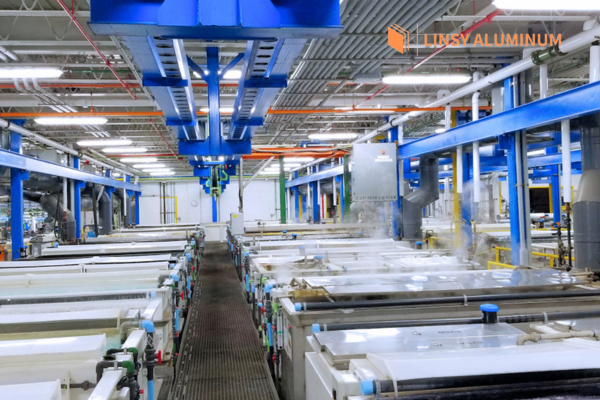
From etching to sealing, we tightly manage:
- Bath chemistry, temperature, and current density
- Dye concentration and immersion time
- Sealing quality (validated by optional salt spray tests up to 1000+ hours)
All processes comply with ASTM and ISO 9001 standards.
✅ 3. End-to-End Coordination = Fewer Defects
Because we handle cutting, welding, consultation, surface prep, anodizing, and packaging under one roof:
- No miscommunication between suppliers
- Weld areas are adequately cleaned and prepped for a uniform finish
- Final parts arrive ready to assemble—no rework needed
Excellent Finish Starts with Great Metal
A perfect anodized finish isn’t created in the tank—it’s built into the metal from day one. No amount of process control can compensate for poor alloy composition, hidden impurities, or inconsistent surface quality. That’s why material selection is the first—and most important—step in successful anodizing.
At Linsy, we give you that foundation by default. We supply only certified anodizing-grade aluminum (6063, 6061, 5052), backed by complete Mill Test Reports (MTRs) for every batch. This ensures consistent color uptake, zero streaking, and a flawless final appearance—every time, which is critical in achieving the best surface finishing.
And because we handle both material supply and anodizing in-house, you eliminate handoff risks, reduce lead times, and avoid the #1 cause of anodizing failures: upstream quality mismatches.
Ready to start your project on the right base?
Share your application details with us—we’ll specify the ideal alloy and finish to guarantee success. Or you can email [email protected] for a free consultation.
Frequently Asked Questions
1. How durable are anodized colors compared to paint or powder coating?
Anodized color is part of the metal itself—dye fills microscopic pores in the aluminum oxide layer, then gets sealed permanently. Unlike paint, it won’t chip, peel, or flake. With proper sealing, it offers excellent UV light and abrasion resistance, making it ideal for long-life products.
2. Why does my anodized part sometimes have uneven color or streaks?
Over 70% of color inconsistencies trace back to the base aluminum—not the anodizing process. Alloy impurities (like high iron), inconsistent temper, or poor surface prep (e.g., residual grease or weld discoloration) cause these defects, which can also affect the integrity of the porous oxide layer. That’s why we only use certified 6063/6061 with full Mill Test Reports (MTRs).
3. Can I get consistent color across multiple production runs?
Yes—but only if your aluminum alloy, temper, and surface finish are tightly controlled. At Linsy, we lock in material specs and run pre-production test panels for critical color matches, ensuring batch-to-batch consistency.
4. Are bright colors like red or blue suitable for outdoor use?
Standard organic dyes (red, blue, green) can fade under prolonged UV exposure. For outdoor applications, we recommend electrolytic coloring (bronze, black, gray, and darker colors), which uses metal salts deposited in the pores—offering superior UV stability and no fading for 10+ years.
5. Can welded or machined parts be anodized uniformly?
Yes, but weld zones often anodize darker due to heat-affected microstructure. We help you select compatible filler wire (e.g., ER5356) and apply post-weld cleaning protocols to minimize visual differences—something most anodizers don’t control.
6. What’s the difference between Type II and Type III anodizing?
- Type II: Decorative + moderate protection (5–25 μm). Great for consumer goods and architecture. Full color range.
- Type III (Hard Coat): Extreme wear resistance (25–100 μm). Used in aerospace/industrial. Limited to dark tones.
Both require high-purity aluminum—but Type III is far less forgiving of material flaws.
7. Do you supply the aluminum, or just provide anodizing?
We do both—and that’s our advantage. By sourcing your anodizing-grade aluminum (6063, 6061, 5052) directly from us, you eliminate the #1 cause of anodizing failure: mismatched upstream material quality which is crucial for quality control. Every coil comes with MTRs and is pre-qualified for consistent finishing.
8. How can I ensure my project succeeds from raw material to final finish?
Start with a consultation. Share your part design, environment, and color goals—we’ll specify the ideal alloy, temper, and anodizing type, then manage the entire process in-house.
9. Are there differences in coloringtechniques for aluminum versustitanium anodizing?
Anodizing aluminum usually involves creating an aluminum oxide layer, whereas titanium anodizing results in a different oxide layer. The coloring techniques differ because aluminum uses dye absorption into the porous aluminum oxide layer. In contrast, titanium’s colors are produced by varying the thickness of its oxide layer, which interferes with light to generate vibrant hues without added dyes.