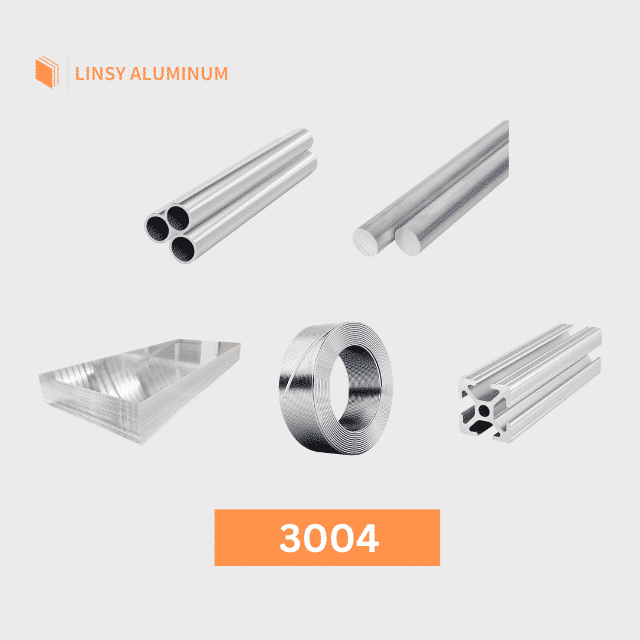



3004 aluminum alloy is a medium-strength Al-Mn-Mg alloy offering approximately 20% higher strength than 3003 while retaining comparable corrosion resistance. Widely used in can body stock, building products (roofing and siding), and cookware, 3004 is available from Linsy in sheet, coil, tube, bar, and wire forms. We supply standard tempers O, H12, H14, H16, H18, and H19 with custom dimensions, cut-to-length, and MTC reporting per EN 10204. Whether you need coil for beverage can production or sheet for architectural cladding, Linsy provides ISO 9001 certified material with flexible MOQs and a 10–60 day lead time.
Available forms: sheet / coil / tube / bar / wire / custom profile
Common tempers: O / H12 / H14 / H16 / H18 / H19
Processing support: cut-to-length / slitting / precision saw cutting / edge trimming
Quality documents: MTC with each order per EN 10204
3004 is an aluminum-manganese-magnesium alloy in the 3xxx series, designed as a higher-strength alternative to the widely used 3003 alloy. With a nominal composition of Al–1.2Mn–1.0Mg, 3004 delivers approximately 20% greater tensile and yield strength than 3003 while maintaining comparable corrosion resistance and excellent formability in the annealed condition.
This alloy is best known as the material behind the aluminum beverage can body — an application that demands a precise balance of formability for deep drawing, strength for internal pressure, and surface quality for printing and lacquering. Beyond packaging, 3004 is widely specified for building products, cookware, chemical equipment, and general sheet metal applications.
3004 is a non-heat-treatable, work-hardening alloy. Its mechanical properties are developed through cold working (H tempers) rather than solution heat treatment. This makes temper selection critical: O temper offers maximum formability for deep drawing, while H14 and H16 provide the structural strength needed in roofing, siding, and storage tank applications.
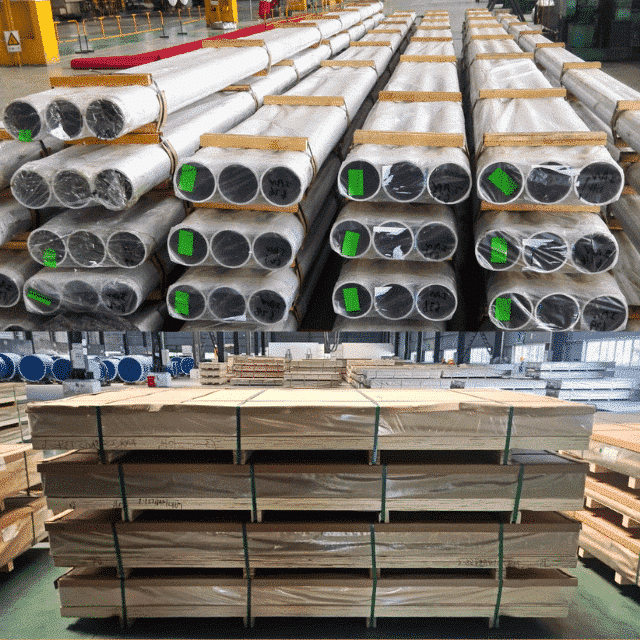
The dominant product forms for 3004. Sheet and coil are the core supply for can body stock, building panels, and general fabrication. Linsy stocks 3004 in O, H14, H16, H18, and H19 tempers with slitting, cut-to-length, and edge trimming as standard processing options.
| Form | Temper | Thickness (mm) | Width (mm) | Length (mm) |
|---|---|---|---|---|
| 3004 Sheet | O, H12, H14, H16, H18, H19 | 0.3 – 6.0 | 500 – 2600 | 1000 – 6000 |
| 3004 Coil | O, H12, H14, H16, H18, H19 | 0.3 – 4.0 | 500 – 2600 | Coil (by weight) |
Custom thickness, width, and length available on request. Coil inner diameter: 508 mm standard.
3004 round tube is available for fluid handling, heat exchanger, and structural applications where moderate strength and corrosion resistance are required. Supplied in O, H14, and H16 tempers.
| Form | Temper | Outer Diameter (mm) | Wall Thickness (mm) | Length (mm) |
|---|---|---|---|---|
| 3004 Round Tube | O, H14, H16 | 6 – 200 | 0.5 – 20 | 1000 – 6000 |
Square and rectangular tube available as custom order. Contact us with your section drawing.
3004 round bar for machining, fasteners, and general mechanical components. Available in work-hardened tempers for moderate strength applications.
| Form | Temper | Diameter (mm) | Length (mm) |
|---|---|---|---|
| 3004 Round Bar | O, H14, H16 | 3 – 200 | 1000 – 6000 |
Square and flat bar available as custom order.
3004 wire for rivets, fasteners, and general wire-form applications. Cold-drawn to H14, H16, or H18 for strength.
| Form | Temper | Diameter (mm) | Coil Weight | Tolerance |
|---|---|---|---|---|
| 3004 Wire | O, H14, H16, H18 | 0.8 – 10 | Min 50 kg | ±0.02 mm |
Custom profiles, extrusions, and fabricated parts available on inquiry. Contact our sales team with your drawing or specification for a feasibility assessment and quotation.
| Standard | Designation |
|---|---|
| EN / EN AW | EN AW-AlMn1Mg1 / EN AW-3004 |
| UNS | A93004 |
| ISO | AlMn1Mg1 |
| GB (China) | 3004 |
| JIS (Japan) | A3004 |
| AA (Aluminum Association) | 3004 |
3004 is covered under ASTM B209 (sheet and plate), EN 485 (sheet, strip, and plate), GB/T 3880 (wrought aluminum and aluminum alloy sheet), and related product-form standards.
| Element | Composition (%) |
|---|---|
| Silicon (Si) | 0.30 max |
| Iron (Fe) | 0.70 max |
| Copper (Cu) | 0.25 max |
| Manganese (Mn) | 1.0 – 1.5 |
| Magnesium (Mg) | 0.8 – 1.3 |
| Zinc (Zn) | 0.25 max |
| Others, each | ≤0.05 |
| Others, total | ≤0.15 |
| Aluminum (Al) | Balance |
Composition per ASTM B209 / EN 573-3. The primary alloying elements are manganese (for strength through solid-solution strengthening) and magnesium (for additional strength and work-hardening response).
The mechanical properties of 3004 vary significantly with temper. The table below shows typical values for sheet at 1.3 mm thickness per ASTM B209. Actual values may vary with product form and thickness.
| Temper | Tensile Strength (MPa) | Yield Strength (MPa, min) | Elongation (%, min) |
|---|---|---|---|
| O | 155 – 200 | ≥60 | ≥14 |
| H12 | 190 – 240 | ≥145 | ≥4 |
| H14 | 220 – 265 | ≥170 | ≥3 |
| H16 | 240 – 285 | ≥190 | ≥3 |
| H18 | ≥260 | ≥210 | ≥2 |
| H19 | ≥275 | ≥230 | ≥2 |
Values shown are typical for 1.3 mm sheet per ASTM B209. Thinner gauge material may show higher strength and lower elongation. H2x tempers (strain-hardened and partially annealed) offer intermediate strengths with improved ductility compared to H1x equivalents — contact us for H22/H24/H26 availability.
| Temper | Strength Level | Formability | Typical Applications |
|---|---|---|---|
| O | Lowest | Excellent — deep drawing, stretching | Can bodies, deep drawn cookware, complex stampings |
| H12 | Low – Medium | Good — moderate forming | General sheet metal, lightly formed panels |
| H14 | Medium | Moderate — limited bending | Roofing, siding, truck panels, storage tanks |
| H16 | Medium – High | Limited — gentle bending only | High-strength building panels, structural cladding |
| H18 | High | Minimal — flat applications | Can ends, stiffener panels, flat blanks |
| H19 | Highest | Minimal — flat only | Maximum stiffness applications |
3004 offers excellent resistance to atmospheric corrosion, fresh water, and many mild chemical environments — comparable to 3003 and other 3xxx series alloys. The manganese content contributes to a uniform, protective surface oxide. For applications involving alkaline or strongly acidic conditions, consult our technical team for compatibility assessment.
In the O temper, 3004 exhibits outstanding formability suitable for deep drawing, stretching, and bending — a key reason it is the standard alloy for beverage can bodies. Work-hardened tempers (H1x) progressively reduce formability but can still be bent, roll-formed, and stamped with appropriate tooling and bend radii.
With a density of 2.72 g/cm³, 3004 achieves approximately 20% higher strength than 3003 without a weight penalty — making it the preferred upgrade where 3003 strength is insufficient but the formability and corrosion resistance of the 3xxx series are still required.
3004 can be welded by gas welding and resistance welding methods. It is not recommended for arc welding (TIG/MIG) due to the risk of hot cracking in the weld zone. Brazing and soldering are feasible with appropriate flux. Mechanical fastening (riveting, bolting) works reliably in all tempers.
As a non-heat-treatable alloy, 3004 gains all its strength from cold working. The work-hardening rate is moderate — faster than pure aluminum but slower than 5xxx alloys. Annealing at 345°C followed by slow cooling restores full softness for reworking.
Cutting: 3004 sheet and plate can be sheared, slit, or saw-cut with standard aluminum tooling. Precision saw cutting is recommended for tight dimensional tolerances on bar and tube. Linsy provides cut-to-length and slitting services for sheet and coil.
Forming: For deep drawing and severe forming, specify O temper. For roll forming and moderate bending, H14 or H16 are suitable. Minimum bend radius for H14 temper is approximately 1x thickness for 90° bends — increase for tighter tempers.
Annealing: Heat to 345°C, hold for sufficient time to ensure through-heating, and slow cool (furnace cool or still air). Avoid rapid quenching, which may cause distortion in thin sheet.
Surface finish: Mill finish is standard. 3004 can be chemically cleaned, etched, or conversion coated for improved paint adhesion. Mechanical finishing (brushing, polishing) is feasible but the alloy is not typically specified for decorative anodizing — for anodized applications, consider 5xxx or 6xxx series alloys instead.
Every 3004 shipment from Linsy includes a Mill Test Certificate (MTC) per EN 10204 Type 3.1, documenting:
Additional testing available on request: intergranular corrosion testing, conductivity measurement, microstructural examination, and ultrasonic inspection for thicker sections.
Linsy Aluminum has served international industrial buyers for over 20 years, supplying aluminum alloys across packaging, building, automotive, and general engineering sectors. We understand that 3004 buyers need more than a standard mill run — they need the right temper, precise gauge control, and reliable documentation for their production line.
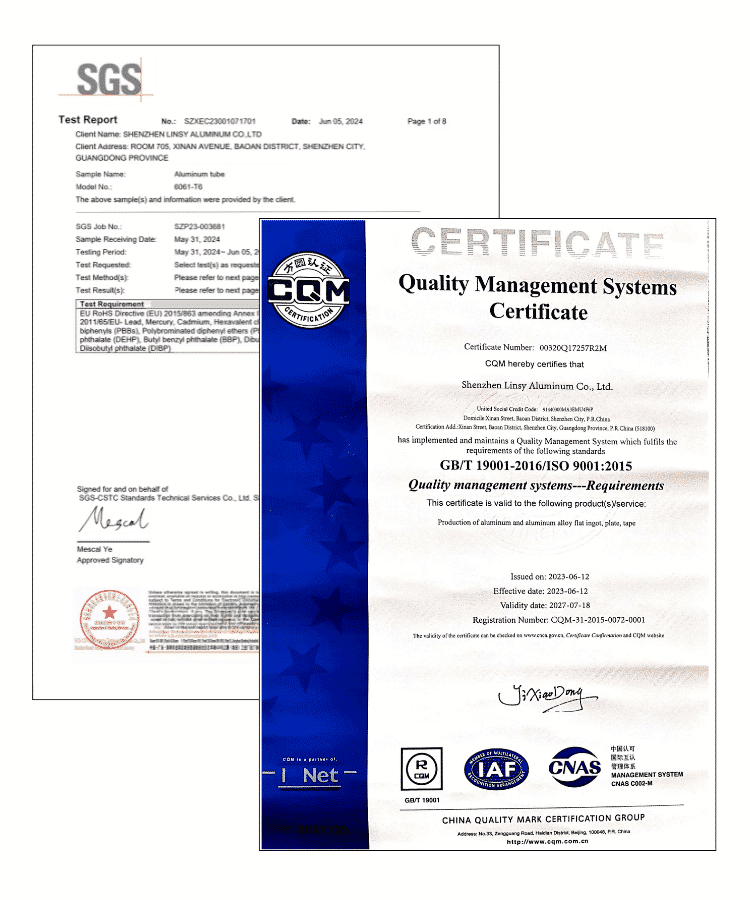
Our quality management system is certified to ISO 9001, environmental management to ISO 14001, and occupational health and safety to ISO 45001. Material is sourced from ISO-certified mills with full lot traceability from cast to shipment.
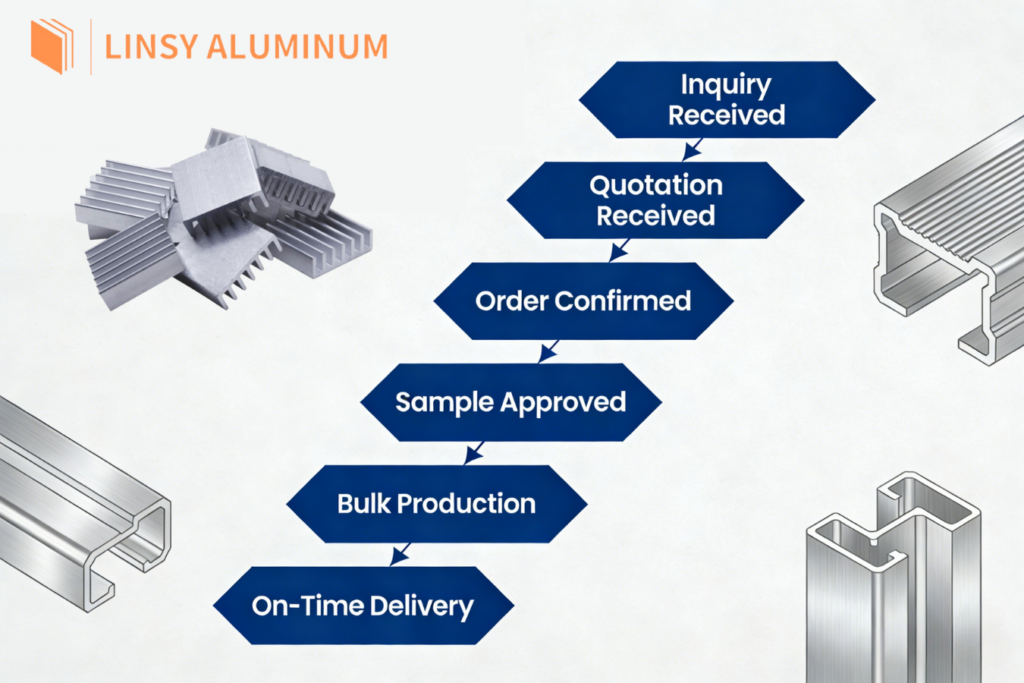
We ship 3004 sheet, coil, tube, bar, and wire to customers across Europe, Southeast Asia, the Middle East, South America, and Africa. Custom dimensions, flexible minimum order quantities, and 10–60 day lead times are standard. Contact us with your inquiry — our team responds with a quotation and technical data sheet within one business day.
Q: How does 3004 compare to 3003 aluminum?
A: 3004 contains 0.8–1.3% magnesium, while 3003 contains essentially no magnesium (~0.05%). This gives 3004 approximately 20% higher tensile and yield strength than 3003. Corrosion resistance, density, and general workability are comparable. Choose 3004 when 3003 strength is insufficient but you still need 3xxx-series formability and corrosion resistance.
Q: What is 3004 most commonly used for?
A: The dominant application is aluminum beverage can bodies, where hundreds of billions of cans are produced annually from 3004 sheet. Building products (roofing, siding), cookware, and general sheet metal fabrication are the other major markets.
Q: Can 3004 aluminum be welded?
A: Gas welding and resistance welding work well with 3004. Arc welding (TIG/MIG) is not recommended due to hot-cracking susceptibility from the manganese and magnesium content. For welded structures, consider 5052 or 5083 instead. Mechanical fastening and brazing are reliable alternatives.
Q: Is 3004 suitable for anodizing?
A: 3004 is not a preferred anodizing alloy. The manganese content can produce a gray or mottled anodic coating rather than the clear, bright finish expected from 5xxx or 6xxx alloys. For decorative or architectural anodizing, consider 5005, 5052, or 6063.
Q: What is the minimum order quantity for 3004 sheet?
A: Linsy operates with flexible MOQs. Standard stock sizes are available from single sheets; custom dimensions and non-stock tempers may require a production minimum. Contact us with your specification and we will provide a quotation within one business day.
Q: Do you provide Mill Test Certificates?
A: Yes. Every order includes an MTC per EN 10204 Type 3.1 with full chemical and mechanical results traceable to the heat number.
Q: What are your lead times?
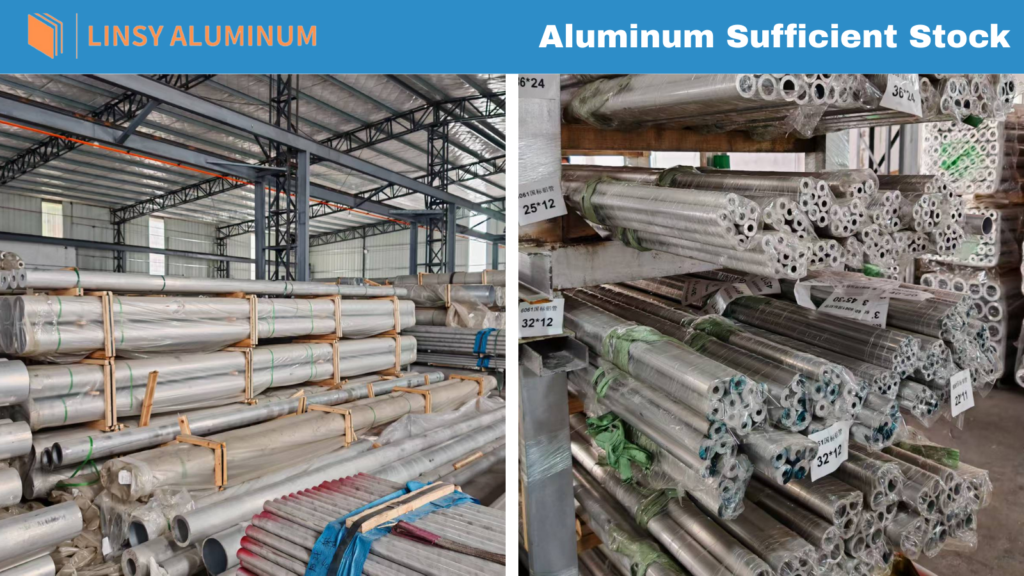
A: Standard: 10–60 days, depending on product form, temper, quantity, and current production schedule. Stock items ship faster. Contact us for a confirmed delivery date with your quotation.
Q: Can you supply custom dimensions?
A: Yes. Custom thickness, width, length, and temper combinations are available on request. Non-standard sizes may require a production minimum but we accommodate most requirements.
Q: What certifications does Linsy hold?
A: Linsy is certified to ISO 9001 (quality management), ISO 14001 (environmental management), and ISO 45001 (occupational health and safety). We can provide copies of current certificates on request.
Q: How do I request a quotation?
A: Contact us through the inquiry form on this page or email our sales team directly. Provide your required alloy, temper, dimensions, quantity, and destination, and we will return a quotation with a technical data sheet within one business day.
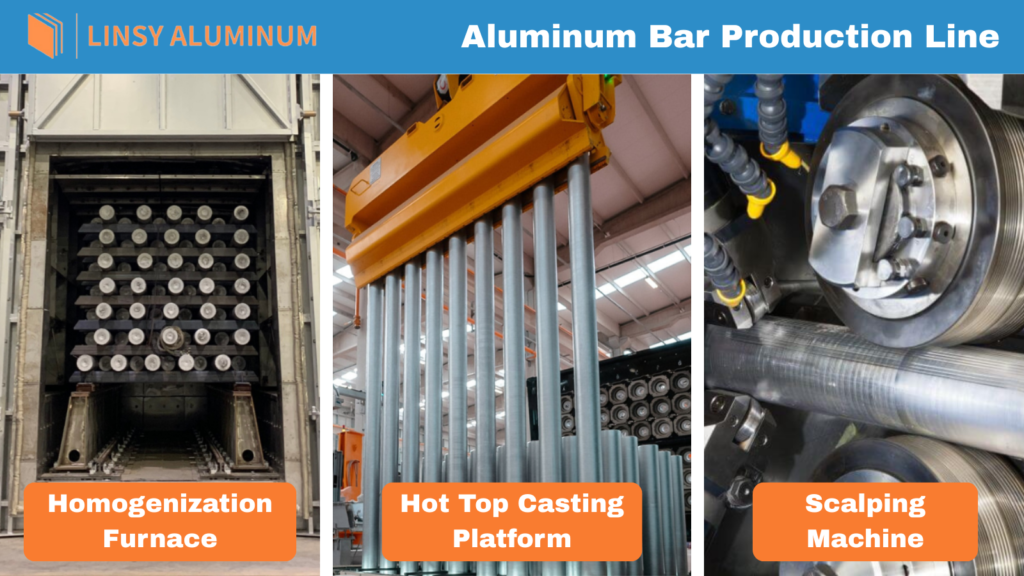
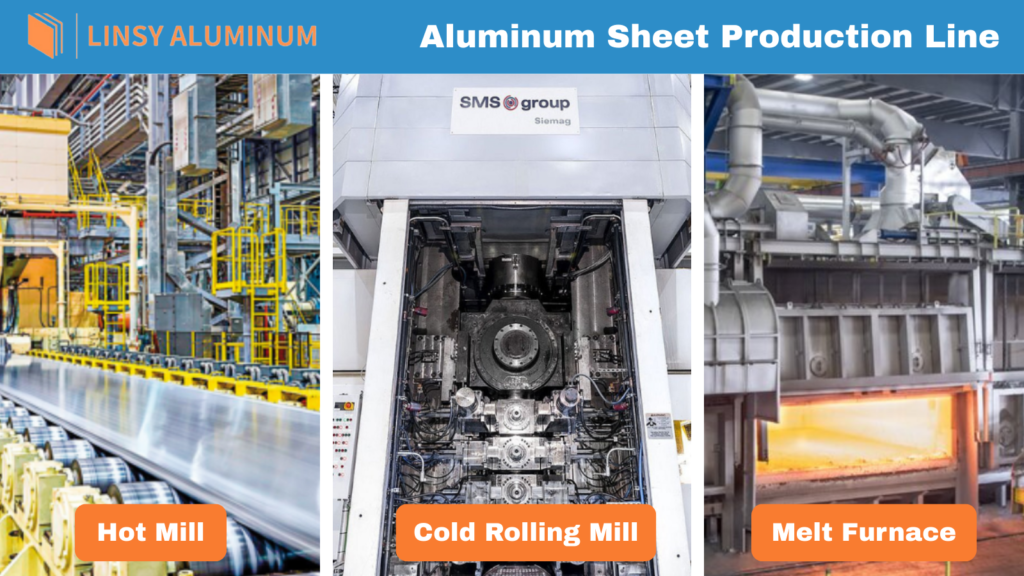
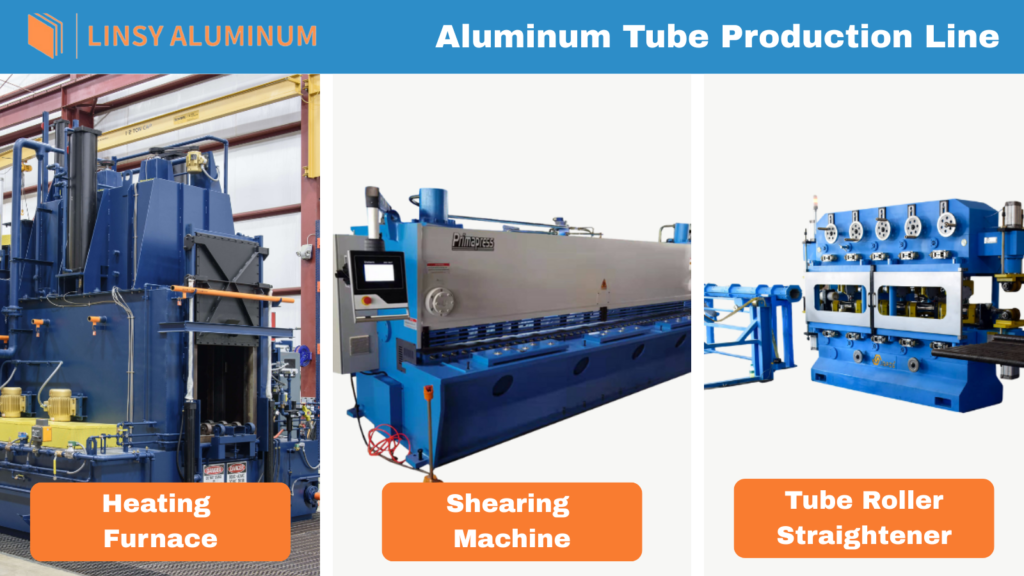
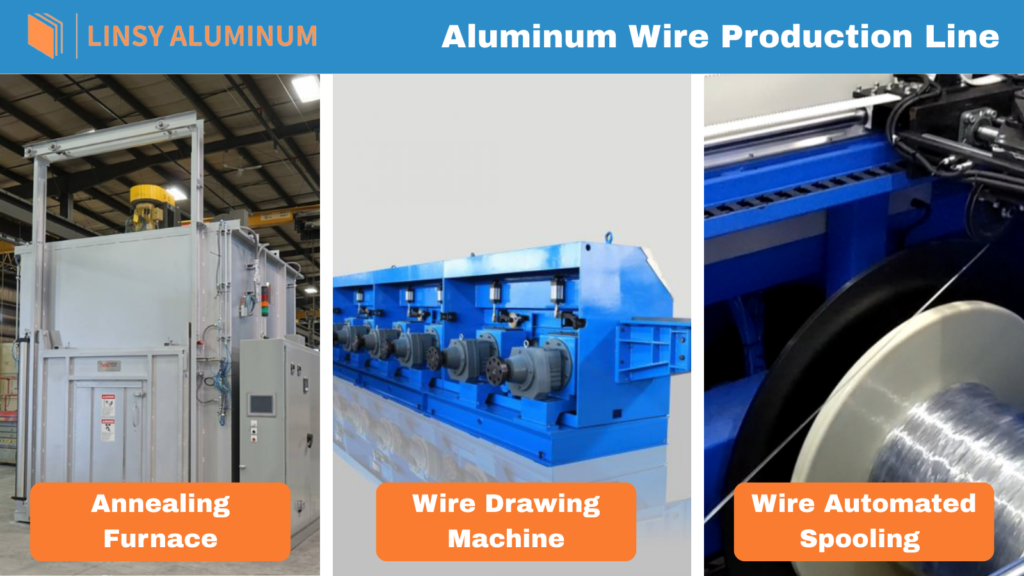
Linsy Advantages
Linsy Aluminum is a leading supplier of aluminum processing products, serving diverse industries including aerospace, general engineering, automotive, marine, shipbuilding and other specialized industrial applications.
We are committed to maintaining the highest standards of quality and environmental responsibility, as demonstrated by our certifications: ISO 9001:2008, ISO 14001:2004 and SGS.