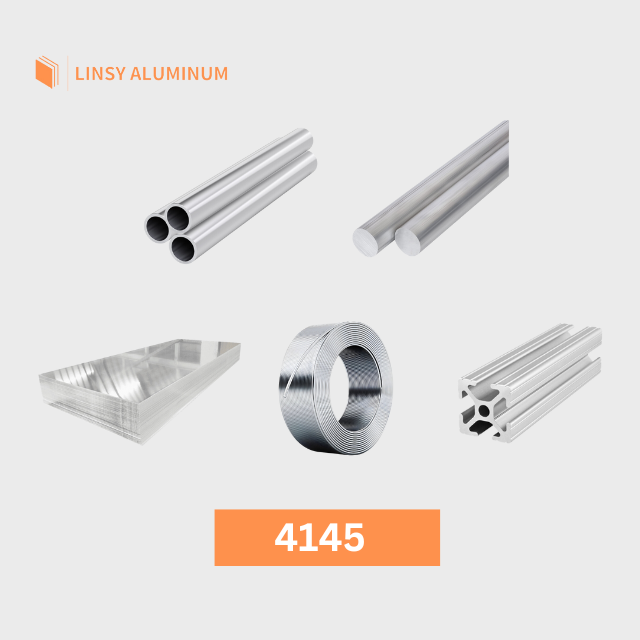



4145 aluminum alloy (AlSi10Cu4) is a high-silicon, copper-bearing 4000 series filler metal specifically formulated for welding and brazing heat-treatable aluminum alloys, particularly 2000 series alloys and aluminum-copper or aluminum-copper-silicon castings. With 9.3–10.7% silicon and 3.3–4.7% copper, 4145 provides low melting temperature, high fluidity, and very low susceptibility to weld cracking in the fusion zone. Linsy supplies 4145 aluminum welding wire, rod, coil, and strip in standard and custom diameters, with MTC reports and SGS testing available on request.
Available forms: welding wire / TIG rod / coil / strip / custom diameters
Primary applications: welding 2xxx series alloys / brazing Al-Cu & Al-Cu-Si castings / repair welding
Quality documents: MTC report with every order, SGS testing on request
Processing support: precision wire drawing / cut-to-length rod / spooling options
4145 aluminum alloy (also designated AlSi10Cu4) is a 4000 series aluminum-silicon-copper filler metal engineered primarily for the welding and brazing of heat-treatable aluminum alloys. Unlike structural 4000 series grades such as 4043, 4145 contains significantly higher silicon (9.3–10.7%) and copper (3.3–4.7%), which together lower the melting range and effectively suppress hot cracking when joining 2000 series (Al-Cu) base alloys and aluminum-copper or aluminum-copper-silicon castings.
As a filler metal alloy, 4145 is not intended for structural use on its own. Its value lies in its metallurgical compatibility with high-strength 2xxx wrought alloys (2014, 2024, 2219) and Al-Cu castings — materials that are notoriously difficult to weld with standard 4043 or 5356 filler wires. By introducing a eutectic-rich liquid with a lower solidus than the base metal, 4145 minimizes liquation cracking in the partially melted zone and produces sound, ductile weld deposits in demanding repair and fabrication scenarios.
4145 filler metal is typically supplied in spooled welding wire, straight-length TIG rod, and coil or strip formats for furnace brazing and controlled-atmosphere applications.
Linsy supplies 4145 aluminum filler metal in the following standard forms. Diameters, spool weights, and packaging can be adjusted to your production requirements.
| Form | Typical Diameter (mm) | Spool Weight (kg) | Packaging |
|---|---|---|---|
| 4145 MIG Wire | 0.8 / 1.0 / 1.2 / 1.6 / 2.0 / 2.4 | 7 / 15 / 20 | Plastic spool / layer-wound |
| 4145 TIG Rod | 1.6 / 2.0 / 2.4 / 3.2 / 4.0 / 5.0 | 5 / 10 per tube | Straight length, 915 mm / 1000 mm |
| 4145 Coil / Strip | 0.1 – 2.0 (thickness) | Custom | Coil / reel |
Custom diameters outside the standard range, precision wire drawing tolerances, and non-standard spool weights are available on request. Please contact us for project-specific requirements.
| Standard / Designation | Value |
|---|---|
| UNS Number | A94145 |
| ISO Designation | AlSi10Cu4 |
| Alloy Series | 4000 Series (Al-Si-Cu) |
| Primary Use | Filler metal for welding & brazing |
| Compatible Base Alloys | 2xxx series (2014, 2024, 2219), Al-Cu castings, Al-Cu-Si castings |
| Typical AWS Classification | ER4145 (per AWS A5.10) |
| Element | Content (%) |
|---|---|
| Silicon (Si) | 9.3 – 10.7 |
| Copper (Cu) | 3.3 – 4.7 |
| Iron (Fe) | ≤ 0.8 |
| Manganese (Mn) | ≤ 0.15 |
| Magnesium (Mg) | ≤ 0.15 |
| Zinc (Zn) | ≤ 0.20 |
| Chromium (Cr) | ≤ 0.15 |
| Titanium (Ti) | ≤ 0.15 |
| Others (Each) | ≤ 0.05 |
| Others (Total) | ≤ 0.15 |
| Aluminum (Al) | Remainder |
Composition limits per standard AA/ANSI H35.1 registration data. Actual heat analysis values are reported on each order’s MTC.
The mechanical properties below are for 4145 filler metal in O temper (as-drawn / annealed condition). Properties of the deposited weld metal will vary depending on base alloy, welding process, dilution, and post-weld treatment.
| Property | Typical Value (O Temper) |
|---|---|
| Tensile Strength (Ultimate) | ~ 124 MPa |
| Elongation at Break | ~ 15% |
| Melting Range (Solidus – Liquidus) | ~ 521 – 585 °C (approx.) |
Note: Mechanical property data for 4145 filler metal is typically provided for the as-drawn wire condition. Weld deposit properties are application-dependent; contact our technical team for joint-specific guidance.
The high silicon content (9.3–10.7%) in 4145 creates a low-melting eutectic that remains liquid as the surrounding weld metal solidifies, effectively back-filling solidification cracks. This makes 4145 the preferred filler metal when welding crack-sensitive 2000 series base alloys and Al-Cu castings where standard filler wires like 4043 or 5356 would produce poor results.
4145 is specially formulated with a copper content (3.3–4.7%) that matches the metallurgy of 2xxx wrought alloys and Al-Cu castings. This compositional compatibility minimizes dilution-related defects and promotes a uniform, crack-free deposit when joining or repairing 2014, 2024, 2219, and similar high-strength grades.
The combined effect of silicon and copper depresses the melting range of 4145 significantly below that of most structural aluminum alloys. This characteristic improves puddle control, enhances wetting and flow along the joint, and reduces heat input to the base material — all critical factors when brazing or welding heat-sensitive components.
4145 shows good general corrosion resistance in atmospheric and mild chemical environments. The silicon-rich composition contributes to a stable passive film, and the alloy performs well in applications where the weldment is exposed to moisture or marine atmospheres.
| Application Area | Typical Use | Why 4145 Is Used |
|---|---|---|
| Aerospace Repair | Welding and repairing 2024-T3 / 2024-T4 aircraft structural components | Only filler that reliably welds 2xxx aircraft alloys without cracking |
| Automotive & Motorsport | Joining Al-Cu cast engine blocks, cylinder heads, and intake manifolds | Metallurgically compatible with cast Al-Cu alloys |
| General Fabrication | Brazing of heat exchangers, radiators, and HVAC components | Low melting point enables controlled brazing cycles |
| Cast Component Repair | Salvage welding of damaged Al-Cu and Al-Cu-Si castings | Excellent wetting and crack resistance in casting repairs |
| Tool & Die | Joining or repair of aluminum tooling plates and fixtures | Reduces distortion and heat-affected-zone damage |
4145 filler metal is suitable for Gas Tungsten Arc Welding (GTAW / TIG) and Gas Metal Arc Welding (GMAW / MIG) processes. It may also be used in laser beam welding, plasma arc welding, and furnace brazing operations where compatible process parameters are established.
4145 filler metal deposits are not heat-treatable in the conventional sense. Weldments may be put back into solution treatment and aging cycles for the base alloy (e.g., 2024-T4 to -T6), but the filler metal zone will not respond to precipitation hardening. Mechanical design should account for the filler metal zone as the strength-limiting region of the joint.
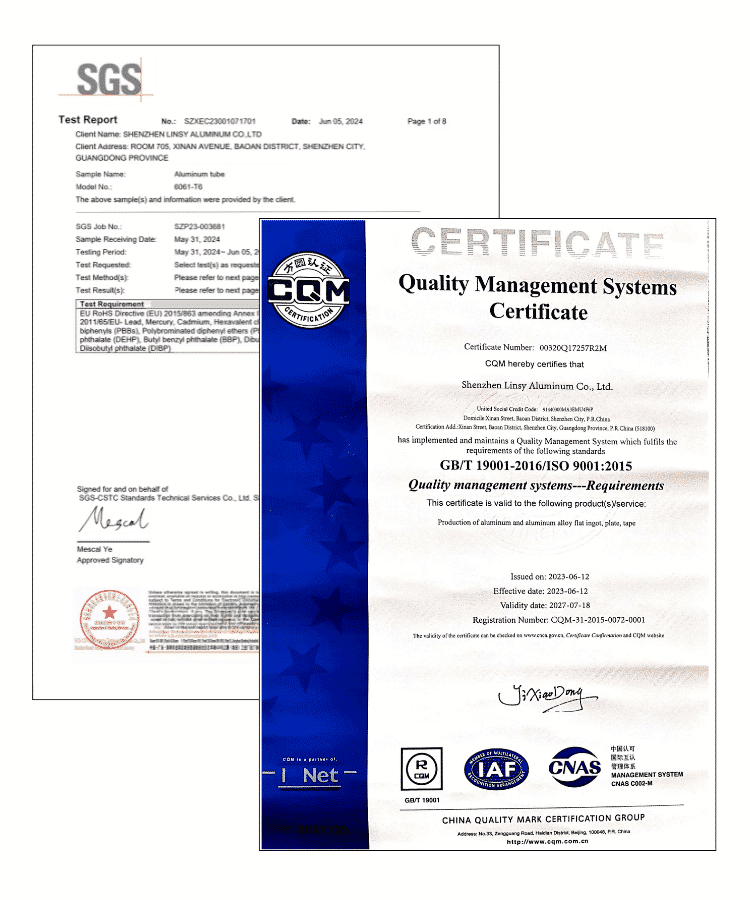
Linsy aluminum provides an MTC (Material Test Certificate) with every order, issued under Linsy Aluminum after production. This document confirms chemical composition and mechanical properties of the supplied material and supports traceability for each shipment.
For customers who require independent verification, SGS test reports are available on request, including:
Our management system is operated under ISO 9001, ISO 14001, and ISO 45001 standards to support consistent product quality and responsible manufacturing practices.
Linsy Aluminum is a Shenzhen-based aluminum factory with more than 20 years of industry experience, specializing in factory-direct aluminum supply, broad alloy coverage, and low-MOQ custom production. For buyers sourcing 4145 filler metal, we focus on practical supply support:
Whether you are welding 2024 aircraft components, repairing Al-Cu castings, or running a production brazing line, contact our team to discuss your 4145 filler metal requirements.
4145 aluminum alloy is primarily used as a filler metal for welding and brazing 2000 series (Al-Cu) wrought alloys such as 2014, 2024, and 2219, as well as aluminum-copper and aluminum-copper-silicon castings. Its high silicon and copper content suppresses hot cracking in these otherwise difficult-to-weld materials.
4145 contains significantly more silicon (9.3–10.7% vs 4.5–6.0%) and copper (3.3–4.7% vs ≤ 0.30%), making it specifically formulated for 2xxx alloys and Al-Cu castings. 4043 is the general-purpose Al-Si filler used for 6xxx and most cast aluminum alloys, while 4145 is the specialized choice when welding crack-sensitive Al-Cu materials where 4043 would produce unacceptable cracking.
Technically possible but not recommended. 4145 is formulated for Al-Cu base metals and would introduce excess copper into a 6061 weld, potentially reducing corrosion resistance and joint ductility. For 6061 aluminum, 4043 or 5356 filler metals are the standard industry choices.
4145 is a filler metal, not a structural base alloy. It is used to join structural base metals (e.g., 2024-T3 airframe components). The load-bearing capacity of the welded assembly depends primarily on the base metal properties, with the filler metal zone representing the strength-limiting region of the joint.
Linsy supplies 4145 as spooled MIG wire (0.8–2.4 mm diameter), straight-length TIG rod (1.6–5.0 mm diameter), and coil/strip for brazing applications. Custom diameters and spool weights can be arranged on request.
Yes. Every order of 4145 welding wire, rod, or strip ships with an MTC (Material Test Certificate) issued under Linsy Aluminum. The MTC confirms the chemical composition of the heat or lot from which your material was produced. SGS third-party chemical analysis is also available on request.
Yes. Linsy supports low-MOQ orders for trial, testing, and WPS (Welding Procedure Specification) qualification purposes. Contact our sales team to discuss your quantity requirements.
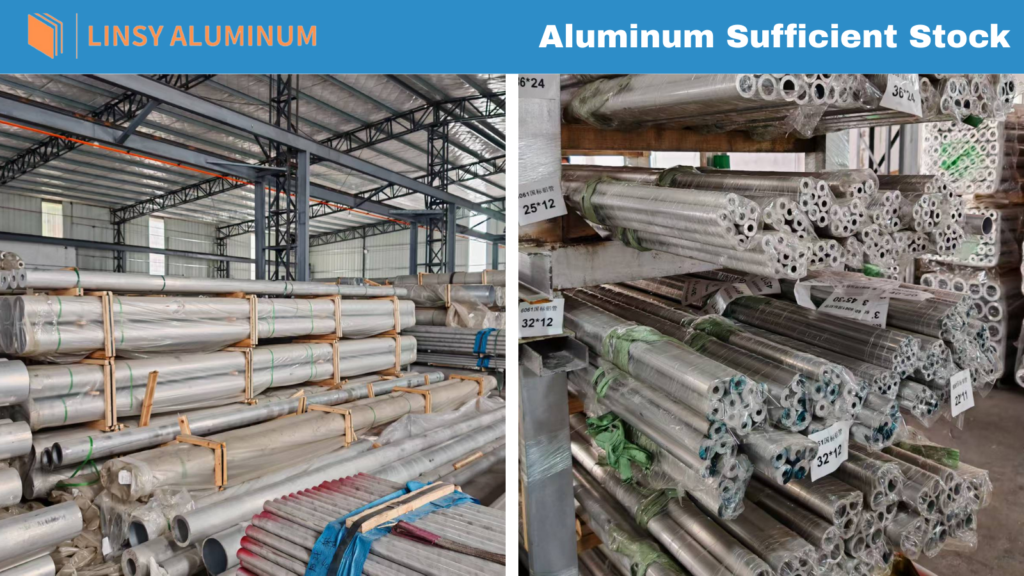
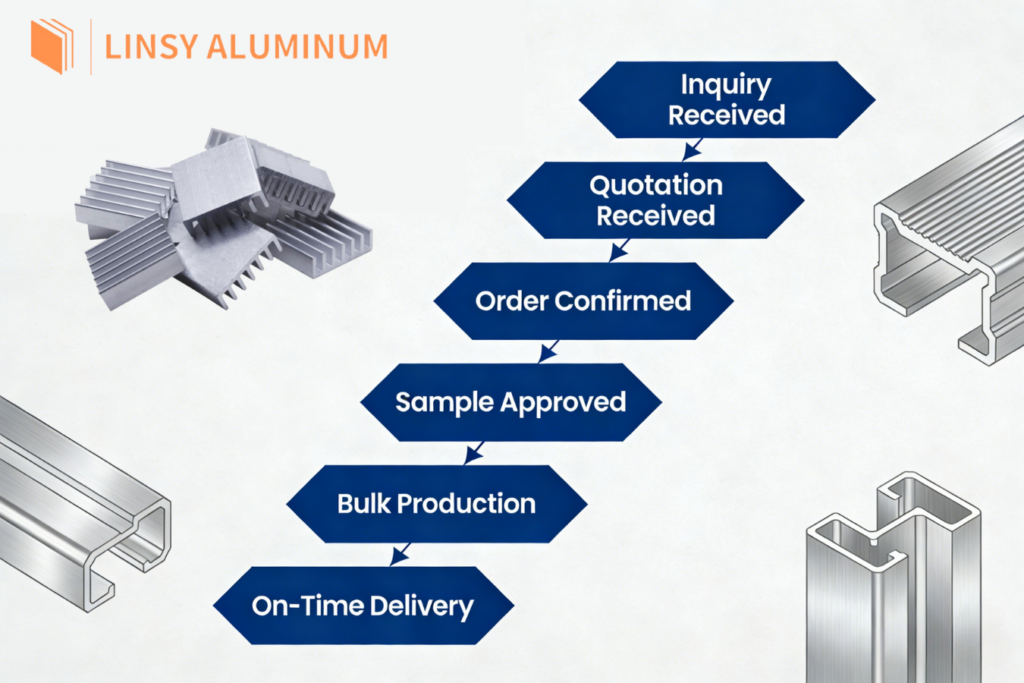
For standard diameters held in stock, shipment can be arranged quickly. For custom diameters or non-standard specifications, typical production lead time is 10 to 60 days, depending on diameter, quantity, and processing requirements.
We offer flexible MOQs suitable for both trial and production quantities. For standard-sized 4145 welding wire and rod, lower MOQs apply. Contact us with your requirements for a specific quotation.
We accept T/T (wire transfer) and L/C (letter of credit). Payment terms can be discussed based on order size and customer relationship.
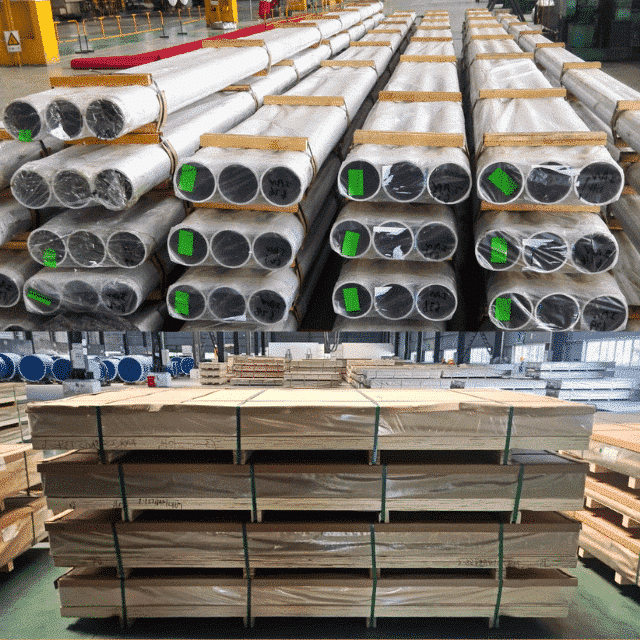
Wire is spooled on plastic spools with layer-wound precision, then packed in individual cartons with desiccant. Rod is packed in sealed tubes. All packaging is designed to protect the filler metal from moisture, contamination, and mechanical damage during transit.
Yes. Linsy Aluminum ships to customers in Europe, South Africa, Brazil, Singapore, Turkey, Japan, South Korea, and other regions. We work with major freight forwarders and can arrange sea, air, or courier shipment based on your timeline and budget.
Sample quantities of standard-diameter 4145 wire or rod can be provided for evaluation and procedure qualification. Please contact us to discuss your sample requirements.
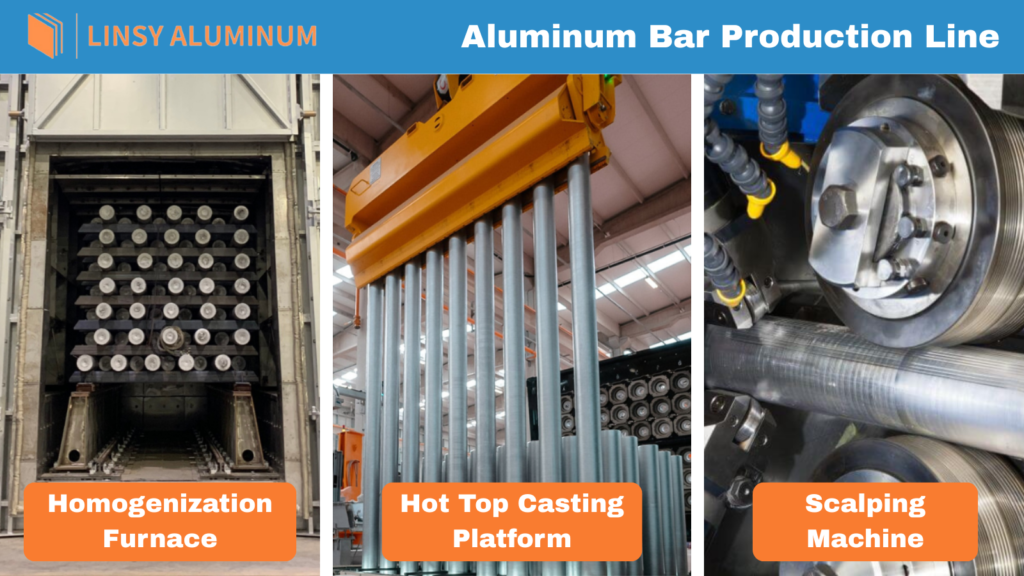
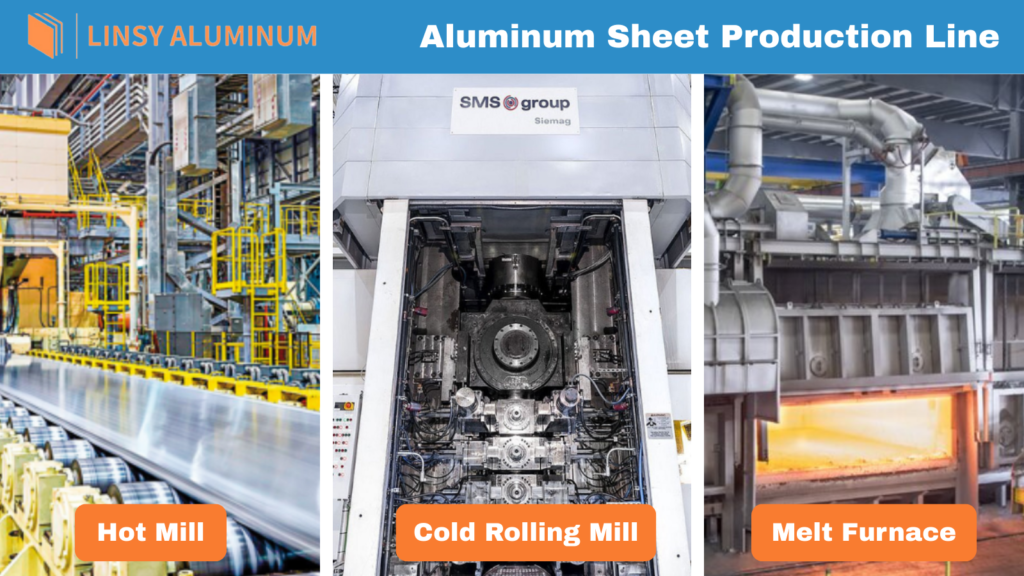
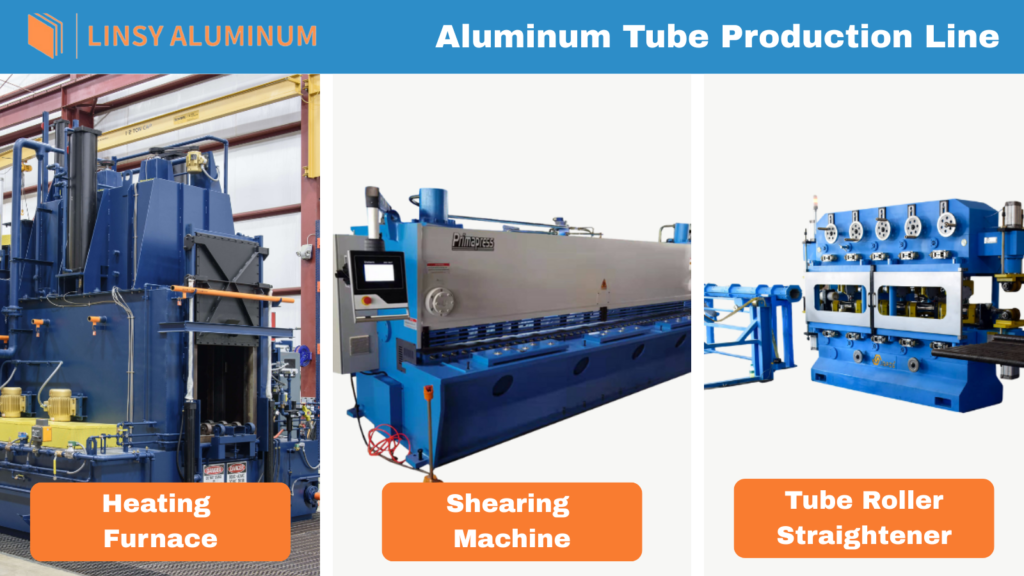
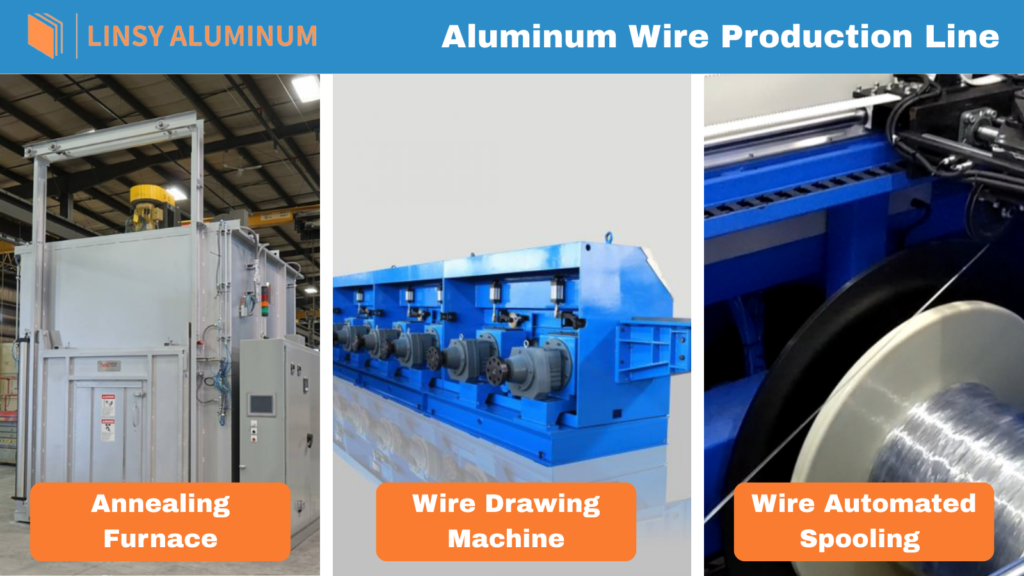
Linsy Advantages
Linsy Aluminum is a leading supplier of aluminum processing products, serving diverse industries including aerospace, general engineering, automotive, marine, shipbuilding and other specialized industrial applications.
We are committed to maintaining the highest standards of quality and environmental responsibility, as demonstrated by our certifications: ISO 9001:2008, ISO 14001:2004 and SGS.