Wat is 2024-Aluminium?
2024 is de op koper gebaseerde werkpaardlegering van de 2xxx-serie. Koper bij 3,8–4,9%, met magnesium bij 1,2–1,8% en mangaan bij 0,3–0,9%, maakt de legering warmtebehandelbaar: fijne precipitaten vormen zich in het metaal en pinnen dislocaties vast, en daar komt de sterkte vandaan. In zijn sterkere tempers draagt 2024 belastingen die anders staal zouden vereisen, bij ongeveer een derde van de dichtheid.
Het kopergehalte brengt ook specifieke afwegingen met zich mee. 2024 is een van de minst corrosiebestendige aluminiumlegeringen in algemeen gebruik, omdat koperrijke fasen galvanische cellen vormen langs de korrelgrenzen, dus onbekleed materiaal heeft bekleding, anodiseren of verf nodig in elke vochtige of maritieme toepassing. Het laat zich ook slecht verbinden door smeltlassen, omdat de warmte-beïnvloede zone scheurgevoelig is, daarom worden 2024-constructies geklonken of gebout in plaats van gelast. Deze beperkingen horen bij de legering en veranderen niet door warmtebehandeling. Wat wel verandert — sterkte, ductiliteit en hoeveel vervorming het materiaal verdraagt voordat het scheurt — wordt volledig bepaald door de temper, en voor plaatwerk is die temper bijna altijd T3.
Het T3-temper begrijpen
De T3-aanduiding definieert een driestapssequentie: oplossingsgloeibehandeld, koud bewerkt en vervolgens natuurlijk verouderd tot een in wezen stabiele toestand.
| Stap | Proces | Doel en resultaat |
| Oplossingsgloeibehandeling | Gehouden nabij 493 °C (920 °F), daarna geblust | Koper en magnesium lossen op in de aluminiummatrix en worden gevangen in oververzadigde oplossing |
| Koud bewerken | Gecontroleerde vervorming — voor plaat een wals- of vlakkeerbewerking | Verhoogt de dislocatiedichtheid bovenop de gebluste structuur; deze stap onderscheidt T3 van T4 |
| Natuurlijke veroudering | Precipitatie bij kamertemperatuur van fijne clusters uit gevangen opgeloste stof | De meeste sterkte ontwikkelt zich binnen de eerste 24 uur; in wezen stabiel na ongeveer vier dagen |
Het praktische resultaat is een plaat die aankomt met bijna al zijn sterkte reeds ontwikkeld, terwijl deze nog ongeveer 18% rek bezit. Dat is voldoende ductiliteit voor de kantbewerkingen, joggles en rekvormen die vliegtuigrompplaatwerk vereist. Geen warmtebehandeling op de werkvloer is nodig, en geen gekoelde opslag: het materiaal kan worden gevormd en geklonken in de as-geleverde staat.
T3, T4 en T351: Belangrijkste verschillen
Deze drie tempers zijn nauw verwant en worden vaak verward in specificaties en inkoopdocumentatie binnen de 2024-familie.
T4 slaat de koudbewerkingsstap over — alleen oplossingsbehandeld en natuurlijk verouderd. Marginaal lagere sterkte, marginaal meer ductiliteit, en de gebruikelijke conditie voor staf, staaf en 2024-draad. Zie de 2024-T4-gids voor de volledige dataset.
T3 voegt de koudbewerking toe, daarom is dit de standaard plaattemper voor gevormde en geklonken constructies.
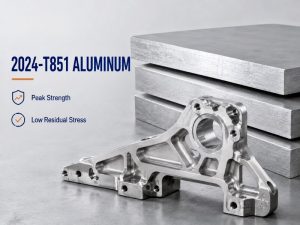
T351 past dezelfde logica toe op plaat, behalve dat de koudbewerking een gecontroleerde rekspanning van 1,5–3% is waarvan het doel spanningsontlasting is, niet versterking. Voor dikke plaat bestemd voor bewerking in plaats van plaat voor vormen, is de 2024-T351-gids de relevante.
Mechanische eigenschappen van 2024-T3
De onderstaande cijfers zijn typische waarden voor onbeklede 2024-T3-plaat. Dikte en productvorm beïnvloeden deze, dus ontwerpbeslissingen moeten verwijzen naar de gecertificeerde waarden op het molentestcertificaat in plaats van een gepubliceerd gemiddelde.
| Eigendom | Typische waarde | Opmerkingen |
| Dichtheid | 2,78 g/cm³ | Ongeveer een derde van staal |
| Uiterste treksterkte | 483 MPa (70 ksi) | Onbeklede plaat; Alclad ligt lager |
| Vloeigrens (0,2%) | 345 MPa (50 ksi) | Het getal waar de meeste ontwerptoelaatbaarheden op zijn gebaseerd |
| Rek bij breuk | ~18% | 1,6 mm plaat; neemt af naarmate de dikte toeneemt |
| Vermoeiingssterkte | 138 MPa | Bij 5×10⁸ cycli, roterende balk |
| Schuifsterkte | 283 MPa | Relevant voor het dimensioneren van geklonken verbindingen |
| Elasticiteitsmodulus | 73,1 GPa | In wezen constant over 2024-tempers |
| Hardheid | 120 HB | 500 kg belasting, 10 mm kogel |
| Thermische geleidbaarheid | 121 W/m·K | Lager dan 6061, een kopereffect |
| Elektrische geleidbaarheid | ~30% IACS | Matig tot laag; geen geleiderlegering |
| Smelttraject | 502–638 °C | Solidus tot liquidus |
Twee getallen doen het meeste werk hier. De 483/345 MPa-combinatie is wat een 2024-T3-huidpaneel in staat stelt een veel zwaardere stalen plaat te vervangen, en de 138 MPa vermoeiingssterkte is waarom de legering een positie behoudt in drukbelaste rompconstructies die nieuwere, sterkere legeringen niet hebben overgenomen. Een romphuid ervaart elke vlucht een drukcabincyclus; weerstand tegen scheurinitiatie over honderdduizenden van die cycli is belangrijker dan piektreksterkte.
Een inkoopdetail dat de moeite waard is om te bevestigen vóór het bestellen: Alclad 2024-T3 is niet zo sterk als onbekleed. De zuivere aluminiumbekledingslagen dragen weinig belasting, dus typische Alclad-waarden dalen tot ongeveer 448 MPa treksterkte en 310 MPa vloeigrens — een verlies van ruwweg 8–10%. Dunne diktes verliezen proportioneel meer. Als toelaatbaarheden zijn berekend op onbeklede eigenschappen, mag bekled materiaal niet worden gesubstitueerd zonder de marge opnieuw te controleren.
Waar 2024-T3 wordt gebruikt
Luchtvaart domineert, en niet met een kleine marge. Het vermoeiingsgedrag en de sterkte-gewichtsverhouding wegen op tegen de corrosiebescherming en het klinken dat de legering vereist.
Vliegtuighuiden. Alclad 2024-T3-plaat is het klassieke materiaal voor romp- en onderste vleugelhuiden, gevormd naar contouren en geklonken aan de onderconstructie.
Rompspanten, stringers en ribben. Gevormde plaatcomponenten waarbij het onderdeel vóór montage wordt gebogen in plaats van uit massief materiaal bewerkt.
Onderste vleugeloppervlakken. De onderste vleugel is een trekconstructie, en 2024 presteert beter dan 7075 in vermoeiingsscheurgroei onder trekbelasting. Bovenste oppervlakken, belast op druk, gebruiken vaker 7075. De 2024 vs 7075-vergelijking behandelt die splitsing in detail.
Fittingen, beugels en hardware. Bewerkte of gevormde onderdelen waar sterkte per massa-eenheid het ontwerp bepaalt.
Vrachtwagenwielen en hydraulische verdeelblokken. De belangrijkste niet-luchtvaarttoepassingen, beide hoogbelaste onderdelen die de extra afwerkingskosten rechtvaardigen.
Motorsport- en defensieconstructies. Gewichtskritische samenstellingen die werken in gecontroleerde of beschermde omgevingen.
Waar 2024-T3 niet thuishoort: algemeen chassiswerk, maritieme hardware, gelaste frames, architecturale panelen of alles wat stroom voert. 5052 en 6061 behandelen die gevallen beter en kosten minder om af te werken.
2024-T3 versus andere 2024-tempers
Alle 2024-tempers delen dezelfde chemie. Alleen de thermische en mechanische geschiedenis verschilt, en die geschiedenis bepaalt de eigenschappen van het materiaal en de geschiktheid voor een bepaalde toepassing.
| Temper | UTS (MPa) | Rekgrens (MPa) | Rek | Typische vorm |
| O (gegloeid) | 186 | 76 | ~20% | Plaat voor zware vervorming |
| T3 | 483 | 345 | ~18% | Plaat, gevormd en geklonken |
| T4 | 469 | 324 | ~19% | Staf, staaf, draad |
| T351 | ~470 | ~325 | ~19% | Plaat voor bewerking |
| T6 | ~475 | ~393 | ~10% | Zelden op voorraad als plaat |
| T851 | ≥455 | ≥400 | ~5% | Gefreesde plaat, maximale stabiliteit |
Let op wat de tabel niet toont: een grote treksterkte-spreiding. Tussen T3, T4, T351 en T6 varieert de uiterste treksterkte slechts enkele procenten. De relevante verschillen liggen in vloeigrens, ductiliteit en dimensioneel gedrag, en dat zijn de factoren die de keuze moeten bepalen.
Kiezen van de temperingstoestand
T3 is de standaardkeuze wanneer het onderdeel start als plaatmateriaal, wordt gevormd en wordt geklonken — sterkte is vereist bij levering met voldoende resterende rek om te buigen.
T4 geldt voor staf, rond of draad, of wanneer de vervorming zodanig zwaar is dat het extra punt ductiliteit van belang is.
T351 wordt gespecificeerd voor het bewerken van dikke plaat waarbij restspanning het onderdeel buiten tolerantie zou trekken naarmate materiaal wordt verwijderd.
T851 wordt geselecteerd wanneer een bewerkt plaatonderdeel de hoogste vloeigrens en stabiliteit vereist die beschikbaar is in 2024 en 5% rek acceptabel is.
O wordt gebruikt wanneer de vervorming zwaar genoeg is om elke T-tempering te doen scheuren — vormen in gegloeide toestand, vervolgens oplossingsgloeien en verouderen. De 2024-O plaatgids behandelt deze route.
Een andere legering is vereist als de samenstelling moet worden smeltgelast, onbeschermd buiten of op zee zal worden gebruikt, of een significante stroom moet voeren. Geen van de 2024-temperingstoestanden lost deze beperkingen op.
Werken met 2024-T3
Vormgeving
T3 laat zich vormen, maar het is geen 5052. Reken op een minimale buigradius in de orde van 3t tot 5t, afhankelijk van dikte en oriëntatie, enkele malen groter dan wat een 5xxx-plaat bij dezelfde dikte verdraagt. Buigen dwars op de walsrichting is vergevingsgezinder dan buigen in de walsrichting, en dikkere materialen vereisen proportioneel grotere radii. Waar een ontwerp daadwerkelijk een kleine radius vereist, zijn de gebruikelijke oplossingen vormen in de O-toestand en daarna warmtebehandelen, of overstappen op een gevormde-en-geklonken samenstelling in plaats van een enkel gebogen onderdeel.
Verbinden
Smeltlassen van 2024 is geen praktische productieroute: de warmte-beïnvloede zone is gevoelig voor hete scheuren en de temperingstoestand wordt lokaal in ieder geval vernietigd. Klinken is de standaard, met bouten en structureel lijmen als de twee andere geaccepteerde methoden. Friction stir welding werkt wel op 2024 en vermijdt het smeltprobleem, hoewel het opspanning en toegang tot de lasnaad vereist die veel samenstellingen niet kunnen bieden. Merk op dat 2024-klinknagels zelf (de DD-aanduidingen) worden geleverd in een vers oplossingsbehandelde toestand en gekoeld moeten worden bewaard en binnen een beperkt tijdsvenster moeten worden geslagen — die beperking geldt voor de klinknagel, niet voor de T3-plaat waarin deze wordt geplaatst.
Bewerking
2024-T3 laat zich goed verspanen. Scherp hardmetalen gereedschap, hoge snijsnelheid en een gemiddelde voeding geven goede spaanbeheersing en een heldere afwerking, en de legering houdt nauwe toleranties goed vast. Voor dikke secties waar veel materiaal wordt verwijderd, is T351-plaat het betere uitgangspunt omdat de gerekte spanningsontlasting het onderdeel vlak houdt.
Corrosiebescherming en afwerking
Bescherming is niet optioneel bij deze legering. Alclad-plaat, met hoogzuiver aluminium dat aan beide zijden is gewalst, is de standaard luchtvaartoplossing omdat de bekleding sacrificieel corrodeert en de koperrijke kern afschermt. Anodiseren en primer- of verfsystemen zijn de alternatieven voor onbekleed materiaal. Een specifiek punt voor vermoeiingskritische onderdelen: conventioneel zwavelzuuranodiseren brengt een meetbare vermoeiingsdebet met zich mee, daarom werd dun chroomzuuranodiseren traditioneel gespecificeerd voor 2024-vliegtuigonderdelen, en waarom boorzwavelzuur- en dunne-film zwavelzuurprocessen de rol hebben overgenomen nu chroomgebruik wordt beperkt. Let ook op galvanische paren — 2024 in contact met stalen bevestigingsmiddelen of koolstofvezel vereist een isolerende laag.
Voordelen en beperkingen
| Voordeel | Beperking |
| 483 MPa treksterkte bij 2,78 g/cm³, een van de beste sterkte-gewichtsverhoudingen in commercieel aluminium | Slechte corrosiebestendigheid; bekleding, anodiseren of verf is verplicht in gebruik |
| 138 MPa vermoeiingssterkte, zeer geschikt voor cyclisch belaste constructies | Niet lasbaar met smeltmethoden; samenstellingen moeten worden geklonken, gebout of gelijmd |
| ~18% rek, voldoende voor het vormen dat geklonken plaatconstructies nodig hebben | Buigradii van 3t tot 5t; kleinere geometrie vereist O-tempering vormen en nabehandeling |
| Laat zich goed verspanen en houdt toleranties vast | ~30% IACS-geleidbaarheid sluit het uit voor stroomvoerende onderdelen |
| Breed gespecificeerd en goed gekarakteriseerd, waardoor ontwerpgegevens eenvoudig te verkrijgen zijn | Kost meer dan 5052 of 6061, en de afwerking draagt daar verder aan bij |
Conclusie
2024-T3 combineert hoge geleverde sterkte, vermoeiingsweerstand en voldoende ductiliteit voor gevormde en geklonken plaatconstructies, maar de afwegingen zijn evenzeer gedefinieerd: corrosiebescherming is verplicht, smeltlassen is geen praktische productieroute, en buigradii van 3t tot 5t beperken de geometrie — waar die beperkingen passen bij het onderdeel, kunnen weinig legeringen concurreren, en waar ze niet passen, is 6061 of 5052 de praktischere keuze tegen lagere totale kosten. Het verkrijgen van de juiste temperingstoestand en dikte met volledige documentatie blijft een veelvoorkomende inkoopuitdaging.
Linsy levert 2024 in T3 en andere standaard temperingstoestanden in plaat, dikke plaat, staf, buis en draad, met fabriekstestcertificaten bij elke bestelling, lage MOQ maatwerkproductie, en ISO 9001-, ISO 14001- en ISO 45001-certificering, met SGS-testrapporten op aanvraag en typische levertijden van 10 tot 60 dagen afhankelijk van vorm en hoeveelheid. Bekijk de 2024-T3-specificatie voor gecertificeerde eigenschapsgegevens per dikte en temperingstoestand, of neem contact op met Linsy om de beschikbaarheid en maatwerkproductiemogelijkheden voor de beoogde toepassing te bevestigen.
Veelgestelde vragen
Is 2024-T3 hetzelfde als 2024-T351?
Ze liggen dicht bij elkaar maar zijn niet onderling uitwisselbaar. Beide zijn oplossingsbehandeld, koudvervormd en natuurlijk verouderd. Bij T351 is de koudvervorming een gecontroleerde rekrek van 1,5–3% die specifiek wordt toegepast om restspanning te verlichten, en de aanduiding wordt normaal gesproken toegepast op dikke plaat. T3 is de plaat-tempering, waarbij de koudvervorming een wals- of vlakslag is gericht op sterkte. Typische sterktewaarden liggen binnen enkele procenten van elkaar; de reden om T351 te specificeren is dimensionele stabiliteit tijdens het verspanen, niet extra sterkte.
Kan 2024-T3 worden gelast?
Niet met smeltmethoden in enige praktische productiezin. De warmte-beïnvloede zone is gevoelig voor hete scheuren, en de T3-toestand wordt lokaal vernietigd door de laswarmte ongeacht. Klinken, bouten en structureel lijmen zijn de geaccepteerde methoden. Friction stir welding is technisch haalbaar omdat het onder het smeltpunt blijft, maar het vereist opspanning en toegang tot de lasnaad die de meeste plaatconstructies niet kunnen bieden.
Hoeveel kost 2024-T351 in vergelijking met T3?
De prijstoeslag voor T351 ten opzichte van T3 bedraagt doorgaans 5–15%, gedreven door de extra strekbewerking. Voor dikke plaat (boven 25 mm) wordt de toeslag kleiner omdat T3 zelden wordt gespecificeerd in die diktes — T351 is de standaard luchtvaarttemper. De werkelijke kostenvergelijking is niet T351 versus T3, maar T351 versus de kosten van het afkeuren van een vervormd T3-onderdeel na bewerking.
Welke minimale buigradius moet ik aanhouden bij het ontwerpen met 2024-T3-plaat?
Ongeveer 3t tot 5t, variërend met dikte en buigoriëntatie, waarbij dwarse buigingen vergevingsgezinder zijn dan longitudinale. Bevestig dit tegen de leveranciersgegevens voor de specifieke dikte voordat gereedschap wordt vrijgegeven. Als het ontwerp iets kleinere radii vereist, vorm het onderdeel dan in de O-toestand en warmtebehandel het naar T na het vormen.
Heeft 2024-T3 gekoelde opslag of herveroudering nodig na levering?
Nee. T3-materiaal is natuurlijk verouderd tot een substantieel stabiele toestand vóór verzending, dus het kan bij kamertemperatuur worden opgeslagen en bewerkt zonder sterkteverlies. De koelvereiste die mensen met 2024 associëren, geldt voor vers oplossingsbehandelde klinknagels, die een geheel andere producttoestand zijn.