Was ist 2024er Aluminium?
2024 ist das kupferbasierte Arbeitstier der 2xxx-Serie. Kupfer mit 3,8–4,9 Gew.-%, Magnesium mit 1,2–1,8 Gew.-% und Mangan mit 0,3–0,9 Gew.-% machen die Legierung aushärtbar: Feine Ausscheidungen bilden sich im Metall und verankern Versetzungen – daraus resultiert die Festigkeit. In den höherfesten Zuständen trägt 2024 Lasten, die andernfalls Stahl erfordern würden, bei etwa einem Drittel der Dichte.
Der Kupfergehalt bringt jedoch auch spezifische Kompromisse mit sich. 2024 gehört zu den am wenigsten korrosionsbeständigen Aluminiumlegierungen im üblichen Einsatz, da kupferreiche Phasen entlang der Korngrenzen galvanische Elemente bilden. Blankes Material benötigt daher Plattierung, Eloxierung oder Lackierung bei jeder feuchten oder maritimen Anwendung. Zudem lässt es sich nur schlecht durch Schmelzschweißen fügen, da die Wärmeeinflusszone rissanfällig ist – weshalb 2024-Konstruktionen stattdessen genietet oder geschraubt werden. Diese Grenzen sind der Legierung inhärent und ändern sich durch Wärmebehandlung nicht. Was sich ändert – Festigkeit, Duktilität und das Umformvermögen des Materials vor der Rissbildung – wird vollständig durch den Zustand bestimmt, und für Blech ist dieser Zustand fast immer T3.
Verständnis des T3-Zustands
Die Bezeichnung T3 definiert eine dreistufige Sequenz: Lösungsgeglüht, kaltverformt, dann natürlich ausgelagert bis zu einem im Wesentlichen stabilen Zustand.
| Schritt | Prozess | Zweck und Ergebnis |
| Lösungsglühen | Gehalten bei ca. 493 °C (920 °F), dann abgeschreckt | Kupfer und Magnesium lösen sich in der Aluminiummatrix und werden in übersättigter Lösung fixiert |
| Kaltverformung | Kontrollierte Verformung – bei Blech ein Walz- oder Glättungsdurchgang | Erhöht die Versetzungsdichte zusätzlich zur abgeschreckten Struktur; dieser Schritt unterscheidet T3 von T4 |
| Natürliche Auslagerung | Raumtemperatur-Ausscheidung feiner Cluster aus der fixierten übersättigten Lösung | Der Großteil der Festigkeit entwickelt sich innerhalb der ersten 24 Stunden; nach etwa vier Tagen im Wesentlichen stabil |
Das praktische Ergebnis ist ein Blech, das mit nahezu vollständig entwickelter Festigkeit ankommt und dabei noch etwa 18 % Dehnung aufweist. Das ist ausreichend Duktilität für die Abkantungen, Versätze und Streckziehoperationen, die die Blechbearbeitung von Flugzeugzellen erfordert. Keine Wärmebehandlung in der Werkstatt erforderlich, keine Kühllagerung: Das Material kann im Anlieferzustand umgeformt und genietet werden.
T3, T4 und T351: Wesentliche Unterschiede
Diese drei Zustände sind eng verwandt und werden in Spezifikationen und Beschaffungsdokumenten der 2024-Familie häufig verwechselt.
T4 überspringt den Kaltverformungsschritt – nur lösungsgeglüht und natürlich ausgelagert. Geringfügig niedrigere Festigkeit, geringfügig höhere Duktilität und der übliche Zustand für Stangen, Rundstäbe und 2024-Draht. Siehe den 2024-T4-Leitfaden für den vollständigen Datensatz.
T3 fügt die Kaltverformung hinzu, weshalb es der Standard-Blechzustand für umgeformte und genietete Strukturen ist.
T351 wendet dieselbe Logik auf Platten an, mit dem Unterschied, dass die Kaltverformung ein kontrollierter Reck von 1,5–3 % ist, dessen Zweck die Spannungsarmglühung und nicht die Festigkeitssteigerung ist. Für dicke Platten, die für die spanende Bearbeitung bestimmt sind und nicht für Blech zum Umformen, ist der 2024-T351-Leitfaden der relevante.
Mechanische Eigenschaften von 2024-T3
Die folgenden Werte sind typische Werte für blankes 2024-T3-Blech. Dicke und Produktform beeinflussen sie, daher sollten Konstruktionsentscheidungen die zertifizierten Werte im Abnahmeprüfzeugnis des Walzwerks referenzieren und nicht einen veröffentlichten Durchschnittswert.
| Eigentum | Typischer Wert | Anmerkungen |
| Dichte | 2,78 g/cm³ | Etwa ein Drittel von Stahl |
| Zugfestigkeit | 483 MPa (70 ksi) | Blankes Blech; Alclad liegt niedriger |
| Streckgrenze (0,2 %) | 345 MPa (50 ksi) | Die Kennzahl, auf der die meisten zulässigen Konstruktionswerte basieren |
| Bruchdehnung | ~18% | 1,6-mm-Blech; nimmt mit zunehmender Dicke ab |
| Dauerschwingfestigkeit | 138 MPa | Bei 5×10⁸ Zyklen, Umlaufbiegung |
| Scherfestigkeit | 283 MPa | Relevant für die Auslegung von Nietverbindungen |
| Elastizitätsmodul | 73,1 GPa | Über alle 2024-Zustände praktisch konstant |
| Härte | 120 HB | 500 kg Last, 10 mm Kugel |
| Wärmeleitfähigkeit | 121 W/m·K | Niedriger als 6061, ein Kupfereffekt |
| Elektrische Leitfähigkeit | ~30 % IACS | Mäßig bis niedrig; keine Leiterlegierung |
| Schmelzbereich | 502–638 °C | Solidus bis Liquidus |
Zwei Werte leisten hier die Hauptarbeit. Die 483/345-MPa-Kombination ermöglicht es einem 2024-T3-Hautfeld, ein wesentlich schwereres Stahlteil zu ersetzen, und die 138-MPa-Dauerschwingfestigkeit ist der Grund, warum die Legierung ihre Position in der druckbeaufschlagten Rumpfstruktur hält, die neuere, festere Legierungen ihr nicht streitig gemacht haben. Eine Rumpfhaut durchläuft bei jedem Flug einen Druckbeaufschlagungszyklus; der Widerstand gegen Rissinitiierung über Hunderttausende dieser Zyklen ist wichtiger als die maximale Zugfestigkeit.
Ein Beschaffungsdetail, das vor der Bestellung zu klären ist: Alclad 2024-T3 ist nicht so fest wie blankes Material. Die reinen Aluminium-Plattierungsschichten tragen nur wenig Last, sodass typische Alclad-Werte auf etwa 448 MPa Zugfestigkeit und 310 MPa Streckgrenze fallen – ein Abschlag von etwa 8–10 %. Dünne Dicken verlieren proportional mehr. Wenn die zulässigen Werte auf Basis der Blankeigenschaften berechnet wurden, sollte plattiertes Material nicht ohne Neuberechnung der Sicherheitsmarge substituiert werden.
Wo 2024-T3 eingesetzt wird
Die Luft- und Raumfahrt dominiert, und das mit deutlichem Abstand. Das Ermüdungsverhalten und das Verhältnis von Festigkeit zu Gewicht rechtfertigen den Korrosionsschutz und die Nietverbindungstechnik, die die Legierung erfordert.
Flugzeughäute. Alclad 2024-T3-Blech ist das klassische Material für Rumpf- und Unterflügelhäute, konturgeformt und mit der Unterstruktur vernietet.
Rumpfspanten, Stringer und Rippen. Umgeformte Blechbauteile, bei denen das Teil vor der Montage gebogen wird und nicht aus dem Vollen gefräst wird.
Untere Flügeloberflächen. Der untere Flügel ist eine Zugstruktur, und 2024 übertrifft 7075 beim Ermüdungsrisswachstum unter Zugbelastung. Obere Oberflächen, die auf Druck belastet werden, verwenden häufiger 7075. Der Vergleich 2024 vs. 7075 behandelt diese Aufteilung im Detail.
Beschläge, Halterungen und Hardware. Spanend bearbeitete oder umgeformte Teile, bei denen die Festigkeit pro Masseneinheit das Design bestimmt.
LKW-Räder und Hydraulikverteiler. Die wichtigsten Nicht-Luftfahrtanwendungen, beide hochbelastete Teile, die die zusätzlichen Oberflächenkosten rechtfertigen.
Motorsport- und Verteidigungsstrukturen. Gewichtskritische Baugruppen in kontrollierten oder geschützten Umgebungen.
Wo 2024-T3 nicht hingehört: allgemeine Fahrwerksarbeiten, Meeresanwendungen, geschweißte Rahmen, Architekturpaneele oder alles, was Strom führt. 5052 und 6061 bewältigen diese Fälle besser und sind kostengünstiger in der Oberflächenbehandlung.
2024-T3 im Vergleich zu anderen 2024-Zuständen
Alle 2024-Zustände teilen dieselbe chemische Zusammensetzung. Nur die thermische und mechanische Vorgeschichte unterscheidet sich, und diese Vorgeschichte bestimmt die Eigenschaften des Materials und seine Eignung für eine bestimmte Anwendung.
| Temperament | Zugfestigkeit (MPa) | Streckgrenze (MPa) | Dehnung | Typische Form |
| O (geglüht) | 186 | 76 | ~20% | Blech für starke Umformung |
| T3 | 483 | 345 | ~18% | Blech, umgeformt und genietet |
| T4 | 469 | 324 | ~19% | Stange, Rundstab, Draht |
| T351 | ~470 | ~325 | ~19% | Platte für die spanende Bearbeitung |
| T6 | ~475 | ~393 | ~10% | Selten als Blech gelagert |
| T851 | ≥455 | ≥400 | ~5% | Gefrästes Blech, maximale Stabilität |
Beachten Sie, was die Tabelle nicht zeigt: eine große Zugfestigkeitsspanne. Zwischen T3, T4, T351 und T6 bewegt sich die Bruchfestigkeit nur um wenige Prozent. Die maßgeblichen Unterschiede liegen in Streckgrenze, Duktilität und Dimensionsverhalten – und diese sollten die Auswahl bestimmen.
Wahl der Wärmebehandlung (Temper)
T3 ist die Standardwahl, wenn das Bauteil als Blech beginnt, umgeformt und genietet wird – Festigkeit ist bei Lieferung erforderlich, mit ausreichender Dehnung für Biegeumformung.
T4 gilt für Stangen, Rund- oder Drahtmaterial oder wenn die Umformung so stark ist, dass der zusätzliche Duktilitätspunkt entscheidend ist.
T351 wird für die Bearbeitung dicker Platten spezifiziert, bei denen Eigenspannungen das Bauteil beim Abtragen des Materials aus der Toleranz ziehen würden.
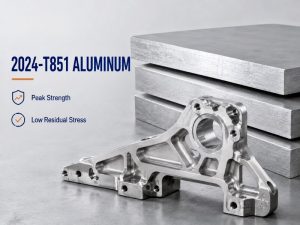
T851 wird gewählt, wenn ein bearbeitetes Plattenbauteil die höchste Streckgrenze und Stabilität benötigt, die in 2024 verfügbar ist, und 5% Dehnung akzeptabel ist.
O wird verwendet, wenn die Umformung so stark ist, dass jeder T-Zustand reißen würde – weichglühend umformen, dann lösungsglühen und auslagern. Der 2024-O-Blechleitfaden behandelt diesen Weg.
Eine andere Legierung ist erforderlich, wenn die Baugruppe schmelzgeschweißt werden muss, ungeschützt im Freien oder auf See eingesetzt wird oder nennenswerten Strom führen muss. Keiner der 2024-Zustände behebt diese Einschränkungen.
Arbeiten mit 2024-T3
Formung
T3 lässt sich umformen, ist aber kein 5052. Planen Sie einen Mindestbiegeradius im Bereich von 3t bis 5t ein, abhängig von Blechdicke und Orientierung – ein Vielfaches dessen, was ein 5xxx-Blech bei gleicher Dicke toleriert. Biegen quer zur Walzrichtung ist verzeihender als Biegen entlang der Walzrichtung, und dickere Bleche benötigen proportional größere Radien. Wenn eine Konstruktion tatsächlich einen engen Radius erfordert, sind die üblichen Lösungen: Umformen im O-Zustand und anschließende Wärmebehandlung oder der Wechsel zu einer umgeformten und anschließend genieteten Baugruppe anstelle eines einzelnen gebogenen Bauteils.
Fügen
Schmelzschweißen von 2024 ist kein praktikabler Produktionsweg: Die Wärmeeinflusszone ist heißrissgefährdet und der Zustand wird lokal in jedem Fall zerstört. Nieten ist der Standard, mit Verschrauben und strukturellem Kleben als den beiden anderen anerkannten Verfahren. Rührreibschweißen funktioniert bei 2024 und vermeidet das Schmelzproblem, erfordert jedoch Vorrichtungen und Zugänglichkeit der Fügestelle, die viele Baugruppen nicht bieten können. Beachten Sie, dass 2024-Niete selbst (die DD-Bezeichnungen) in frisch lösungsgeglühtem Zustand geliefert werden, gekühlt gelagert und innerhalb eines begrenzten Zeitfensters gesetzt werden müssen – diese Einschränkung gilt für den Niet, nicht für das T3-Blech, in das er gesetzt wird.
Bearbeitung
2024-T3 lässt sich sauber zerspanen. Scharfe Hartmetallwerkzeuge, hohe Schnittgeschwindigkeit und mittlerer Vorschub ergeben gute Spanbildung und eine glänzende Oberfläche; die Legierung hält enge Toleranzen gut. Bei dicken Querschnitten mit großem Materialabtrag ist T351-Platte der bessere Ausgangswerkstoff, da die gereckte Spannungsarmglühung das Bauteil eben hält.
Korrosionsschutz und Oberflächenbehandlung
Schutz ist bei dieser Legierung nicht optional. Alclad-Blech, bei dem hochreines Aluminium auf beide Seiten aufgewalzt ist, ist die Standardlösung in der Luftfahrt, da die Plattierung opferanodisch korrodiert und den kupferreichen Kern abschirmt. Eloxieren und Grundierungs- oder Lackiersysteme sind die Alternativen für unbeschichtetes Material. Ein spezifischer Punkt für ermüdungskritische Bauteile: Konventionelles Schwefelsäure-Eloxieren bringt eine messbare Ermüdungsminderung mit sich – weshalb traditionell dünnes Chromsäure-Eloxieren für 2024-Flugzeugstrukturteile spezifiziert wurde und Borsäure-Schwefelsäure- sowie Dünnschicht-Schwefelsäure-Verfahren die Chromatanwendung zunehmend ersetzen. Achten Sie auch auf galvanische Paarungen – 2024 in Kontakt mit Stahlbefestigungen oder Kohlefaser benötigt eine isolierende Zwischenschicht.
Vorteile und Grenzen
| Vorteil | Begrenzung |
| 483 MPa Zugfestigkeit bei 2,78 g/cm³ – eines der besten Festigkeits-Gewichts-Verhältnisse unter handelsüblichen Aluminiumlegierungen | Geringe Korrosionsbeständigkeit; Plattierung, Eloxieren oder Lackierung sind im Einsatz zwingend erforderlich |
| 138 MPa Dauerschwingfestigkeit, gut geeignet für zyklisch belastete Strukturen | Nicht schmelzschweißbar; Baugruppen müssen genietet, verschraubt oder geklebt werden |
| ~18% Dehnung, ausreichend für die Umformung, die genietete Blechstrukturen benötigen | Biegeradien von 3t bis 5t; engere Geometrien erfordern Umformen im O-Zustand und anschließende Wärmebehandlung |
| Lässt sich sauber zerspanen und hält Toleranzen | ~30% IACS-Leitfähigkeit schließt den Einsatz für stromführende Teile aus |
| Weit verbreitet spezifiziert und gut charakterisiert, daher sind Auslegungsdaten leicht verfügbar | Kostet mehr als 5052 oder 6061, und die Oberflächenbehandlung erhöht die Kosten zusätzlich |
Schlussfolgerung
2024-T3 vereint hohe Lieferfestigkeit, Ermüdungsbeständigkeit und ausreichende Duktilität für umgeformte und genietete Blechstrukturen, aber die Kompromisse sind ebenso klar definiert: Korrosionsschutz ist zwingend, Schmelzschweißen ist kein praktikabler Produktionsweg, und Biegeradien von 3t bis 5t begrenzen die Geometrie – wo diese Einschränkungen zum Bauteil passen, konkurrieren nur wenige Legierungen, und wo sie nicht passen, ist 6061 oder 5052 die praktikablere Wahl zu geringeren Gesamtkosten. Die Beschaffung des korrekten Zustands und der Blechdicke mit vollständiger Dokumentation bleibt eine häufige Beschaffungsherausforderung.
Linsy liefert 2024 in T3 und anderen Standardzuständen als Blech, Platte, Stange, Rohr und Draht, mit Werksprüfzeugnissen für jede Bestellung, kundenspezifischer Fertigung ab geringen Mindestmengen sowie Zertifizierungen nach ISO 9001, ISO 14001 und ISO 45001, mit auf Anfrage verfügbaren SGS-Prüfberichten und typischen Lieferzeiten von 10 bis 60 Tagen je nach Form und Menge. Prüfen Sie die 2024-T3-Spezifikation für zertifizierte Eigenschaftsdaten nach Dicke und Zustand oder kontaktieren Sie Linsy, um Lagerverfügbarkeit und kundenspezifische Fertigungsoptionen für die Zielanwendung zu bestätigen.
Häufig gestellte Fragen
Ist 2024-T3 dasselbe wie 2024-T351?
Sie sind ähnlich, aber nicht austauschbar. Beide sind lösungsgeglüht, kaltverfestigt und natürlich ausgelagert. Bei T351 ist die Kaltverfestigung ein kontrollierter Reckvorgang von 1,5–3%, der gezielt zum Abbau von Eigenspannungen angewendet wird, und die Bezeichnung wird normalerweise für Platten verwendet. T3 ist der Blechzustand, bei dem die Kaltverfestigung ein Walz- oder Planiergang zur Festigkeitssteigerung ist. Die typischen Festigkeiten liegen innerhalb weniger Prozent voneinander; der Grund, T351 zu spezifizieren, ist die Dimensionsstabilität während der Bearbeitung, nicht eine höhere Festigkeit.
Kann 2024-T3 geschweißt werden?
Nicht durch Schmelzschweißverfahren in irgendeinem praktikablen Produktionssinn. Die Wärmeeinflusszone ist heißrissgefährdet, und der T3-Zustand wird durch die Schweißwärme lokal in jedem Fall zerstört. Nieten, Verschrauben und strukturelles Kleben sind die anerkannten Wege. Rührreibschweißen ist technisch machbar, da es unterhalb der Schmelztemperatur bleibt, erfordert jedoch Vorrichtungen und Fügestellenzugang, die die meisten Blechbaugruppen nicht bieten können.
Wie viel kostet 2024-T351 im Vergleich zu T3?
Der Preisaufschlag für T351 gegenüber T3 liegt in der Regel bei 5–15 %, bedingt durch den zusätzlichen Reckvorgang. Bei dicken Platten (über 25 mm) verringert sich der Aufschlag, da T3 bei diesen Dicken selten spezifiziert wird — T351 ist der Standard-Luftfahrthärtungszustand. Der eigentliche Kostenvergleich ist nicht T351 gegen T3, sondern T351 gegen die Kosten eines verschrotteten, verzogenen T3-Teils nach der Bearbeitung.
Welchen Mindestbiegeradius sollte ich für 2024-T3-Blech konstruktiv vorsehen?
Ungefähr 3t bis 5t, abhängig von Blechdicke und Biegerichtung, wobei Querbiegungen verzeihender sind als Längsbiegungen. Bestätigen Sie dies anhand der Lieferantendaten für die spezifische Dicke, bevor Sie Werkzeuge freigeben. Wenn die Konstruktion etwas Engeres erfordert, formen Sie das Bauteil im O-Zustand und wärmebehandeln Sie es nach dem Umformen auf T.
Benötigt 2024-T3 Kühllagerung oder eine erneute Auslagerung nach der Lieferung?
Nein. T3-Material wird vor dem Versand natürlich auf einen im Wesentlichen stabilen Zustand ausgelagert, sodass es bei Raumtemperatur ohne Festigkeitseinbußen gelagert und verarbeitet werden kann. Die Kühlanforderung, die man mit 2024 verbindet, gilt für frisch lösungsgeglühte Niete, die ein vollständig anderes Produkt darstellen.