Önemli Noktalar
- 3003 H14, manganezle güçlendirilmiş bir 3000 serisi alaşımdır; iyi korozyon direncini korurken kolayca şekillendirilir ve biçimlendirilir.
- H14 mizacı, ısıl işlem olmaksızın orta düzeyde mukavemet sağlayan, yaklaşık yarı sertliğe kadar gerilimle sertleştirilmiş (soğuk işlenmiş) anlamına gelir.
- Isıl işlem uygulanabilir bir alaşım değildir; bu nedenle mukavemet, kaynak sonrası ısıl işlemden değil, soğuk işlemden gelir.
- Yaygın kullanım alanları arasında çatı kaplama, oluklar, ısı eşanjörleri, yakıt tankları ve genel sac imalatı yer alır.
- 5052 ile karşılaştırıldığında daha iyi şekillenir; 6061 ile karşılaştırıldığında daha ucuz ve işlenmesi daha kolaydır ancak daha düşük mukavemet sunar.
Giriş
3003 H14 alüminyum, en yaygın kullanılan genel amaçlı alüminyum alaşımlarından biridir. İnşaat, otomotiv ve imalat işleri için orta düzeyde mukavemet, mükemmel şekillendirilebilirlik ve iyi korozyon direncini dengeler.
Bu kılavuz, 3003 H14'ün ne olduğunu, kimyasal bileşiminin ve H14 mizacının performansı nasıl etkilediğini, nerede kullanıldığını ve 5052 ile 6061 ile nasıl karşılaştırıldığını açıklar. Stok veya ölçüye göre kesilmiş malzeme ihtiyacınız varsa, bkz. 3003 alüminyum alaşım ürün yelpazemiz.
3003 H14 Alüminyum Alaşımını Anlamak
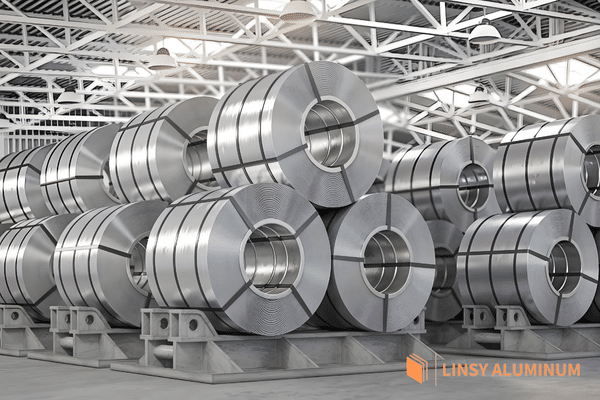
3003, manganezin ana alaşım elementi olduğu 3000 serisine aittir. Eklenen manganez, alaşımın kolayca şekillendirilip kaynaklanabilmesini sağlarken mukavemeti 1100 gibi neredeyse saf alaşımların üzerine çıkarır.
“H14” kısmı mizacı tanımlar. Alüminyum mizaç tanımlamalarında H, gerilimle sertleştirilmiş anlamına gelir ve sonraki rakamlar ne kadar soğuk işlem uygulandığını açıklar. H14 yaklaşık yarı serttir; bu nedenle malzeme tavlanmış (O) durumdan daha güçlü ve daha serttir ancak yine de bükülmesi ve şekillendirilmesi kolaydır.
Kimyasal Bileşim
3003, standart bileşim sınırlarına göre üretilir; böylece kalite partiden partiye tutarlı kalır. Manganez (Mn), yaklaşık %1,0-1,5 oranıyla temel ilavedir ve mukavemeti saf alüminyumun üzerine çıkaran da budur. Az miktarda demir, silisyum, bakır ve çinko mevcuttur ve döküm, korozyon davranışı ve mekanik özellikleri etkiler.
| Element | Yüzde (ağırlıkça %) |
|---|---|
| Alüminyum (Al) | ~98.7% |
| Manganez (Mn) | ~1.0-1.5% |
| Bakır (Cu) | ≤%0,20 |
| Silisyum (Si) | ≤%0,60 |
| Demir (Fe) | ≤%0,70 |
| Çinko (Zn) | ≤%0,10 |
Temel Özellikler ve Faydalar
3003 H14'ün ana avantajı şekillendirilebilirliğidir. İyi bükülür, savrulur ve çekilir; bu da imalatı basitleştirir ve tasarım seçeneklerini genişletir. Isıl işlem uygulanamadığı için mukavemeti ısıdan değil soğuk işlemden gelir.
Ayrıca korozyona iyi direnç gösterir; bu nedenle ek kaplamalar olmadan dış mekan ve nemli ortamlar için uygundur. Aşağıdaki tablo tipik özellik değerlerini listeler.
| Mülkiyet | Değer |
|---|---|
| Çekme Dayanımı | ~22.000 PSI (≈152 MPa) |
| Akma Dayanımı | ~21.000 PSI (≈145 MPa) |
| Kopma Uzaması | ~8% |
| Yoğunluk | ~2,73 g/cm³ |
| Termal İletkenlik | ~160 W/m·K |
| Korozyon Direnci | Mükemmel |
H14 Temper Ne Anlama Geliyor?
Alüminyumda “mizaç”, mekanik veya termal işlemle üretilen durumu tanımlar. Mizaç kodları bir harfi rakamlarla eşleştirir; 3000 serisi için H mizaçları gerilimle sertleştirilmiş anlamına gelir.
H14, alaşımın tamamen sert H18 mizacının yaklaşık yarısı kadar bir sertliğe soğuk işlendiği anlamına gelir. Daha yüksek bir ikinci rakam, daha fazla soğuk işlem ve daha yüksek mukavemet anlamına gelir. Mizacı bilmek, mühendislerin mukavemet ve şekillendirilebilirlik arasında doğru dengeyi seçmesine yardımcı olur.
3003 H14 Alüminyumun Yaygın Uygulamaları
İnşaat Sektörü
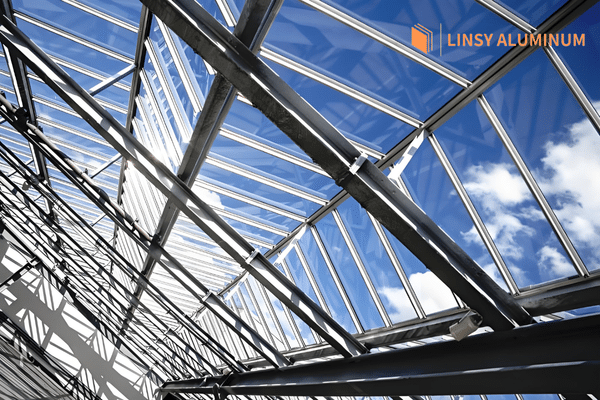
İnşaat, hafif ve korozyona dayanıklı malzemeler gerektirir ve 3003 H14 buna çok uygundur. Yaygın olarak 3003 alüminyum levha bina ve mimari işler için tedarik edilir.
- Çatı kaplama ve dış cephe kaplaması: düşük ağırlık yapısal yükü azaltırken hava koşullarına dayanıklılık binayı korur.
- Yağmur olukları ve iniş boruları: korozyon direnci, minimum bakımla yıllarca çalışmalarını sağlar.
- Çatı kaplama kenar şeritleri ve trimler: kolay şekillendirme, imalatçıların açıklıkları kapatan özel profiller oluşturmasını sağlar.
Otomotiv Endüstrisi
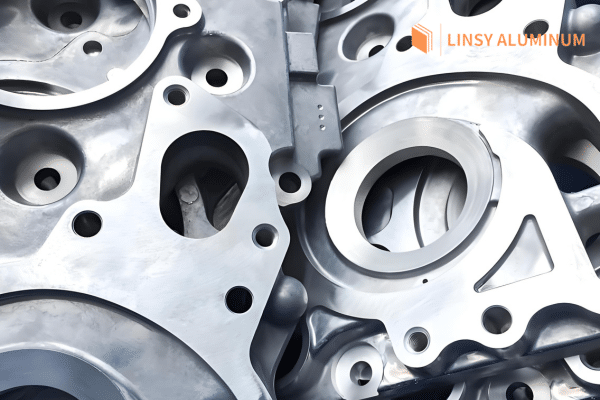
Otomobil üreticileri, yüksek maliyet olmadan ağırlığı azaltmak için 3003 H14 kullanır. 6061 veya çelik kadar güçlü değildir ancak şekillendirilebilirlik ve korozyon direnci gerektiren yapısal olmayan parçalar için idealdir.
- Radyatörler ve ısı eşanjörleri: iyi termal iletkenlik ve korozyon direnci soğutma sistemleri için uygundur. Çekilmiş 3003 alüminyum yuvarlak boru burada yaygındır.
- İç trimler ve pervazlar: dekoratif parçalar için hafif, dayanıklı ve işlenmesi kolaydır.
- Yakıt tankları: kıvılcım çıkarmama özelliği yakıt sistemlerine güvenlik katar.
Ambalaj Endüstrisi
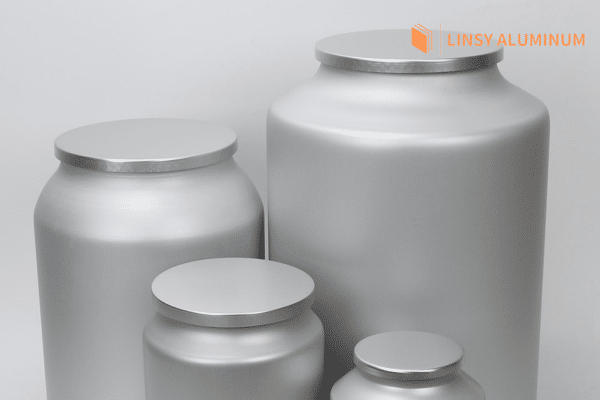
3003 H14, ambalaj sektöründe güçlü, şekillendirilebilir ve alüminyum standartlarıyla uyumlu olduğu için popülerdir. Genişlik ve kalınlık özelleştirilebilir; bu nedenle ağırlığa duyarlı kullanımlarda karbon çeliğinden daha iyi birçok ambalaj ihtiyacına uyar.
3003 H14 Alüminyumun Artıları ve Eksileri
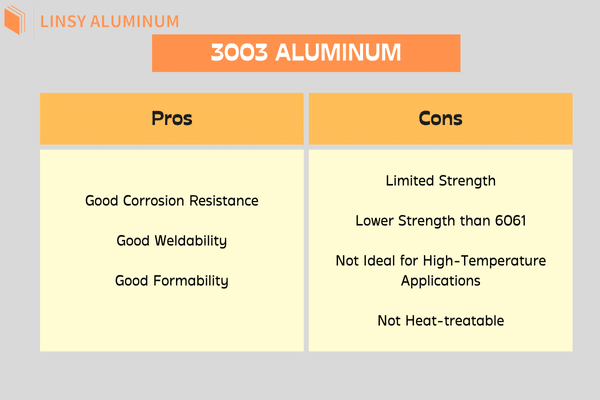
Her mühendislik malzemesi gibi, 3003 H14'ün de ödünleşimleri vardır. Kolayca şekillenir ve kaynaklanır, korozyona direnç gösterir ve orta düzeyde çekme mukavemetine sahiptir (yaklaşık 20-26 ksi). Sınırlamalar, yüksek gerilimli parçalar için düşük mukavemet ve ısıl işlemle mukavemeti artırma seçeneğinin olmamasıdır.
3003'ün Diğer Alüminyum Alaşımlarıyla Karşılaştırılması
3003 H14'ü 5052 ve 6061'in yanında görmek, nereye uyduğunu gösterir. Seçim, parçanın ne kadar kolay şekillenmesi gerektiğine karşı ne kadar mukavemete ihtiyacınız olduğuna bağlıdır.
Alüminyum 3003 vs. 5052
Hem 3003 hem de 5052 ısıl işlem uygulanamaz ve mukavemeti soğuk işlemden kazanır. 5052, daha yüksek çekme ve akma mukavemeti sağlayan magnezyum ekler; bu nedenle daha ağır yüklü parçalar için uygundur. 3003 şekillendirilebilirlikte öne çıkar.
| Mülkiyet | 3003 H14 | 5052 H32 |
|---|---|---|
| Çekme Dayanımı | 20-26 ksi | 31-38 ksi |
| Akma Dayanımı | 21 ksi | 28 ksi |
| Uzama | 8% | 12% |
| Kaynaklanabilirlik | İyi | İyi, ancak bazı önlemler alınmalı |
| Şekillendirilebilirlik | Mükemmel | İyi |
Daha fazla mukavemete ihtiyacınız olduğunda 5052'yi seçin; karmaşık şekillendirme en önemli konu olduğunda 3003'ü seçin.
Alüminyum 3003 vs. 6061
6061 ısıl işlem uygulanabilir olduğundan daha yüksek mukavemete (genellikle 40 ksi üzeri) ulaşır ancak maliyeti ve karmaşıklığı artıran ısıl işlem adımları gerektirir. 3003'e ısıl işlem uygulanamaz; bu da onu orta düzey mukavemetli işler için daha basit ve daha ucuz tutar.
Daha derin bir yan yana karşılaştırma için, bkz. 3003 vs 6061 karşılaştırması. Sac alaşımları arasında seçim yaparken, 3104 vs 3003 vs 3004 sac kılavuzumuz alaşımı işe eşleştirmenize yardımcı olur.
Sonuç
3003 H14 pratik bir genel amaçlı alaşımdır ancak sınırlamaları gerçektir: mukavemet kazanmak için ısıl işlem uygulanamaz; bu nedenle yüksek gerilimli yapısal parçalar için doğru seçim değildir. Tutarsız bir tedarikçiden tedarik etmek risk ekler; çünkü spesifikasyon dışı kalınlık veya mizaç, ileride şekillendirme ve kaynak işlemlerinde başarısızlığa neden olabilir.
Linsy Aluminum, 20+ yıllık deneyimiyle 3003 H14 plaka, sac, çubuk, boru ve profil tedarik eden Shenzhen merkezli bir fabrikadır. Her sipariş, MTC (Malzeme Test Sertifikası) ile sevk edilir ve talep üzerine SGS test raporları sunulur. Fabrika doğrudan tedariki, dahili CNC işleme, kaynak ve lazer kesim ile ISO 9001, ISO 14001 ve ISO 45001 yönetim sistemleri sayesinde Linsy, tutarlı malzeme ve 10-60 gün arasında kısa özel teslim süreleri sunar.
3003 H14 gereksinimlerinizi görüşmek ve fiyat teklifi almak için bugün Linsy Aluminum ile iletişime geçin.
Sıkça Sorulan Sorular
Alüminyum 1100 ve Alüminyum 3003 arasındaki fark nedir?
1100 neredeyse saf alüminyumdur; bu nedenle 3003'ten daha yumuşak ve daha zayıftır. 3003'te manganez eklenmesi mukavemeti artırır ve iyi şekillendirilebilirliği korur; bu da onu imal edilen parçalar için daha kullanışlı hale getirir.
3003 H14'ü diğer alüminyum alaşımlarından ayıran nedir?
H14 mizacı, yaklaşık yarı sertliğe kadar gerilimle sertleştirilmiş anlamına gelir; bu nedenle tavlanmış durumdan daha güçlüdür ancak yine de şekillendirilmesi kolaydır. Şekillendirilebilirlik, korozyon direnci ve orta düzey mukavemet dengesi, onu 6061 gibi ısıl işlem uygulanabilir alaşımlardan ayırır.
3003 H14 en yaygın olarak hangi sektörlerde kullanılır?
İnşaatta (çatı kaplama, oluklar, trimler), otomotivde (radyatörler, trimler, yakıt tankları) ve ambalajda, ayrıca şekillendirilebilirlik ve korozyon direncinin yüksek mukavemetten daha önemli olduğu genel imalatta yaygındır.
3003 H14 alüminyum kolayca kaynaklanabilir veya işlenebilir mi?
3003 H14, standart ark kaynağıyla kolayca kaynaklanır ve temiz bir şekilde işlenir ve kesilir. Isıl işlem uygulanamaz yapısı, kaynaklı bağlantıların kaynak sonrası ısıl işlem olmadan özelliklerini koruduğu anlamına gelir.