What Are the Differences Between 6061 and 7075 Aluminum Alloys?
6061 aluminum is simpler to weld and shape. 7075 aluminum is stronger, but it doesn’t resist corrosion as well. Engineers typically choose 6061 for structural parts, marine fittings, and truck bodies. 7075 is preferred for aircraft parts where a high strength-to-weight ratio matters most.
Introduction
Aluminum alloys play a key role in modern manufacturing. Adjusting their chemical composition modifies properties like tensile strength, corrosion resistance, and machinability. This guide compares 6061 aluminum alloy and 7075 aluminum alloy — two of the most widely used grades — to help you choose the right material for your project.
Understanding 6061 and 7075 Aluminum Alloys
The Basics of 6061 Aluminum Alloy
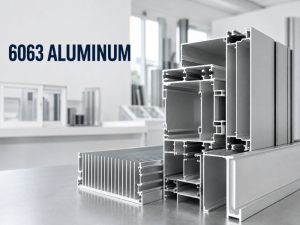
6061 aluminum alloy belongs to the 6000 series. It offers medium strength and excellent corrosion resistance. The alloy is easy to weld, cut, and join, making it a go-to choice in construction and automotive industries. It is available in sheets, plates, bars, and tubes — including 6061 aluminum round bar and 6061 aluminum sheet.
6061 is significantly cheaper than 7075, which is why many projects default to it when extreme strength is not required.
The Fundamentals of 7075 Aluminum Alloy
7075 aluminum alloy is part of the 7000 series. It is one of the strongest aluminum alloys available, with strength approaching some types of steel. This comes from its high zinc content, combined with magnesium and copper.
The trade-off: 7075 is harder to weld and form than 6061. It is the preferred choice in aerospace, defense, and high-performance sporting goods where strength-to-weight ratio is critical.
Chemical Composition and Properties
The properties of 6061 and 7075 stem from their different alloying elements. 6061 relies on magnesium and silicon for strength, corrosion resistance, and weldability. 7075 gets its exceptional strength from zinc, magnesium, and copper.
| Element | 6061 Aluminum | 7075 Aluminum |
|---|---|---|
| Aluminum | Remainder | Remainder |
| Magnesium | 0.8% – 1.2% | 2.1% – 2.9% |
| Silicon | 0.4% – 0.8% | 0.4% max |
| Copper | 0.15% – 0.4% | 1.2% – 1.8% |
| Manganese | 0.15% max | 0.3% max |
| Chromium | 0.04% – 0.35% | 0.18% – 0.28% |
| Zinc | 0.25% max | 5.1% – 6.1% |
| Iron | 0.7% max | 0.5% max |
| Other Elements | 0.15% max (each) | 0.15% max (each) |
Property Comparison: Strength and Durability
The mechanical properties of 6061-T6 and 7075-T6 show why these alloys serve different purposes:
| Property | 6061-T6 | 7075-T6 |
|---|---|---|
| Tensile Strength (MPa) | 310 | 572 |
| Yield Strength (MPa) | 276 | 503 |
| Shear Strength (MPa) | 207 | 331 |
7075-T6 is nearly twice as strong as 6061-T6 in tensile and yield strength. This makes 7075 the clear choice for high-load applications, while 6061 is sufficient for general-purpose structural use.
Physical and Mechanical Characteristics
Density and Weight Differences
7075 has a density of about 2.81 g/cm³, while 6061 sits at 2.7 g/cm³. The difference comes from 7075’s higher zinc content. While small, this gap matters in aerospace and automotive applications where every gram counts.
Tensile Strength and Yield Strength Insights
7075 aluminum’s tensile strength is nearly double that of 6061. Its yield strength is also significantly higher, meaning it can take more stress before permanent deformation. This is why 7075 is specified for components that experience high stress, such as aircraft fuselage frames and military equipment.
For a deeper look at 6061’s mechanical properties in context, see our 5052 vs 6061 comparison guide.
Processing and Manufacturability
Machinability of 6061 and 7075 Alloys
6061 is easy to machine. Its lower hardness and tensile strength mean standard cutting tools work well without excessive wear.
7075 is harder and stronger, requiring special tooling and techniques. Machining 7075 takes more force, which can accelerate tool wear and affect surface finish. However, its excellent machinability rating (compared to other high-strength alloys) still makes it a favorite for CNC-machined parts.
Formability, Welding, and Joining Techniques
6061 has excellent formability. It can be bent, stamped, and shaped into complex forms without cracking. It also welds easily using MIG and TIG methods with standard filler materials.
7075 is more challenging. Welding 7075 risks cracking and reduced strength in the heat-affected zone. Many applications use riveting or mechanical fastening instead. When welding is necessary, specialized techniques and post-weld heat treatment are required.
Performance in Applications
Corrosion Resistance Analysis
Both alloys form a protective oxide layer when exposed to air. 6061, with its magnesium-silicon composition, resists corrosion better than 7075. It holds up well in weather and many industrial chemical environments.
7075 contains copper, which increases its susceptibility to corrosion in harsh conditions. For marine or corrosive environments, 7075 may require anodizing or protective coatings to maintain longevity.
Thermal Conductivity and Heat Treatment
6061 conducts heat better than 7075, making it suitable for heat sinks and heat exchangers. Heat treatment significantly strengthens both alloys, but 7075 benefits more dramatically — its T6 temper delivers exceptional strength gains.
Note that heat treatment can reduce corrosion resistance. Depending on the application, additional surface protection may be needed after treatment.
Industry Applications and Use Cases
Aerospace and Automotive Applications
7075 is the aerospace industry’s preferred aluminum alloy. Its high strength-to-weight ratio makes it ideal for aircraft structural parts, wing spars, and fuselage components. In automotive applications, 7075 is used for high-stress parts like wheels, suspension components, and chassis supports.
6061 is used for less critical automotive parts — body panels, interior trim, and components that don’t bear extreme loads. Its weldability and formability make it more versatile for general manufacturing.
Construction and Structural Engineering Uses
6061 is widely used in construction for beams, columns, and trusses. Its combination of strength, weldability, and light weight helps reduce project costs. For more on 6061 structural products, see our guide on 6061 aluminum angle.
7075 is rarely used in standard construction due to cost. It appears in specialized high-strength projects like bridges and towers where maximum strength-to-weight is essential.
Cost Considerations and Availability
Price Comparison: 6061 vs 7075
6061 is significantly cheaper than 7075. The materials and processing required for 6061 are less expensive, and it is produced in higher volumes.
7075’s high zinc content and more complex processing drive up its price. For large projects, this cost difference can be substantial. The key question: does your application need 7075’s strength, or is 6061 sufficient?
For strength-critical applications, 7075 justifies its premium. For general-purpose use where weldability and cost matter more, 6061 is the better choice. For another perspective on this trade-off, see our forged 7075 vs 6061 guide.
Conclusion
Choosing between 6061 and 7075 comes down to a clear trade-off: 6061 offers better weldability, corrosion resistance, and lower cost, while 7075 delivers nearly double the strength for demanding applications. If your project involves high-stress components in aerospace or defense, 7075 is worth the premium. For structural, automotive, and general manufacturing work, 6061 provides the best balance of performance and value.
If you need help sourcing either alloy, Linsy Aluminum supplies 6061 and 7075 in sheets, plates, bars, tubes, and custom shapes — with typical lead times of 10–60 days depending on alloy, dimensions, and processing requirements. Contact Linsy Aluminum today to discuss your specifications and get a quote.
FAQ
Which is stronger, 6061 or 7075 aluminum?
7075-T6 is significantly stronger. Its tensile strength (572 MPa) is nearly double that of 6061-T6 (310 MPa). If maximum strength is your priority, 7075 is the clear winner.
Can you weld 7075 aluminum?
Welding 7075 is possible but challenging. It is prone to cracking in the heat-affected zone and loses strength after welding. Many applications use riveting or mechanical fastening instead. 6061, by contrast, welds easily with standard MIG and TIG methods.
Which alloy is better for corrosion resistance?
6061 has better corrosion resistance due to its magnesium-silicon composition. 7075 contains copper, which makes it more susceptible to corrosion in harsh environments. If corrosion resistance is critical, 6061 is the safer choice.
Is 7075 aluminum worth the extra cost?
It depends on your application. For high-stress aerospace, defense, or performance automotive parts, 7075’s strength justifies the premium. For general structural or fabrication work, 6061 provides better value for money.
What are the most common tempers for 6061 and 7075?
6061 is most commonly used in T6 and T651 tempers. 7075 is typically specified in T6 and T73 tempers — T73 offers improved stress-corrosion cracking resistance at a slight strength reduction compared to T6. For more on temper selection, see our guide on 6061 T651 vs T6.