6061 aluminum sheet and plate is heat-treatable Al-Mg-Si flat product, sold by thickness: sheet to 6 mm, plate above it. It is the default flat-stock alloy for anything welded, machined or anodized — tooling plate, jigs, boat fittings, truck bodies, tanks, machine guarding. T6 gives 310 MPa typical tensile with good corrosion resistance and clean anodizing.
Sheet: 0.5–6 mm, to 2,000 mm wide
Plate: 6–150 mm, to 3,000 mm wide
Tempers: O / T4 / T6 / T651
Standard: ASTM B209, EN 485
Quality documents: MTC report with every order
6061 aluminum sheet and plate is heat-treatable Al-Mg-Si flat product, sold by thickness: sheet up to 6 mm, plate above it. It is the default flat-stock alloy for anything that has to be welded, machined or anodized — tooling plate, jigs, boat fittings, truck bodies, tanks, machine guarding. T6 gives 310 MPa typical tensile with good corrosion resistance and clean anodizing, and the alloy is available in the widest thickness range of any common grade. Its limit is strength: 6061 is roughly half of 7075 and about two-thirds of 2024. Alloy data: 6061 aluminum alloy.
| Form | Tempers | Thickness (mm) | Width (mm) | Length (mm) |
|---|---|---|---|---|
| Sheet | O, T4, T6 | 0.5 – 6 | 1,000 – 2,000 | 1,000 – 6,000 |
| Plate | T6, T651 | 6 – 150 | 1,000 – 3,000 | 1,000 – 6,000 |
Sheet or plate? The industry line is 6 mm: below it the product is coiled and flattened as sheet, above it the product is rolled as plate and sawn to size. The tempers differ across that line, and so does the tolerance. Above 6 mm, T651 is normally the correct designation — T6 plate is available but will move when machined, which is why tooling plate is ordered as T651.
Supplied to ASTM B209 or EN 485. Thickness tolerance, flatness and edge condition are all quotable to a tighter class than commercial; if the plate is going on a machining centre, say so — flatness and residual stress matter more than nominal thickness.
| Temper | Tensile (MPa) | Yield (MPa) | Elongation | Typical use |
|---|---|---|---|---|
| O | ≤ 150 | 83 – 110 | 10 – 18% | Severe forming before heat treatment |
| T4 | 180 – 210 | ≥ 110 | 10 – 16% | Formed parts that age naturally |
| T6 | ≥ 290 (typical 310) | ≥ 240 (typical 276) | 8 – 12% | Structural sheet, general plate |
| T651 | ≥ 290 (typical 310) | ≥ 240 (typical 276) | 8 – 12% | Machined plate, tooling |
Typical values; confirm against the MTC. Density 2.70 g/cm³, elastic modulus 69 GPa. T651 carries the same strength as T6 — the difference is that the plate was stretched after quenching, so it stays flat when you remove material.
Sheet in T6 covers general fabrication: guards, panels, brackets, welded assemblies. T4 is for parts that are formed before service and can be left to age. O is for severe forming only.
Plate is where the temper decision actually costs money. A T6 plate machined into a tooling fixture will bow as the stressed skin is removed — not because the plate was defective, but because the residual stress was never relieved. T651 is the fix, and it is the reason tooling plate is specified that way. If you are buying 6 mm and above to machine, order T651 unless there is a specific reason not to.
| Alloy / temper | Tensile (MPa) | Yield (MPa) | Weldability | Where it fits |
|---|---|---|---|---|
| 6061-T6 / T651 | 310 | 276 | Good | Tooling plate, structures, machined parts, anodized panels |
| 5052-H32 | 214 – 262 | ≥ 159 | Excellent | Formed and welded parts, marine, tanks |
| 7075-T6 / T651 | 570 | 505 | Not weldable | Maximum-strength plates for tooling and aerospace |
6061 is the compromise that fits most jobs: weldable, corrosion resistant, anodizable, and strong enough for general structural work. Choose 5052 when the part is formed hard or lives in salt water; choose 7075 when the plate has to be as strong as possible and will never be welded.
Cutting: sheet is supplied cut to size, guillotined or sawn; plate is sawn. Both are available cut to your finished dimension, which is usually cheaper than shipping full sheets and cutting on site.
Machining: good in T6 and T651, though not free-cutting — use sharp polished carbide and keep the feed up to avoid built-up edge. For plate work, order T651 and rough machine before finishing.
Surface: mill finish, PVC protective film on one or both faces, or anodized. 6061 anodizes to a uniform clear or dyed film, which is why it is used for visible panels. Film is worth specifying on thin sheet that will be handled before fabrication.
Tooling plate and jigs, machine guarding and frames, boat fittings and decks, truck and trailer bodies, tanks and pressure covers, electrical enclosures and panels, anodized architectural and consumer panels, signs and nameplates, mould backing plates, general fabrication.
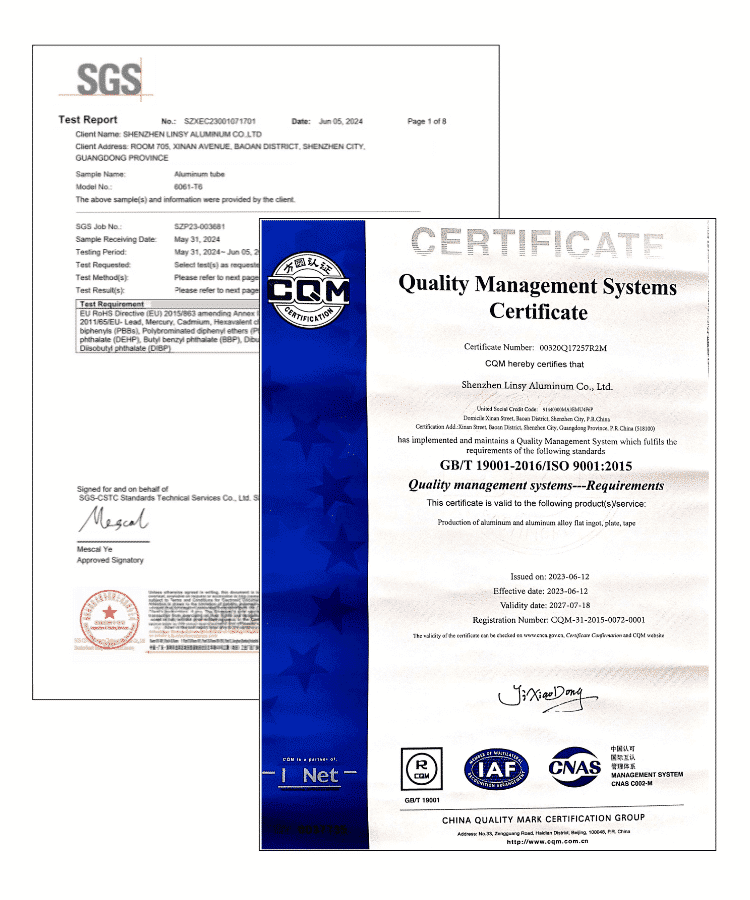
Every order ships with an MTC reporting alloy, temper, chemical composition and mechanical results against ASTM B209 or the ordered standard. Flatness and thickness tolerance can be certified to the class ordered. Third-party testing is available on request at additional cost; production runs under ISO 9001, ISO 14001 and ISO 45001 certified systems.
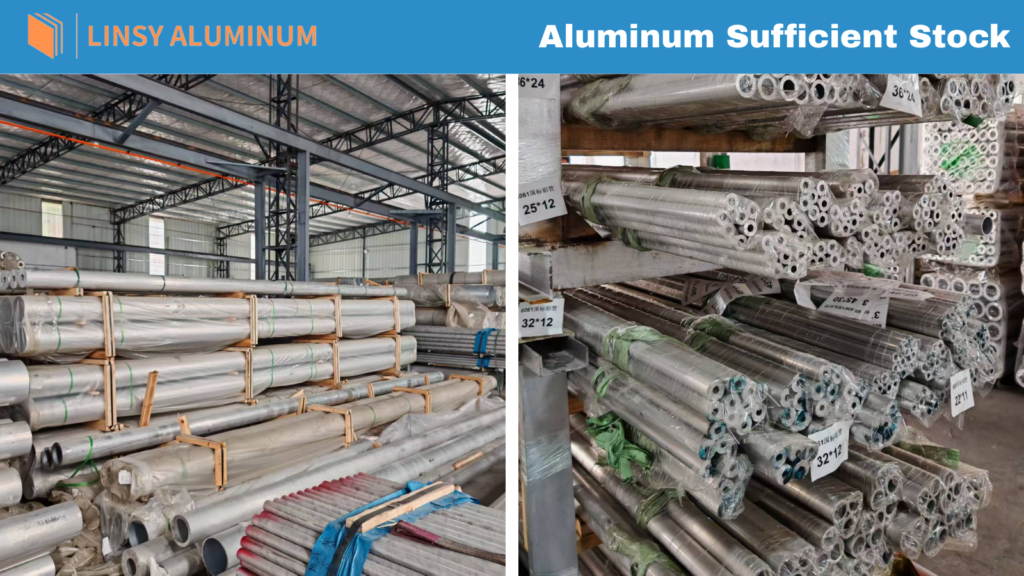
Sales confirm stock or custom lead time for that exact combination.
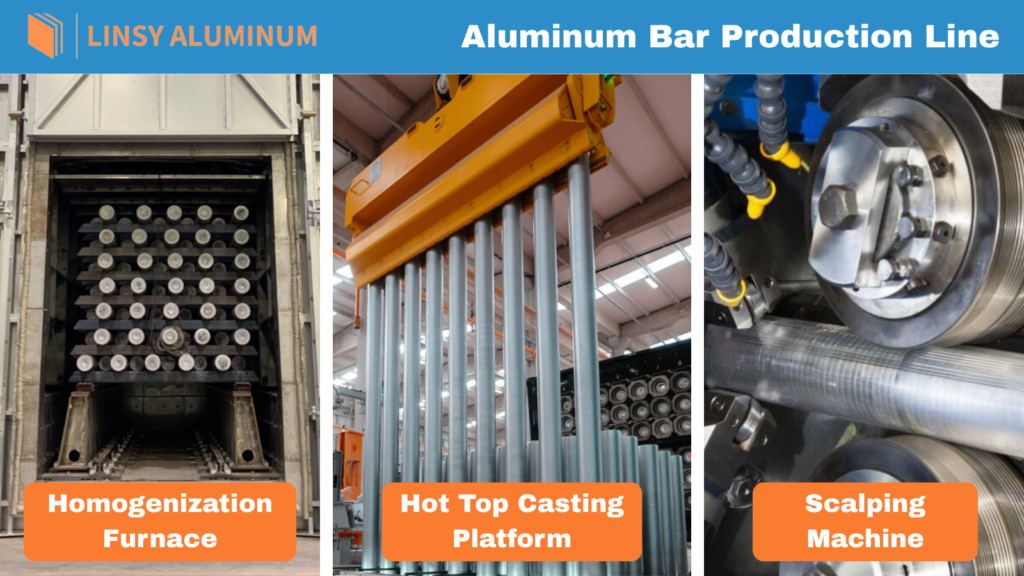
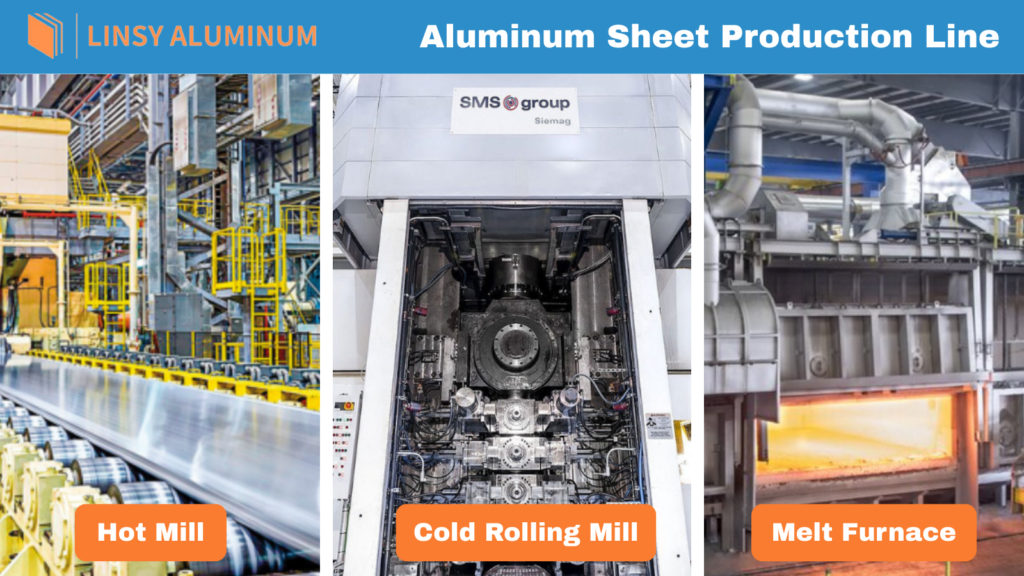
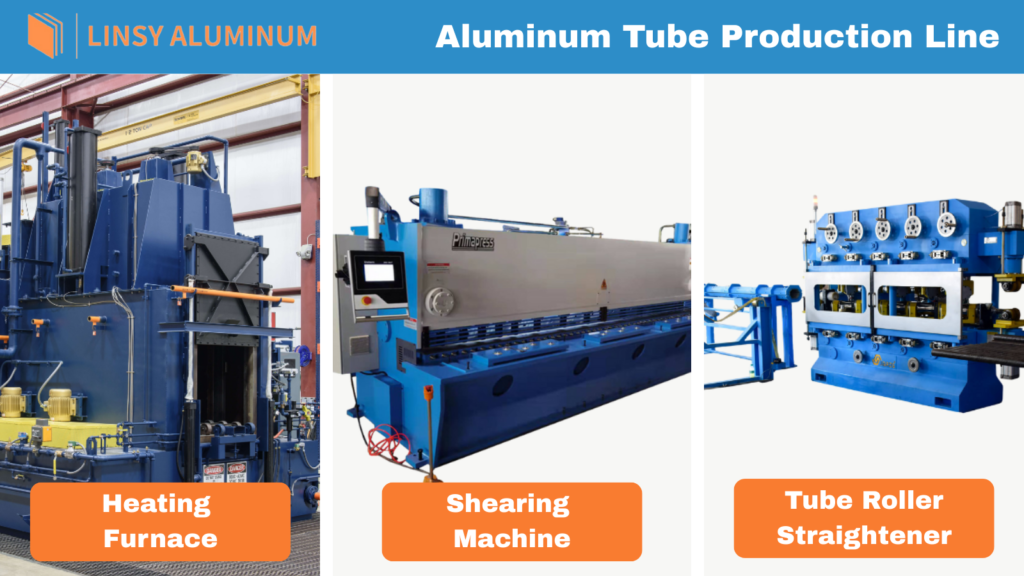
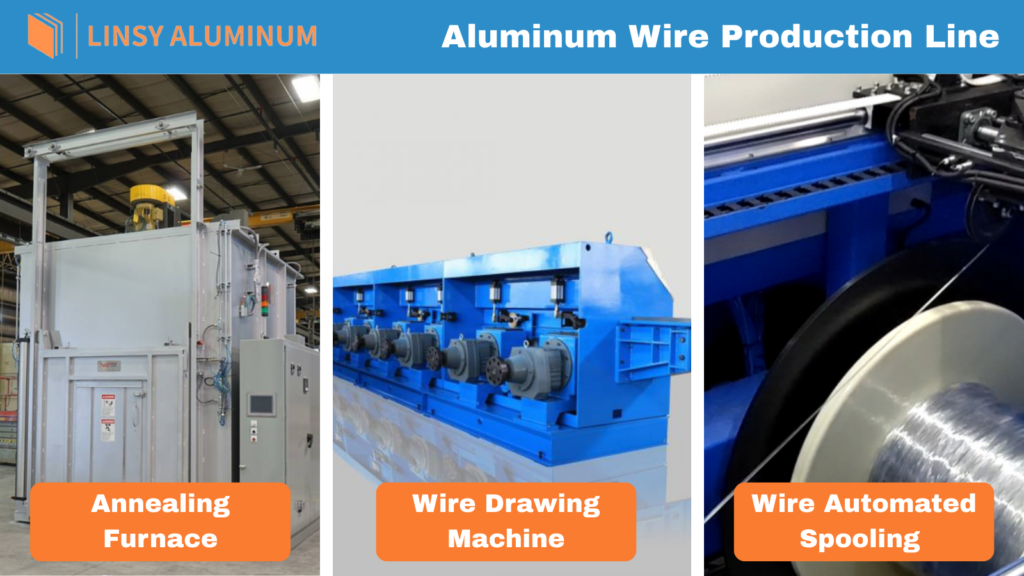
Shenzhen-based aluminum factory, more than 20 years in the industry, supplying 1000–8000 series alloys in standard specifications and custom sizes.
Q: Sheet or plate — where is the line?
A: 6 mm. Below it the product is coiled sheet, above it rolled plate, and the available tempers differ across that line. If you order 6 mm as sheet but need T651, that is the wrong form.
Q: Why T651 for a machined plate?
A: Because T6 plate carries residual stress from quenching and will bow as you remove material. T651 is stretched after quenching to relieve it, so the plate stays flat. Same strength, different stability.
Q: Can 6061 plate be welded?
A: Yes, with 5356 or 4043 filler, but welding in T6 softens the heat-affected zone back towards annealed. Design the joint for the as-welded strength rather than the parent-metal figure.
Q: What thicknesses and sizes do you hold?
A: Sheet 0.5–6 mm up to 2,000 mm wide, plate 6–150 mm up to 3,000 mm wide, cut to length up to 6,000 mm. Tell us the finished size and sales will confirm stock.
Q: Does 6061 sheet anodize well?
A: Yes — it gives a clean, uniform clear or dyed film and is one of the standard alloys for visible anodized panels. Hard anodizing also works, which is not true of the 2xxx and 7xxx grades.
Linsy Advantages
Linsy Aluminum is a leading supplier of aluminum processing products, serving diverse industries including aerospace, general engineering, automotive, marine, shipbuilding and other specialized industrial applications.
We are committed to maintaining the highest standards of quality and environmental responsibility, as demonstrated by our certifications: ISO 9001:2008, ISO 14001:2004 and SGS.