6061 aluminum round bar is a heat-treatable Al-Mg-Si bar and the general-purpose choice for machining and structural work: T6 gives 310 MPa typical tensile, it welds, machines cleanly, anodizes to a uniform finish and resists corrosion far better than 2024 or 7075. Its limits are equally clear — it is not a high-strength alloy, and welding in T6 softens the heat-affected zone.
Diameter: 6–400 mm
Length: up to 6,000 mm, cut to size
Tempers: O / T4 / T6 / T651 / T6511
Standards: ASTM B211, ASTM B221, EN 755
Quality documents: MTC report with every order
6061 aluminum round bar is a solid Al-Mg-Si bar, heat-treatable to T6 and supplied as general-purpose machining and structural stock. It is the alloy most buyers start with and the one most projects end on: T6 gives 310 MPa typical tensile, it welds, it machines well, it anodizes cleanly, and it resists corrosion far better than the 2xxx and 7xxx grades. The limits are equally clear — it is not a high-strength alloy, and it loses strength in the heat-affected zone when welded in T6. Alloy data: 6061 aluminum alloy.
| Item | Range |
|---|---|
| Diameter | 6 – 400 mm |
| Length | Up to 6,000 mm, cut to size |
| Tempers | O / T4 / T6 / T6511 |
| Standards | ASTM B211, ASTM B221, EN 755, GB/T 3191 |
| Tolerance | Per the ordered standard; tighter drawn tolerance quoted on request |
On the designation. T6511 is the stress-relieved temper for extruded bar. T651 is the matching designation for rolled plate, which is where a large-diameter bar is cut from — if your drawing names T651, tell us the diameter and we will confirm which route applies. The two are not interchangeable on a mill certificate.
| Temper | Tensile (MPa) | Yield (MPa) | Elongation | Shear (MPa) |
|---|---|---|---|---|
| O | ≤ 150 | 83 – 110 | 10 – 18% | ~84 |
| T4 | 180 – 210 | ≥ 110 | 10 – 16% | ~110 |
| T6 | ≥ 290 (typical 310) | ≥ 240 (typical 276) | 8 – 12% | ~210 |
| T6511 | ≥ 290 (typical 310) | ≥ 240 (typical 276) | 8 – 12% | ~210 |
Typical AA reference figures; confirm against the mill certificate. Density 2.70 g/cm³, elastic modulus 69 GPa, fatigue strength at T6 around 97 MPa at 5×10⁸ cycles.
T6 is the default and covers most structural and machined parts. T6511 is what you want if the bar is machined on more than one face — identical strength, but stress relieved and straightened, so the part does not move after the first cut. On a bar-fed lathe this is the difference between holding a tolerance and chasing it.
T4 is for parts that will be formed and can be left to age naturally afterwards. O is annealed and used where severe forming is needed before heat treatment; it is rarely held and usually quoted on request. Choose the softest temper that meets the strength requirement — every step up in strength costs formability and machining time.
| Alloy / temper | Tensile (MPa) | Yield (MPa) | Weldability | Where it fits |
|---|---|---|---|---|
| 6061-T6 / T6511 | 310 | 276 | Good | Structures, fixtures, marine, anodized parts, general machining |
| 2024-T351 / T3511 | 462 | 324 | Limited | Fatigue-critical parts; poor corrosion resistance |
| 7075-T6 / T6511 | 570 | 505 | Not weldable | Maximum-strength machined parts, tooling |
6061 is roughly half the strength of 7075 and around two-thirds that of 2024, but it is the only one of the three that welds, and the only one that survives outdoor and marine service without protection. Choose 6061 when the part has to be welded, exposed, or anodized; move up the ladder only when the strength calculation forces it and the part can be kept dry, coated, and unwelded.
Machining: good in T6 and T6511, though not in the free-machining class — 6061 is gummier than 2011 or 6262, so use sharp polished carbide and keep the feed up to avoid built-up edge. Order T6511 for multi-face work.
Finishing: this is where 6061 wins. It anodizes to a clean, uniform film, clear or dyed, and takes powder coating and hard anodizing without the colour shift that 2xxx and 7xxx show. It is the correct alloy for visible decorative parts.
Welding: weldable, but welding in T6 softens the heat-affected zone back towards O condition. Design the joint for the as-welded strength, or weld in T4 and age after welding where the part allows it. Use 5356 or 4043 filler depending on whether the weld will be anodized.
Machine frames and structural components, jigs and fixtures, marine hardware and boat fittings, hydraulic manifolds and pneumatic parts, fasteners and fittings, electrical enclosures, bicycle frames, anodized architectural and consumer parts, general precision machining.
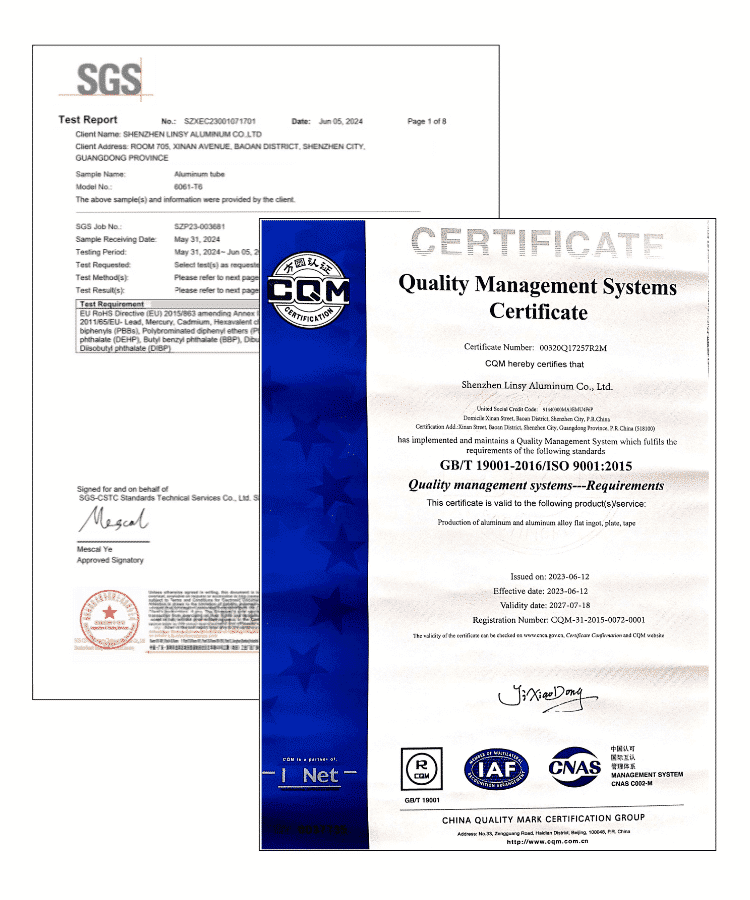
Every order ships with an MTC reporting alloy, temper, chemical composition and mechanical results against the ordered standard. Third-party testing is available on request at additional cost; production runs under ISO 9001, ISO 14001 and ISO 45001 certified systems.
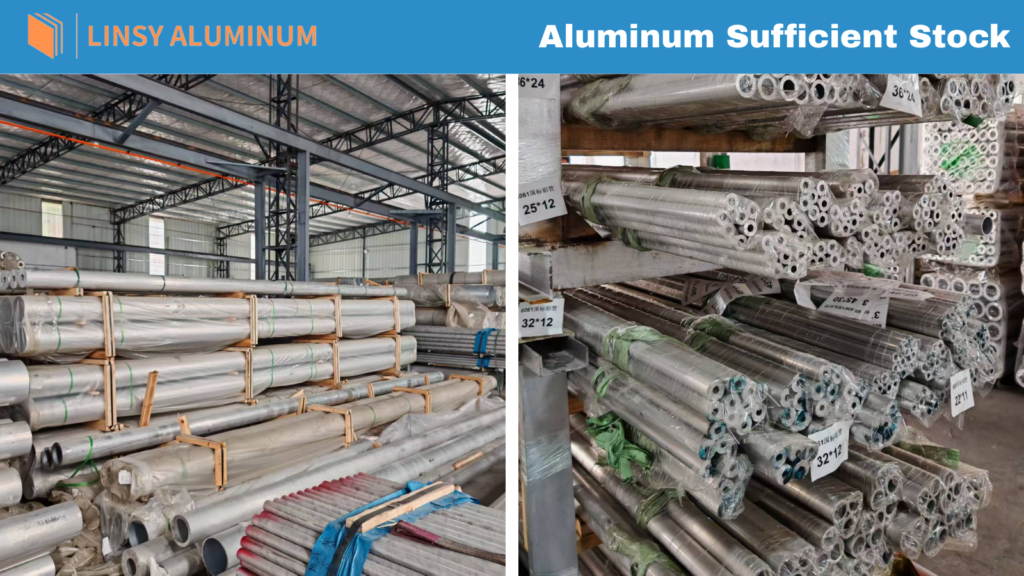
Sales confirm stock or custom lead time for that exact combination.
Shenzhen-based aluminum factory, more than 20 years in the industry, supplying 1000–8000 series alloys in standard specifications and custom sizes.
Q: Should I order T6 or T6511?
A: T6511 if the bar will be machined on more than one face — same strength as T6, but stress relieved so the part does not move after the first cut. T6 is fine for parts machined in one operation.
Q: Can 6061 round bar be welded?
A: Yes, but welding in T6 softens the heat-affected zone back towards annealed. Design for the as-welded strength, or weld in T4 and age afterwards. Use 5356 if the weld will be anodized.
Q: Why 6061 instead of 7075 or 2024?
A: Because it welds, resists corrosion, and anodizes cleanly. 2024 and 7075 are stronger but not weldable and need protection. If the part is exposed, welded or visible, 6061 is the correct choice.
Q: What sizes do you hold?
A: Diameter 6–400 mm in O, T4, T6 and T6511, cut to length up to 6,000 mm. Tell us the diameter and quantity and sales will confirm stock against made-to-order.
Q: Does 6061 anodize well?
A: Yes — it is one of the best alloys for anodizing, giving a uniform clear or dyed film. Hard anodizing also works well. This is a main reason it is chosen over the 2xxx and 7xxx grades for visible parts.
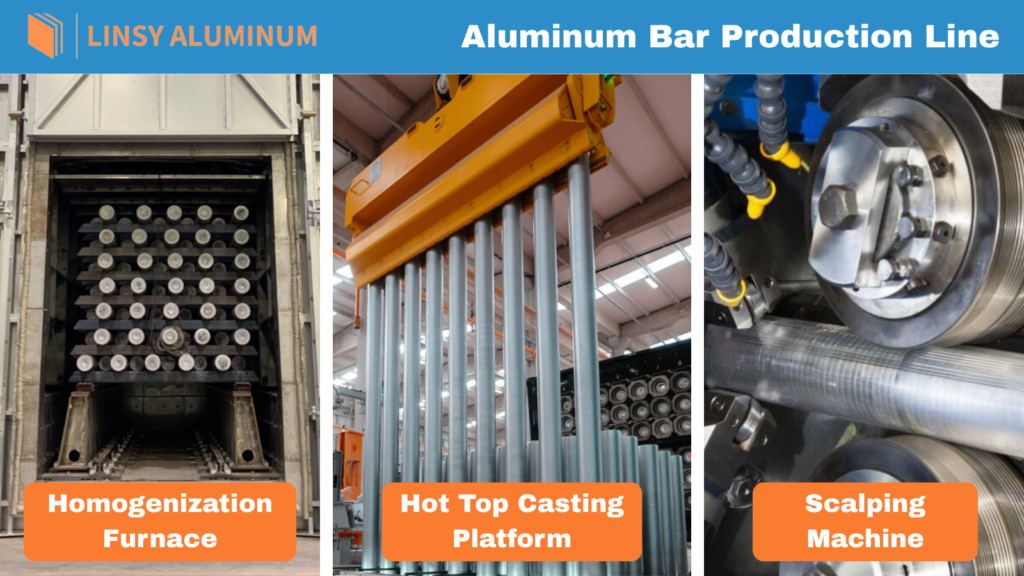
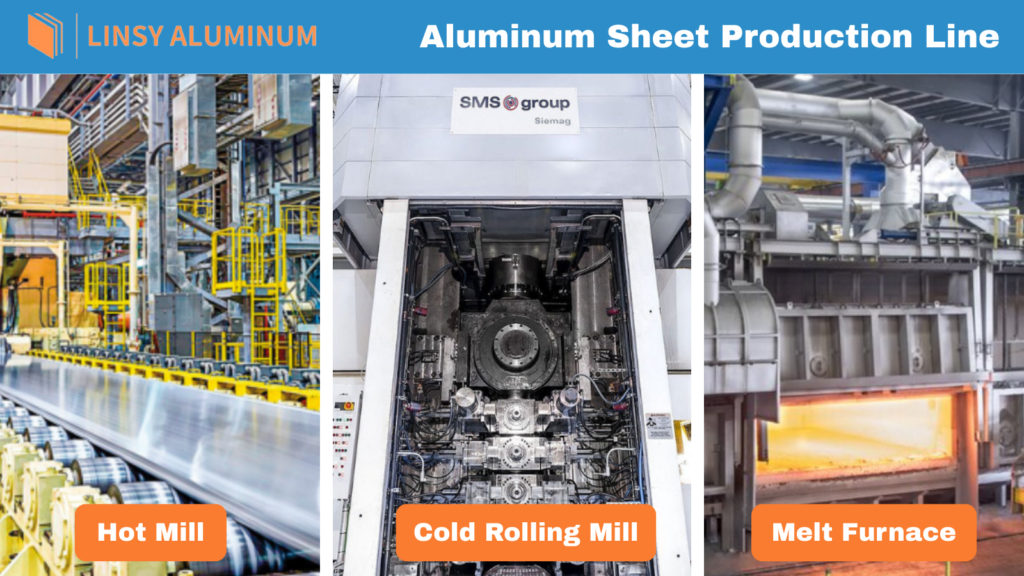
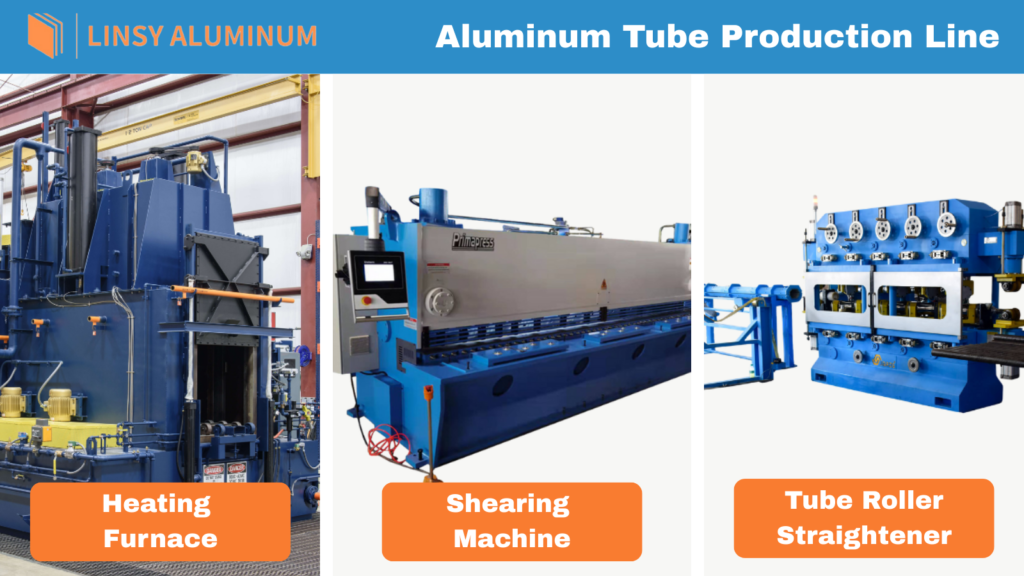
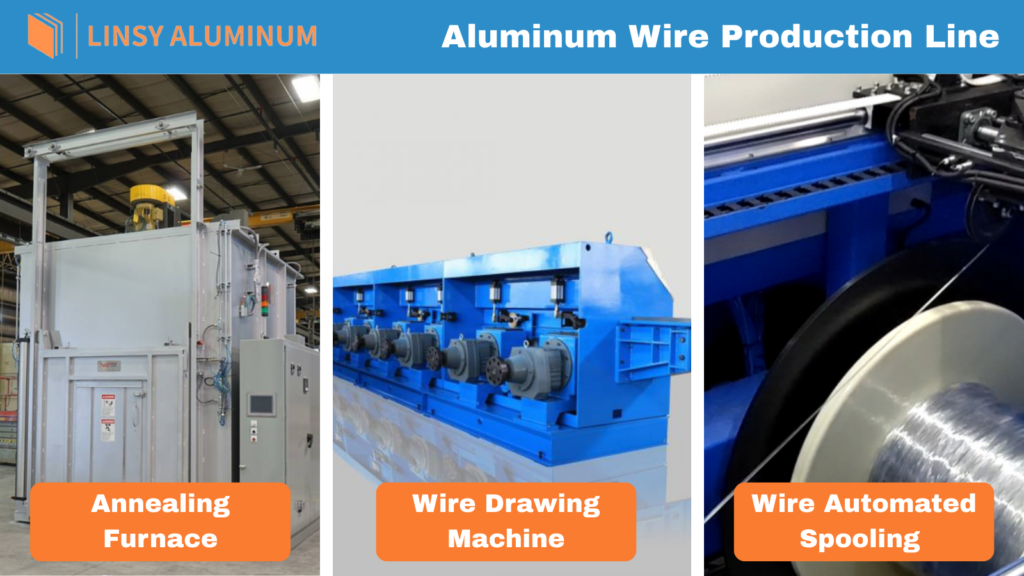
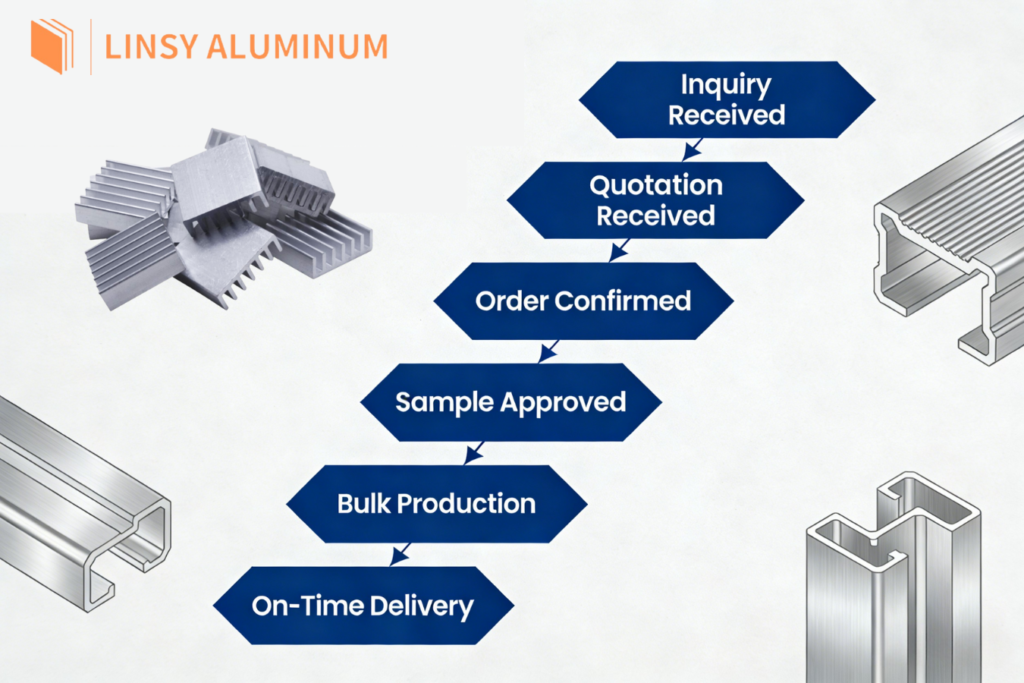
Linsy Advantages
Linsy Aluminum is a leading supplier of aluminum processing products, serving diverse industries including aerospace, general engineering, automotive, marine, shipbuilding and other specialized industrial applications.
We are committed to maintaining the highest standards of quality and environmental responsibility, as demonstrated by our certifications: ISO 9001:2008, ISO 14001:2004 and SGS.