Aspectos más destacados
- Las aleaciones 2024 y 7075 se consideran no soldables mediante los procesos tradicionales de soldadura por arco.
- Estas aleaciones de alta resistencia son propensas a agrietarse en la zona afectada por el calor (ZAC) durante la soldadura.
- Su composición química orientada a la resistencia limita la soldabilidad.
- Técnicas especializadas como la soldadura por fricción-agitación (FSW) pueden unirlos, pero a menudo resultan poco prácticas para la fabricación cotidiana.
- Para la mayoría de las aplicaciones, elija aleaciones fácilmente soldables de las series 1xxx, 3xxx, 4xxx, 5xxx o 6xxx.
Introducción
El mundo de la soldadura por arco incluye muchos tipos de metales, cada uno con sus características y problemas especiales. Las aleaciones de aluminio son muy populares porque son ligeras y resisten la corrosión. Pero no todas las aleaciones de aluminio se comportan igual durante la soldadura. Este artículo analiza dos aleaciones específicas, la 2024 y la 7075. Ambas son, en general, malas candidatas para la soldadura por arco tradicional.
Comprensión de las aleaciones de aluminio 2024 y 7075
El 2024 y el Aluminio 7075 Las aleaciones son conocidas por ser resistentes y a la vez ligeras. Esto las convierte en favoritas en campos como el aeroespacial y la fabricación. Sus excelentes propiedades mecánicas son notables, pero soldarlas es difícil.
Estas aleaciones contienen elementos que aumentan la resistencia. Sin embargo, esos mismos elementos pueden provocar grietas al soldar.
Propiedades de la aleación de aluminio 2024
2024 aluminio La aleación es conocida por su alta resistencia y su resistencia a la fatiga. Contiene principalmente cobre, lo que aumenta su resistencia. Debido a estas características, es una buena opción para piezas como alas de aeronaves, fuselajes y otras estructuras.
Sin embargo, el cobre en esta aleación también puede causar corrosión si no está bien protegido. Al soldar la aleación 2024, el calor puede crear compuestos intermetálicos frágiles en la zona soldada, lo que hace que la aleación sea más propensa a agrietarse. Debido a este riesgo, la aleación 2024 generalmente se considera difícil de soldar.
Muchos fabricantes utilizan métodos de unión alternativos, como el remachado, en su lugar. La investigación sobre nuevas técnicas y materiales de aporte continúa explorando si la soldadura de la aleación 2024 puede volverse práctica.
Propiedades de la aleación de aluminio 7075
La aleación de aluminio 7075 es un material resistente con una excelente relación resistencia-peso. Contiene principalmente zinc y magnesio. Estos elementos le otorgan a la aleación 7075 una resistencia muy alta, que incluso supera a la de algunos aceros.
Pero las mismas características que hacen resistente a la aleación 7075 también dificultan su soldadura. El calor de la soldadura puede alterar la microestructura de la aleación. Esto puede provocar grietas en caliente, donde se forman fisuras en la soldadura a medida que se enfría. También puede desarrollarse corrosión bajo tensión con el tiempo cuando una tensión sostenida se combina con un entorno corrosivo.
Debido a estos problemas, la aleación 7075 se utiliza comúnmente en cuadros de bicicletas y piezas de aeronaves donde se evita la soldadura o se emplean otros métodos de unión.
Preparación previa a la soldadura de aleaciones de aluminio
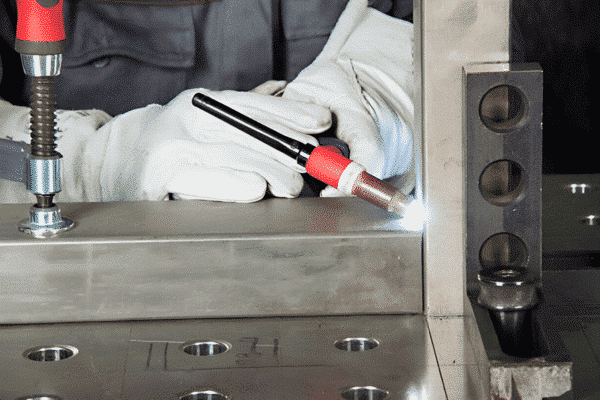
Aunque las aleaciones 2024 y 7075 a menudo se consideran difíciles de soldar con métodos de arco convencionales, la preparación del metal para una unión alternativa o una soldadura especializada sigue principios similares. Una preparación adecuada es clave para que estos métodos tengan éxito.
Las siguientes secciones ofrecen orientación sobre la limpieza y la selección de equipos cuando se van a unir estas aleaciones.
Limpieza y preparación del material
Antes de soldar o unir las aleaciones 2024 o 7075, es muy importante limpiar a fondo el material base. Este proceso de limpieza incluye:
- Desengrase por vapor o limpieza con disolventes: Elimina aceites, grasas y otros contaminantes que podrían debilitar la unión.
- Limpieza mecánica: El cepillado con alambre o el lijado producen una superficie limpia y libre de óxido para una mejor adhesión.
- Grabado químico: Un decapante para aluminio elimina la fina capa de óxido, mejorando la humectación y la acción capilar durante la unión.
Estos cuidadosos pasos de limpieza son vitales con aleaciones resistentes como la 2024 y la 7075. Cualquier contaminación residual puede causar defectos y debilitar la unión.
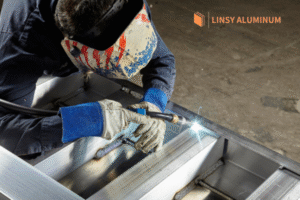
Selección del equipo de soldadura adecuado
Es importante elegir el equipo adecuado al evaluar los métodos de unión para las aleaciones 2024 y 7075.
| Equipamiento | Descripción | Uso para aleaciones de aluminio |
| Soldadora TIG de alta frecuencia | Control preciso del arco y del calor | Lo mejor para secciones finas |
| Soldadora MIG pulsada | Un mejor control del calor ayuda a prevenir la perforación | Ideal para secciones más gruesas |
| Máquina de soldadura por fricción (FSW) | Une materiales sin fundirlos | Ideal para aleaciones de aluminio resistentes como 7075 |
Comprenda lo que cada proceso puede y no puede hacer al elegir el equipo. Esto ayuda a garantizar uniones resistentes y fiables.
Conclusión
Soldar con éxito las aleaciones de aluminio 2024 y 7075 requiere atención cuidadosa y precisión. Conozca las características especiales de cada aleación, prepare a fondo antes de la unión y siga una técnica experta durante el proceso para producir uniones resistentes y duraderas. Ya sea que su proyecto sea pequeño o industrial, limpie bien, elija las herramientas adecuadas y aplique el método correcto: estas son las claves del éxito.
Elegir Linsy Aluminio Significa seleccionar un proveedor de aluminio en China dedicado a la calidad, la innovación y la satisfacción del cliente. Como una de las principales marcas de aluminio, nos especializamos en la producción de aleaciones de aluminio de alta resistencia diseñadas para industrias exigentes como la aeroespacial, la automotriz y la construcción. Nuestra avanzada fábrica de aluminio en China utiliza tecnología de vanguardia y un estricto control de calidad para garantizar que cada producto cumpla con rigurosos estándares internacionales. Con un compromiso con soluciones personalizadas y una entrega global rápida, Linsy Aluminum se destaca como un socio de confianza para todas sus necesidades de aluminio, ofreciendo calidad y fiabilidad en cada paso del camino.
¿Planea un proyecto con aleación 7075 o 2024 y necesita material soldable o asesoramiento experto? Contacte con Linsy Aluminum Para analizar sus requisitos.
Preguntas frecuentes
¿Se puede soldar fácilmente el aluminio 2024?
Soldar aluminio 2024 es posible pero desafiante debido a su mala soldabilidad, lo que puede causar grietas bajo la soldadura por arco tradicional. Por lo tanto, no se recomienda que los aficionados intenten soldar esta aleación.
¿Cuáles son las mejores prácticas para soldar aluminio 7075?
Para el aluminio 7075, la soldadura por fricción-agitación es el método preferido porque su enfoque en estado sólido evita los problemas relacionados con la fusión de la soldadura por arco. La soldadura por arco tradicional no se recomienda. Los principiantes que trabajen con la aleación 7075 deben explorar técnicas de unión alternativas.