本指南涵盖内容
您为CNC加工选择的合金不仅决定材料成本。它影响刀具磨损、表面光洁度质量、零件能否阳极氧化,以及在负载或腐蚀性环境中的性能。良好的合金选择可缩短加工时间、减少废料,并生产出尺寸稳定的零件。不匹配的选择则导致相反的结果——翘曲、斑驳的表面处理和过早失效。.
本指南介绍铝CNC加工工艺,解释为何铝是CNC加工的首选金属,比较四种最常加工的合金(6061、7075、5052和6063),并将每种合金与其最佳匹配的表面处理对应。如果您需要了解 哪些铝合金在加工后可以可靠焊接, ,我们也有专门的指南供您参考。.
什么是铝CNC加工
铝CNC加工是一种减材制造工艺。计算机控制的切削工具从实心铝坯料——板材、棒材或管材——上去除材料,直至达到成品零件的几何形状。该工艺被称为减材制造,因为零件是通过切削去除材料而成型,与3D打印等增材方法相反。.
机床提供精度,但铝的牌号决定了结果是否干净且一致。某些合金切屑顺畅并能保持严格公差。其他合金则更粘稠,容易在刀具上堆积。少数合金在切削过程中应力释放后明显翘曲。选择可CNC加工的铝材意味着选择一种切削可预测、抗变形并能接受所需表面处理的牌号。.
可CNC加工的铝材应具备:
- 切削顺畅,切屑形成可控,刀具磨损最小
- 材料去除释放内应力后,尺寸保持在公差范围内
- 能接受预期的表面处理——阳极氧化、化学转化膜、喷砂或机加工态
- 冶金一致性——无内部气孔、夹杂物或成分变化,避免在刀具上形成硬点
经应力消除的坯料带来显著差异。在Linsy Aluminum,CNC级材料随附工厂检验证书(MTC)以确保可追溯性,从而在首次切削前确认合金、回火状态和成分。.
Come funziona la lavorazione CNC dell'alluminio
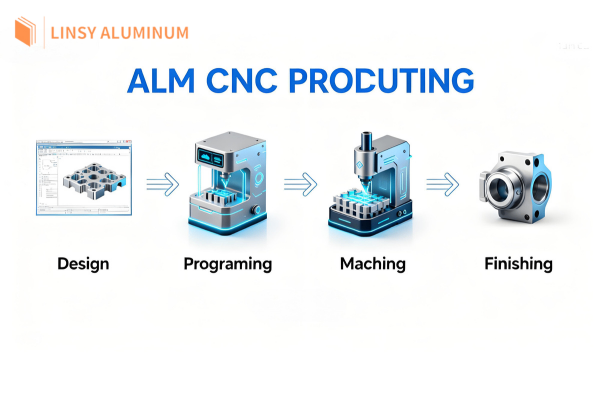
无论零件是单个原型还是批量生产,工艺流程均遵循四个标准步骤:
- Design — 3D CAD模型定义零件几何形状、公差和表面处理要求。.
- Programmazione — CAM软件将模型转换为G代码,指定刀具路径、切削速度、进给速率和冷却液策略。.
- Lavorazione meccanica — CNC铣床或车床执行程序。多轴机床(3轴、4轴或5轴)以更少的装夹次数处理日益复杂的几何形状。.
- Finitura — 零件进行去毛刺、清洁,如有规定则送交表面处理——阳极氧化、喷砂、化学转化膜或粉末喷涂。.
该工艺快速且可重复,但结果取决于起始铝坯料的一致性。材料质量差即使在最好的机床上也会产生不可预测的结果。.
为何在CNC项目中选择铝
铝不仅在CNC加工中广受欢迎——它是大多数行业中原型、功能零件和生产组件的实用默认选择。该材料的切削速度约为不锈钢的三到四倍,所需刀具力更小,并且在合适的合金和后处理条件下可产生优异的表面光洁度。.
与常见替代材料相比,权衡如下。.
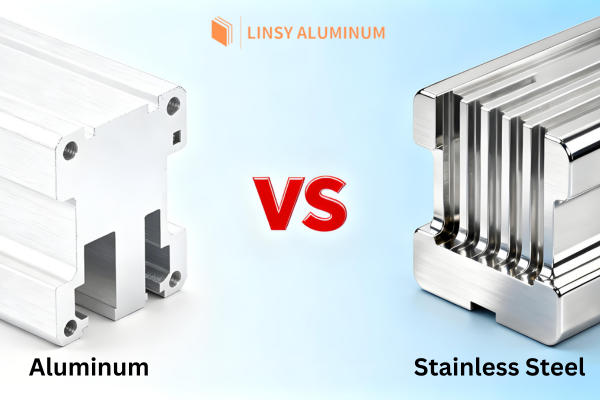
铝与不锈钢在CNC加工中的对比
| Proprietà | Alluminio | Acciaio inox |
|---|---|---|
| Lavorabilità | 优异——比钢快3至4倍 | 良好,但较慢且需要更大的刀具力 |
| Forza-peso | 优异——就其强度水平而言重量轻 | 良好,但重量约为其3倍 |
| Resistenza alla corrosione | 良好至优异——取决于合金;5052和6061在大多数环境中表现良好 | 优异——尤其在富含氯化物的环境中 |
| 材料成本 | 通常低于不锈钢 | 通常较高 |
| Finiture di superficie | 高度适合阳极氧化、化学转化膜、喷砂和粉末喷涂 | 可抛光至高光泽;整体表面处理选项较少 |
铝在速度和表面处理灵活性方面胜出。不锈钢在原始耐久性和极端耐腐蚀性方面胜出。如果重量、加工时间或表面处理多样性最为重要,铝通常是更合适的选择。.

可CNC加工的铝合金——哪种牌号适合您的项目
初学者最大的错误是假设所有铝牌号的加工方式相同。每种合金在刀具下的表现不同,错误的选择会导致翘曲、表面光洁度差或表面处理失败。以下四种合金覆盖了大多数CNC加工应用。.
6061-T6——通用和原型制作
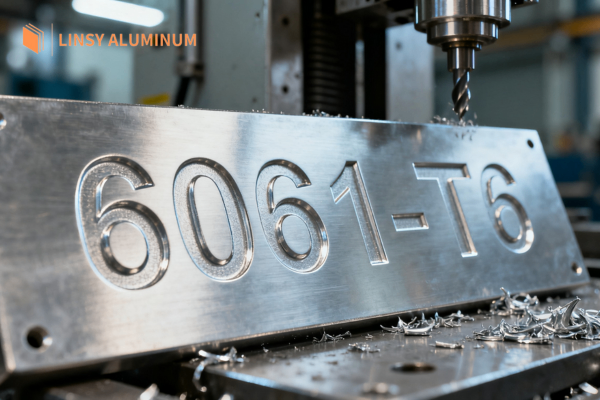
6061-T6 是最广泛使用的CNC铝合金——原因充分。它在可加工性、强度、耐腐蚀性和阳极氧化响应之间取得了比任何其他单一牌号更好的平衡。它切削顺畅,产生干净的切屑,并能以最小变形保持严格公差。.
Questo lo rende lo standard per staffe, custodie, componenti automobilistici, telai di macchine e parti di ingegneria generale. Se il progetto non richiede una resistenza estrema o una resistenza alla corrosione di livello marino, il 6061-T6 è solitamente il punto di partenza corretto.
一个实用说明:6061-T6焊接良好,但在热影响区会显著丧失强度。如果计划加工后进行焊接,请在设计中考虑这一点。请参阅我们的 可焊接铝合金指南 以获取更全面的比较。.
| Proprietà | 6061-T6 |
|---|---|
| Resistenza alla trazione | 约310 MPa |
| Lavorabilità | 优异——切削顺畅,切屑形成干净 |
| Saldabilità | 良好——兼容TIG和MIG焊接;注意热影响区强度损失 |
| Resistenza alla corrosione | 良好——适用于室内和一般室外使用 |
| Risultato dell'anodizzazione | 均匀——可良好接受透明、黑色和彩色阳极氧化 |
| Usi comuni | 支架、外壳、机床框架、汽车零部件、原型 |
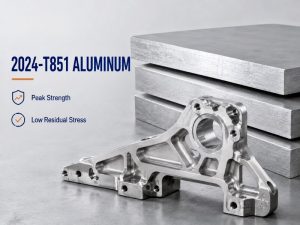
7075-T6/T651——高强度应用
当强度重量比是首要要求时,, 7075-T6/T651 是应选择的合金。主要添加锌合金化,其抗拉强度可与许多钢材相媲美,而重量约为其三分之一。航空航天翼梁、机身接头、无人机框架、高性能自行车部件和国防硬件均因此依赖7075。.
权衡是实际存在的。7075对刀具的磨损比6061更大,无法通过标准方法焊接,耐腐蚀性较低——通常需要化学转化膜或油漆等保护涂层以用于室外或海洋环境。它也无法干净地阳极氧化;高锌含量会产生深色、斑驳的结果。当强度不可妥协时使用7075。否则,6061是更实用且更具成本效益的选择。.
| Proprietà | 7075-T6/T651 |
|---|---|
| Resistenza alla trazione | 约570 MPa——铝合金中最高之一 |
| Lavorabilità | 一般——对刀具磨损比6061更大 |
| Saldabilità | 差——不建议使用标准方法焊接 |
| Resistenza alla corrosione | 低——通常需要化学转化膜或油漆保护 |
| Risultato dell'anodizzazione | 差——由于锌含量容易变暗或斑驳 |
| Usi comuni | 飞机接头、无人机框架、国防部件、攀岩装备 |

5052-H32——海洋、化工和室外环境
5052-H32 是当零件将面对盐水、化学品暴露或长期潮湿时应指定的合金。这是一种通过冷加工强化的非热处理型牌号,在常用加工铝合金中提供最佳的耐腐蚀性,尤其在海洋大气环境中。.
权衡:5052的切削不如6061干净——它更粘稠,需要更锋利的刀具几何形状并更加注意排屑。其强度也无法与6061匹敌,峰值抗拉值不及7075。但对于海洋五金件、燃料箱、化学品储罐和室外外壳等长期环境耐受性比极限强度更重要的应用,5052-H32是正确的选择。.
| Proprietà | 5052-H32 |
|---|---|
| Resistenza alla trazione | Circa 225 MPa — il più elevato tra i gradi non trattabili termicamente |
| Lavorabilità | Moderata — più gommosa della 6061; si raccomanda una geometria dell'utensile più affilata |
| Saldabilità | Eccellente — compatibile con TIG e MIG |
| Resistenza alla corrosione | Eccellente — soprattutto in ambienti con acqua salata e agenti chimici |
| Trattabile termicamente | No — la resistenza deriva dalla lavorazione a freddo |
| Usi comuni | Componenti navali, serbatoi di carburante, recipienti chimici, involucri per esterni |

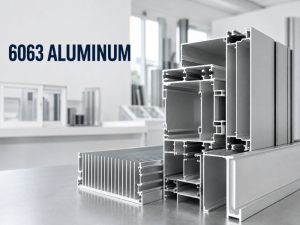
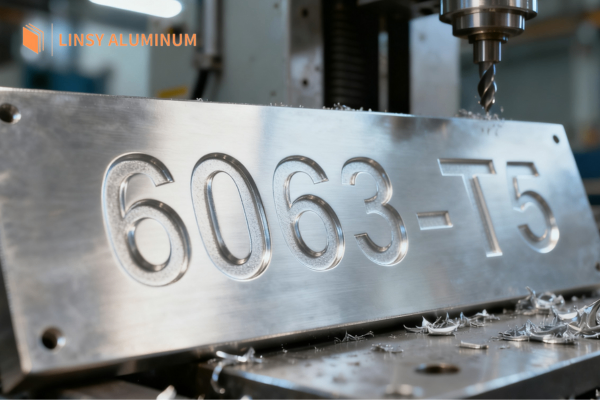
6063-T5/T6 — Componenti estetici e architettonici
Quando l'aspetto superficiale determina la specifica, 6063-T5/T6 è la scelta migliore tra le leghe di alluminio lavorabili. Spesso chiamato alluminio architettonico, il 6063 produce una superficie eccezionalmente liscia che si anodizza con una finitura profonda e uniforme — rendendolo lo standard per hardware a vista, involucri di elettronica di consumo, profili per illuminazione, telai per finestre e sistemi per porte.
La resistenza meccanica è inferiore a quella del 6061 — circa 170-210 MPa di carico di rottura — quindi il 6063 generalmente non è la scelta giusta per componenti strutturali portanti. Ma per parti in cui la qualità visiva, la consistenza cromatica e l'uniformità superficiale sono i fattori decisivi, il 6063 offre risultati che 6061 e 7075 non possono eguagliare.
| Proprietà | 6063-T5/T6 |
|---|---|
| Resistenza alla trazione | Circa 170–210 MPa |
| Lavorabilità | Buona — taglio pulito con qualità superficiale costante |
| Finitura superficiale | Eccezionalmente liscia — la migliore base per anodizzazione tra le leghe CNC comuni |
| Risultato dell'anodizzazione | Altamente uniforme — ideale per finiture anodizzate colorate e trasparenti |
| Resistenza strutturale | Moderata — non adatta per componenti portanti primari |
| Usi comuni | Telai per finestre, involucri di elettronica di consumo, profili per illuminazione |
Finiture superficiali e compatibilità delle leghe
Il vantaggio dell'alluminio nella lavorazione CNC va oltre la lavorabilità — il materiale è compatibile con un'ampia gamma di trattamenti superficiali. Ma non tutte le leghe accettano ogni finitura allo stesso modo. Selezionare una combinazione errata di lega e finitura può produrre colore non uniforme, scarsa adesione del rivestimento o corrosione prematura, anche con un processo di finitura correttamente eseguito.
Come lavorati
La finitura da lavorazione è la superficie grezza lasciata dopo il taglio CNC — nessuna post-lavorazione applicata. I segni dell'utensile sono visibili, solitamente come sottili motivi a spirale, ma la superficie è liscia al tatto e le dimensioni sono preservate senza rischio di variazioni di tolleranza dovute all'accumulo del rivestimento.
Ideale per componenti interni, prototipi funzionali e parti ad alto volume dove costo e velocità hanno priorità sull'aspetto estetico.

Anodizzazione Tipo II — Standard e colorata
L'anodizzazione Tipo II crea un sottile strato di ossido poroso sulla superficie dell'alluminio. Lo strato migliora la resistenza alla corrosione e accetta facilmente i coloranti, producendo finiture colorate che non si scheggiano né si sfaldano. Questa è la finitura più comune per componenti destinati al consumatore, involucri e hardware architettonico.
- Il migliore in assoluto: 6061-T6 e 6063-T5/T6 — colore uniforme, risultati costanti
- Evitare: 7075-T6 — l'elevato contenuto di zinco produce anodizzazione scura e chiazzata

Anodizzazione Tipo III Hardcoat
L'anodizzazione hardcoat produce uno strato di ossido molto più spesso e duro — fino a tre volte più duro del Tipo II. Il risultato è un'elevata resistenza all'usura, che la rende la scelta giusta per staffe aerospaziali, involucri militari, attrezzature industriali e qualsiasi componente esposto ad abrasione o uso intensivo.
- Il migliore in assoluto: 6061-T6 — risultati più affidabili e prevedibili
- Usare con cautela con: 7075 — le tensioni interne possono causare cricche sotto strati hardcoat spessi
Sebbene l'hardcoat possa essere tinto, i colori appaiono più scuri a causa della struttura densa dello strato. La maggior parte delle applicazioni specifica trasparente o nero per la massima durata.

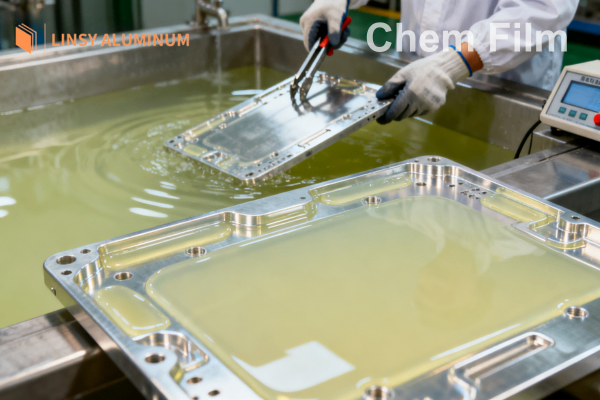
Chem Film — Rivestimento di conversione Alodine
A differenza dell'anodizzazione, il chem film (Alodine) è un sottile rivestimento di conversione chimica. Fornisce una moderata resistenza alla corrosione preservando la conducibilità elettrica — un requisito fondamentale per involucri di schermatura EMI/RFI, chassis elettronici e componenti che necessitano successivamente di verniciatura o incollaggio.
Un vantaggio pratico: il chem film aggiunge quasi nessuno spessore misurabile, rendendolo adatto per assemblaggi a tolleranza stretta dove anche i pochi micron dell'anodizzazione potrebbero causare problemi di accoppiamento. Funziona su tutte le principali leghe di alluminio, incluso il 7075-T6, il che lo rende la finitura protettiva standard quando l'anodizzazione non è praticabile.
Sabbiatura e anodizzazione trasparente
Questo processo in due fasi produce l'aspetto opaco e satinato comune nell'elettronica di consumo premium e nei dispositivi medici:
- La sabbiatura rimuove i segni di lavorazione visibili e crea una texture satinata uniforme su tutta la superficie.
- L'anodizzazione trasparente sigilla la superficie sabbiata, fissando la texture e aggiungendo resistenza a graffi e corrosione.
- Il migliore in assoluto: 6061-T6 o 6063-T6 — la struttura del grano costante produce texture e colore uniformi
- Evitare: Leghe con grano non uniforme — impurità o grano grossolano appaiono come macchie visibili dopo la sabbiatura

Conclusione
Scegliere la lega di alluminio giusta per la lavorazione CNC è una decisione pratica con conseguenze misurabili. Il 6061-T6 copre la maggior parte del lavoro generico con il miglior equilibrio complessivo tra lavorabilità, compatibilità delle finiture e costo. Il 7075-T6/T651 offre la resistenza richiesta dalle applicazioni aerospaziali e ad alte prestazioni, ma sacrifica saldabilità e qualità di anodizzazione nel processo. Il 5052-H32 è la risposta quando l'esposizione ad acqua salata o agenti chimici è il rischio principale — a scapito di una lavorazione più lenta. Il 6063-T5/T6 vince su finitura superficiale e uniformità di anodizzazione ma non dovrebbe essere utilizzato dove la resistenza strutturale è il requisito principale.
Il filo comune tra tutte e quattro le leghe è che la qualità del materiale in alluminio conta tanto quanto il grado stesso. Composizione incoerente, tensioni interne o mancanza di tracciabilità possono trasformare la scelta giusta della lega in un risultato di lavorazione sbagliato.
Linsy Aluminum fornisce 6061, 7075, 5052 e 6063 di grado CNC in lastra, barra e tubo, con certificati di prova del materiale (MTC) per ogni ordine. Dimensioni personalizzate e quantità minime d'ordine ridotte sono supportate per articoli non standard, con un tempo di consegna tipico di 10-60 giorni a seconda della lega, delle dimensioni e dei requisiti di lavorazione. Rapporti di prova SGS — inclusi composizione chimica, proprietà meccaniche e ispezione dimensionale — sono disponibili su richiesta a costo aggiuntivo.
Se sta ancora decidendo tra due gradi, o deve confermare tempra, forma e pacchetto documentale prima di ordinare, invii il disegno o la specifica per una revisione tecnica.
FAQ
L'alluminio 7075 può essere anodizzato dopo la lavorazione CNC?
Il 7075-T6 può essere anodizzato, ma i risultati sono generalmente scadenti per applicazioni estetiche. L'elevato contenuto di zinco della lega causa una formazione irregolare dello strato anodico, producendo un aspetto scuro e chiazzato piuttosto che una finitura pulita e uniforme. Per componenti che necessitano di un aspetto anodizzato colorato o trasparente, 6061 o 6063 sono le scelte migliori. Se il 7075 deve essere utilizzato per motivi di resistenza, il chem film (Alodine) è il rivestimento protettivo standard — preserva la resistenza alla corrosione senza i problemi estetici dell'anodizzazione.
Qual è la differenza tra 6061-T6 e 6061-T651?
T651 è una sotto-designazione di T6. Entrambe le tempra sono trattate termicamente in soluzione e invecchiate artificialmente allo stesso livello di resistenza. La differenza è che il materiale T651 è stato stirato dopo il trattamento termico per alleviare le tensioni interne, seguito da una leggera raddrizzatura. Per la lavorazione CNC, il T651 è generalmente preferito al T6 semplice — la fase di distensione riduce il rischio di deformazione o variazione dimensionale durante l'asportazione del materiale, soprattutto su parti lunghe o sottili.
Il 6061-T6 necessita di trattamento termico post-saldatura dopo la lavorazione CNC?
Il 6061-T6 perde una parte significativa della sua resistenza nella zona termicamente alterata dopo la saldatura — l'area vicino alla saldatura può scendere approssimativamente alla resistenza del 6061-O ricotto. Se il trattamento termico post-saldatura sia necessario dipende dall'applicazione. Per componenti non strutturali dove non è richiesta la piena resistenza T6, la condizione come-saldata può essere accettabile. Per componenti portanti o critici a fatica, si raccomandano trattamento termico in soluzione post-saldatura e invecchiamento artificiale per ripristinare la resistenza sull'intero componente.
Quale quantità minima d'ordine supporta Linsy Aluminum per materiale di grado CNC?
Linsy Aluminum supporta quantità minime d'ordine ridotte per articoli personalizzati non standard. Le specifiche standard in magazzino sono disponibili senza requisiti elevati di MOQ. Dimensioni personalizzate, tempre specifiche e misure non standard sono prodotte su ordinazione con un tempo di consegna tipico di 10-60 giorni, a seconda della lega, delle dimensioni e dei requisiti di lavorazione.
Come dovrei scegliere tra 6061 e 7075 per un prototipo?
Inizi con il 6061-T6 a meno che il prototipo non abbia un requisito specifico che solo il 7075 può soddisfare. Il 6061 si lavora più velocemente, costa meno, si anodizza in modo prevedibile ed è ampiamente disponibile. Passi al 7075 solo se il prototipo deve dimostrare una resistenza a trazione ultima o prestazioni a fatica paragonabili al pezzo di produzione — ad esempio, una staffa aerospaziale funzionale o un componente portante per drone. Per prototipi di verifica di accoppiamento, studi di forma o build di proof-of-concept, il 6061 è quasi sempre la risposta pratica.