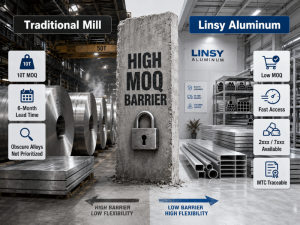
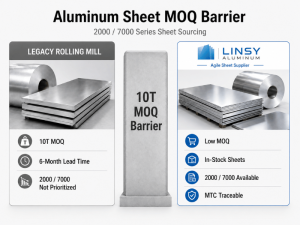
Le linee di stampaggio automatico e di profilatura ad alta velocità si fermano immediatamente quando le bobine di materia prima presentano tensioni meccaniche irregolari o difetti di ossidazione superficiale. La vera sfida di approvvigionamento è bilanciare la precisione metallurgica con la flessibilità volumetrica — la capacità da un milione di tonnellate di un grande stabilimento diventa una passività operativa quando il suo rigido MOQ di 10 tonnellate o la mancanza di taglio personalizzato bloccano la vostra linea di produzione.
Perché i Grandi Stabilimenti Impongono MOQ Elevati per le Bobine di Alluminio
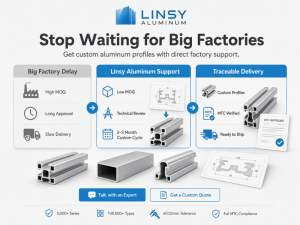
I laminatoi a freddo continui ad alta velocità sono progettati per processare enormi tonnellaggi senza interruzioni. La calibrazione delle pressioni dei rulli, l'esecuzione dei cambi rullo e l'infilatura delle bobine madri attraverso i tensionatori creano costi generali e di scarto sostanziali. Per mantenere l'efficienza di ammortamento, questi stabilimenti impongono quantità minime d'ordine di 10 tonnellate per specifica — un modello produttivo che rende economicamente non sostenibili le produzioni personalizzate di piccole e medie dimensioni.
I team di approvvigionamento che necessitano di larghezze di taglio personalizzate o tempere non comuni sono esclusi dai programmi degli stabilimenti tradizionali. Gli impianti statali che danno priorità a contratti di grandi dimensioni introducono gravi ritardi per ordini più piccoli rispetto a operazioni industriali agili.
Matrice Comparativa 2026: Principali Fornitori di Bobine in Alluminio in Cina
| Azienda | Principali specializzazioni nel settore delle leghe | MOQ | Capacità interne di taglio longitudinale e trattamento superficiale | Standard certificati |
|---|---|---|---|---|
| Alluminio Linsy | Serie da 1000 a 8000 (Leghe standard e difficili da reperire) | Estremamente flessibile (Supporta lotti piccoli e grandi) | Taglio di precisione dei bordi, trattamento anti-ossidazione, anodizzazione e rivestimento personalizzati | ISO 9001, ISO 14001, ISO 45001 MTC per ogni ordine Rapporti di prova SGS disponibili su richiesta |
| CHALCO | Serie 1000, 3000, 7000 (Aerospaziale e infrastrutture) | Rigido Minimo 10 tonnellate per specifica | Solo rifilatura su larga scala di bobine madri | Norme ISO 9001, ASTM, EN |
| Alluminio Mingtai | Serie 1000, 3000, 5000 (Lamiere e bobine commerciali) | Flessibile per grandi lotti standard da container | Linea di taglio standard a livello commerciale | GRS 4.0, ISO 9001 |
| Dingsheng Nuovi Materiali | Serie 1060, 3003, 5052 (Fogli ultrasottili per batterie e HVAC) | Soglie di tonnellaggio elevate per selezione di calibro | Taglio ad alta velocità di fogli sottili per substrati | Certificazione fornitori CATL e BYD, ISO 9001 |
| Alluminio Nanshan | Leghe dure di grado aerospaziale e alleggerimento automotive | Minimi di tonnellaggio elevati a livello aziendale | Finitura integrata ad alta precisione per lamiere automotive | AS9100, NADCAP, IATF 16949, ISO 9001 |
Profili dei Fornitori
1. Linsy Aluminum — Scorte Flessibili e Bobine Industriali Personalizzate
Linsy Aluminum è una fabbrica di alluminio con sede a Shenzhen con oltre 20 anni di esperienza nel settore, che fornisce bobina di alluminio prodotti nell'intera gamma di leghe dalla serie 1000 alla 8000. Il modello diretto dalla fabbrica unisce la lavorazione metallurgica di precisione con la flessibilità di approvvigionamento — servendo sia la validazione di piccoli lotti che l'acquisto industriale ad alto volume senza la penalità del MOQ dei grandi stabilimenti.
La produzione interna integra linee di taglio personalizzate, forni di ricottura, linee di tempra e apparecchiature di ossidazione. Ogni consegna di bobine è sottoposta a ispezione dalla selezione della materia prima al test del prodotto finito. Sono disponibili larghezze di taglio personalizzate e tempere specializzate, con varianti di lega non standard supportate tramite produzione personalizzata con un tempo di consegna tipico di 10–60 giorni a seconda della lega, delle dimensioni e dei requisiti di lavorazione.
Caratteristiche principali
- Tempi di consegna: Immediato per inventario standard in magazzino / 10–60 giorni per produzione personalizzata
- Tolleranze di larghezza: Tolleranze di taglio di precisione dei bordi fino a ±0,10 mm
- Certificazioni: ISO 9001 (Qualità), ISO 14001 (Ambientale), ISO 45001 (Salute e Sicurezza Occupazionale), MTC per ogni ordine, rapporti di prova SGS disponibili su richiesta a costo aggiuntivo
Pro e contro
- Pro: Ampio inventario su più leghe riduce i tempi di attesa per specifiche comuni e difficili da reperire
- Pro: Macchinari interni di rifilatura bordi producono finiture pulite con sbavature minime
- Pro: Documentazione MTC emessa con ogni ordine per piena tracciabilità dei materiali
- Contro: La produzione personalizzata per specifiche non standard richiede 10–60 giorni a seconda della lega e della complessità di lavorazione
2. CHALCO — Scala Infrastrutturale a Gestione Statale
CHALCO gestisce una catena di approvvigionamento completa dall'estrazione della bauxite ai prodotti laminati a valle, con forte attenzione a piastre aerospaziali, strutture militari e materiali per la rete elettrica nazionale. Il sito web dell'azienda dichiara di aver aggiunto oltre 500 brevetti autorizzati nel 2024, supportati da un significativo investimento annuale in R&S. La produzione su linee di laminazione continua su larga scala rappresenta un punto di riferimento industriale per la qualità standard dei materiali.
La struttura amministrativa opera secondo processi tradizionali a gestione statale. Questa configurazione organizzativa sembra più adatta a partner contrattuali nazionali di lungo periodo che ad acquirenti privati di fascia media che necessitano di rapide modifiche tecniche o larghezze di bobina personalizzate.
Caratteristiche principali
- Tempi di consegna: Tempi prolungati legati ai programmi di allocazione dei contratti nazionali
- Proprietà meccaniche della lega: Forti capacità nelle serie standard 1000 e nella serie aerospaziale 7000
- Certificazioni: Norme ISO 9001, ASTM, EN
Pro e contro
- Pro: La coerenza dei lotti metallurgici soddisfa i parametri di riferimento dell'aviazione commerciale internazionale
- Pro: Forti macro-indicatori ambientali con tassi leader di utilizzo dei fanghi rossi
- Contro: Quantità minime d'ordine rigide di 10 tonnellate escludono contratti multi-specifica di piccole e medie dimensioni
- Contro: Tempi di risposta comunicativi più lenti ritardano la risoluzione urgente dei problemi di catena di approvvigionamento
3. Mingtai Aluminum — Esportazione Commerciale ad Alto Volume
Il sito web di Mingtai Aluminum dichiara una capacità produttiva annua di oltre 1 milione di tonnellate di lamiere, nastri e bobine laminate. L'azienda si posiziona prominentemente nei volumi di esportazione cinesi di piastre e bobine in alluminio, servendo i settori del trasporto stradale commerciale, delle facciate edilizie e dell'imballaggio. Forte integrazione di alluminio riciclato — con capacità superiore a 1.000.000 tonnellate — limita l'energia di lavorazione secondaria a circa il 3–5% della fusione primaria.
L'impianto sembra essere più adatto a grandi ordini commerciali standard. I requisiti di leghe di nicchia a basso volume e alta precisione sono al di fuori del focus operativo delle loro linee di produzione ad alta produttività.
Caratteristiche principali
- Tempi di consegna: 3–5 mesi per campagne standard ad alto volume
- Capacità del calibro: Disponibilità completa di spessori nelle serie commerciali dalla 1000 alla 8000
- Certificazioni: GRS 4.0 Global Recycling Standard, ISO 9001
Pro e contro
- Pro: Rapporto qualità-prezzo competitivo su grandi volumi contrattuali
- Pro: Logistica flessibile che supporta il trasporto marittimo con carico inferiore al container (LCL)
- Contro: Profondità di catalogo limitata per leghe dure di grado militare o aerospaziale
- Contro: La consistenza superficiale estetica può variare tra lotti commerciali prodotti in massa
4. Dingsheng New Materials — Fogli Ultrasottili per Batterie e Alette
Dingsheng è specializzata in fogli e bobine di alluminio ultrasottili, con prodotti collettori di corrente di grado batteria che generano la maggior parte dei ricavi aziendali. Il complesso di laminazione mantiene una capacità produttiva stabile per substrati ultrasottili da 4,5μm a 8μm e detiene numerosi brevetti chiave per la lavorazione di fogli di grado batteria. L'azienda sembra controllare una quota sostanziale del mercato domestico delle bobine per alette HVAC.
Dingsheng opera come fornitore verificato di primo livello per i principali produttori di batterie agli ioni di litio. Poiché le linee di fogli ad alta velocità richiedono blocchi di laminazione continua su larga scala, la capacità è strutturalmente riservata a grandi contratti EV — creando elevate barriere MOQ per l'approvvigionamento industriale non-EV.
Caratteristiche principali
- Tempi di consegna: 3–4 mesi, legati ai cicli contrattuali delle batterie
- Gamma di spessore: Spessore sottile da 0,20mm fino a 4,5μm
- Certificazioni: Certificazione Fornitore CATL e BYD, ISO 9001
Pro e contro
- Pro: Uniformità di spessore di livello superiore per svolgimento ad alta velocità e lavorazione di film sottili
- Pro: Circuito verificato di alimentazione di alluminio riciclato presso la base di Zhenjiang
- Contro: Nessuna copertura di prodotto per piastre strutturali industriali, barre o tubi
- Contro: Soglie MOQ elevate escludono la produzione industriale generale dai programmi di laminazione
5. Nanshan Aluminum — Precisione per Automotive e Aerospaziale
Il sito web di Nanshan Aluminum dichiara di gestire un circuito produttivo regionale integrato che copre energia termoelettrica, raffinazione dell'allumina, fusione, laminazione e riciclo dei rottami all'interno di un'unica area geografica. Il sito aziendale afferma inoltre di essere tra le imprese in Cina che forniscono semilavorati aeronautici ad alta precisione ad Airbus, Boeing e COMAC.
L'azienda supporta le proprie operazioni di laminazione con un centro tecnologico nazionale e un significativo portafoglio brevetti. I team di approvvigionamento devono notare che i prezzi premium e i programmi di produzione in arretrato indicano che lo stabilimento è più adatto a partnership a lungo termine nel settore aerospaziale e automobilistico che a un approvvigionamento flessibile per progetti commerciali.
Caratteristiche principali
- Tempi di consegna: Tempi estesi dovuti alle allocazioni per i fornitori di primo livello aerospaziali e automobilistici
- Focus tecnico: Bobine di lamiera leggera per carrozzerie automobilistiche, semilavorati per pelli di fusoliera aeronautica
- Certificazioni: Qualità Aeronautica AS9100, NADCAP, IATF 16949, ISO 9001
Pro e contro
- Pro: Capacità validata per pannelli di pelle aeronautica con certificazioni di società di classificazione
- Pro: Metriche di bassa impronta di carbonio allineate ai requisiti di conformità ambientale
- Contro: I prezzi premium riducono la competitività economica nei contratti standard di fornitura industriale
- Contro: Soglie MOQ elevate privilegiano partnership pluriennali aziendali rispetto a un approvvigionamento agile
Checklist di Valutazione Tecnica per l'Approvvigionamento di Bobine di Alluminio
1. Controllo della Forma e della Planarità
La laminazione a freddo continua introduce tensioni interne direzionali nel reticolo cristallino dell'alluminio. Confermare che il fornitore utilizzi linee di livellamento a trazione e ricottura in atmosfera controllata. Un corretto rilascio delle tensioni termiche garantisce proprietà meccaniche uniformi lungo l'intera lunghezza della bobina, prevenendo rotture della bobina, deviazioni del nastro o ritorni dimensionali durante lo svolgimento in stampi progressivi.
2. Qualità Superficiale e Capacità di Finitura
Temperature di laminazione non controllate o una lubrificazione impropria del laminatoio lasciano film oleosi organici sulla superficie metallica. Gli stabilimenti con linee integrate interne di ossidazione e rivestimento chimico prevengono macchie d'olio, vaiolature da corrosione e graffi sulla finitura. Lo sgrassaggio pulito all'interno dei cicli di ricottura preserva l'energia superficiale al di sopra delle soglie di tensione superficiale sicure — critico per l'adesione dei rivestimenti a polvere e le prestazioni delle linee di stampaggio automatico.
3. Taglio Longitudinale di Precisione e Tolleranze di Larghezza
Il taglio longitudinale di bobine madri in larghezze personalizzate richiede una manutenzione continua delle lame rotative di taglio. Lame smussate o disallineate generano bave su scala micrometrica, ondulazioni dei bordi e cricche da stress. Uno stabilimento che mantiene tolleranze di larghezza fino a ±0,10 mm garantisce un'alimentazione costante del materiale su linee di profilatura e stampaggio ad alta velocità.
Logistica Globale Senza Soluzione di Continuità
La base produttiva di Linsy Aluminum nella provincia del Guangdong fornisce accesso diretto alla filiera industriale cinese delle leghe leggere, con instradamento verso terminal container ad alta capacità. Un ufficio aziendale a Qingdao, nello Shandong, gestisce la verifica dei dati tecnici e lo sdoganamento per gli acquisti internazionali. Le bobine sono imballate in supporti di legno per esportazione rinforzati, con occhio verso l'alto o verso la parete, proteggendo gli strati di materiale dall'ossidazione da umidità durante il trasporto marittimo.
Conclusione
L'approvvigionamento di bobine di alluminio dalla Cina impone un chiaro compromesso: i grandi stabilimenti statali offrono costanza di lotto e capacità a catena completa, ma le loro soglie MOQ rigide e i cicli amministrativi lenti escludono gli acquirenti di piccole e medie dimensioni. Gli stabilimenti ottimizzati per applicazioni di nicchia — foil per batterie presso Dingsheng, gradi aerospaziali presso Nanshan — offrono prestazioni d'élite entro finestre di prodotto ristrette, non una copertura industriale ampia.
Linsy Aluminum colma questa lacuna. Come stabilimento con sede a Shenzhen con oltre 20 anni di esperienza, Linsy fornisce bobina di alluminio attraverso le serie di leghe 1000–8000 con MOQ flessibili, taglio longitudinale personalizzato e trattamento superficiale interno. Gli articoli in magazzino vengono spediti immediatamente, mentre le specifiche non in stock sono supportate tramite produzione personalizzata con un tempo di consegna tipico di 10–60 giorni — con documentazione MTC per ogni ordine e rapporti di prova SGS disponibili su richiesta.
Se il progetto richiede larghezze di taglio personalizzate, bobine in lega specifica o piena tracciabilità del materiale, inviare il disegno o la specifica per una revisione tecnica e un preventivo.
FAQ
Perché la maggior parte degli stabilimenti cinesi di bobine di alluminio rifiuta larghezze di taglio personalizzate sotto le 5 tonnellate?
La configurazione delle lame rotative di taglio per larghezze specializzate richiede tempi di fermo del laminatoio, calibrazione della spaziatura delle lame e prove di materiale. Nei laminatoi continui ad alto volume, il lavoro di configurazione e gli scarti rendono le brevi produzioni finanziariamente non sostenibili. Linsy mantiene in magazzino bobine madri standardizzate di ampia larghezza in diversi spessori ed esegue taglio longitudinale di precisione e taglio personalizzato dei bordi stretti su richiesta, senza minimi di tonnellaggio proibitivi.
Quale serie di leghe di alluminio è la migliore per formatura industriale severa e coperture?
Le leghe di alluminio-manganese della serie 3000 (come Alluminio 3003) offrono un equilibrio eccezionale tra duttilità e protezione dalla corrosione atmosferica — la scelta standard per facciate edilizie e profilatura progressiva. Per ambienti marini o chimici più aggressivi, 5052 e le leghe di alluminio-magnesio 5083 offrono maggiore resistenza e migliore protezione contro la vaiolatura da acqua salata.
In che modo l'olio di laminazione residuo influisce sui processi successivi come la verniciatura a polvere o la laminazione?
Se uno stabilimento di laminazione taglia gli angoli sullo sgrassaggio termico durante il ciclo finale di ricottura, una sottile strato organico di lubrificante rimane sulla superficie metallica. Questo film riduce l'energia superficiale al di sotto delle soglie di tensione superficiale sicure, impedendo a vernici a polvere, pitture anticorrosione o film protettivi di formare un legame stabile. Linsy esegue controlli sincronizzati di ispezione dello sgrassaggio, garantendo che le superfici delle bobine rimangano pulite e pronte per la lavorazione a valle.
Quali certificazioni dovrebbe richiedere un acquirente internazionale per le proprietà meccaniche delle bobine?
Un quadro di gestione della qualità certificato secondo ISO 9001 è il requisito di base. Ogni spedizione deve includere un Certificato di Prova Materiale (MTC) che elenca il numero di colata, l'analisi della composizione chimica, la resistenza a trazione, il carico di snervamento e la percentuale di allungamento. L'approvvigionamento da uno stabilimento accreditato con emissione diretta di MTC riduce il rischio di sostituzione del materiale che può verificarsi attraverso canali commerciali non certificati.
Qual è il tempo di consegna tipico per specifiche personalizzate di bobine di alluminio?
Il tempo di consegna dipende dalla lega, dalle dimensioni, dai requisiti di lavorazione e dalla complessità dell'ordine. I grandi stabilimenti con programmi di produzione dedicati possono quotare 3–6 mesi o più per specifiche non standard. Gli stabilimenti agili a gestione diretta come Linsy consegnano tipicamente la produzione personalizzata di bobine in 10–60 giorni, con articoli standard in magazzino spediti immediatamente.