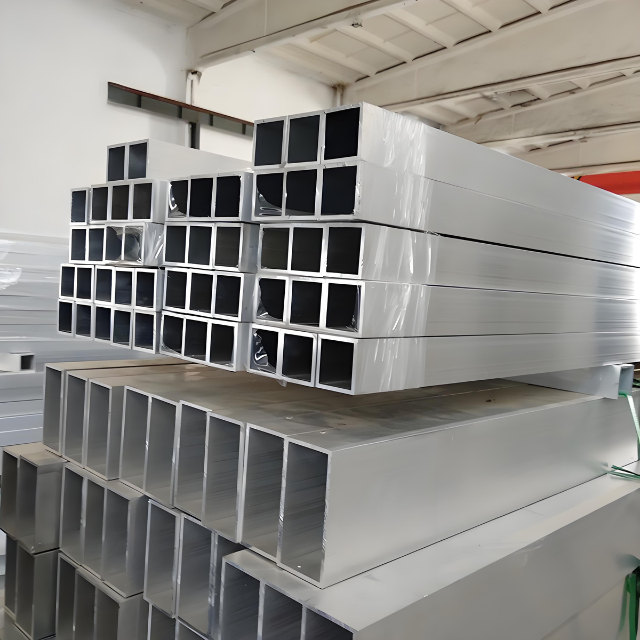
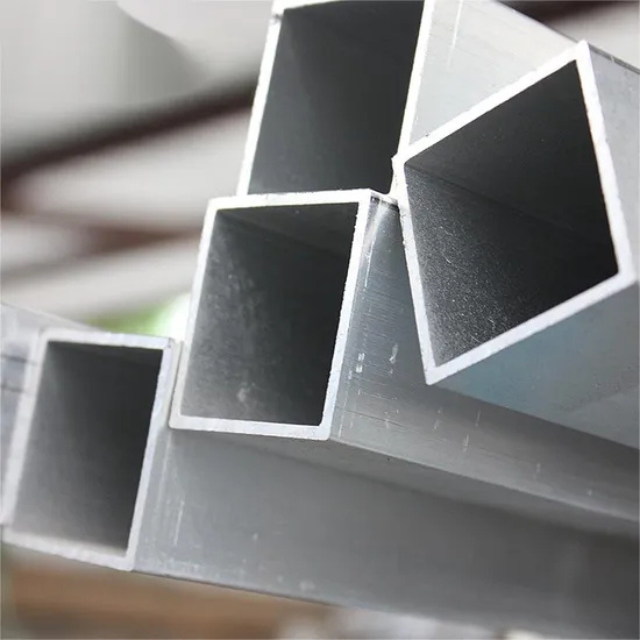
2024 aluminum square tube is a hollow square Al-Cu-Mg section for structure under repeated load. Square gives equal stiffness both ways with a flat mounting face, which is why it appears in airframe structure and fatigue-loaded frames. Not weldable, and bare 2024 needs protection.
Side: 10–200 mm
Wall: 1–15 mm
Tempers: O / T3 / T4 / T6 / T81
Standards: ASTM B210, ASTM B221
Quality documents: MTC report with every order
2024 aluminum square tube is a hollow square Al-Cu-Mg section, the aerospace structural tube, used where the load is repeated rather than a single peak. Square is the profile that resists bending equally on both axes and gives a flat face for attachment, which is why 2024 square tube appears in airframe structure, fatigue-loaded frames and fittings. Where 7075 wins on absolute strength, 2024 wins on fatigue life. Bare 2024 corrodes readily and it is not reliably weldable. Alloy data: 2024 aluminum alloy.
| Item | Range |
|---|---|
| Outside side | 10 – 200 mm |
| Wall thickness | 1 – 15 mm |
| Length | 1,000 – 12,000 mm, custom cut |
| Tempers | O / T3 / T4 / T6 / T81 |
| Standards | ASTM B210, ASTM B221, EN 755 |
On the designation. Extruded or drawn tube carries T3, T4, T6 or T81. T351 and T851 are plate tempers produced by stretching, and they do not apply to a hollow section — if a drawing specifies them on tube, the specification and the product form disagree.
| Temper | Tensile (MPa) | Yield (MPa) | Elongation | Fatigue (MPa) |
|---|---|---|---|---|
| O | 186 | 76 | 20% | 90 |
| T3 | 483 | 345 | 18% | 138 |
| T4 | 462 | 324 | 17% | 138 |
| T81 | 483 | 393 | 10% | 138 |
Typical AA reference figures; confirm against the MTC. Density 2.78 g/cm³, elastic modulus 73 GPa. Fatigue strength barely changes across tempers while elongation drops — and on a square section, the inside corners are where that reduced ductility shows first.
T3 is the standard tube temper: solution treated, cold worked, naturally aged. Best combination of strength and formability, and what most 2024 tube is sold in. T4 omits the cold work — lower strength, more ductility — for members formed after heat treatment. T81 is stretched and artificially aged: higher yield, much lower elongation, for strength at temperature where the tube will not be formed.
| Alloy / temper | Tensile (MPa) | Yield (MPa) | Fatigue | Where it fits |
|---|---|---|---|---|
| 2024-T3 | 483 | 345 | Best in class | Fatigue-loaded airframe structure and fittings |
| 7075-T6 / T6511 | 570 | 505 | Lower | Maximum-strength members, competition parts |
| 6061-T6 | 310 | 276 | Moderate | Machine frames, racks, dry service |
7075 is stronger, 2024 lasts longer under cyclic load — a member that sees many cycles should be specified on fatigue data. Neither should be welded and both need corrosion protection; if the frame is welded or left bare outdoors, 6061 is the answer regardless of the numbers.
Square gives equal stiffness both ways, which suits structure where the load direction is not fixed; rectangular puts material where the bending is and is lighter for a one-direction beam. Airframe structure uses both, chosen by the load path rather than by availability.
Corner radius is a stress consideration as well as a fit one on this alloy: the inside corner concentrates stress, and in 2024 that is where a fatigue crack starts. A tighter corner is not always better for the part.
Twist matters more on square than round. A twisted member will not sit flat or slide into another, and 2024 cannot be corrected by welding. Specify straightness where the assembly is dimensionally critical.
On riveted square frames, edge margin is the detail that decides whether the joint lasts: a rivet too close to the corner puts the load into the least ductile part of the section, and in 2024 that is where a fatigue crack begins. Keep fasteners away from the corner radius and out of the heat-affected or worked zone, and the fatigue advantage of the alloy is actually realised.
Bending: square sections collapse at the corners; practical radii are large, and 2024 in T81 will crack. Frames are fabricated from mitred segments.
Finishing: bare 2024 corrodes in damp air and cut edges go first. Specify anodizing, a conversion coating or paint at quotation. Welding: not recommended — design for riveting, bonding or mechanical fastening.
Aircraft structure and fittings, fatigue-loaded frames, hydraulic line supports, riveted assemblies, racing and motorsport structures, high-load instrument frames, aerospace ground support equipment.
Every order ships with an MTC reporting alloy, temper, side, wall and mechanical results against ASTM B210 or B221. For aerospace or pressure work, state the test and certification requirement on the enquiry. Third-party testing is available on request at additional cost; production runs under ISO 9001, ISO 14001 and ISO 45001 certified systems.
The two questions that matter on this alloy are whether the member is fatigue-loaded — which decides 2024 against 7075 — and how it will be protected, because bare 2024 will not survive an uncoated service life. Answer those at enquiry and the rest of the specification follows.
To quote in one round, send: side × wall × length, temper (T3 standard, T4 if it will be formed), corner radius if a stress or fit requirement applies, corrosion protection, end finish, and the destination.
Shenzhen-based aluminum factory, more than 20 years in the industry, supplying 1000–8000 series alloys in standard specifications and custom sizes.
Q: Why not T351 or T851 on tube?
A: Those are plate tempers produced by stretching and do not apply to a hollow section. Extruded or drawn tube carries T3, T4, T6 or T81.
Q: 2024 or 7075 square tube?
A: 7075 is stronger (570 against 483 MPa); 2024 has better fatigue resistance, which is what governs a cyclically loaded member.
Q: Can 2024 square tube be welded?
A: No, not reliably. It hot-cracks and loses properties in the heat-affected zone. Design for riveting, bonding or mechanical fastening.
Q: Can it be bent?
A: Not practically. Square sections collapse at the corners and T81 will crack; fabricate from mitred segments instead.
Q: What sizes do you supply?
A: 10–200 mm side, 1–15 mm wall, cut to length from 1,000 to 12,000 mm.
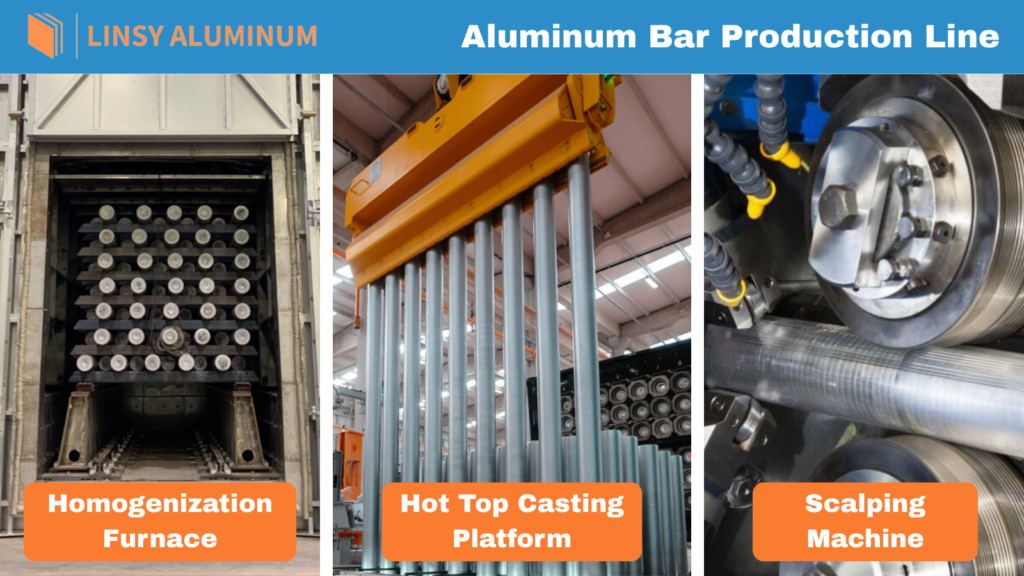
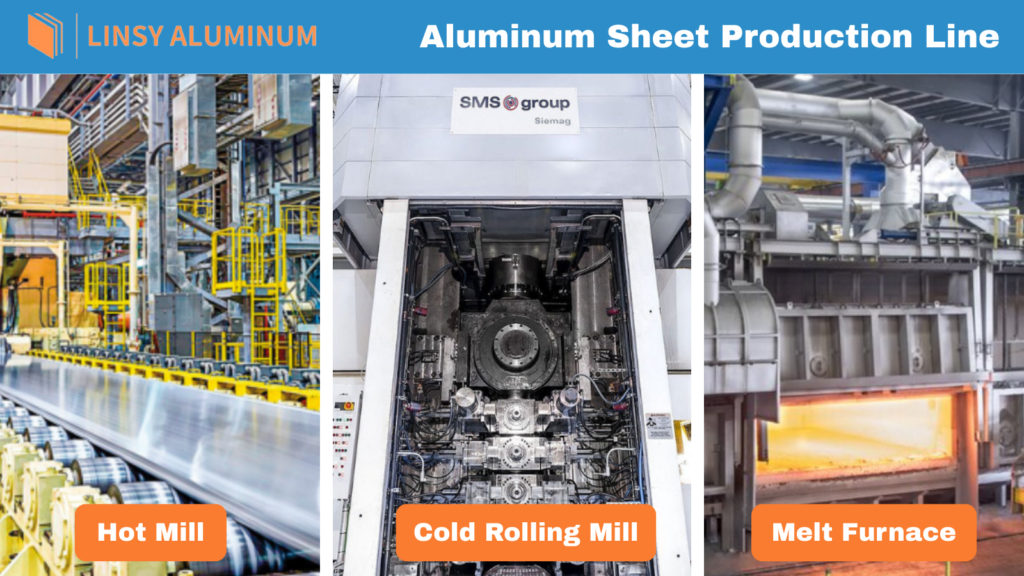
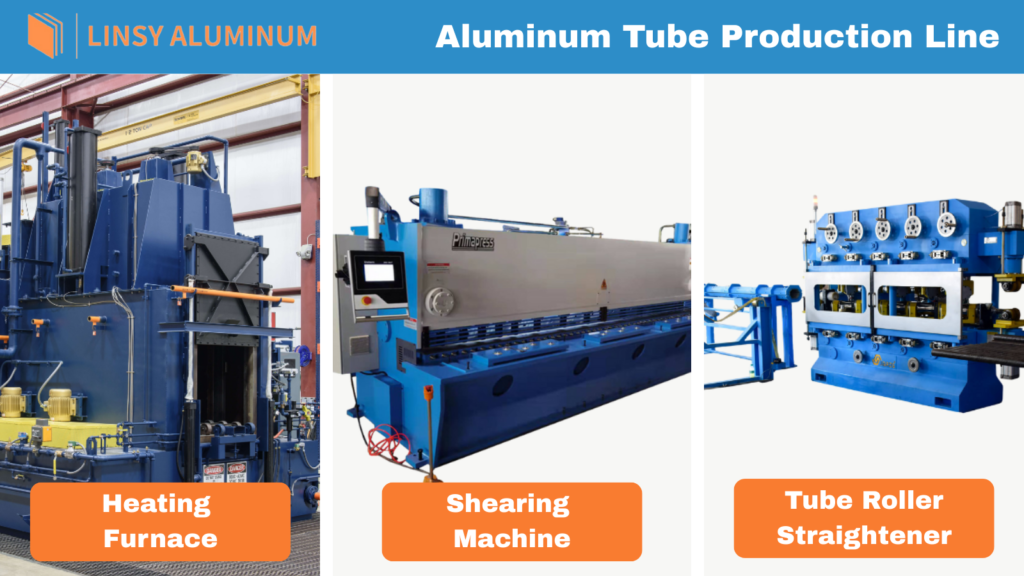
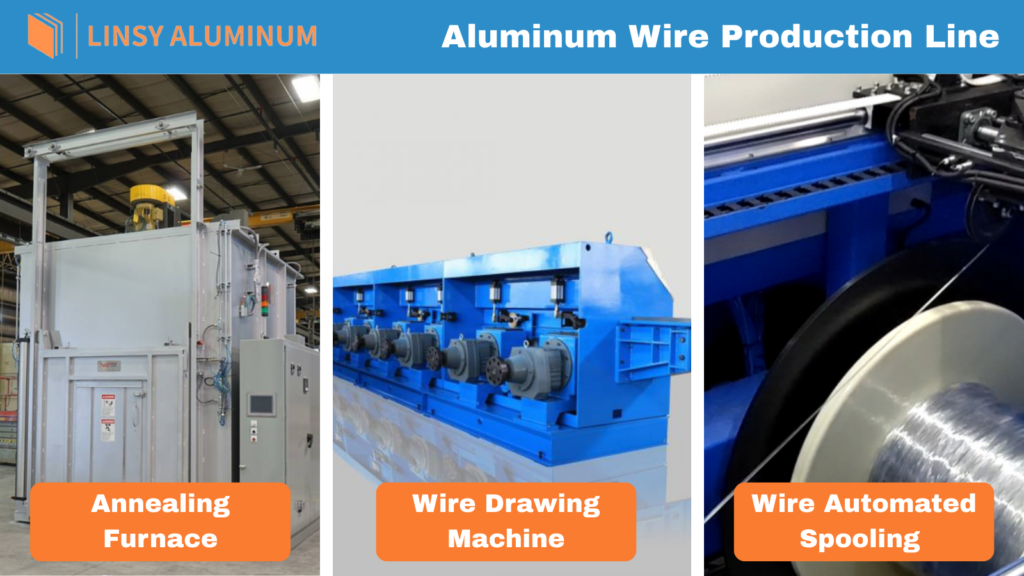
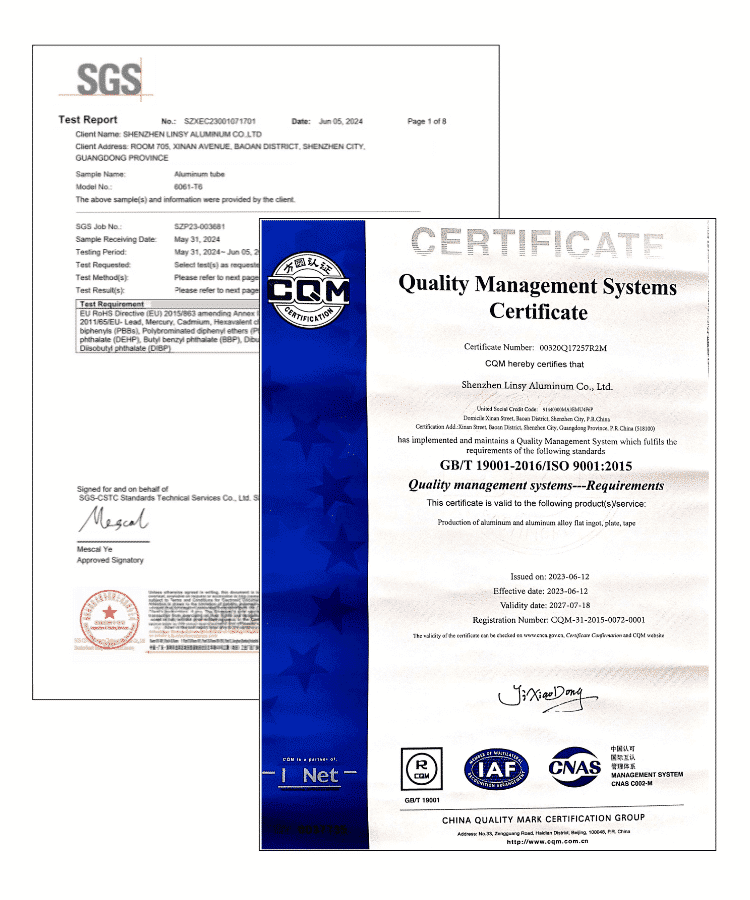
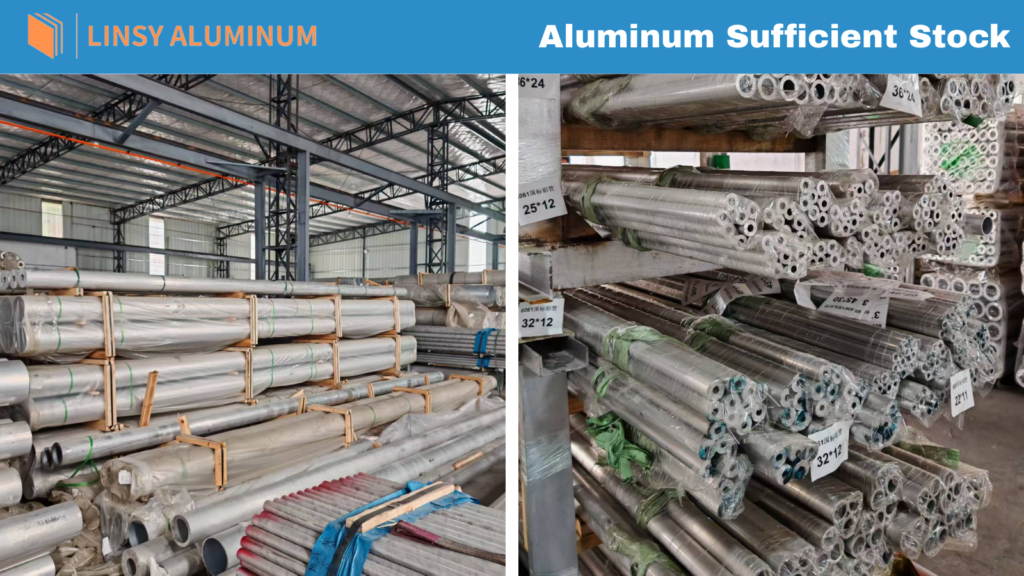
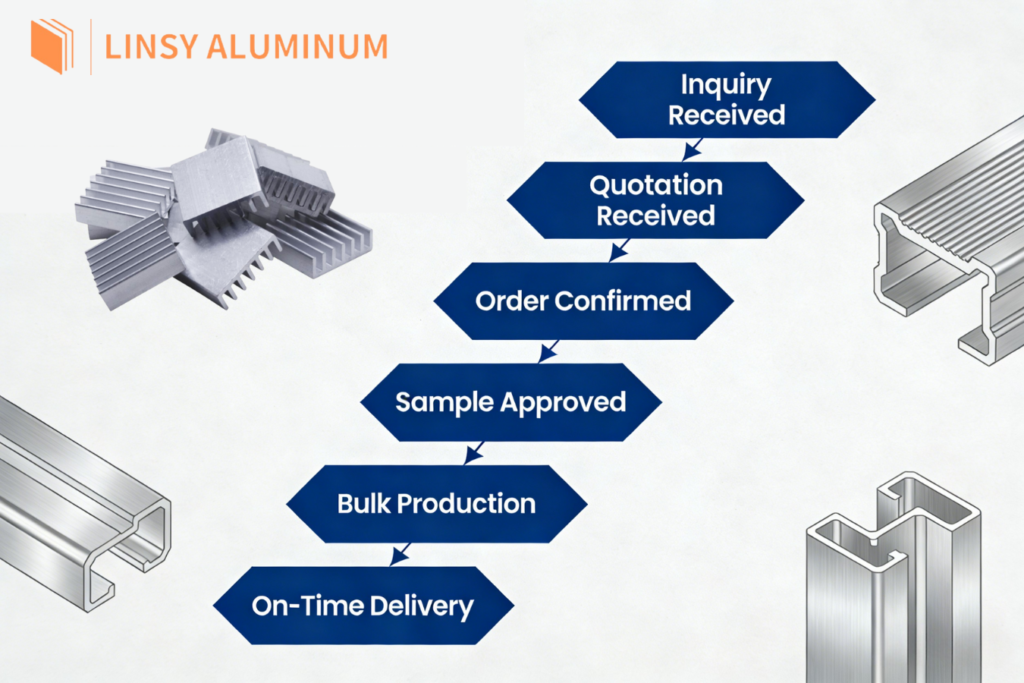
Linsy Advantages
Linsy Aluminum is a leading supplier of aluminum processing products, serving diverse industries including aerospace, general engineering, automotive, marine, shipbuilding and other specialized industrial applications.
We are committed to maintaining the highest standards of quality and environmental responsibility, as demonstrated by our certifications: ISO 9001:2008, ISO 14001:2004 and SGS.