6061 aluminum square tube is a hollow square Al-Mg-Si section at 310 MPa typical in T6. Square gives equal stiffness on both axes and a flat face for mounting, which is why it dominates machine frames, racks and guarding. Not the same as pipe — tube is side × wall.
Side: 10–300 mm
Wall: 1–20 mm
Tempers: O / T4 / T6 / T6511
Standards: ASTM B221, EN 755
Quality documents: MTC report with every order
6061 aluminum square tube is a hollow Al-Mg-Si section with a square outside profile, specified as side length × wall thickness and heat-treatable to T6. Its advantage over round tube is stiffness in two directions: a square section resists bending equally on both axes and gives a flat face for mounting, which is why it dominates frames, racks, machine bases and guarding. T6 gives 310 MPa typical tensile, it welds and machines cleanly, and it anodizes uniformly. Alloy data: 6061 aluminum alloy.
| Item | Range |
|---|---|
| Outside side | 10 – 300 mm |
| Wall thickness | 1 – 20 mm |
| Length | 1,000 – 6,000 mm, cut to size |
| Tempers | O / T4 / T6 / T6511 |
| Standards | ASTM B221, EN 755, GB/T 6892 |
Square tube is ordered by outside side and wall, not by an internal bore — the opposite of pipe. If you are matching an existing frame or a connector, measure the outside and the wall and give us both; “40 square tube” alone does not tell us the wall, and the wall is what carries the load.
| Temper | Tensile (MPa) | Yield (MPa) | Elongation | Typical use |
|---|---|---|---|---|
| O | ≤ 150 | 83 – 110 | 10 – 18% | Forming before heat treatment |
| T4 | 180 – 210 | ≥ 110 | 10 – 16% | Formed frames that age naturally |
| T6 | ≥ 290 (typical 310) | ≥ 240 (typical 276) | 8 – 12% | Structural frames, racks, guarding |
| T6511 | ≥ 290 (typical 310) | ≥ 240 (typical 276) | 8 – 12% | Extruded tube, stress relieved for machining |
Typical values; confirm against the MTC. Density 2.70 g/cm³, elastic modulus 69 GPa. On the designation: extruded tube is stress relieved to T6511, not T651 — T651 is a plate designation and cannot appear on a hollow-section certificate.
T6 is the default for frames, racks and machine bases. T4 is the bending temper — but on square tube that matters less than on round, because square sections do not bend well in any temper (see below). Where a frame needs a curved member, it is usually designed around a round tube or fabricated from cut segments.
T6511 is worth specifying where the tube is machined — cut ends faced, holes bored, or the tube used as a bushing housing — because the stress relief keeps the section stable through machining.
| Alloy / temper | Tensile (MPa) | Yield (MPa) | Where it fits |
|---|---|---|---|
| 6061-T6 | 310 | 276 | Structural frames, machine bases, racks, guarding |
| 6063-T5 / T6 | 185 / 240 | 145 / 215 | Architectural, handrail, visible frames — better finish |
| 5052-H32 | 214 – 262 | ≥ 159 | Marine, welded frames, salt-water service |
6061 is the structural default. Choose 6063 where the frame is visible and will be anodized — the finish is better and the strength is adequate for handrails and trim. Choose 5052 when the frame is welded and lives outdoors or in salt water.
Square tube gives equal stiffness on both axes, which is why it is used where the load direction is unknown or changing. Rectangular tube puts the material where the bending is — a 100 × 50 section is much stiffer about its strong axis than a 60 square of the same mass, but weak about the other. If the frame is a beam spanning one direction, rectangular usually wins on weight; if it is a post or a general frame, square is simpler to detail.
Corner radius is the dimension drawings forget and assemblers notice: the outside corners are radiused rather than sharp, and the inside corners more so. A connector designed for a sharp corner will not seat, and a tube specified “square” can still have a corner radius that prevents it sliding into another. If the joint depends on the corner, state the radius you need or send the connector drawing.
Straightness and twist are the real quality variables on square tube. A tube with a slight twist will not sit flat on a machine base and will pull a welded frame out of square; if the assembly is dimensionally critical, say so and we will quote a straightened product rather than a commercial one.
Bending: square tube does not bend like round. It collapses at the corners and needs internal support or special rolls; practical radii are large, and most frames are fabricated from mitred segments instead. Design the joint, not the bend.
Cutting and joining: sawed square, mitred on request, deburred. Welding is straightforward in 6061 — but welding in T6 softens the heat-affected zone back towards annealed, so design the joint for as-welded strength or weld in T4 and age afterwards.
Machine frames and bases, equipment racks and stands, guarding and enclosures, workbenches, conveyor frames, signposts and gantries, trailer and truck body frames, architectural mullions, display structures, handrails.
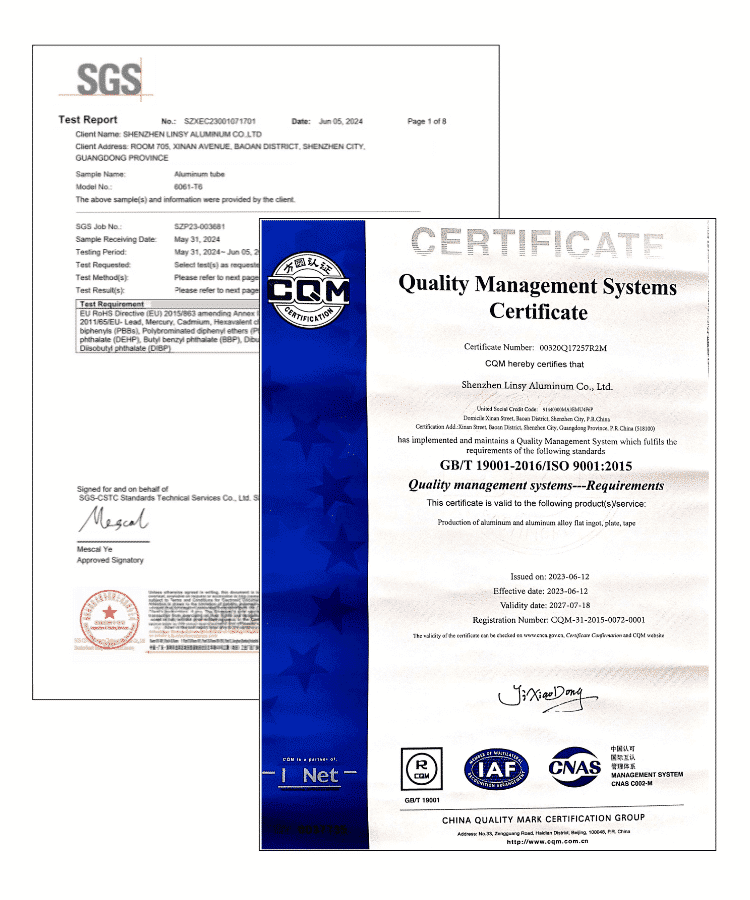
Every order ships with an MTC reporting alloy, temper, side, wall and mechanical results against the ordered standard. For structural work, state whether straightness and twist are critical. Third-party testing is available on request at additional cost; production runs under ISO 9001, ISO 14001 and ISO 45001 certified systems.
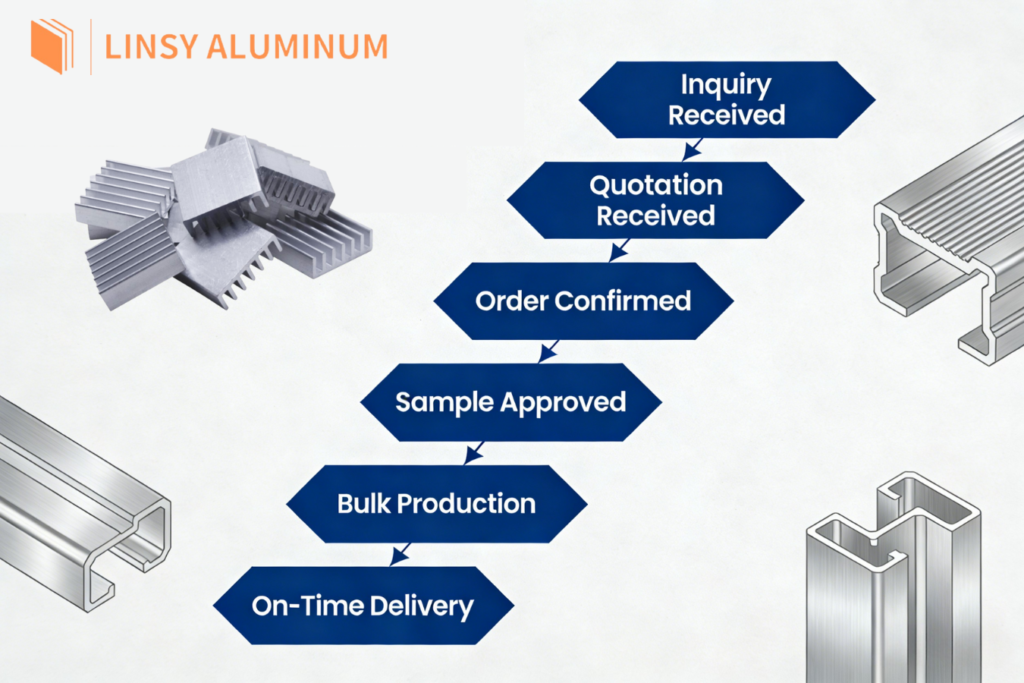
To quote in one round, send: side × wall × length, temper (T6 standard, T6511 if machined), corner radius if a connector depends on it, straightness requirement, end finish (square, mitred, deburred), and the destination.
Shenzhen-based aluminum factory, more than 20 years in the industry, supplying 1000–8000 series alloys in standard specifications and custom sizes.
Q: Is square tube ordered by outside or inside size?
A: Outside side and wall — unlike pipe, which is nominal bore and schedule. “40 square tube” says nothing about the wall, and the wall carries the load.
Q: Why does corner radius matter?
A: Because outside corners are radiused. A connector designed for a sharp corner will not seat, and a tube specified “square” may still have a radius that stops it sliding into another.
Q: Can 6061 square tube be bent?
A: Not like round tube. It collapses at the corners and needs internal support or special rolls; practical radii are large, so frames are usually fabricated from mitred segments.
Q: Square or rectangular tube?
A: Square gives equal stiffness both ways and is easier to detail. Rectangular puts material where the bending is and is lighter for a one-direction beam.
Q: What sizes do you hold?
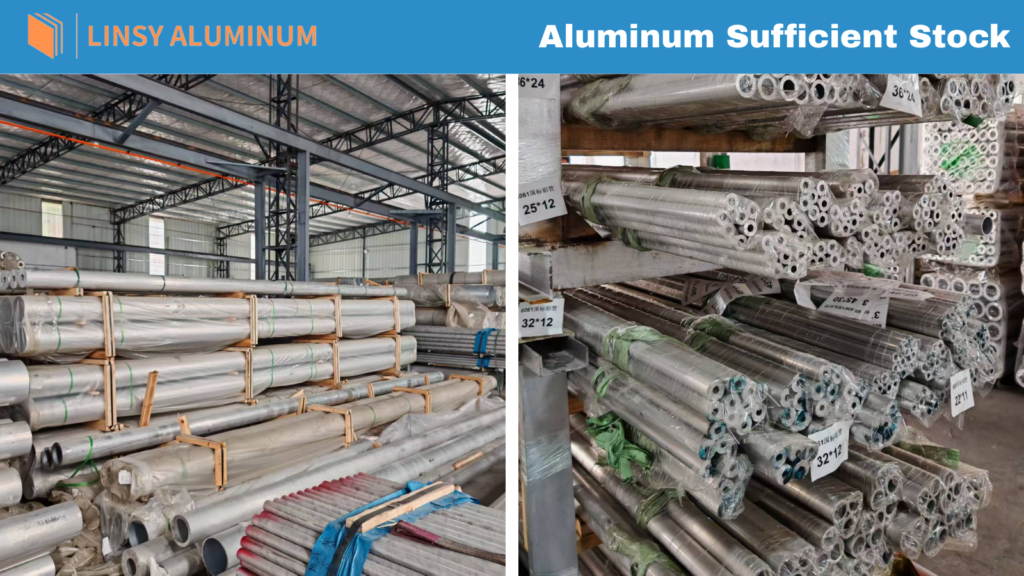
A: 10–300 mm side, 1–20 mm wall, cut to length from 1,000 to 6,000 mm.
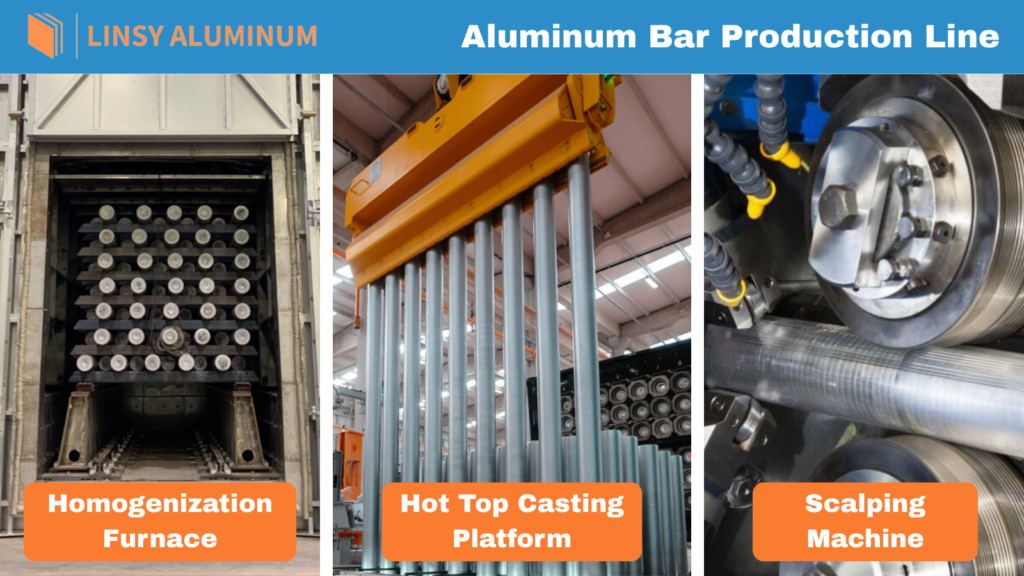
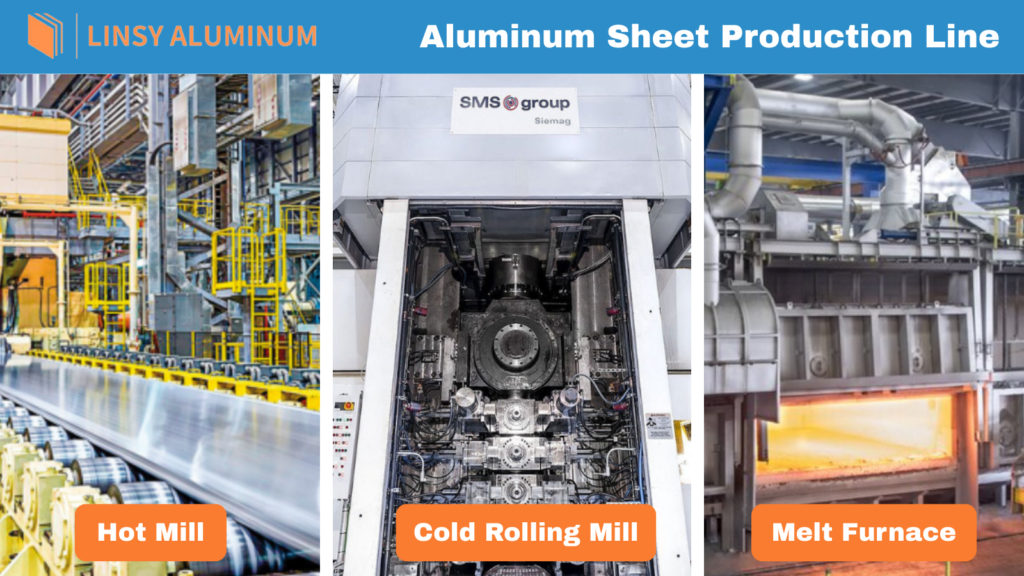
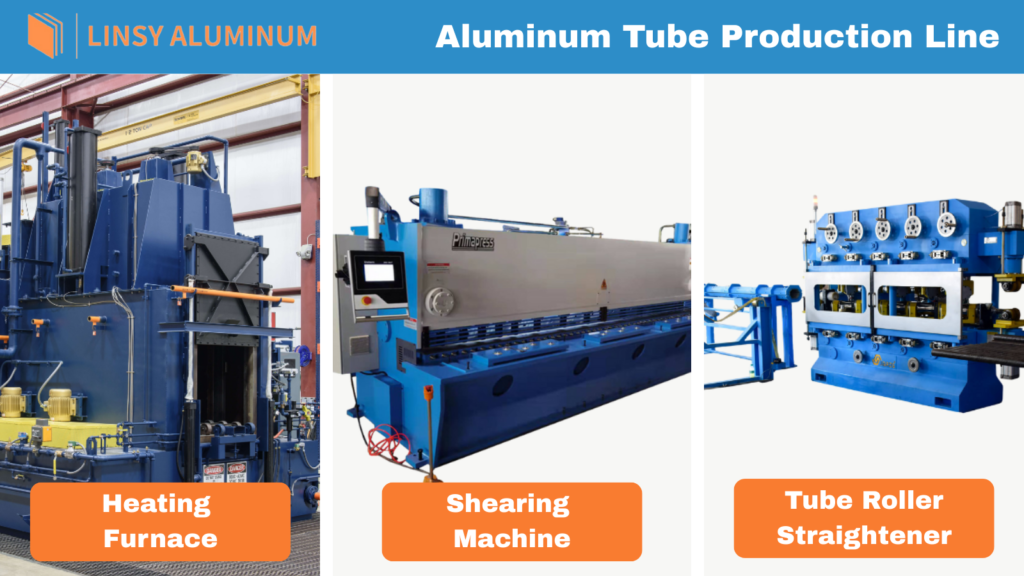
Linsy Advantages
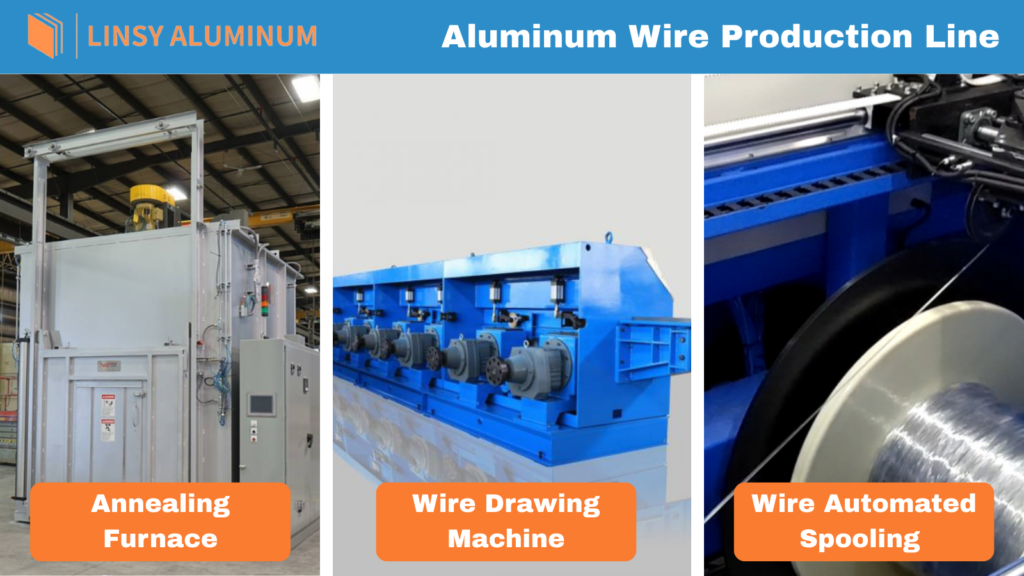
Linsy Aluminum is a leading supplier of aluminum processing products, serving diverse industries including aerospace, general engineering, automotive, marine, shipbuilding and other specialized industrial applications.
We are committed to maintaining the highest standards of quality and environmental responsibility, as demonstrated by our certifications: ISO 9001:2008, ISO 14001:2004 and SGS.