6063 aluminum round tube is a hollow Al-Mg-Si section chosen for clean extrusion and the best anodized finish of any common alloy. It is the default for visible tube: handrails, balustrades, furniture frames, display structures. Not a structural alloy — T6 gives 240 MPa against 310 for 6061 — and it bends well only in the annealed condition.
OD: 6–400 mm
Wall: 0.5–40 mm
Tempers: O / T5 / T52 / T6
Standards: ASTM B221, EN 755
Quality documents: MTC report with every order
6063 aluminum round tube is a hollow Al-Mg-Si section with lower alloy content than 6061, supplied by OD and wall and chosen for two reasons: it extrudes into clean sections and it anodizes better than any other common alloy. That makes it the default for visible tube — handrails, balustrades, furniture frames, display structures, lighting and trim. It is not a structural alloy in the way 6061 is: T6 gives 240 MPa against 310, and it is less tolerant of tight bends. Alloy data: 6063 aluminum alloy.
| Item | Range |
|---|---|
| Outside diameter | 6 – 400 mm |
| Wall thickness | 0.5 – 40 mm |
| Length | 1,000 – 6,000 mm, cut to size |
| Tempers | O / T5 / T52 / T6 |
| Standards | ASTM B221 (extruded tube), EN 755 |
6063 tube is extruded, so the stress-relieved condition is T5 or T52 — not the T6511 used on 6061 extruded tube, and certainly not T651. A drawing that carries a plate designation onto a 6063 tube order is a copy-paste error worth catching before the certificate is written.
| Temper | Tensile (MPa) | Yield (MPa) | Elongation | Condition |
|---|---|---|---|---|
| O | 90 | 55 | 25% | Annealed |
| T5 | 185 | 145 | 12% | Cooled from extrusion and aged |
| T52 | 185 | 130 | 12% | Stress relieved by stretching |
| T6 | 240 | 215 | 12% | Solution treated and artificially aged |
Typical values; confirm against the MTC. Density 2.70 g/cm³, elastic modulus 69 GPa. For a handrail or a frame member the numbers are rarely the constraint — stiffness, finish and bendability decide, and 6063 is chosen for the last two.
T5 is the volume temper: cheap, good surface, adequate for handrails, trim and furniture frames. T52 adds stress relief by stretching for tube that will be machined, threaded or cut to tight length — the same logic as T6511 on 6061, at lower strength.
T6 is for parts needing the extra 55 MPa, at some cost in finish because the quench disturbs the section. O is for bending — and on tube this matters more than on bar: a 6063 tube in T5 will flatten or crack on a tight radius, while the same tube in O bends cleanly and can be aged afterwards.
| Alloy / temper | Tensile (MPa) | Yield (MPa) | Where it fits |
|---|---|---|---|
| 6063-T5 / T6 | 185 / 240 | 145 / 215 | Handrails, balustrades, furniture, display frames, anodized trim |
| 6061-T6 | 310 | 276 | Structural frames, manifolds, pressure lines |
| 5052-H32 | 214 – 262 | ≥ 159 | Marine, fuel and hydraulic lines, formed tube |
The decision is usually about finish and formability rather than strength. 6063 when the tube is seen and will be anodized; 6061 when it carries load or pressure; 5052 when it is bent hard, welded, or wet.
Tube is specified by OD and wall; pipe by nominal bore and schedule. They are not interchangeable: a 1 in schedule 40 aluminium pipe is 33.4 mm OD with a 3.4 mm wall, so quoting “1 inch tube” gets a 25.4 mm tube instead. If your drawing is a pipe schedule, say so and we will quote to the schedule.
6063 tube is normally extruded seamless in the smaller diameters and welded from sheet at larger ones. Seamless is correct for bending, pressure and machining through the wall; welded is cheaper at large diameters and adequate for frames, rails and handrails. The weld line limits the bend radius, so specify seamless if the tube will be bent.
Cutting: sawed square and cut to length; deburring on request. For handrail systems, state whether ends are to be capped or welded.
Bending: 6063 bends well in O and poorly in T5. A centreline radius of 2–3 × OD is realistic in the annealed condition; tighter needs a mandrel, and the tube must be aged afterwards if strength is required. Wall thinning on the outside of the bend is greater on thin walls — if the tube is structural after bending, that has to be accounted for.
Surface: the reason to specify 6063. It anodizes to a bright, uniform film in clear or any dye lot with minimal batch-to-batch variation, and it polishes well. Powder coating is equally straightforward.
Handrails and balustrades, furniture and display frames, window and door tube, lighting columns and housings, exhibition structures, greenhouse and canopy frames, decorative trim, machine covers that will be anodized.
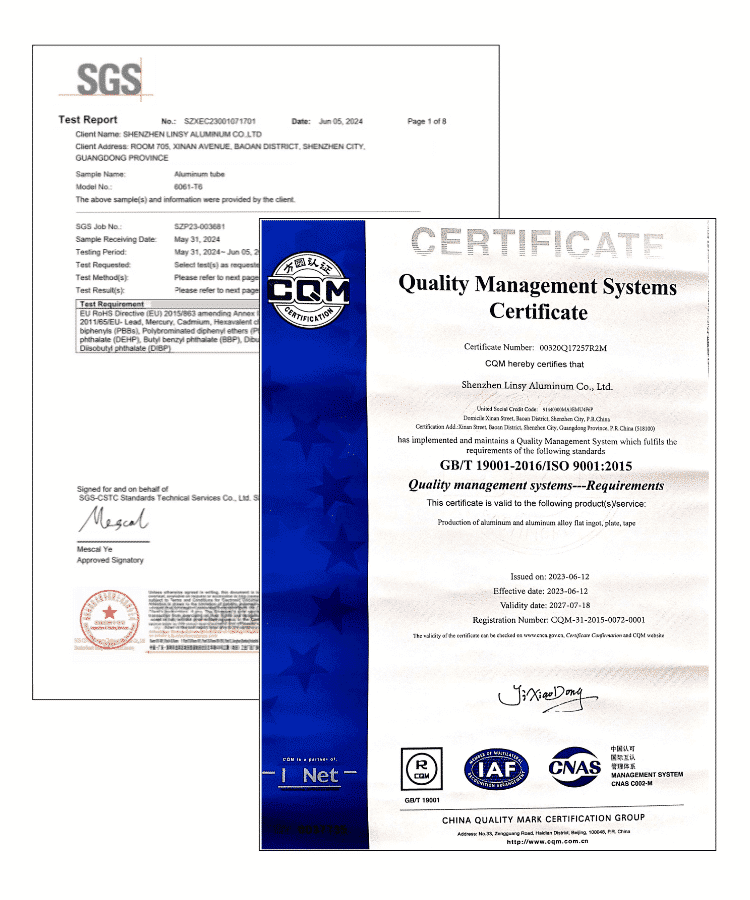
Every order ships with an MTC reporting alloy, temper, OD, wall and mechanical results. Where the tube is decorative, state the anodizing requirement — clear or dyed, film thickness, and whether colour consistency across lots matters. Third-party testing is available on request; production runs under ISO 9001, ISO 14001 and ISO 45001 certified systems.
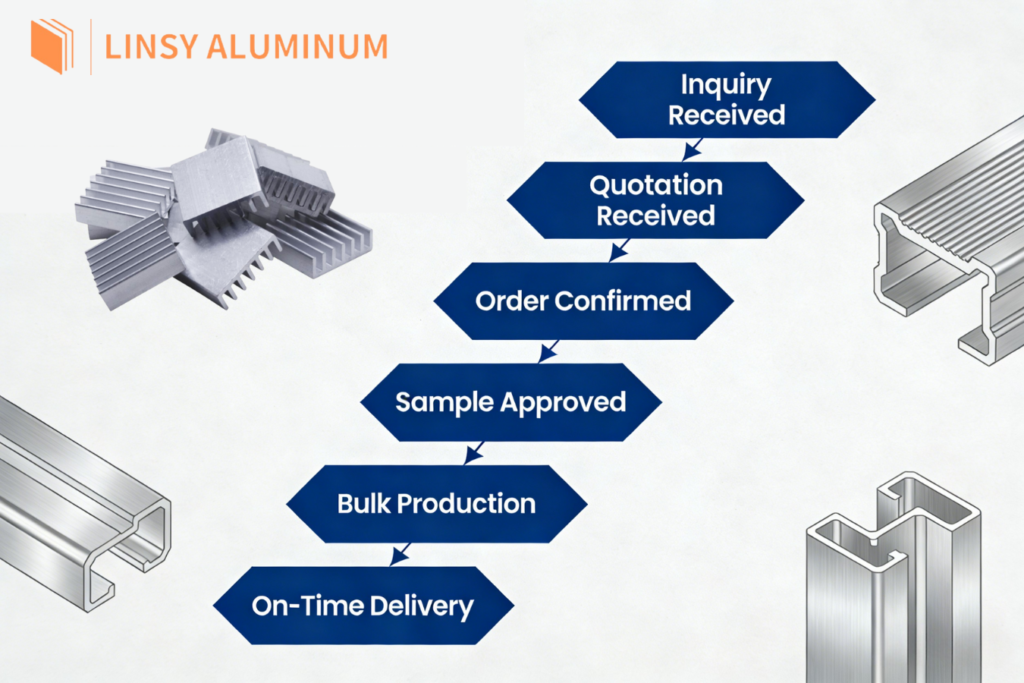
To quote in one round, send: OD × wall × length, temper (O if it will be bent), seamless or welded, anodizing (clear, dyed, film thickness), end finish (square, capped, deburred), and the destination.
Shenzhen-based aluminum factory, more than 20 years in the industry, supplying 1000–8000 series alloys in standard specifications and custom sizes.
Q: Can 6063 tube be bent?
A: Yes in O, poorly in T5. A centreline radius of 2–3 × OD is realistic annealed; tighter needs a mandrel and ageing afterwards if strength matters.
Q: Is 6063 tube strong enough for a structural frame?
A: Usually not. T6 gives 240 MPa against 310 for 6061. 6063 is chosen for finish and extrudability; if the frame carries load, check the numbers.
Q: Why does 6063 anodize better than 6061?
A: Lower alloying content gives a more uniform film and less colour variation between batches — which is what an architectural specification tests for.
Q: Is it tube or pipe?
A: Tube is OD × wall. Pipe is nominal bore and schedule with a fixed OD per size, so a 1 in schedule 40 pipe is 33.4 mm OD — not 25.4 mm.
Q: What sizes do you hold?
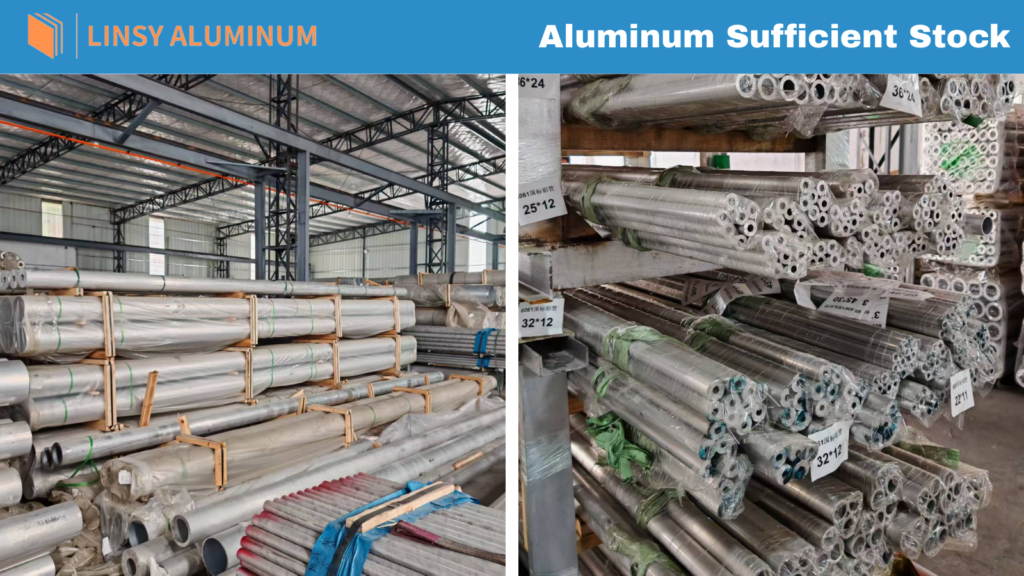
A: 6–400 mm OD, 0.5–40 mm wall, cut to length from 1,000 to 6,000 mm.
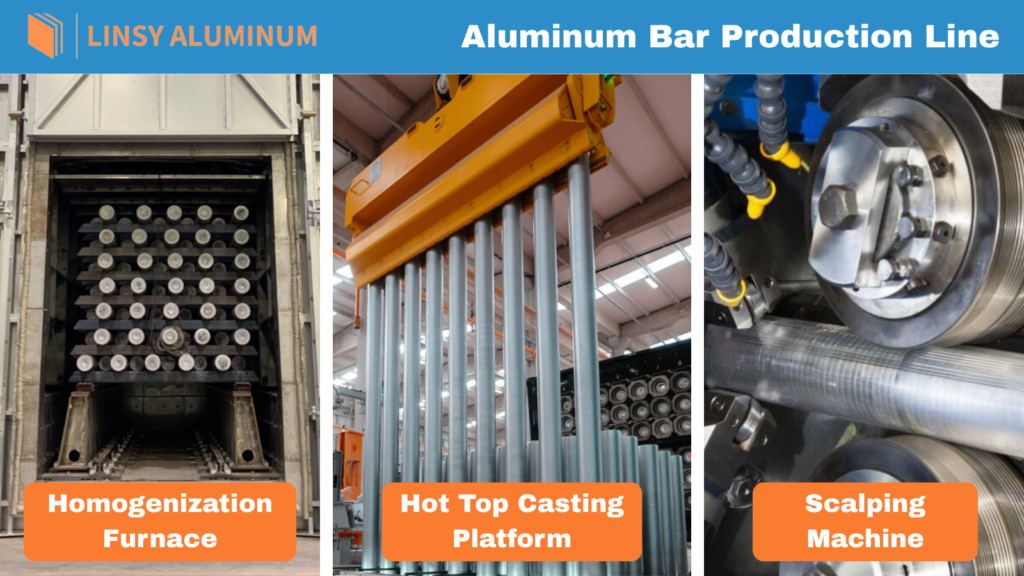
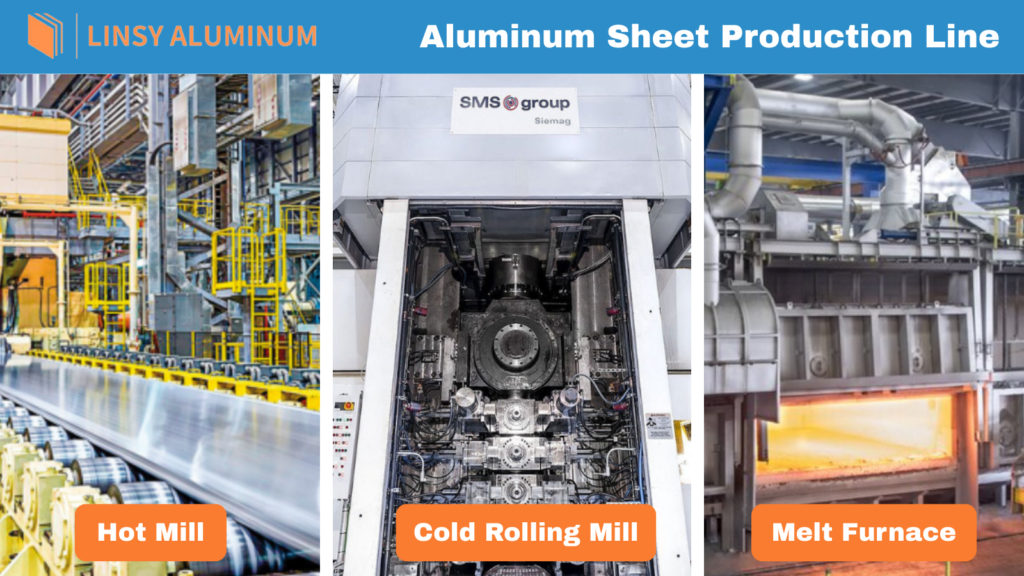
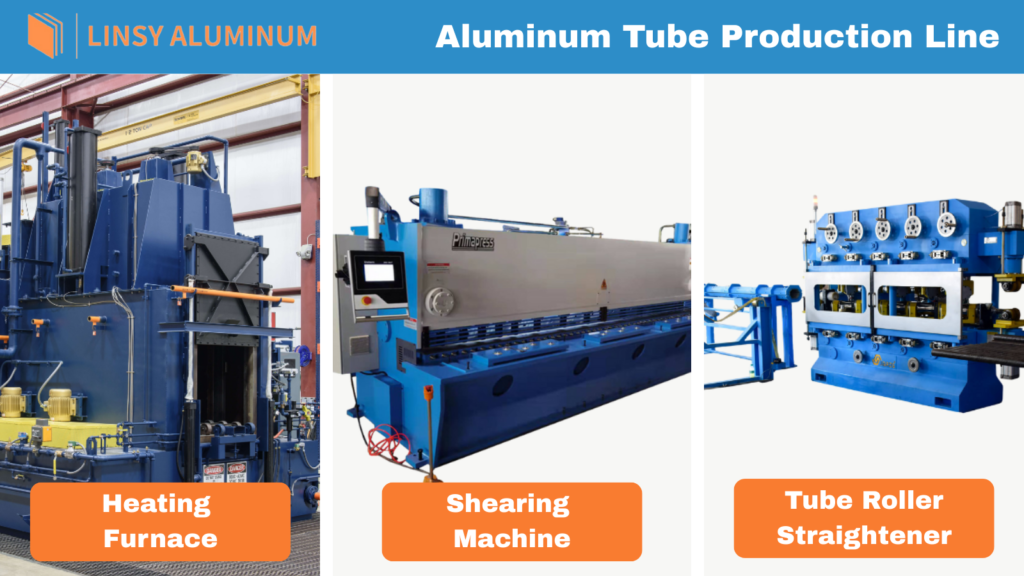
Linsy Advantages
Linsy Aluminum is a leading supplier of aluminum processing products, serving diverse industries including aerospace, general engineering, automotive, marine, shipbuilding and other specialized industrial applications.
We are committed to maintaining the highest standards of quality and environmental responsibility, as demonstrated by our certifications: ISO 9001:2008, ISO 14001:2004 and SGS.