Aspectos más destacados
- 3003 H14 es una aleación de la serie 3000 reforzada con manganeso que se forma y moldea fácilmente manteniendo una buena resistencia a la corrosión.
- El temple H14 significa endurecido por deformación (trabajado en frío) hasta aproximadamente medio duro, lo que proporciona una resistencia moderada sin tratamiento térmico.
- No es tratable térmicamente, por lo que la resistencia proviene del trabajo en frío y no de un tratamiento térmico posterior a la soldadura.
- Los usos comunes incluyen techados, canaletas, intercambiadores de calor, tanques de combustible y fabricación general de chapas.
- En comparación con la aleación 5052, se forma mejor; en comparación con la 6061, es más económica y fácil de trabajar, pero ofrece menor resistencia.
Introducción
El aluminio 3003 H14 es una de las aleaciones de aluminio de uso general más utilizadas. Equilibra resistencia moderada, excelente formabilidad y buena resistencia a la corrosión para trabajos de construcción, automoción y fabricación.
Esta guía explica qué es el 3003 H14, cómo su composición química y el temple H14 afectan el rendimiento, dónde se utiliza y cómo se compara con las aleaciones 5052 y 6061. Si necesita material en stock o cortado a medida, consulte nuestra Aleación de aluminio 3003 gama de productos.
Comprensión de la aleación de aluminio 3003 H14
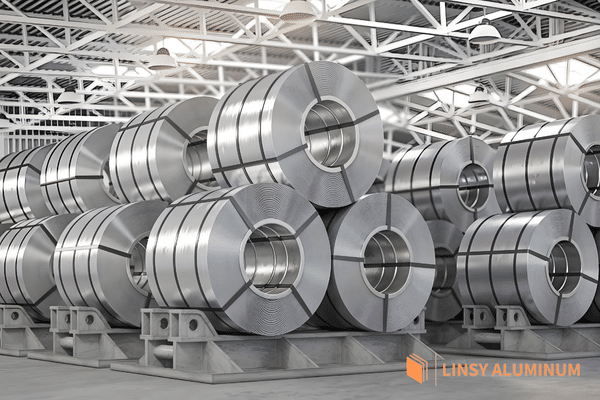
El 3003 pertenece a la serie 3000, donde el manganeso es el principal elemento de aleación. El manganeso añadido eleva la resistencia por encima de las aleaciones casi puras como la 1100, manteniendo al mismo tiempo la facilidad de conformado y soldadura.
La parte “H14” describe el temple. En las designaciones de temple del aluminio, H significa endurecido por deformación y los dígitos siguientes describen la cantidad de trabajo en frío aplicado. H14 es aproximadamente medio duro, por lo que el material es más resistente y duro que la condición recocida (O), pero sigue siendo fácil de doblar y moldear.
Composición química
El 3003 se fabrica dentro de los límites de composición estándar, por lo que la calidad se mantiene constante de un lote a otro. El manganeso (Mn) es la adición clave en aproximadamente 1,0-1,5%, y es lo que eleva la resistencia por encima del aluminio puro. Están presentes pequeñas cantidades de hierro, silicio, cobre y zinc que afectan la colada, el comportamiento frente a la corrosión y las propiedades mecánicas.
| Elemento | Porcentaje (% en peso) |
|---|---|
| Aluminio (Al) | ~98.7% |
| Manganeso (Mn) | ~1.0-1.5% |
| Cobre (Cu) | ≤0,20% |
| Silicio (Si) | ≤0,60% |
| Hierro (Fe) | ≤0,70% |
| Zinc (Zn) | ≤0,10% |
Propiedades y ventajas clave
La principal ventaja del 3003 H14 es su formabilidad. Se dobla, embute y estira bien, lo que simplifica la fabricación y amplía las opciones de diseño. Debido a que no puede tratarse térmicamente, su resistencia proviene del trabajo en frío y no del calor.
También resiste bien la corrosión, por lo que es adecuado para entornos exteriores y húmedos sin recubrimientos adicionales. La tabla siguiente enumera los valores de propiedades típicos.
| Propiedad | Valor |
|---|---|
| Resistencia a la tracción | ~22 000 PSI (&aprox;152 MPa) |
| Límite elástico | ~21 000 PSI (&aprox;145 MPa) |
| Alargamiento a la rotura | ~8% |
| Densidad | ~2,73 g/cm³ |
| Conductividad térmica | ~160 W/m·K |
| Resistencia a la corrosión | Excelente |
¿Qué significa el temperamento H14?
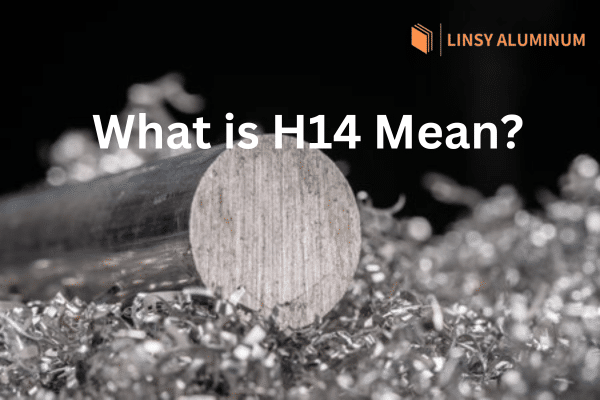
En el aluminio, “temple” describe la condición producida por un tratamiento mecánico o térmico. Los códigos de temple combinan una letra con dígitos; para la serie 3000, los temples H significan endurecido por deformación.
H14 significa que la aleación fue trabajada en frío hasta aproximadamente la mitad de la dureza de un temple H18 completamente duro. Un segundo dígito más alto significa más trabajo en frío y mayor resistencia. Conocer el temple ayuda a los ingenieros a elegir el equilibrio adecuado entre resistencia y formabilidad.
Aplicaciones comunes del aluminio 3003 H14
Industria de la construcción
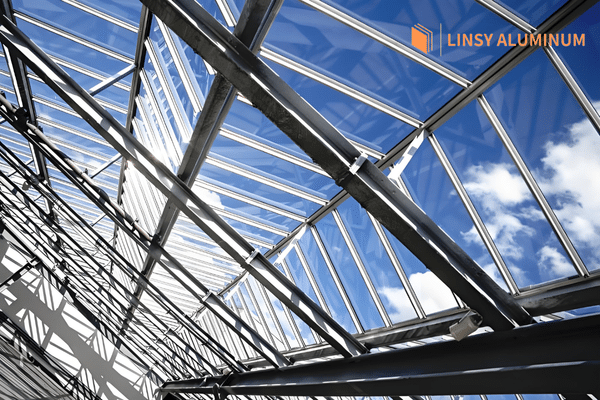
La construcción necesita materiales ligeros y resistentes a la corrosión, y el 3003 H14 se adapta bien. Se suministra ampliamente como chapa de aluminio 3003 para trabajos de construcción y arquitectura.
- Techados y revestimientos: el bajo peso reduce la carga estructural mientras que la resistencia a la intemperie protege el edificio.
- Canaletas y bajantes: la resistencia a la corrosión garantiza su funcionamiento durante años con poco mantenimiento.
- Baberos y molduras: la fácil conformación permite a los fabricantes crear perfiles personalizados que sellan aberturas.
Industria del automóvil
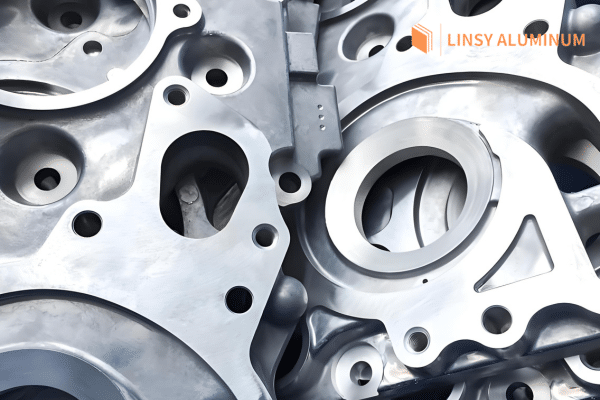
Los fabricantes de automóviles utilizan 3003 H14 para reducir peso sin alto costo. No es tan resistente como el 6061 o el acero, pero es ideal para piezas no estructurales que requieren formabilidad y resistencia a la corrosión.
- Radiadores e intercambiadores de calor: la buena conductividad térmica y la resistencia a la corrosión son adecuadas para sistemas de refrigeración. El embutido Tubo redondo de aluminio 3003 es común aquí.
- Molduras y embellecedores interiores: ligeros, resistentes y fáciles de acabar para piezas decorativas.
- Depósitos de combustible: el comportamiento no generador de chispas añade seguridad a los sistemas de combustible.
Industria del embalaje
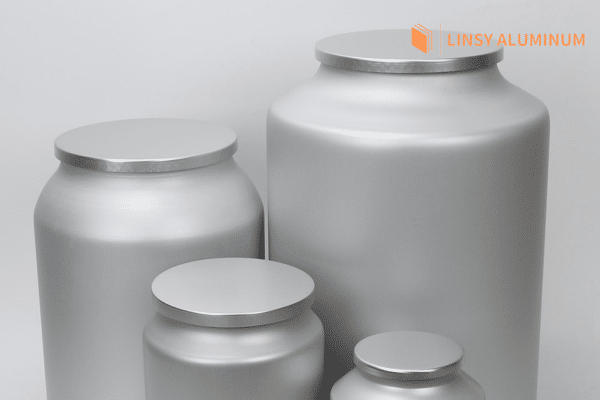
El 3003 H14 es popular en envases y embalajes porque es resistente, formable y consistente con los estándares del aluminio. El ancho y el espesor se pueden personalizar, por lo que se adapta a muchas necesidades de embalaje mejor que el acero al carbono en aplicaciones sensibles al peso.
Ventajas e inconvenientes del aluminio 3003 H14
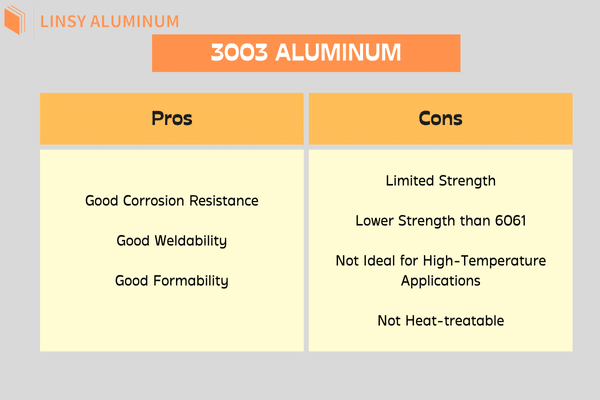
Como cualquier material de ingeniería, el 3003 H14 tiene ventajas y desventajas. Se forma y suelda fácilmente, resiste la corrosión y tiene una resistencia a la tracción moderada (aproximadamente 20-26 ksi). Las limitaciones son la baja resistencia para piezas altamente solicitadas y la imposibilidad de aumentar la resistencia mediante tratamiento térmico.
Comparación del 3003 con otras aleaciones de aluminio
Ver el 3003 H14 junto al 5052 y al 6061 muestra dónde encaja. La elección depende de cuánta resistencia necesite frente a la facilidad con la que la pieza debe formarse.
Aluminio 3003 vs. 5052
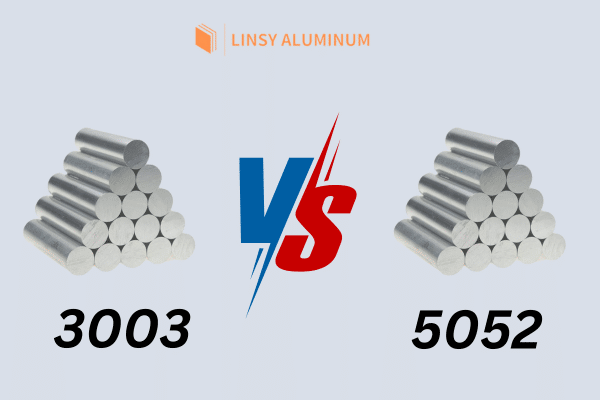
Tanto el 3003 como el 5052 no son tratables térmicamente y obtienen resistencia mediante trabajo en frío. El 5052 añade magnesio, lo que proporciona mayor resistencia a la tracción y al límite elástico, por lo que es adecuado para piezas de mayor carga. El 3003 gana en formabilidad.
| Propiedad | 3003 H14 | 5052 H32 |
|---|---|---|
| Resistencia a la tracción | 20-26 ksi | 31-38 ksi |
| Límite elástico | 21 ksi | 28 ksi |
| Alargamiento | 8% | 12% |
| Soldabilidad | Bien | Bueno, pero con algunas precauciones |
| Formabilidad | Excelente | Bien |
Elija 5052 cuando necesite más resistencia; elija 3003 cuando la conformación compleja sea lo más importante.
Aluminio 3003 vs. 6061
El 6061 es tratable térmicamente, por lo que alcanza mayor resistencia (a menudo superior a 40 ksi), pero requiere pasos de tratamiento térmico que aumentan el costo y la complejidad. El 3003 no puede tratarse térmicamente, lo que lo mantiene más simple y económico para trabajos de resistencia moderada.
Para una comparación más detallada, lea nuestra comparación 3003 vs 6061. Al elegir entre aleaciones de chapa, nuestra guía de chapa 3104 vs 3003 vs 3004 le ayuda a seleccionar la aleación adecuada para cada trabajo.
Conclusión
El 3003 H14 es una aleación práctica de uso general, pero sus limitaciones son reales: no puede tratarse térmicamente para ganar resistencia, por lo que no es la opción adecuada para piezas estructurales altamente solicitadas. Obtenerlo de un proveedor inconsistente añade riesgo, ya que un espesor o temple fuera de especificación puede provocar fallos en el conformado y la soldadura posteriores.
Linsy Aluminum es una fábrica con sede en Shenzhen con más de 20 años de experiencia en el suministro de placa, chapa, barra, tubo y perfil de 3003 H14. Cada pedido se envía con un MTC (Certificado de Ensayo de Material), y los informes de ensayo SGS están disponibles bajo petición. Con suministro directo de fábrica, mecanizado CNC interno, soldadura y corte por láser, además de sistemas de gestión ISO 9001, ISO 14001 e ISO 45001, Linsy le ofrece material consistente y plazos de entrega personalizados cortos de 10 a 60 días.
Contacte hoy con Linsy Aluminum para analizar sus requisitos de 3003 H14 y solicitar un presupuesto.
Preguntas frecuentes
¿Cuál es la diferencia entre el aluminio 1100 y el aluminio 3003?
El 1100 es aluminio casi puro, por lo que es más blando y débil que el 3003. La adición de manganeso en el 3003 eleva la resistencia y mantiene una buena formabilidad, lo que lo hace más útil para piezas fabricadas.
¿Qué distingue al 3003 H14 de otras aleaciones de aluminio?
El temple H14 significa endurecido por deformación hasta aproximadamente medio duro, por lo que es más resistente que la condición recocida pero aún fácil de formar. Su equilibrio de formabilidad, resistencia a la corrosión y resistencia moderada lo distingue de las aleaciones tratables térmicamente como la 6061.
¿En qué industrias se utiliza más el 3003 H14?
Es común en construcción (techados, canaletas, molduras), automoción (radiadores, molduras, tanques de combustible) y embalaje, además de la fabricación general donde la formabilidad y la resistencia a la corrosión importan más que la alta resistencia.
¿Se puede soldar o mecanizar fácilmente el aluminio 3003 H14?
El 3003 H14 se suelda fácilmente con soldadura por arco estándar y se mecaniza y corta limpiamente. Su naturaleza no tratable térmicamente significa que las uniones soldadas mantienen sus propiedades sin tratamiento térmico posterior a la soldadura.