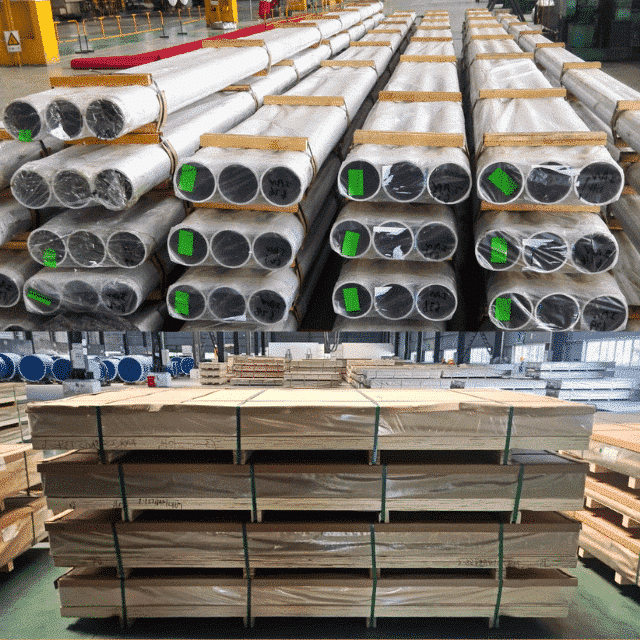

La aleación de aluminio 3003 es una aleación Al-Mn (serie 3000) no tratable térmicamente, ampliamente utilizada en techados, revestimientos, equipos químicos, utensilios de cocina, intercambiadores de calor y fabricación general de chapa metálica. Ofrece una excelente resistencia a la corrosión, buena formabilidad y resistencia moderada — aproximadamente un 20% más resistente que el aluminio 1100. Linsy suministra lámina, bobina, placa, tubo, barra y alambre de aluminio 3003 en temple O, H12, H14, H16, H18 y H112, con tamaños personalizados, opciones de acabado superficial e informes MTC disponibles para cada pedido.
Formularios disponibles: lámina / bobina / placa / tubo / barra / alambre
Temperamentos habituales: O / H12 / H14 / H16 / H18 / H112
Asistencia técnica: Mecanizado CNC / corte por láser / soldadura TIG y MIG / anodizado / pulido
Documentos de calidad: Informe MTC con cada pedido; ensayos de SGS bajo petición
La aleación de aluminio 3003 es una de las aleaciones Al-Mn (aluminio-manganeso) más utilizadas. Introducida por primera vez en la década de 1930 y estandarizada como UNS A93003, es una aleación forjada no tratable térmicamente que obtiene sus propiedades mecánicas mediante trabajo en frío (endurecimiento por deformación) en lugar de endurecimiento por precipitación. Esto hace que la 3003 sea fundamentalmente diferente de las aleaciones tratables térmicamente como la 6061 o la 7075 — su resistencia se controla mediante el grado de reducción en frío durante el laminado o conformado, expresado por la designación de temple H (H12, H14, H16, H18, etc.).
Con un 1,0–1,5% de manganeso como elemento de aleación principal, la 3003 ofrece aproximadamente un 20% más de resistencia que el aluminio comercialmente puro 1100, manteniendo una excelente resistencia a la corrosión, formabilidad y soldabilidad. Es la aleación de aluminio en lámina de uso general más común y está aprobada según las principales normas internacionales, incluyendo ASTM B209, ASTM B210, ASTM B211, ISO 6361 y EN 573-3.
La 3003 no puede fortalecerse mediante tratamiento térmico. El recocido (temple O) restaura la suavidad total, mientras que la reducción en frío controlada produce los temples endurecidos por deformación H1x. Esta característica hace que la 3003 sea ideal para aplicaciones que requieren embutición profunda, hilado, estampado o conformado por rodillos — como paneles de techado, utensilios de cocina, tanques de almacenamiento químico y aletas de intercambiadores de calor.
Linsy suministra aluminio 3003 en toda la gama de formas de producto estándar y personalizadas. La longitud, el ancho y las tolerancias dimensionales pueden adaptarse a los requisitos de su proyecto.
| Formulario | Temple | Espesor (mm) | Anchura (mm) | Longitud (mm) |
|---|---|---|---|---|
| Lámina / Bobina 3003 | O, H12, H14, H16, H18, H112 | 0.3 – 6.0 | 500 – 2600 | 500 – 16000 |
| Formulario | Temple | Espesor (mm) | Anchura (mm) | Longitud (mm) |
|---|---|---|---|---|
| Placa 3003 | O, H12, H14, H16, H112 | 6.0 – 150 | 500 – 2600 | 500 – 16000 |
| Formulario | Temple | Diámetro exterior (mm) | Pared (mm) | Longitud (mm) |
|---|---|---|---|---|
| Tubo 3003 | O, H12, H14, H16 | 6 – 200 | 1 – 50 | 1000 – 6000 |
| Formulario | Temple | Diámetro (mm) | Longitud (mm) |
|---|---|---|---|
| Barra redonda 3003 | O, H12, H14, H16, H112 | 3 – 200 | 1000 – 6000 |
| Formulario | Temple | Diámetro (mm) | Peso / Bobina |
|---|---|---|---|
| Alambre 3003 | O, H12, H14, H16 | 0.5 – 25 | Mín. 50 kg |
El aluminio 3003 está reconocido bajo designaciones internacionales y normas de producto. La siguiente tabla muestra los equivalentes más comunes utilizados en especificaciones de adquisición.
| Estándar | Denominación | Normas de producto aplicables |
|---|---|---|
| UNS | A93003 | — |
| ES | EN AW-3003 / EN AW-AlMn1Cu | EN 485, EN 573-3, EN 754, EN 755 |
| AA (Asociación del Aluminio) | 3003 | ASTM B209, B210, B211, B221 |
| ISO | AlMn1Cu | ISO 6361 |
| JIS (Japón) | A3003 | JIS H4000, JIS H4040, JIS H4080 |
| GB (China) | 3003 | GB/T 3190, GB/T 3880 |
Los siguientes límites de composición química se aplican al aluminio 3003 según ASTM B209 y EN 573-3. Todos los valores están en porcentaje en peso (%).
| Elemento | Mín. % | Máx. % |
|---|---|---|
| Silicio (Si) | — | 0.6 |
| Hierro (Fe) | — | 0.7 |
| Cobre (Cu) | 0.05 | 0.20 |
| Manganeso (Mn) | 1.0 | 1.5 |
| Magnesio (Mg) | — | 0.05 |
| Cromo (Cr) | — | 0.05 |
| Zinc (Zn) | — | 0.10 |
| Titanio (Ti) | — | 0.05 |
| Otros Cada uno | — | 0.05 |
| Otros Total | — | 0.15 |
| Aluminio (Al) | — | Saldo |
Las propiedades mecánicas del aluminio 3003 dependen en gran medida del temple. El trabajo en frío aumenta tanto la resistencia a la tracción como el límite elástico, reduciendo la ductilidad. Los valores siguientes son típicos para productos en lámina según ASTM B209.
| Propiedad | Valor típico |
|---|---|
| Resistencia a la tracción (MPa) | 95 – 130 |
| Límite elástico (MPa) | ≥ 35 |
| Alargamiento (%) | ≥ 25 |
| Dureza (Brinell) | 28 |
| Propiedad | Valor típico |
|---|---|
| Resistencia a la tracción (MPa) | 140 – 180 |
| Límite elástico (MPa) | ≥ 115 |
| Alargamiento (%) | ≥ 5 |
| Dureza (Brinell) | 40 |
| Propiedad | Valor típico |
|---|---|
| Resistencia a la tracción (MPa) | ≥ 185 |
| Límite elástico (MPa) | ≥ 165 |
| Alargamiento (%) | ≥ 3 |
| Dureza (Brinell) | 55 |
El temple que elija determina el equilibrio entre resistencia, formabilidad y acabado superficial. Utilice la guía siguiente para seleccionar el temple adecuado para su aplicación.
| Temple | Descripción | Ventaja principal | Aplicaciones típicas |
|---|---|---|---|
| O | Recocido — totalmente blando | Máxima conformabilidad y ductilidad | Piezas embutidas profundas, hilado, estampados complejos |
| H12 | Endurecido por deformación, 1/4 duro | Buena formabilidad con ligero aumento de resistencia | Conformado moderado, chapa metálica general |
| H14 | Endurecido por deformación, semiduro | Mejor equilibrio entre resistencia y formabilidad | Techados, revestimientos, utensilios de cocina, tanques |
| H16 | Endurecido por deformación, 3/4 duro | Mayor resistencia, formabilidad limitada | Paneles estructurales, señalización |
| H18 | Endurecido por deformación, completamente duro | Resistencia máxima para 3003 | Paneles planos, piezas estructurales sin conformado |
| H112 | Tal como se fabrica (sin control especial de endurecimiento por deformación) | Económico para placa más gruesa | Placa y aplicaciones estructurales de gran espesor |
El aluminio 3003 ofrece una excelente resistencia a la corrosión atmosférica, incluso en entornos marinos e industriales. El contenido de manganeso suprime la corrosión intergranular, y la 3003 se comporta bien en contacto con productos alimenticios, productos químicos suaves y agua dulce. Se utiliza comúnmente sin recubrimientos protectores en techados, revestimientos y aplicaciones de procesamiento de alimentos.
La 3003 muestra una excelente formabilidad en frío en los temples O y H1x. Puede embutirse profundamente, hilarse, estamparse, conformarse por rodillos y doblarse — lo que la convierte en un material de primera elección para utensilios de cocina y piezas complejas de chapa metálica. Para soldadura, la 3003 está clasificada como altamente soldable por todos los métodos comunes, incluyendo TIG (GTAW), MIG (GMAW) y soldadura por resistencia. Se recomienda el metal de aporte 4043 o 1100 para soldadura por fusión. Tenga en cuenta que la soldadura recocerá la zona afectada por el calor, reduciendo la resistencia local en los temples endurecidos por deformación.
El aluminio 3003 tiene una buena conductividad térmica (aproximadamente 160–190 W/(m·K), variable según el temple) y una conductividad eléctrica de aproximadamente 40–44% IACS. Su densidad es de 2,73 g/cm³, y el rango de fusión es de 643–654°C. Estas propiedades hacen que la 3003 sea adecuada para aletas de intercambiadores de calor y aplicaciones de gestión térmica donde se requiere un rendimiento térmico moderado.
| Industria | Aplicaciones | Por qué se utiliza la 3003 |
|---|---|---|
| Construcción y edificación | Láminas para techado, paneles de revestimiento, canalones, bajantes, vierteaguas | Resistencia a la corrosión, formabilidad, rentabilidad |
| Alimentación y cocina | Utensilios de cocina, ollas, sartenes, bandejas de horneado, bandejas de procesamiento de alimentos | Apto para contacto con alimentos, excelente embutición profunda, buena conductividad térmica |
| Químico e industrial | Tanques de almacenamiento, equipos de procesamiento químico, recipientes a presión, tambores | Resistencia a productos químicos suaves, soldabilidad, no tóxico |
| HVAC y Térmico | Aletas de intercambiadores de calor, tubos de radiadores, componentes de aire acondicionado | Conductividad térmica, conformabilidad en calibres delgados |
| Manufactura General | Gabinetes de lámina metálica, señalización, placas de identificación, molduras, mobiliario | Bajo costo, fácil fabricación, aceptación de pintura |
| Automoción | Tanques de combustible, cárteres de aceite, componentes de admisión de aire, paneles de carrocería no estructurales | Resistencia a la corrosión, conformabilidad, soldabilidad |
El aluminio 3003 admite una amplia gama de opciones de procesamiento y tratamiento superficial:
Al seleccionar aluminio para su proyecto, el 3003 se compara frecuentemente con aleaciones cercanas. Así se posiciona frente a las alternativas más comunes:
| Comparación | Diferencia Clave | Cuándo Elegir 3003 |
|---|---|---|
| 3003 vs 1100 | El 3003 es ~20% más resistente; el 1100 tiene ligeramente mejor resistencia a la corrosión y mayor conductividad eléctrica | Elija 3003 cuando necesite más resistencia que el aluminio puro sin sacrificar conformabilidad |
| 3003 vs 3004 | El 3004 añade ~1% de Mg para mayor resistencia; el 3003 es ligeramente más conformable y menos costoso | Elija 3003 para trabajos generales de lámina metálica; elija 3004 cuando se requiera mayor resistencia |
| 3003 vs 3103 | El 3103 tiene un rango de Mn ligeramente más ajustado (0.9–1.5%) y es el equivalente europeo; casi idéntico en la práctica | El 3003 y el 3103 son funcionalmente intercambiables para la mayoría de las aplicaciones |
| 3003 frente a 5052 | El 5052 tiene ~40% mayor resistencia y mejor resistencia a la corrosión en agua salada; el 3003 es de menor costo y más conformable | Elija 3003 para lámina metálica sensible al costo; elija 5052 para aplicaciones marinas o de mayor resistencia |
| 3003 frente a 6061 | El 6061 es tratable térmicamente y aproximadamente 2 veces más resistente; el 3003 es más conformable y resistente a la corrosión | Elija 3003 para conformado y resistencia a la corrosión; elija 6061 para resistencia estructural |
Para una comparación detallada lado a lado, consulte nuestra Guía 3003 vs 6061 y Comparación 3104 vs 3003 vs 3004.
Cada pedido de aluminio 3003 de Linsy incluye documentación de calidad para respaldar sus requisitos de adquisición y cumplimiento normativo:
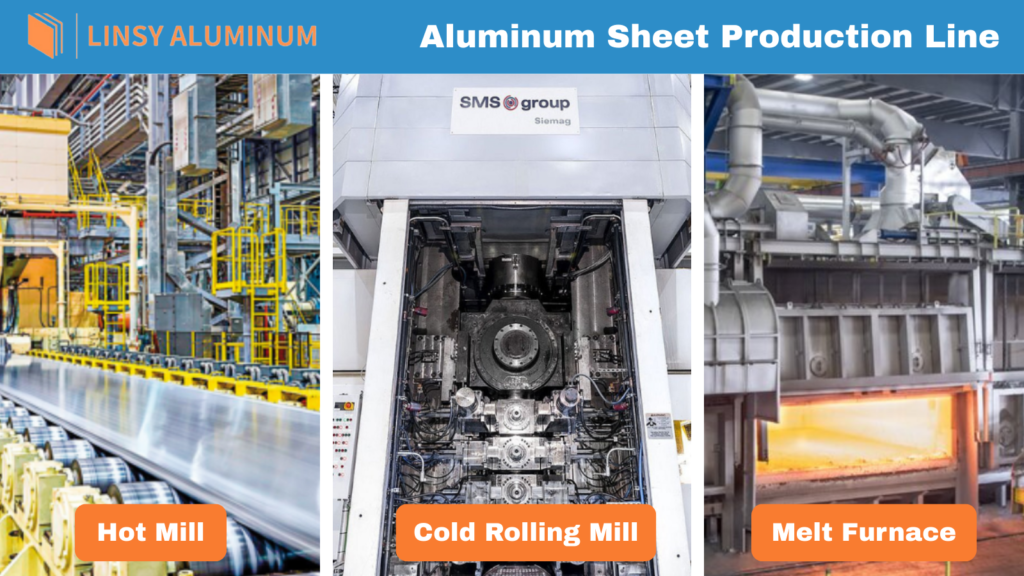
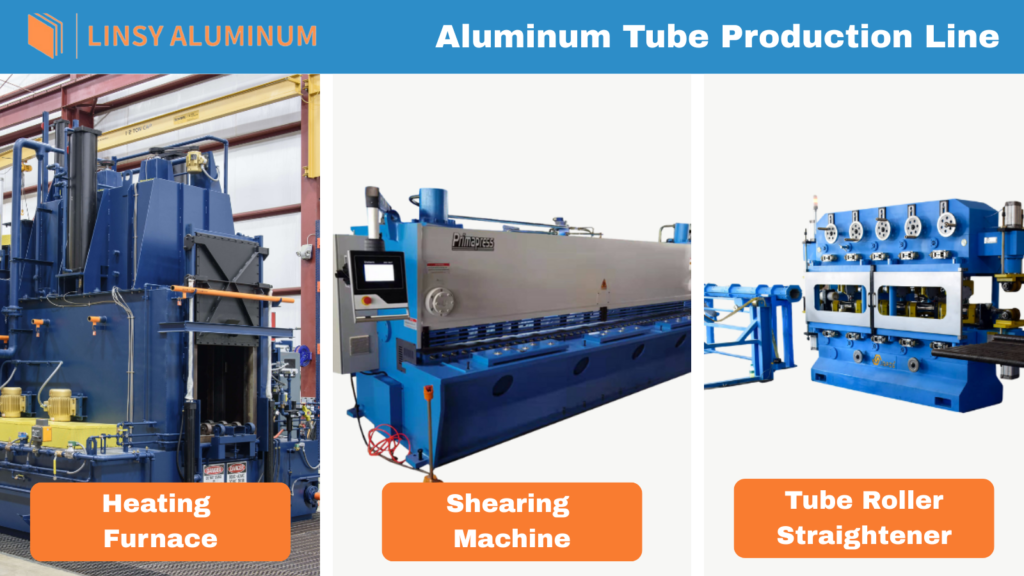
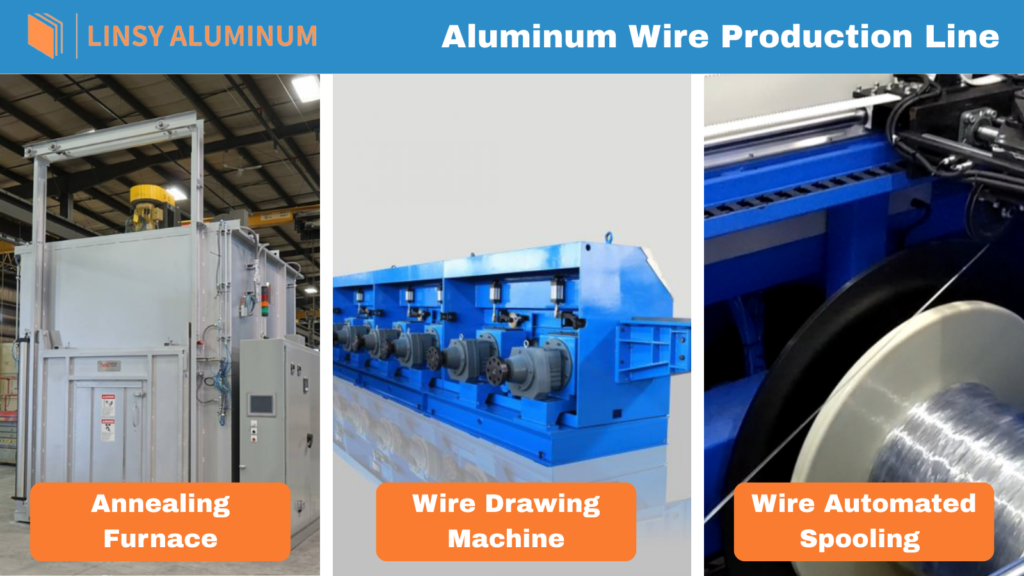
Linsy Aluminum es una fábrica de aluminio con sede en Shenzhen con más de 20 años de experiencia en la industria. Suministramos lámina, bobina, placa, tubo, barra y alambre de aluminio 3003 en toda la gama de temples — desde O hasta H18 y H112. Nuestro amplio inventario de especificaciones estándar de 3003 respalda el cumplimiento rápido de pedidos comunes, mientras que nuestra capacidad de producción personalizada con MOQ bajo (plazo de entrega de 10 a 60 días) maneja tamaños no estándar, temples especiales y compras de proyectos con especificaciones mixtas.
Nuestras capacidades de procesamiento internas — mecanizado CNC, corte por láser, soldadura TIG y MIG, anodizado y pulido — significan que puede obtener tanto el material como el procesamiento posterior de un solo proveedor. Cada pedido de 3003 se envía con un MTC emitido por la fábrica, e informes de prueba SGS de terceros están disponibles bajo solicitud.
Atendemos a compradores en todo el mundo, incluidos Europa, Sudáfrica, Brasil, Singapur, Turquía, Japón, Corea del Sur y otros mercados asiáticos, ofreciendo precios directos de fábrica y calidad trazable desde la materia prima hasta el producto terminado.
R: El aluminio 3003 se utiliza más comúnmente para paneles de techado y revestimiento, utensilios de cocina y equipos de procesamiento de alimentos, tanques de almacenamiento químico, componentes de intercambiadores de calor y fabricación general de lámina metálica. Su combinación de resistencia a la corrosión, conformabilidad y resistencia moderada lo hace adecuado para cualquier aplicación donde se requiera embutido profundo, hilado o conformado por rodillos sin necesidad de tratamiento térmico.
R: No. El 3003 es una aleación no tratable térmicamente — pertenece a la serie 3000 (Al-Mn). Su resistencia se desarrolla mediante trabajo en frío (endurecimiento por deformación), no mediante tratamiento térmico de solución y envejecimiento como el 6061 o 7075. El único proceso térmico aplicable al 3003 es el recocido (calentamiento a 340–410°C y luego enfriamiento), que devuelve el material a su condición de temple O blando.
R: El 3003-O es el temple completamente recocido (blando) con la menor resistencia (~110 MPa de tracción) pero máxima conformabilidad y capacidad de embutido profundo. El 3003-H14 está endurecido por deformación a condición de medio duro, ofreciendo aproximadamente 40% más resistencia a la tracción (~150 MPa) mientras conserva buena conformabilidad para la mayoría de las operaciones de lámina metálica. H14 es el temple más comúnmente almacenado para lámina de 3003 de uso general.
R: Sí. El 3003 está clasificado como altamente soldable mediante métodos TIG (GTAW), MIG (GMAW), oxiacetilénico y soldadura por resistencia. Se recomienda típicamente el metal de aporte 4043 o 1100. Sin embargo, tenga en cuenta que la zona afectada por el calor se ablandará en temples trabajados en frío — el área soldada vuelve a una resistencia cercana al temple O después de la soldadura.
R: Sí. La adición de 1,0–1,5% de manganeso en el 3003 proporciona aproximadamente un 20% más de resistencia que el 1100 (aluminio comercialmente puro) en todas las templezas, manteniendo una resistencia a la corrosión y conformabilidad muy similares. Esto convierte al 3003 en la mejora más común respecto al 1100 cuando se necesita una resistencia ligeramente superior.
R: Sí, el 3003 puede anodizarse, pero el acabado tendrá una apariencia grisácea o amarillenta en lugar del acabado brillante y claro de grados más puros como el 1100 o el 6063. Esto se debe al contenido de manganeso y hierro. El anodizado del 3003 es adecuado para aplicaciones protectoras o decorativas donde no se requiere un acabado brillante o de color uniforme.
R: Sí. Linsy emite un Certificado de Ensayo de Fábrica (MTC) con cada pedido de aluminio 3003, documentando la composición química, las propiedades mecánicas y los resultados de inspección dimensional del material específico enviado. También se pueden solicitar informes de ensayo de terceros SGS.
R: El equivalente europeo del 3003 es EN AW-3003, con la designación química EN AW-AlMn1Cu. Está cubierto por las normas EN 485 (chapa, banda y plancha), EN 573-3 (composición química), EN 754 (tubo estirado en frío) y EN 755 (barra y tubo extruido). Un grado europeo estrechamente relacionado es el 3103 (EN AW-AlMn1), que tiene un rango de manganeso ligeramente más amplio (0,9–1,5%). En la mayoría de las aplicaciones, el 3003 y el 3103 son funcionalmente intercambiables.
R: Linsy admite un MOQ bajo para artículos estándar en stock y pedidos de producción personalizados. El MOQ varía según la forma del producto, el tamaño y la templeza. Contacte con nuestro equipo de ventas con su especificación para obtener una cotización de MOQ específica.
R: Los artículos estándar en stock se envían en un plazo de 3 a 7 días. Los pedidos de producción personalizados generalmente requieren de 10 a 60 días, dependiendo de la aleación, las dimensiones, la templeza, los requisitos de procesamiento y la complejidad del pedido.
R: Sí, proporcionamos pequeñas piezas de muestra para evaluación de calidad. La disponibilidad de muestras depende del stock y las especificaciones. Contacte con nosotros con sus requisitos.
R: Aceptamos T/T (transferencia bancaria) y L/C (carta de crédito). Las condiciones de pago estándar son 30% de anticipo con el pedido y 70% antes del envío. Se pueden discutir condiciones personalizadas para asociaciones a largo plazo.
R: Enviamos a todo el mundo, incluidos Europa, Sudamérica, África, Oriente Medio y Asia. Las opciones de flete incluyen transporte marítimo, aéreo y servicios de mensajería, según el tamaño del pedido y la urgencia.
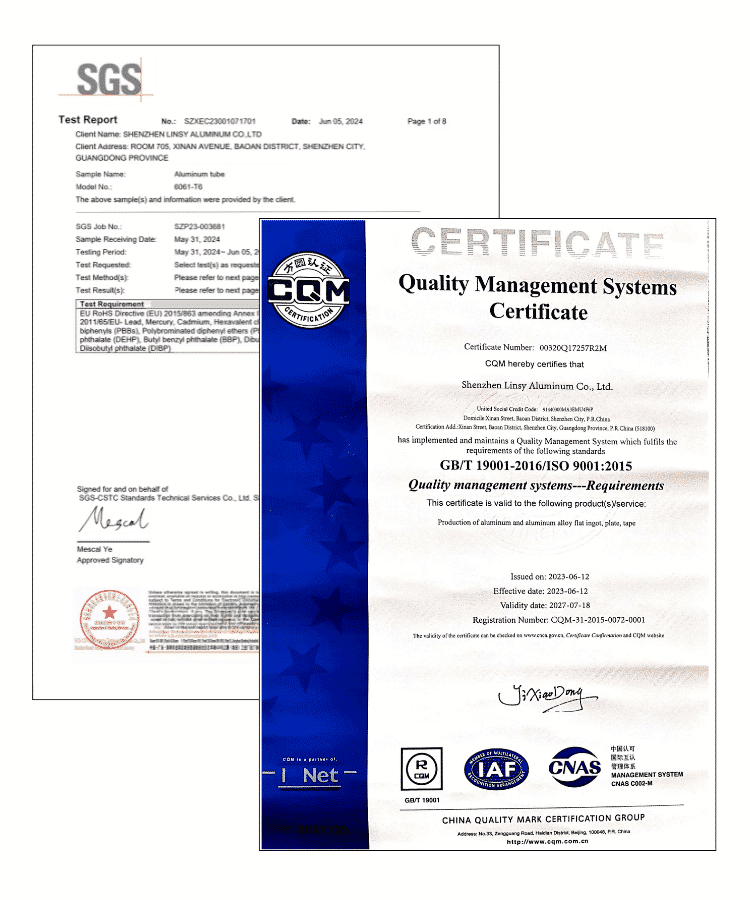
R: Sí. Todos los productos de aluminio de Linsy están respaldados por nuestro sistema de gestión de calidad (ISO 9001). Cada pedido es trazable a través de su MTC, y respondemos por la especificación del material y las tolerancias dimensionales documentadas en la confirmación del pedido.
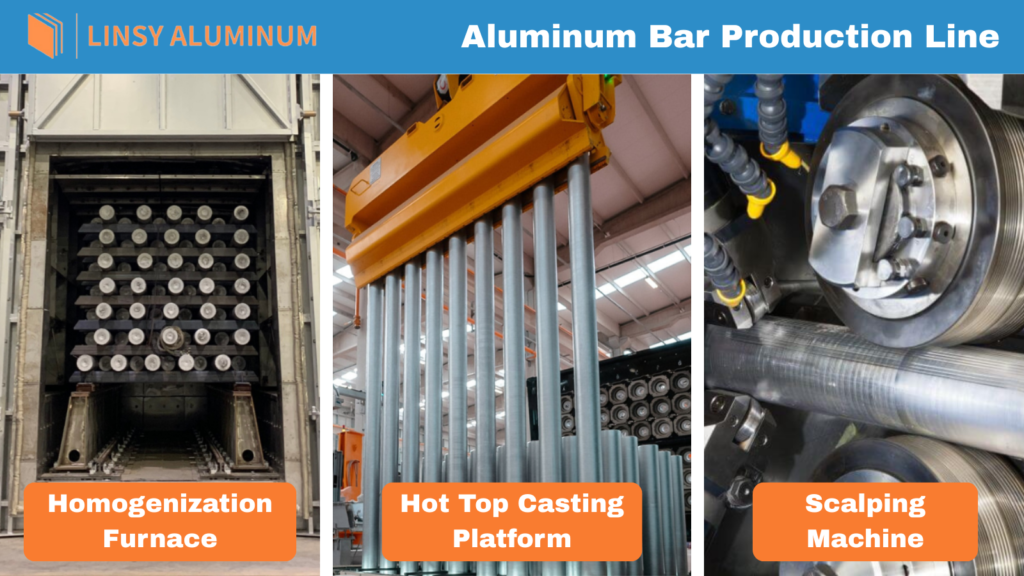
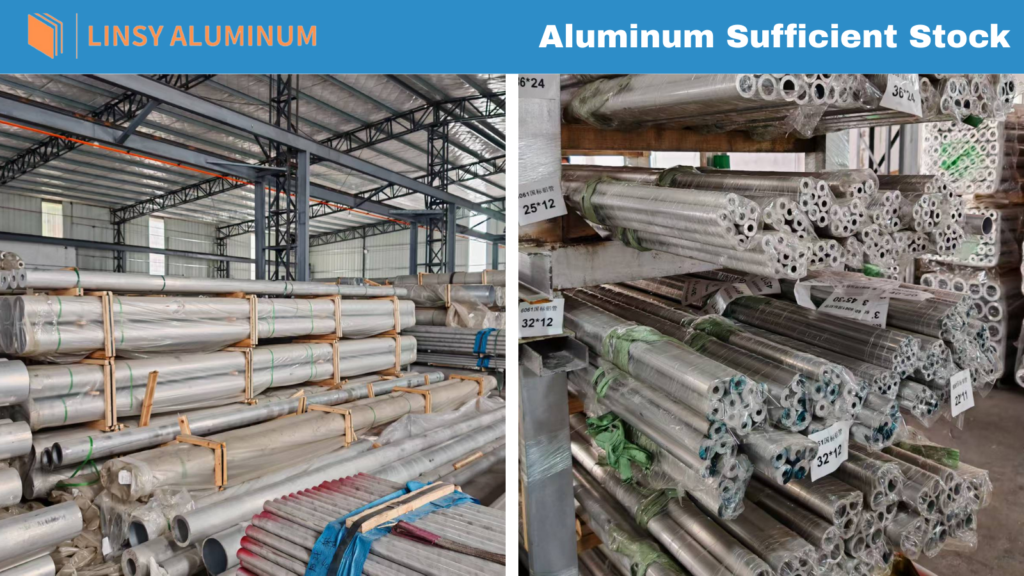
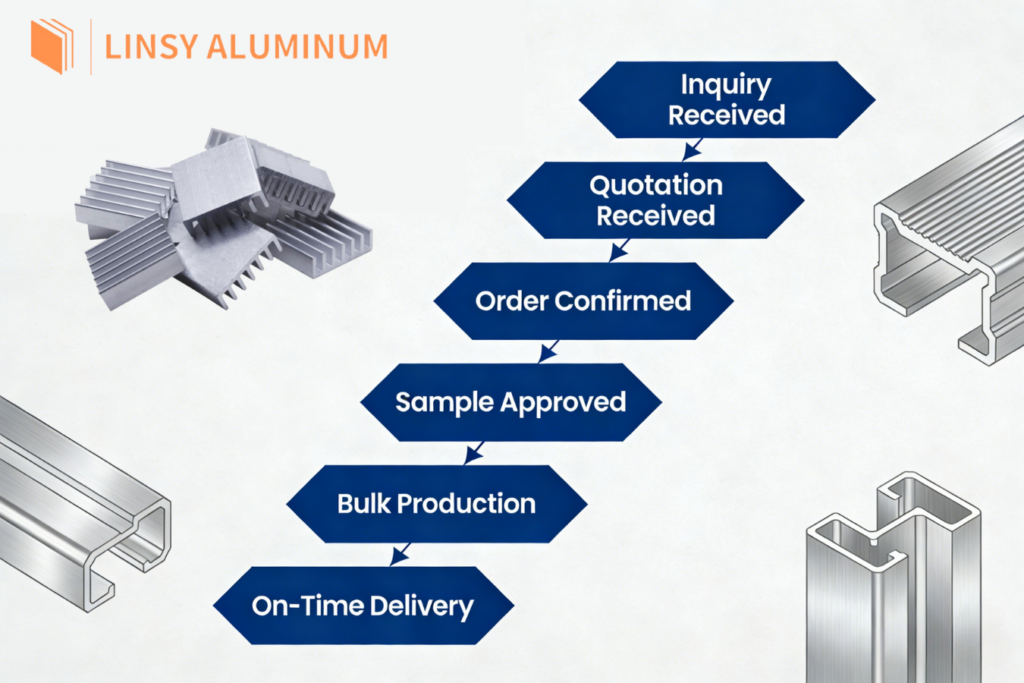
Ventajas de Linsy
Linsy Aluminum es un proveedor líder de productos de procesamiento de aluminio, que presta servicio a diversas industrias, como la aeroespacial, la ingeniería general, la automoción, la marina, la construcción naval y otras aplicaciones industriales especializadas.
Nos comprometemos a mantener los más altos estándares de calidad y responsabilidad medioambiental, como demuestran nuestras certificaciones: ISO 9001:2008, ISO 14001:2004 y SGS.