Что такое алюминий 1350?
1350 — это сплав серии 1xxx с минимальным содержанием алюминия 99,50%, и именно этот сплав Ассоциация алюминия обозначает как класс EC (Electrical Conductor — электрический проводник). Он не упрочняется термической обработкой — он приобретает свою небольшую прочность за счёт деформационного упрочнения при холодной обработке, а не за счёт закалки и старения, как сплавы серий 6xxx или 2xxx.
Именно в чистоте заключается весь смысл: содержание железа и кремния удерживается на низком уровне специально для защиты электропроводности, что делает 1350 стандартным выбором для проволоки, шин и обмоток трансформаторов, а не для конструкционных деталей. Определяющий компромисс — максимальная проводимость ценой низкой прочности — и именно поэтому выбранное вами состояние поставки (O для формовки, H19 для прочности) важнее любой другой спецификации.
Химический состав алюминия 1350
Состав 1350 регулируется почти исключительно предельными значениями примесей, поскольку основной металл уже содержит 99,5% алюминия. Железо и кремний — два элемента, наиболее вредно влияющие на проводимость, поэтому их пределы жёсткие.
| Элемент | Содержание (макс., если не указано иное) |
|---|---|
| Алюминий (Al) | Минимум 99,50% (остальное) |
| Кремний (Si) | 0.10% |
| Железо (Fe) | 0.40% |
| Медь (Cu) | 0.05% |
| Марганец (Mn) | 0.01% |
| Магний (Mg) | 0.01% |
| Хром (Cr) | 0.01% |
| Цинк (Zn) | 0.05% |
| Титан (Ti) | 0.02% |
| Прочие (каждый / всего) | 0.03% / 0.10% |
Соотношение железа и кремния также имеет практическое значение: для проводниковой проволоки класса EC обычно указывается контролируемое содержание Fe + Si таким образом, чтобы их сумма оставалась достаточно низкой для защиты проводимости. Для электротехнического применения приведённая выше таблица состава является основой для приёмки (ASTM B230 / B233, EN AW-1350, GB 1A35).
Физические и механические свойства алюминия 1350
Единственная характеристика, определяющая 1350, — это его электропроводность: гарантированный минимум 61,2% IACS (International Annealed Copper Standard — Международный стандарт отожжённой меди), обычно указываемый на уровне 61,8% IACS. Это наивысшая проводимость среди всех распространённых деформируемых алюминиевых сплавов и причина, по которой медь заменяется на 1350 в проводниках, где важен вес.
| Недвижимость | Значение |
|---|---|
| Плотность | 2,70 г/см³ |
| Интервал плавления | 646–657 °C |
| Электропроводность | ≥ 61,2% IACS (обычно 61,8% IACS) |
| Теплопроводность | ~234 Вт/(м·К) |
| Модуль упругости | ~68,9 ГПа |
| Предел прочности при растяжении, состояние O | 60–100 МПа |
| Предел прочности при растяжении, состояние H19 | 150–200 МПа |
| Предел текучести, состояние O | 20–50 МПа |
| Предел текучести, состояние H19 | 145–185 МПа |
| Относительное удлинение, O / H19 | ≥ 20% / ≥ 1,5% |
Проводимость остаётся практически постоянной во всех состояниях поставки — около 61,8% IACS как в O, так и в H19 — поэтому выбор H19 для прочности не снижает токонесущую способность. Приведённые выше механические значения относятся к проволоке по ASTM B230; лист и другие формы масштабируются по той же логике холодной обработки, но используют значения, специфичные для данной формы.
Обычные температуры алюминия 1350
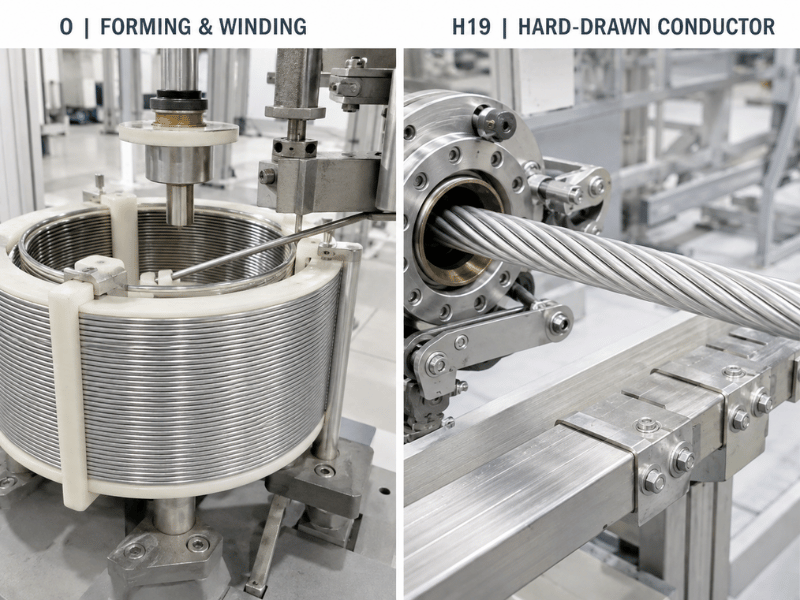
1350 упрочняется только холодной обработкой (деформационное упрочнение), никогда — термической обработкой. Начиная с полностью мягкого состояния O, каждая ступень H1x применяет большее обжатие и частичный отжиг для повышения прочности за счёт удлинения.
| Темпер | Степень деформационного упрочнения | Типичный предел прочности (МПа) | Лучшее для |
|---|---|---|---|
| O | Полностью отожжённый, мягкий | 60–100 | Волочение, намотка, крутые изгибы |
| H12–H18 | Прогрессирующая холодная обработка между O и H19 | Возрастает от ~90 до ~170 по всей линейке | Формованные проводники, требующие большей жёсткости, чем O |
| H19 | Полностью нагартованный (стандартная проволока EC) | 150–200 | Воздушные проводники, шины, жилы кабелей |
H19 — это коммерческая рабочая лошадка: это состояние поставки, указанное для твёрдотянутой проволоки EC в ASTM B230 и для концентрически скрученных многопроволочных проводников (AAC/ACSR) в ASTM B231. Если применение — это тянутая проволока, скрученный кабель или шина, H19 почти всегда является выбором. O зарезервировано для обмоточного провода, тонкого волочения и гибких проводников, где формовочная способность преобладает.
Критерии применимости: Да/Нет
Используйте этот список, чтобы решить, подходит ли 1350, прежде чем указывать его в спецификации.
Подходит — используйте 1350, когда:
- Максимальная электропроводность при минимальном весе является приоритетом — воздушные линии, шины и обмотки трансформаторов или двигателей, где 61,2% IACS важнее прочности.
- Деталь не является несущей и формуется или вытягивается в нужную форму — обмоточный провод, катушечная намотка и гибкие проводники используют преимущества формуемости состояния O.
- Коррозионная стойкость в обычных атмосферных или слабоагрессивных химических условиях достаточна — плёнка оксида чистого алюминия защищает открытые наружные проводники без покрытия.
- Требуется замена меди по весу или стоимости, и конструкция может принять более низкое соотношение проводимости алюминия к меди (~61% против 100% IACS).
Не подходит — не используйте 1350, когда:
- Компонент несёт механическую нагрузку — 1350-H19 достигает лишь около 150–200 МПа предела прочности при растяжении, что намного ниже конструкционных марок, таких как 6061-T6 (310 МПа) или 6082-T6.
- Твёрдость или износостойкость является требованием — сплав мягкий даже в состоянии H19 и будет задираться или царапаться при скользящем контакте.
- Рабочая температура высокая и прочность должна сохраняться — как и все алюминиевые сплавы, 1350 теряет заметную прочность выше примерно 150 °C, поэтому он не является высокотемпературным конструкционным материалом.
- Деталь требует нарезания резьбы, многократного изгиба под нагрузкой или обработанных путей передачи нагрузки — его низкий предел текучести и твёрдость делают его плохим конструкционным выбором.
Где применяется алюминий 1350
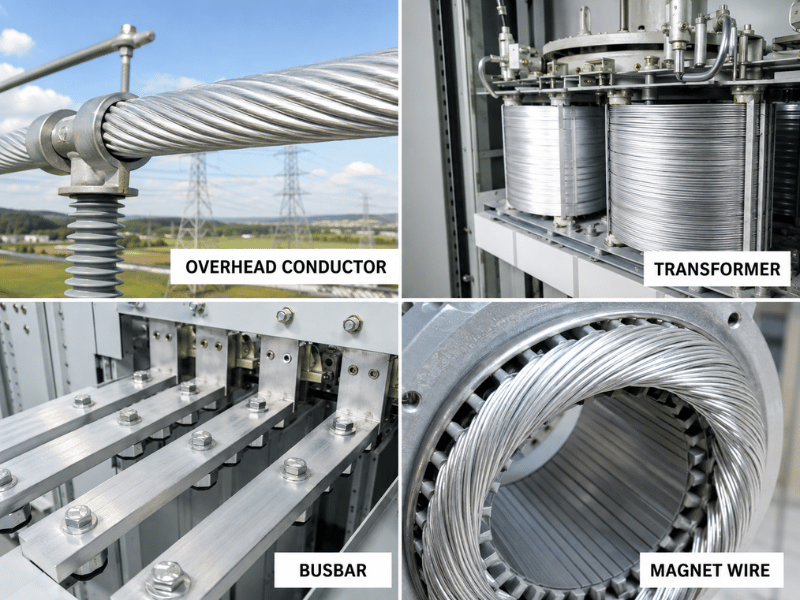
Приведённые выше критерии “подходит/не подходит” отделяют вопрос “стоит ли?” от вопроса «где?». Приведённый ниже список отображает системы, где 1350 является стандартной практикой.
Передача и распределение электроэнергии
Воздушные проводники — крупнейшее применение: линии из полностью алюминиевого провода (AAC) и алюминиевого провода со стальным сердечником (ACSR) изготавливаются из твёрдотянутых проволок 1350-H19, поскольку они передают наибольший ток на килограмм среди любого распространённого семейства воздушных проводников. Жилы подземных кабелей, шинные соединения подстанций и обмотки трансформаторов используют ту же проводимость класса EC, с проволокой состояния O там, где важна гибкость при монтаже.
Обмоточный провод, катушечная намотка и шины
Двигатели, генераторы и трансформаторы используют 1350-O для обмоточного провода и тонкой катушечной намотки, где решающее значение имеют предельная формуемость и наивысшая электропроводность. Шинопровод — как сплошной, так и многожильный — использует H19 для жёсткого распределения тока высокой силы в распределительных устройствах и силовой электронике. Для проволочных изделий класса EC см. у Linsy Алюминиевая проволока 1350-O/H19.
1350 vs 6061 vs 8000 — Как выбрать
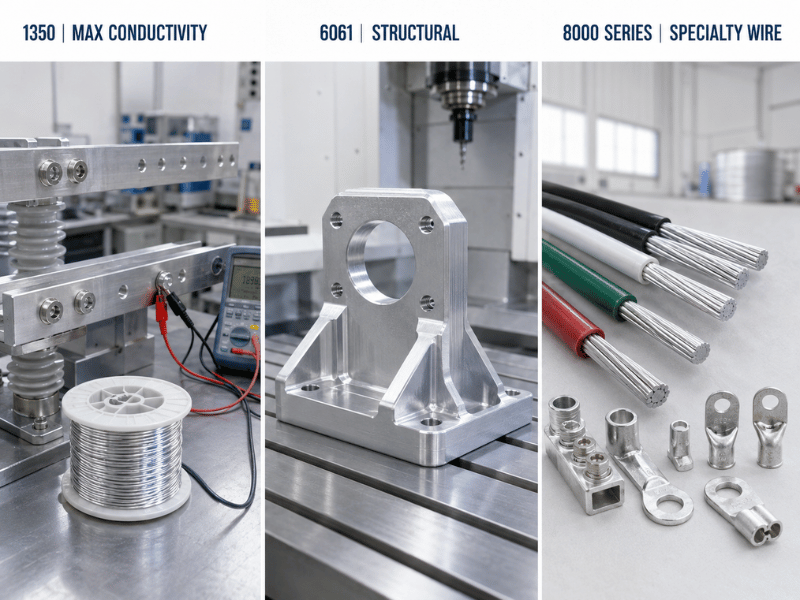
Эти три сплава не являются конкурентами; они отвечают на разные вопросы. 1350 — это класс электропроводности, 6061 — конструкционный класс, а серия 8000 занимает нишевые роли проводников.
| Недвижимость | 1350 (класс EC) | 6061-T6 | Проводниковые сплавы серии 8000 |
|---|---|---|---|
| Основная роль | Электропроводность | Конструкционная прочность | Специальные проводники (некоторые установочные провода) |
| Электропроводность | 61,2% IACS (мин.) | ~40% IACS | Как правило, ниже 61,2% IACS |
| Предел прочности при растяжении | 60–200 МПа (в зависимости от состояния) | 310 МПа | ~100–200 МПа |
| Термическая обработка | Нет (только наклёп) | Да (T6) | Зависит от сплава |
| Устойчивость к коррозии | Высокая (чистота) | Высокая (ниже, чем у 1350) | Хорошая, зависит от сплава |
| Типичное применение | Проволока, шинопровод, обмотки | Рамы, обработанные детали | Конкретные характеристики проводников серии 8000 |
Выбирайте 1350, когда ограничением является электропроводность на единицу веса. Выбирайте 6061-T6, когда деталь должна нести нагрузку и предполагается сварка или механическая обработка. Рассматривайте сплав серии 8000 (например, 8176 или 8130 для установочных проводов) только тогда, когда спецификацию определяет конкретный стандарт или преимущество легирования — а не более высокая электропроводность; 1350 по-прежнему лидирует по чистой производительности IACS. Для конструкционной альтернативы см. страницу алюминиевого сплава 6061.
Работа с алюминием 1350
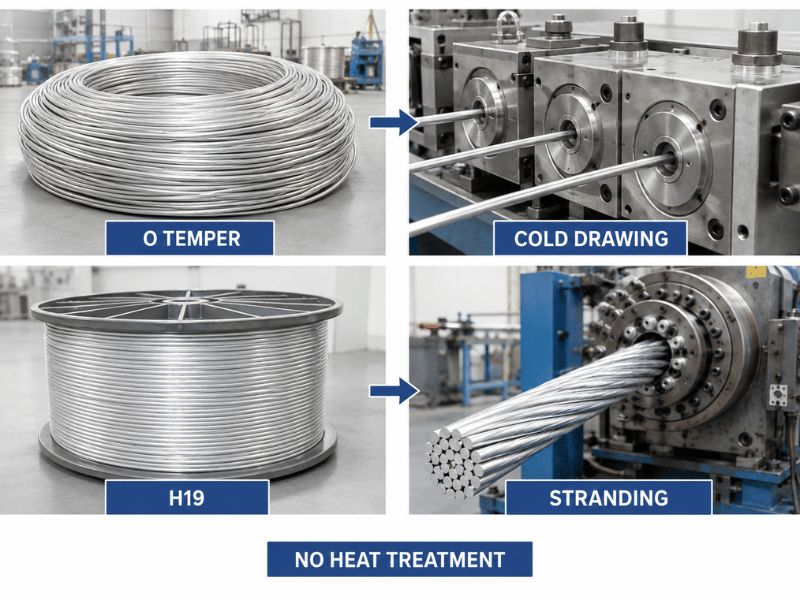
Формовка и волочение: В состоянии O сплав 1350 чрезвычайно технологичен — он без труда волочится, гнётся и наматывается, поэтому он является стандартным выбором для обмоточного провода и тонких проводников. H19 теряет большую часть этой пластичности (удлинение падает примерно до 1,5%), поэтому формуйте его до окончательного упрочнения или используйте его в состоянии после волочения.
Сварка и соединение: 1350 хорошо сваривается методами сопротивления (используется для соединения проводников) и может соединяться MIG/TIG с соответствующим присадочным материалом, хотя сварка нечасто применяется в стандартном производстве проводников. Обратите внимание, что сварка не выполняет термическую обработку сплава — состояния T для восстановления не существует.
Коррозионная защита: Высокая чистота обеспечивает сплаву 1350 превосходную атмосферостойкость благодаря естественной оксидной плёнке, поэтому большинство наружных проводниковых применений не требуют покрытия. В хлоридных или промышленных средах применяются те же анодирование, окраска или изоляционные трубки, что и для других алюминиевых сплавов.
Без термической обработки: Поскольку 1350 не упрочняется термической обработкой, прочность обеспечивается только наклёпом. Любой отжиг возвращает его к состоянию O; восстановление H19 требует повторного волочения, а не печной обработки. Планируйте технологический маршрут изготовления с учётом конечного состояния.
Преимущества и ограничения вкратце
| Размер | Прочность | Ограничение |
|---|---|---|
| Электропроводность | Наивысшая среди любых распространённых алюминиевых сплавов (≥61,2% IACS) | Всё ещё ~61% от меди — не замена меди там, где пространство фиксировано |
| Вес | ~1/3 веса меди при равном токе | Низкая прочность ограничивает конструкционное применение |
| Формуемость (O) | Отличная для волочения и намотки | H19 хрупок при крутых изгибах |
| Устойчивость к коррозии | Высокая благодаря чистоте, покрытие на открытом воздухе не требуется | Мягкая поверхность задирается при скользящем износе |
| Стоимость | Дешевле и легче медных проводников | Низкие механические свойства ограничивают области применения |
| Доступность | Стандартный класс EC, широкое предложение от заводов | Не является складским конструкционным сортаментом |
Заключение
Алюминий 1350 обеспечивает наивысшую электропроводность среди любых основных деформируемых алюминиевых сплавов — гарантированный минимум 61,2% IACS — но его компромисс заключается в низкой прочности и твёрдости, что исключает его для несущих деталей. Это делает его правильным выбором для проводников, шинопровода и обмоток и неправильным выбором для всего конструкционного.
Linsy Aluminum, завод в Шэньчжэне с более чем 20-летним опытом, поставляет 1350 в виде проволоки, шинопровода, листа и рулона по всей серии 1000–8000, включая проволоку класса EC 1350-O и 1350-H19, с полной документацией MTC на каждый заказ и отчётами об испытаниях SGS по запросу; типичный срок изготовления на заказ составляет 10–60 дней с поддержкой низкого MOQ для нестандартных размеров. Когда спецификация требует 1350 класса EC, отправьте чертёж или спецификацию проводника для проверки сплава и состояния.
Часто задаваемые вопросы
В чём разница между 1350-O и 1350-H19?
1350-O полностью отожжён и мягок, с удлинением 20% и более — лучше всего подходит для волочения, намотки и крутых изгибов. 1350-H19 полностью нагартован до предела прочности 150–200 МПа, стандартное состояние для воздушных проводников и шинопровода, где прочность важнее формуемости. Электропроводность одинакова (~61,8% IACS) в обоих случаях.
Подходит ли алюминий 1350 для конструкционных применений?
Нет. Даже в состоянии H19 сплав 1350 достигает лишь около 150–200 МПа предела прочности, что намного ниже конструкционных сплавов, таких как 6061-T6 (310 МПа). Это проводниковый класс, а не конструкционный, и его следует ограничивать не несущими электрическими применениями.
В чем разница между алюминием 1350 и 1370?
Оба являются чистыми сплавами класса EC, но 1370 имеет более высокую минимальную чистоту — 99,70% алюминия против 99,50% у 1350, что даёт немного лучшую электропроводность. Оба служат для электрических проводников; 1370 указывается в спецификации, когда применение требует более высокого класса чистоты.
Можно ли термически обработать алюминий 1350 для повышения прочности?
Нет. 1350 не является термически упрочняемым сплавом — он повышает прочность только за счёт деформационного наклона при холодной обработке (состояния H1x). Отжиг возвращает его к состоянию O, а для восстановления H19 требуется повторная холодная прокатка, а не печной цикл.
В чём разница между алюминием 1350 и 1050?
Оба представляют собой чистые сплавы с минимальным содержанием 99,51 TP3T, но 1350 оптимизирован для электротехнического применения с низким содержанием железа и кремния для сохранения электропроводности, тогда как 1050 — это универсальный чистый сорт. Выбирайте 1350, когда приоритетом является электротехническая характеристика, и 1050 — для общего формования и изготовления.