Co je hliník 1350?
1350 je slitina řady 1xxx s minimálním obsahem hliníku 99,50 %, kterou Asociace hliníku označuje jako třídu EC (Electrical Conductor). Není vytvrzovatelná tepelným zpracováním — svou nepatrnou pevnost získává deformačním zpevněním za studena, nikoli rozpouštěcím žíháním a stárnutím jako slitiny řady 6xxx nebo 2xxx.
Právě tato čistota je klíčová: obsah železa a křemíku je držen na nízkých limitech speciálně kvůli ochraně elektrické vodivosti, což činí ze slitiny 1350 standardní volbu pro dráty, přípojnice a vinutí transformátorů, nikoli pro konstrukční díly. Definujícím kompromisem je maximální vodivost na úkor nízké pevnosti — a právě proto je volba stavu (O pro tváření, H19 pro pevnost) důležitější než jakákoli jiná specifikace.
Chemické složení hliníku 1350
Slitina 1350 je řízena téměř výhradně horními limity nečistot, protože základní kov je již z 99,5 % hliník. Železo a křemík jsou dva prvky nejvíce poškozující vodivost, proto jsou jejich limity přísné.
| Prvek | Obsah (max., pokud není uvedeno jinak) |
|---|---|
| Hliník (Al) | Minimálně 99,50 % (zbytek) |
| Křemík (Si) | 0.10% |
| Železo (Fe) | 0.40% |
| Měď (Cu) | 0.05% |
| Mangan (Mn) | 0.01% |
| Hořčík (Mg) | 0.01% |
| Chrom (Cr) | 0.01% |
| Zinek (Zn) | 0.05% |
| Titan (Ti) | 0.02% |
| Ostatní (každý / celkem) | 0.03% / 0.10% |
Poměr železa ke křemíku je důležitý i v praxi: vodičové dráty třídy EC se obvykle specifikují s kontrolovaným obsahem Fe + Si tak, aby jejich součet zůstal dostatečně nízký pro ochranu vodivosti. Pro elektrické použití je výše uvedená tabulka složení základem pro přejímku (ASTM B230 / B233, EN AW-1350, GB 1A35).
Fyzikální a mechanické vlastnosti hliníku 1350
Jediným číslem, které definuje slitinu 1350, je její elektrická vodivost — garantované minimum 61,2 % IACS (International Annealed Copper Standard), běžně specifikované na 61,8 % IACS. Jedná se o nejvyšší vodivost ze všech běžných tvářených hliníkových slitin a důvod, proč je měď nahrazována slitinou 1350 ve vodičích citlivých na hmotnost.
| Majetek | Hodnota |
|---|---|
| Hustota | 2,70 g/cm³ |
| Rozsah tavení | 646–657 °C |
| Elektrická vodivost | ≥ 61,2 % IACS (běžně 61,8 % IACS) |
| Tepelná vodivost | ~234 W/(m·K) |
| Modul pružnosti | ~68,9 GPa |
| Pevnost v tahu, stav O | 60–100 MPa |
| Pevnost v tahu, stav H19 | 150–200 MPa |
| Mez kluzu, stav O | 20–50 MPa |
| Mez kluzu, stav H19 | 145–185 MPa |
| Tažnost, O / H19 | ≥ 20 % / ≥ 1,5 % |
Vodivost zůstává v podstatě konstantní napříč stavy — přibližně 61,8 % IACS jak ve stavu O, tak H19 — takže volba H19 pro pevnost neznamená ztrátu proudové zatížitelnosti. Výše uvedené mechanické hodnoty platí pro drát dle ASTM B230; plech a jiné formy se řídí stejnou logikou deformačního zpevnění, ale používají hodnoty specifické pro danou formu.
Běžné teploty hliníku 1350
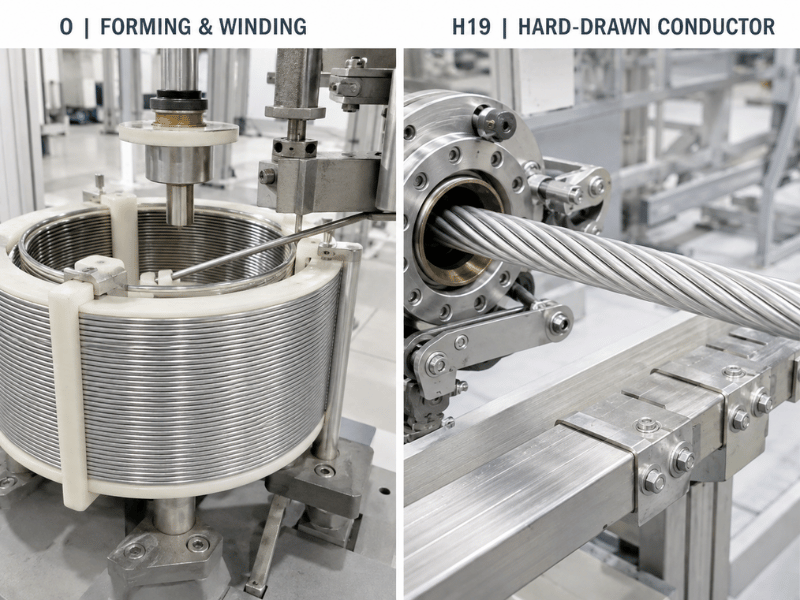
Slitina 1350 se zpevňuje pouze tvářením za studena (deformačním zpevněním), nikdy tepelným zpracováním. Počínaje plně měkkým stavem O každý stupeň H1x aplikuje větší redukci a částečné žíhání pro zvýšení pevnosti na úkor tažnosti.
| Temperament | Stupeň deformačního zpevnění | Typická pevnost v tahu UTS (MPa) | Nejlepší pro |
|---|---|---|---|
| O | Plně žíhaný, měkký | 60–100 | Tažení, navíjení, těsné ohyby |
| H12–H18 | Postupné tváření za studena mezi O a H19 | Stoupá z ~90 směrem k ~170 napříč stupnicí | Tvarovaní vodiči vyžadující větší tuhost než O |
| H19 | Plně tvrzený (standardní EC drát) | 150–200 | Nadzemní vodiče, přípojnice, jádra kabelů |
H19 je komerční pracovní kůň: je to stav specifikovaný pro tvrdě tažený EC drát v ASTM B230 a pro koncentricky lanované vodiče (AAC/ACSR) v ASTM B231. Pokud je aplikací tažený drát, lanovaný kabel nebo přípojnice, H19 je téměř vždy správná volba. O je vyhrazen pro drát pro vinutí, jemné tažení a flexibilní vodiče, kde dominuje tvařitelnost.
Kritéria použití / nepoužití
Použijte tento seznam k rozhodnutí, zda se 1350 hodí, než ji specifikujete.
Ano — použijte 1350, když:
- Maximální elektrická vodivost při minimální hmotnosti je prioritou — nadzemní vedení, přípojnice a vinutí transformátorů nebo motorů, kde 61,2 % IACS záleží více než pevnost.
- Díl je nekonstrukční a tvarovaný nebo tažený do formy — drát pro vinutí, cívkové vinutí a flexibilní vodiče využívají tvařitelnost stavu O.
- Odolnost proti korozi v běžné atmosféře nebo mírně chemickém prostředí je dostačující — oxidový film čistého hliníku chrání exponované venkovní vodiče bez povlaku.
- Je požadována náhrada mědi z důvodu hmotnosti nebo nákladů a konstrukce může přijmout nižší poměr vodivosti hliníku k mědi (~61 % vs 100 % IACS).
Ne — nepoužívejte 1350, když:
- Komponenta přenáší mechanické zatížení — 1350-H19 dosahuje pouze přibližně 150–200 MPa pevnosti v tahu, daleko pod konstrukčními třídami jako 6061-T6 (310 MPa) nebo 6082-T6.
- Tvrdost nebo odolnost proti opotřebení je požadavkem — slitina je měkká i ve stavu H19 a při kluzném kontaktu se bude zadírat nebo škrábat.
- Provozní teplota je vysoká a pevnost musí vydržet — jako všechny hliníkové slitiny, 1350 ztrácí znatelnou pevnost nad přibližně 150 °C, takže není vysokoteplotním konstrukčním materiálem.
- Díl vyžaduje závitování, opakované ohýbání pod zatížením nebo obráběné nosné dráhy — jeho nízká mez kluzu a tvrdost z něj činí špatnou konstrukční volbu.
Kde se hliník 1350 používá
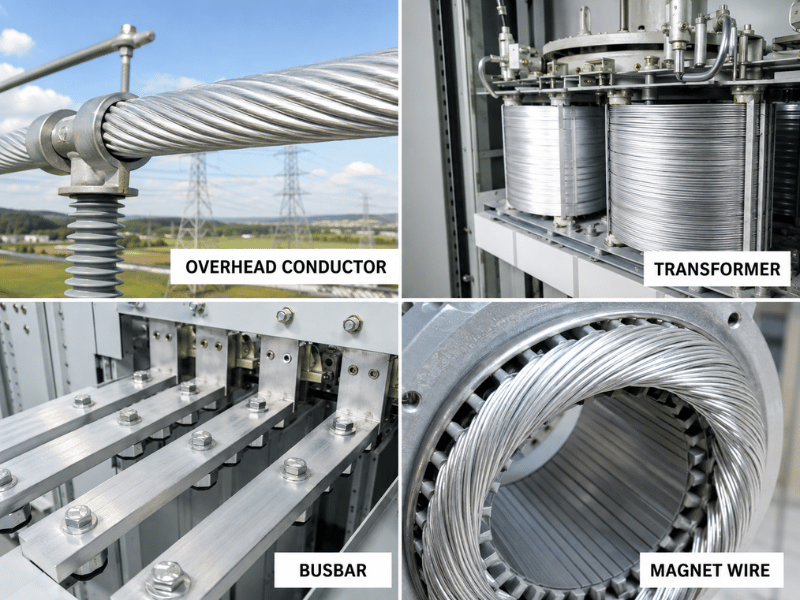
Výše uvedená kritéria Ano/Ne oddělují “měl bych?” od “kde?”. Níže uvedený seznam mapuje systémy, kde je 1350 standardní praxí.
Přenos a distribuce elektrické energie
Nadzemní vodiče jsou největším využitím: vedení z čistého hliníku (AAC) a hliníku s ocelovým jádrem (ACSR) se staví z tvrdě tažených drátů 1350-H19, protože přenášejí nejvíce proudu na kilogram ze všech běžných rodin nadzemních vodičů. Jádra podzemních kabelů, přípojnicové rozvody v rozvodnách a vinutí transformátorů používají stejnou vodivost třídy EC, s drátem stavu O tam, kde záleží na flexibilitě při instalaci.
Drát pro vinutí, cívkové vinutí a přípojnice
Motory, generátory a transformátory používají 1350-O pro magnetický drát a jemné vinutí cívek, kde vítězí extrémní tvařitelnost a nejvyšší vodivost. Přípojnicové sběrnice — jak plné, tak lanované — používají H19 pro tuhou distribuci vysokých proudů v rozváděčích a výkonové elektronice. Pro drátěné formy třídy EC viz Linsyho 1350-O/H19 hliníkový drát.
1350 vs 6061 vs 8000 — Jak vybrat
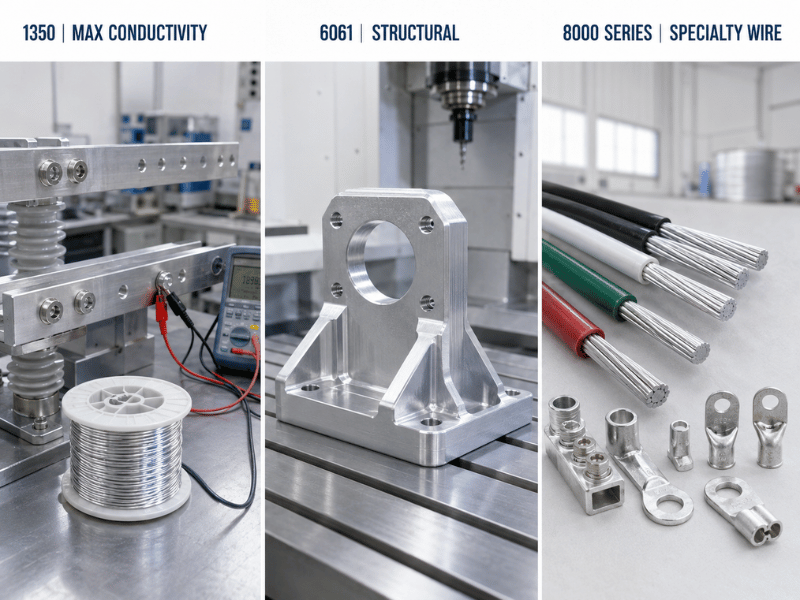
Tyto tři nejsou konkurenty; odpovídají na různé otázky. 1350 je jakost pro vodivost, 6061 je konstrukční jakost a řada 8000 plní specifické role vodičů.
| Majetek | 1350 (třída EC) | 6061-T6 | Jakosti vodičů řady 8000 |
|---|---|---|---|
| Primární role | Elektrická vodivost | Konstrukční pevnost | Speciální vodiče (některé instalační dráty) |
| Elektrická vodivost | 61,2% IACS (min.) | ~40 % IACS | Obvykle pod 61,2% IACS |
| Pevnost v tahu | 60–200 MPa (podle stavu) | 310 MPa | ~100–200 MPa |
| Tepelné zpracování | Ne (pouze za studena tvářené) | Ano (T6) | Liší se podle jakosti |
| Odolnost proti korozi | Vysoká (čistota) | Vysoká (méně než 1350) | Dobrá, závislá na slitině |
| Typické použití | Drát, přípojnicová sběrnice, vinutí | Rámy, obráběné díly | Specifické specifikace vodičů 8000 |
Zvolte 1350, když je omezením vodivost na jednotku hmotnosti. Zvolte 6061-T6, když díl musí přenášet zatížení a je zapotřebí svařování nebo obrábění. Zvažte jakost řady 8000 (například instalační drát 8176 nebo 8130) pouze tehdy, když specifikaci řídí specifická norma nebo přínos legování — nikoli vyšší vodivost; 1350 stále vede v čistém výkonu IACS. Pro konstrukční alternativu viz stránka hliníkové slitiny 6061.
Práce s hliníkem 1350
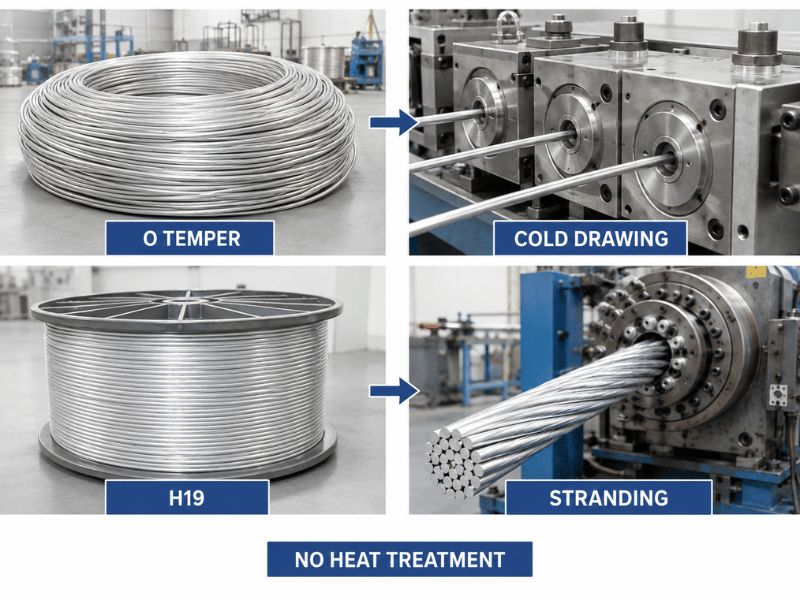
Tváření a tažení: Ve stavu O je 1350 extrémně tvařitelný — táhne se, ohýbá a navíjí bez obtíží, což je důvod, proč je výchozí volbou pro magnetický drát a jemné vodiče. H19 ztrácí většinu této tažnosti (tažnost klesá na přibližně 1,5%), takže tvarujte před konečným zpevněním nebo použijte ve stavu po tažení.
Svařování a spojování: 1350 se dobře svařuje odporovými metodami (používá se pro spojování vodičů) a lze jej spojovat MIG/TIG s vhodným přídavným materiálem, ačkoli svařování je při standardní výrobě vodičů neobvyklé. Upozorňujeme, že svařování slatinu tepelně nezpracovává — neexistuje žádný T-stav, který by se dal obnovit.
Ochrana proti korozi: Vysoká čistota dává 1350 vynikající odolnost proti atmosférické korozi díky přirozenému oxidovému filmu, takže většina venkovních vodičů nevyžaduje povlak. V chloridovém nebo průmyslovém prostředí platí stejné eloxování, lakování nebo opláštění jako u jiných hliníkových jakostí.
Žádné tepelné zpracování: Protože 1350 není tepelně zpracovatelný, pevnost pochází pouze ze tváření za studena. Jakýkoli žíhací krok jej vrací směrem ke stavu O; obnovení H19 vyžaduje opětovné tažení, nikoli tepelné zpracování v peci. Naplánujte výrobní postup s ohledem na konečný stav.
Výhody a omezení na první pohled
| Rozměr | Síla | Omezení |
|---|---|---|
| Elektrická vodivost | Nejvyšší ze všech běžných hliníkových slitin (≥61,2% IACS) | Stále ~61% mědi — není náhradou mědi tam, kde je prostor pevně daný |
| Hmotnost | ~1/3 hmotnosti mědi při stejném proudu | Nízká pevnost omezuje konstrukční použití |
| Tvařitelnost (O) | Vynikající pro tažení a navíjení | H19 je křehký při těsných ohybech |
| Odolnost proti korozi | Vysoká díky čistotě, venku není potřeba povlak | Měkký povrch se zadírá při kluzném opotřebení |
| Náklady | Levnější a lehčí než měděné vodiče | Nízké mechanické vlastnosti omezují aplikace |
| Dostupnost | Standardní jakost EC, široká nabídka z hutí | Není skladová jakost konstrukčních profilů |
Závěr
Hliník 1350 poskytuje nejvyšší vodivost ze všech běžných tvářených hliníkových slitin — garantované minimum 61,2% IACS — ale jeho kompromisem je nízká pevnost a tvrdost, které jej vylučují pro nosné díly. To z něj činí správnou volbu pro vodiče, přípojnicové sběrnice a vinutí a špatnou volbu pro cokoli konstrukčního.
Linsy Aluminum, továrna se sídlem v Shenzhenu s více než 20 lety zkušeností, dodává 1350 ve formě drátu, přípojnicových sběrnic, plechů a svitků napříč řadami 1000–8000, včetně 1350-O a 1350-H19 ec drátu, s úplnou dokumentací MTC ke každé objednávce a testovacími zprávami SGS na vyžádání; typická dodací lhůta pro zakázkovou výrobu je 10–60 dní s podporou nízkého MOQ pro nestandardní rozměry. Když specifikace vyžaduje 1350 třídy EC, zašlete výkres nebo specifikaci vodiče pro posouzení jakosti a stavu.
Často kladené otázky
Jaký je rozdíl mezi 1350-O a 1350-H19?
1350-O je plně žíhaný a měkký, s tažností 20% nebo více — nejlepší pro tažení, navíjení a těsné ohyby. 1350-H19 je plně zpevněný deformačním zpevněním na pevnost v tahu 150–200 MPa, standardní stav pro venkovní vodiče a přípojnicové sběrnice, kde je pevnost důležitější než tvařitelnost. Vodivost je u obou stejná (~61,8% IACS).
Je hliník 1350 vhodný pro konstrukční aplikace?
Ne. I při H19 dosahuje 1350 pouze přibližně 150–200 MPa pevnosti v tahu, což je hluboko pod konstrukčními jakostmi, jako je 6061-T6 (310 MPa). Je to jakost pro vodiče, nikoli konstrukční jakost, a měla by být omezena na elektrické aplikace bez přenášení zatížení.
Jaký je rozdíl mezi hliníkem 1350 a 1370?
Obě jsou čisté slitiny třídy EC, ale 1370 má vyšší minimální čistotu 99,70% hliníku oproti 99,50% u 1350, což dává mírně lepší vodivost. Obě slouží jako elektrické vodiče; 1370 se specifikuje, když aplikace vyžaduje jakost s vyšší čistotou.
Lze hliník 1350 tepelně zpracovat pro zvýšení pevnosti?
Ne. 1350 není tepelně zpracovatelná slitina — pevnosti nabývá pouze deformačním zpevněním za studena (stavitelné stavy H1x). Žíháním se vrací směrem k O a obnovení H19 vyžaduje opětovné tažení za studena, nikoli pecní cyklus.
Jaký je rozdíl mezi hliníkem 1350 a 1050?
Obě jsou slitiny s minimální čistotou 99,51 TP3T, ale 1350 je uzpůsoben pro elektrické použití s nízkým obsahem železa a křemíku pro ochranu vodivosti, zatímco 1050 je univerzální čistá jakost. Zvolte 1350, když je prioritou elektrický výkon, a 1050 pro obecné tváření a zpracování.