1350 Alüminyum Nedir?
1350, minimum ,50 alüminyum içeriğine sahip 1xxx serisi bir alaşımdır ve Alüminyum Birliği'nin EC (Elektrik İletkeni) sınıfı olarak tanımladığı alaşımdır. Isıl işlem uygulanabilir değildir — sahip olduğu az miktardaki mukavemeti, 6xxx veya 2xxx alaşımları gibi çözelti işlemi ve yaşlandırma yoluyla değil, soğuk işlem gerinim sertleşmesi yoluyla kazanır.
Bu saflık asıl meseledir: demir ve silikon, özellikle elektriksel iletkenliği korumak için düşük sınırlarda tutulur; bu da 1350'yi yapısal parçalar yerine tel, bara ve transformatör sargıları için standart tercih haline getirir. Belirleyici ödünleşim, düşük mukavemet pahasına maksimum iletkenliktir — ve bu ödünleşim, seçtiğiniz temperin (şekillendirme için O, mukavemet için H19) diğer tüm spesifikasyonlardan neden daha önemli olduğunun tam sebebidir.
1350 Alüminyum Kimyasal Bileşimi
1350 neredeyse tamamen safsızlık üst sınırlarıyla kontrol edilir, çünkü ana metal zaten ,5 alüminyumdur. Demir ve silikon, iletkenliğe en çok zarar veren iki elementtir, bu nedenle sınırları dardır.
| Element | İçerik (belirtilmediği sürece maksimum) |
|---|---|
| Alüminyum (Al) | Minimum ,50 (denge) |
| Silisyum (Si) | 0.10% |
| Demir (Fe) | 0.40% |
| Bakır (Cu) | 0.05% |
| Manganez (Mn) | 0.01% |
| Magnezyum (Mg) | 0.01% |
| Krom (Cr) | 0.01% |
| Çinko (Zn) | 0.05% |
| Titanyum (Ti) | 0.02% |
| Diğerleri (her biri / toplam) | 0.03% / 0.10% |
Demir-silikon oranı da pratikte önemlidir: EC sınıfı iletken tel genellikle Fe + Si toplamı iletkenliği koruyacak kadar düşük kalacak şekilde kontrol edilerek spesifiye edilir. Elektriksel kullanım için yukarıdaki bileşim tablosu kabul esasıdır (ASTM B230 / B233, EN AW-1350, GB 1A35).
1350 Alüminyum Fiziksel ve Mekanik Özellikleri
1350'yi tanımlayan tek sayı elektriksel iletkenliğidir — garantili minimum ,2 IACS (Uluslararası Tavlanmış Bakır Standardı), yaygın olarak ,8 IACS olarak spesifiye edilir. Bu, herhangi bir ana akım dövme alüminyum alaşımının en yüksek iletkenliğidir ve ağırlığa duyarlı iletkenlerde bakırın 1350 ile ikame edilmesinin sebebidir.
| Mülkiyet | Değer |
|---|---|
| Yoğunluk | 2,70 g/cm³ |
| Erime aralığı | 646–657 °C |
| Elektriksel iletkenlik | ≥ ,2 IACS (yaygın olarak ,8 IACS) |
| Termal iletkenlik | ~234 W/(m·K) |
| Elastisite modülü | ~68,9 GPa |
| Çekme mukavemeti, O temper | 60–100 MPa |
| Çekme mukavemeti, H19 temperi | 150–200 MPa |
| Akma mukavemeti, O temperi | 20–50 MPa |
| Akma mukavemeti, H19 temperi | 145–185 MPa |
| Uzama, O / H19 | ≥ / ≥ %1,5 |
İletkenlik temperler arasında esasen sabit kalır — hem O hem de H19'da yaklaşık ,8 IACS — bu nedenle mukavemet için H19 seçmek akım taşıma kapasitesinden feragat etmenize neden olmaz. Yukarıdaki mekanik değerler ASTM B230'a göre tel içindir; levha ve diğer formlar aynı soğuk işlem mantığıyla ölçeklenir ancak forma özgü değerler kullanır.
1350 Alüminyumun Yaygın Sıcaklıkları
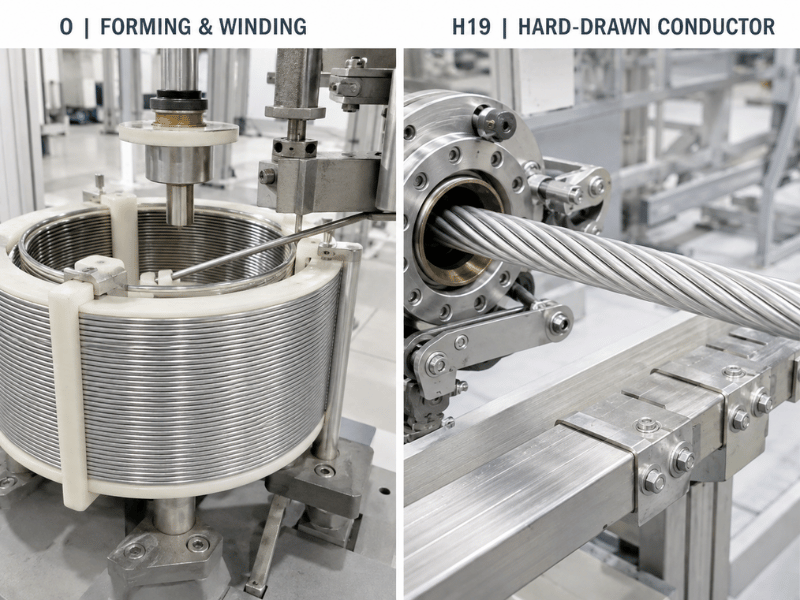
1350 yalnızca soğuk işlem (gerinim sertleşmesi) ile güçlendirilir, asla ısıl işlem ile değil. Tamamen yumuşak O durumundan başlayarak, her H1x adımı uzama pahasına mukavemeti artırmak için daha fazla redüksiyon ve kısmi tavlama uygular.
| Temper | Gerinim sertleşmesi seviyesi | Tipik Çekme Dayanımı (MPa) | İçin en iyisi |
|---|---|---|---|
| O | Tamamen tavlanmış, yumuşak | 60–100 | Çekme, sarma, dar bükümler |
| H12–H18 | O ve H19 arasında kademeli soğuk işlem | Kademe boyunca ~90'dan ~170'e yükselir | O'dan daha fazla rijitlik gerektiren şekillendirilmiş iletkenler |
| H19 | Tam sert (standart EC teli) | 150–200 | Havai iletkenler, bara, kablo çekirdekleri |
H19 ticari iş atıdır: ASTM B230'da sert çekilmiş EC teli ve ASTM B231'de eşmerkezli katmanlı örgülü iletkenler (AAC/ACSR) için spesifiye edilen temperdir. Uygulama çekilmiş tel, örgülü kablo veya bara ise, neredeyse her zaman H19 tercih edilir. O, şekillendirilebilirliğin baskın olduğu emaye kaplı tel, ince çekme ve esnek iletkenler için ayrılmıştır.
Uygun/Uygun Değil Sınırları
Spesifiye etmeden önce 1350'nin uygun olup olmadığına karar vermek için bu listeyi kullanın.
Kullanın — 1350'yi şu durumlarda kullanın:
- Minimum ağırlıkta maksimum elektriksel iletkenlik önceliktir — havai hatlar, bara ve ,2 IACS'nin mukavemetten daha önemli olduğu transformatör veya motor sargıları.
- Parça yapısal değildir ve şekillendirilerek veya çekilerek form verilir — emaye kaplı tel, bobin sarma ve esnek iletkenler O-temperi şekillendirilebilirliğinden yararlanır.
- Sıradan atmosferik veya hafif kimyasal ortamda korozyon direnci yeterlidir — saf alüminyum oksit filmi, kaplama olmadan açıkta kalan dış mekan iletkenlerini korur.
- Ağırlık veya maliyet için bakır ikamesi isteniyorsa ve tasarım alüminyumun bakıra göre daha düşük iletkenlik oranını (~'e karşı 0 IACS) kabul edebiliyorsa.
Kullanmayın — 1350'yi şu durumlarda kullanmayın:
- Bileşen mekanik yük taşıyorsa — 1350-H19 yalnızca yaklaşık 150–200 MPa çekme değerine ulaşır; bu, 6061-T6 (310 MPa) veya 6082-T6 gibi yapısal sınıfların çok altındadır.
- Sertlik veya aşınma direnci gerekiyorsa — alaşım H19'da bile yumuşaktır ve kayma teması altında sıvanma veya çizilme yapacaktır.
- Servis sıcaklığı yüksekse ve mukavemet korunmalıysa — tüm alüminyumlar gibi, 1350 de yaklaşık 150 °C üzerinde belirgin mukavemet kaybeder, bu nedenle yüksek sıcaklık yapısal malzemesi değildir.
- Parça diş açma, yük altında tekrarlanan eğilme veya işlenmiş yük yolları gerektiriyorsa — düşük akma ve sertliği onu zayıf bir yapısal tercih yapar.
1350 Alüminyum Nerede Kullanılır
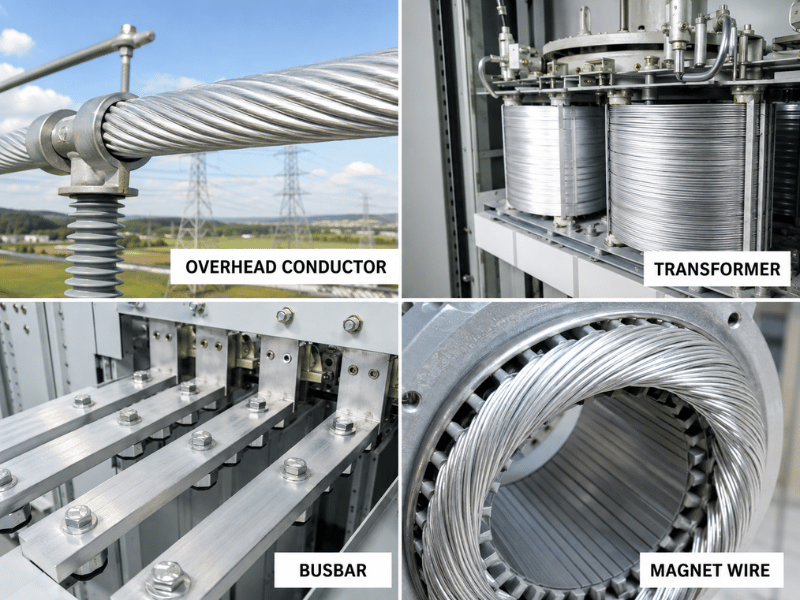
Yukarıdaki Kullanın/Kullanmayın kriterleri “kullanmalı mıyım?” sorusunu “nerede?” sorusundan ayırır. Aşağıdaki liste, 1350'nin standart uygulama olduğu sistemleri haritalandırır.
Güç İletimi ve Dağıtımı
Havai iletkenler en büyük kullanımdır: tam alüminyum (AAC) ve çelik takviyeli alüminyum iletken (ACSR) hatları, herhangi bir yaygın havai iletken ailesi arasında kilogram başına en fazla akım taşıdıkları için sert çekilmiş 1350-H19 tellerinden yapılır. Yeraltı kablo çekirdekleri, trafo merkezi bara işleri ve transformatör sargıları aynı EC sınıfı iletkenliği kullanır; kurulum sırasında esneklik önemli olduğunda O-temperi tel tercih edilir.
Emaye Kaplı Tel, Bobin Sarma ve Bara
Motorlar, jeneratörler ve transformatörler, aşırı şekillendirilebilirlik ve en yüksek iletkenliğin öncelikli olduğu manyetik tel ve ince bobin sarımı için 1350-O kullanır. Busbar — hem katı hem de telli — şalt ekipmanları ve güç elektroniğinde rijit, yüksek akımlı dağıtım için H19 kullanır. EC sınıfı tel formları için Linsy'nin ürünlerine bakın 1350-O/H19 alüminyum tel.
1350 vs 6061 vs 8000 — Nasıl Seçilir
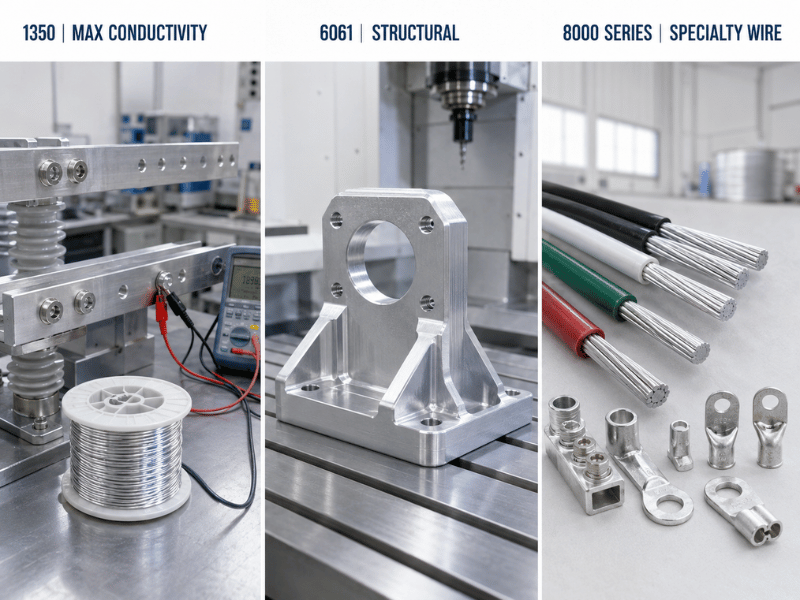
Bu üçü rakip değildir; farklı sorulara cevap verirler. 1350 iletkenlik sınıfıdır, 6061 yapısal sınıftır ve 8000 serisi niş iletken rolleri doldurur.
| Mülkiyet | 1350 (EC sınıfı) | 6061-T6 | 8000 serisi iletken sınıfları |
|---|---|---|---|
| Birincil rol | Elektriksel iletkenlik | Yapısal mukavemet | Özel iletkenler (bazı bina telleri) |
| Elektriksel iletkenlik | 61.2% IACS (min) | ~ IACS | Tipik olarak 61.2% IACS'nin altında |
| Çekme mukavemeti | 60–200 MPa (tempere göre) | 310 MPa | ~100–200 MPa |
| Isıl işlem | Hayır (yalnızca soğuk işlem) | Evet (T6) | Sınıfa göre değişir |
| Korozyon direnci | Yüksek (saflık) | Yüksek (1350'den düşük) | İyi, alaşıma bağlı |
| Tipik kullanım | Tel, busbar, sargılar | Çerçeveler, işlenmiş parçalar | Belirli 8000 iletken özellikleri |
Ağırlık başına iletkenlik kısıtlayıcı olduğunda 1350'yi seçin. Parçanın yük taşıması ve kaynak veya işleme gerektirmesi durumunda 6061-T6'yı seçin. Bir 8000 serisi sınıfı (örneğin 8176 veya 8130 bina teli) yalnızca belirli bir standart veya alaşım faydası — daha yüksek iletkenlik değil — spesifikasyonu yönlendirdiğinde düşünün; 1350 hâlâ saf IACS performansında öncüdür. Yapısal alternatif için bkz. 6061 alüminyum alaşımı sayfası.
1350 Alüminyum ile Çalışma
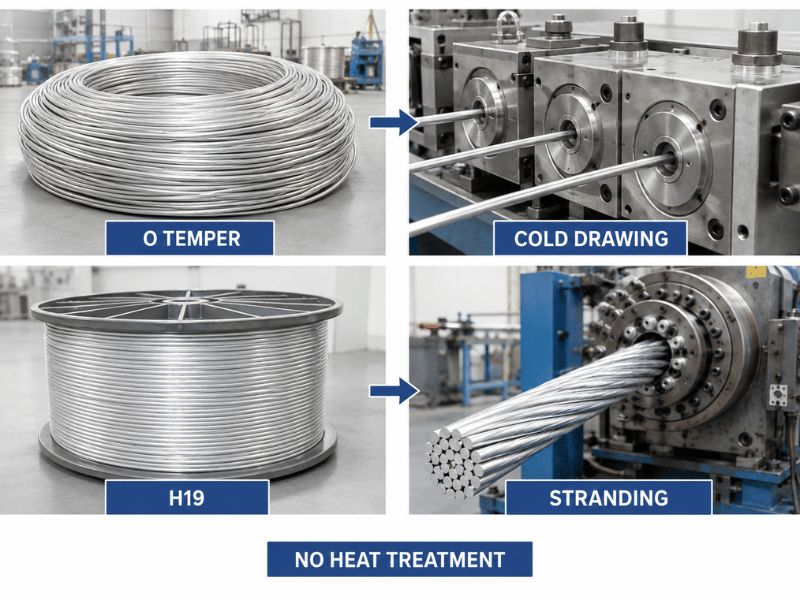
Şekillendirme ve çekme: O temperinde 1350 son derece şekillendirilebilirdir — zorluk çekmeden çekilir, bükülür ve sarılır, bu nedenle manyetik tel ve ince iletkenler için varsayılan tercihtir. H19 bu süneklik özelliğinin çoğunu kaybeder (uzama yaklaşık 1.5%'ye düşer), bu nedenle son sertleştirmeden önce şekillendirin veya çekilmiş halde kullanın.
Kaynak ve birleştirme: 1350 direnç yöntemleriyle iyi kaynak yapılır (iletken ekleme için kullanılır) ve uygun dolgu malzemesiyle MIG/TIG ile birleştirilebilir, ancak standart iletken üretiminde kaynak yaygın değildir. Kaynağın alaşımı ısıl işleme tabi tutmadığını unutmayın — geri yüklenecek bir T-temper yoktur.
Korozyon koruması: Yüksek saflık, 1350'ye doğal oksit filmi aracılığıyla mükemmel atmosferik korozyon direnci kazandırır, bu nedenle çoğu dış mekan iletken kullanımı kaplama gerektirmez. Klorür veya endüstriyel ortamlarda, diğer alüminyum sınıflarında kullanılan aynı anodizasyon, boyama veya kılıflama uygulanır.
Isıl işlem yok: 1350 ısıl işlemle sertleştirilemediğinden, mukavemet yalnızca soğuk işlemden gelir. Herhangi bir tavlama adımı onu O temperine geri döndürür; H19'u geri kazanmak yeniden çekme gerektirir, fırın işlemi değil. Üretim rotasını son tempere göre planlayın.
Artılar ve Sınırlamalar Bir Bakışta
| Boyut | Güç | Sınırlama |
|---|---|---|
| Elektriksel iletkenlik | Herhangi bir yaygın alüminyum alaşımının en yükseği (≥61.2% IACS) | Hâlâ bakırın ~61%'si — alan sabit olduğunda bakır ikamesi değil |
| Ağırlık | Eşit akım için bakırın ~1/3 ağırlığı | Düşük mukavemet yapısal kullanımı sınırlar |
| Şekillendirilebilirlik (O) | Çekme ve sarma için mükemmel | H19 sıkı bükümlerde gevrektir |
| Korozyon direnci | Saflıktan kaynaklanan yüksek direnç, dış mekanda kaplama gerekmez | Yumuşak yüzey kayma aşınması altında yığılır |
| Maliyet | Bakır iletkenlerden daha ucuz ve hafif | Düşük mekanik özellikler uygulamaları kısıtlar |
| Stok Durumu | Standart EC sınıfı, geniş fabrika tedariki | Stok yapısal profil sınıfı değil |
Sonuç
1350 alüminyum, herhangi bir ana akım dövme alüminyum alaşımının en yüksek iletkenliğini sunar — garanti edilen minimum 61.2% IACS — ancak ödünleşimi, onu yük taşıyan parçalar için uygunsuz kılan düşük mukavemet ve sertliktir. Bu da onu iletkenler, busbar ve sargılar için doğru tercih, herhangi bir yapısal uygulama için yanlış tercih yapar.
20 yılı aşkın deneyime sahip Shenzhen merkezli bir fabrika olan Linsy Aluminum, 1000–8000 serisi genelinde tel, busbar, levha ve rulo halinde 1350 tedarik eder; 1350-O ve 1350-H19 ec tel dahil, sipariş başına tam MTC dokümantasyonu ve talep üzerine SGS test raporları ile; tipik özel teslim süresi 10–60 gün arasındadır ve stok dışı boyutlar için düşük MOQ desteği sunulur. Spesifikasyon EC sınıfı 1350 gerektirdiğinde, sınıf ve temper incelemesi için çizimi veya iletken spesifikasyonunu gönderin.
Sıkça Sorulan Sorular
1350-O ile 1350-H19 arasındaki fark nedir?
1350-O tamamen tavlanmış ve yumuşaktır, uzaması 20% veya daha fazladır — çekme, sarma ve sıkı bükümler için en iyisidir. 1350-H19, 150–200 MPa çekme dayanımına kadar tam sert şekilde gerinim sertleştirilmiştir; mukavemetin şekillendirilebilirlikten daha önemli olduğu havai iletkenler ve busbar için standart temperdir. İletkenlik her ikisinde de aynıdır (~61.8% IACS).
1350 alüminyum yapısal uygulamalar için uygun mudur?
Hayır. H19'da bile 1350 yalnızca yaklaşık 150–200 MPa çekme dayanımına ulaşır; bu, 6061-T6 (310 MPa) gibi yapısal sınıfların çok altındadır. Bu bir iletken sınıfıdır, yapısal sınıf değildir ve yük taşımayan elektriksel kullanımlarla sınırlandırılmalıdır.
1350 ve 1370 alüminyum arasındaki fark nedir?
Her ikisi de EC sınıfı saf alaşımlardır, ancak 1370, 1350’nin 99.50%'sine karşılık 99.70% alüminyum minimum saflığa sahiptir ve biraz daha iyi iletkenlik sağlar. Her ikisi de elektriksel iletkenlere hizmet eder; 1370, uygulama daha yüksek saflık sınıfı gerektirdiğinde belirtilir.
1350 alüminyum, mukavemetini artırmak için ısıl işleme tabi tutulabilir mi?
Hayır. 1350, ısıl işlem uygulanabilir bir alaşım değildir — mukavemetini yalnızca soğuk işlem gerinim sertleşmesi yoluyla kazanır (H1x temperleri). Tavlama, malzemeyi O durumuna geri döndürür ve H19'u yeniden elde etmek için yeniden çekme gerekir, fırın çevrimi değil.
1350 ile 1050 alüminyum arasındaki fark nedir?
Her ikisi de minimum ,5 saf alaşımlardır, ancak 1350, iletkenliği korumak için demir ve silisyum düşük tutularak elektriksel kullanım için optimize edilmiştir; 1050 ise genel amaçlı saf bir kalitedir. Elektriksel performans öncelikli olduğunda 1350'yi, genel şekillendirme ve imalat için ise 1050'yi seçin.