Introduction
2618 aluminum alloy is a heat-treatable 2xxx-series wrought aluminum alloy designed for high-temperature applications. With copper, magnesium, and nickel as its primary alloying elements, 2618 retains excellent strength at elevated temperatures up to approximately 200°C. It also delivers strong fatigue resistance and good creep resistance under sustained thermal loads.
These properties make 2618 a preferred material for aerospace engine components, high-performance pistons, compressor wheels, and turbine parts where thermal stability is critical. This article covers the alloy’s chemical composition, mechanical properties, practical applications, and how it compares to other aluminum grades such as 2024, 4032, 6061, and 7075.
What is 2618 Aluminum Alloy
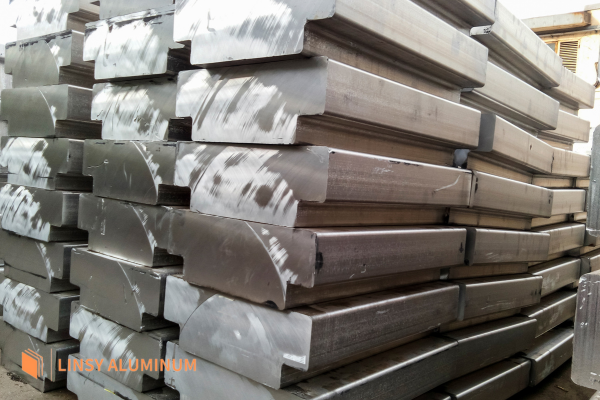
2618 aluminum alloy belongs to the heat-treatable wrought aluminum alloy family, distinguished by its strength retention at elevated temperatures. Its combination of high-temperature strength, fatigue resistance, and machinability makes it suitable for demanding applications in aerospace and motorsports.
The alloy’s composition—primarily aluminum with copper, magnesium, and nickel—directly contributes to its thermal stability. This makes 2618 a reliable choice when components must maintain structural integrity under repeated thermal cycling and mechanical stress.
Chemical Composition of 2618 Aluminum
The distinctive characteristics of 2618 aluminum alloy are defined by its chemical composition. Below is a breakdown of the key alloying elements:
| Element | Composition Percentage | Role |
|---|---|---|
| Aluminum | ~90% | Base material |
| Copper | 2-3% | Enhances strength, especially after heat treatment |
| Magnesium | 1.2-1.8% | Works with copper to further strengthen the alloy |
| Nickel | 1.2-1.8% | Improves high-temperature performance and thermal stability |
These alloying elements, carefully controlled during production, enable 2618 to meet the rigorous standards required by aerospace and high-performance industries where thermal stability is essential.
Key Physical and Mechanical Properties
| Property | Value | What It Means |
|---|---|---|
| Density | 2.75 g/cm³ | Lightweight for high-strength applications |
| Melting Point | ~550–640°C (1,022–1,184°F) | Wide solidification range, suitable for hot working |
| Tensile Strength | ~420–450 MPa (T6) | High strength for demanding structural applications |
| Yield Strength | ~350–380 MPa (T6) | Good resistance to permanent deformation |
| Elongation | ~5–10% | Moderate ductility |
| Hardness | ~120–130 HB (Brinell, T6) | Good surface hardness for wear resistance |
| Thermal Conductivity | ~140–155 W/m·K | Decent heat transfer capability |
| Fatigue Strength | ~150–180 MPa | Strong resistance to cyclic loading |
2618 aluminum alloy delivers a balanced combination of moderate weight, high strength, and thermal stability. Its low density keeps component weight down, while the high melting range allows it to perform reliably in hot environments such as engine bays. The tensile strength of 420–450 MPa in T6 temper and fatigue resistance of 150–180 MPa make it a reliable choice for parts subjected to repeated stress, such as pistons and compressor wheels.
Benefits and Limitations of 2618 Aluminum Alloy
| Benefits | Limitations |
|---|---|
| High strength at elevated temperatures | Lower corrosion resistance compared to 6xxx and 5xxx alloys |
| Good fatigue resistance | Higher cost than general-purpose alloys |
| Heat treatable for enhanced properties | Susceptible to stress corrosion cracking |
| Good machinability in heat-treated condition | Limited cold formability |
| Weldable with specific techniques | Requires protective coatings for corrosive environments |
Practical Applications of 2618 Aluminum Alloy

2618 aluminum alloy is highly valued in aerospace and motorsports for its high strength-to-weight ratio and high-temperature performance. The alloy’s load-bearing capacity and fatigue resistance make it ideal for pistons, forgings, and structural engine components where reliability under extreme conditions is non-negotiable.
Aerospace and Motorsports
In aerospace, 2618 aluminum is used to manufacture aircraft engine parts, fuselage components, and wing structures. Its ability to maintain strength at high temperatures is critical for jet engine environments where components face sustained thermal and mechanical stress.
Pistons and compressor wheels made from 2618 keep their shape and strength during high-temperature operation, helping engines perform reliably over extended service intervals.
The motorsports industry also relies on 2618 for racing engine pistons and components. The alloy’s high-temperature resistance and fatigue strength allow parts to endure the punishing conditions of high-RPM racing environments.
Comparison: 2618 vs Other Aluminum Alloys
While 2618 aluminum alloy excels in high-temperature applications, selecting the right material depends on specific strength, formability, corrosion resistance, and cost requirements. Comparing 2618 against other common alloys helps engineers make informed material choices.
2618 vs 4032 vs 6061 vs 7075 Aluminum
Each of these alloys offers distinct advantages based on its mechanical properties and intended applications:
| Characteristic | 2618 Aluminum | 4032 Aluminum | 6061 Aluminum | 7075 Aluminum |
|---|---|---|---|---|
| Primary Alloying Elements | Cu, Mg, Ni | Cu, Mg, Si | Mg, Si | Zn, Cu, Mg |
| Density (g/cm³) | ~2.77 | ~2.69 | ~2.70 | ~2.81 |
| Tensile Strength (MPa) | ~440 (T6 temper) | ~380 (T6 temper) | ~310 (T6 temper) | ~570 (T6 temper) |
| Yield Strength (MPa) | ~370 (T6 temper) | ~315 (T6 temper) | ~275 (T6 temper) | ~505 (T6 temper) |
| Heat Resistance | Excellent (up to ~200°C) | Good (up to ~150°C) | Moderate (up to ~150°C) | Moderate (up to ~120°C) |
| Corrosion Resistance | Moderate (requires coatings) | Good (better than 2618) | Very Good | Fair (susceptible due to Cu content) |
| Machinability | Good | Excellent | Very Good | Fair |
| Weldability | Fair (special techniques needed) | Poor | Excellent | Poor |
| Fatigue Resistance | Excellent | Good | Good | Excellent |
| Cost | High | Moderate | Low | High |
| Typical Applications | Aerospace engine parts, pistons | Automotive pistons, engine components | Structural parts, general use | Aerospace frames, high-stress parts |
| Key Benefit | High strength at elevated temperatures | Wear resistance, low thermal expansion | Versatility, corrosion resistance | Exceptional room-temperature strength |
| Key Limitation | Lower corrosion resistance, higher cost | Poor weldability, moderate strength | Lower maximum strength | Poor weldability, corrosion concerns |
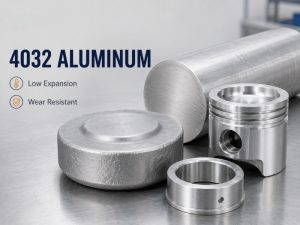
2618 aluminum stands out with its high-temperature strength and good machinability, making it ideal for aircraft engine components and high-performance pistons. 4032 is favored for engine components due to its low thermal expansion and good wear resistance. 6061, known for its versatility, is widely used in structural applications. 7075, with its exceptional room-temperature strength, handles high-stress structural scenarios.
Which Alloy to Choose
Choosing the right alloy—2618, 4032, 6061, or 7075—depends on your specific application, operating conditions, and priorities.
Key Factors to Consider
- Strength Requirements: For maximum strength at room temperature, choose 7075 aluminum (570 MPa tensile). For high-temperature strength, choose 2618 aluminum (retains strength up to ~200°C).
- Temperature Exposure: For engine parts and pistons operating above 150°C, 2618 is the best choice. 4032 and 6061 handle moderate heat up to ~150°C, while 7075 weakens above ~120°C.
- Corrosion Resistance: If the part faces moisture or outdoor exposure, 6061 aluminum offers the best corrosion resistance. 2618 and 7075 require protective coatings in corrosive environments.
- Wear Resistance: For moving parts like pistons where surface wear is a concern, 4032 aluminum provides the best wear resistance due to its higher silicon content.
- Weldability and Formability: 6061 is the easiest to weld and form. 2618 requires specialized welding techniques, while 4032 and 7075 are generally not recommended for welding.
- Cost: 6061 is the most cost-effective and widely available. 2618 and 7075 are priced higher due to their specialized properties, with 4032 falling in between.
Conclusion
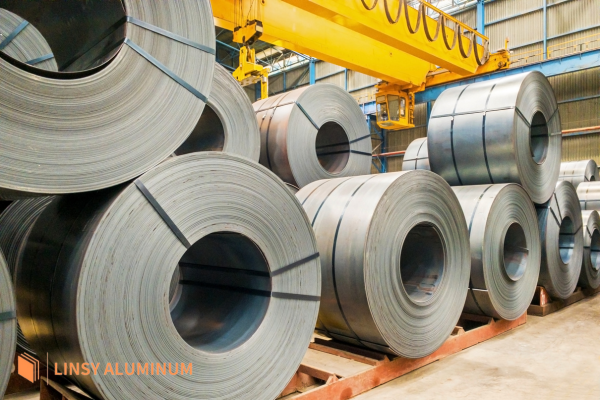
2618 aluminum alloy is a high-temperature aerospace and motorsports specialty material, not a general-purpose alloy. Its nickel-fortified composition delivers excellent strength retention up to approximately 200°C, along with strong fatigue resistance and good machinability—making it ideal for pistons, compressor wheels, and turbine components. However, its higher cost, lower corrosion resistance, and limited availability compared to commodity alloys mean it should only be specified when high-temperature performance is the primary requirement.
Linsy Aluminum covers the full 1000 to 8000 series range, including the 2xxx family, and can source or supply 2618 aluminum for specialized applications. With over 20 years of experience, ISO 9001/14001/45001 certifications, and in-house CNC machining, TIG/GTAW welding, laser cutting, and surface finishing capabilities, Linsy supports projects that require high-performance aluminum solutions from custom sourcing through fabrication. Lead times are typically 10 to 60 days, with full material test certificates (MTC) provided per order and SGS test reports available on request.
Contact Linsy Aluminum today to discuss your 2618 aluminum requirements and request a quote.
Frequently Asked Questions
What is 2618 aluminum alloy used for?
2618 aluminum is primarily used for high-temperature aerospace and motorsports components, including engine pistons, compressor wheels, turbine parts, aircraft structural components, and supersonic aircraft skins. Any application requiring strength retention above 150°C is a candidate for 2618.
What temperature can 2618 aluminum withstand?
2618 aluminum retains excellent strength at temperatures up to approximately 200°C (392°F). Above this threshold, mechanical properties begin to decline, though the alloy maintains some useful strength up to about 250°C (482°F). This is significantly better than alloys like 6061 and 7075, which weaken at lower temperatures.
How does 2618 differ from 2024 and 7075 aluminum?
2618 aluminum sacrifices peak room-temperature strength for superior high-temperature performance. 2024 aluminum offers higher strength at room temperature but loses strength more rapidly above 150°C. 7075 aluminum is the strongest at room temperature (~570 MPa) but weakens significantly above 120°C. 2618 is the preferred choice when sustained heat exposure is the primary design condition.
Is 2618 aluminum alloy weldable?
2618 aluminum can be welded using specialized techniques such as TIG (GTAW) with appropriate filler metals, but it is considered fair to difficult to weld. The high copper content increases the risk of hot cracking and porosity during welding. In most applications, 2618 components are machined from forgings or bar stock rather than welded assemblies.
Why does 2618 aluminum contain nickel?
Nickel (1.2-1.8%) is added to 2618 aluminum specifically to improve high-temperature stability and creep resistance. Nickel forms fine, thermally stable intermetallic compounds that resist coarsening at elevated temperatures, helping the alloy retain strength during prolonged exposure to heat. This is a critical advantage for engine and turbine applications.