5050 알루미늄 합금이란?
5050은 마그네슘(1.1–1.8%)이 주요 강화 원소인 5xxx계 가공 합금입니다. 모든 5xxx 합금과 마찬가지로 열처리 강화가 불가능합니다: 강도는 마그네슘에 의한 고용체 강화와 변형 경화(냉간 가공)에서 비롯되며, 6xxx나 2xxx 합금처럼 석출 열처리에 의존하지 않습니다.
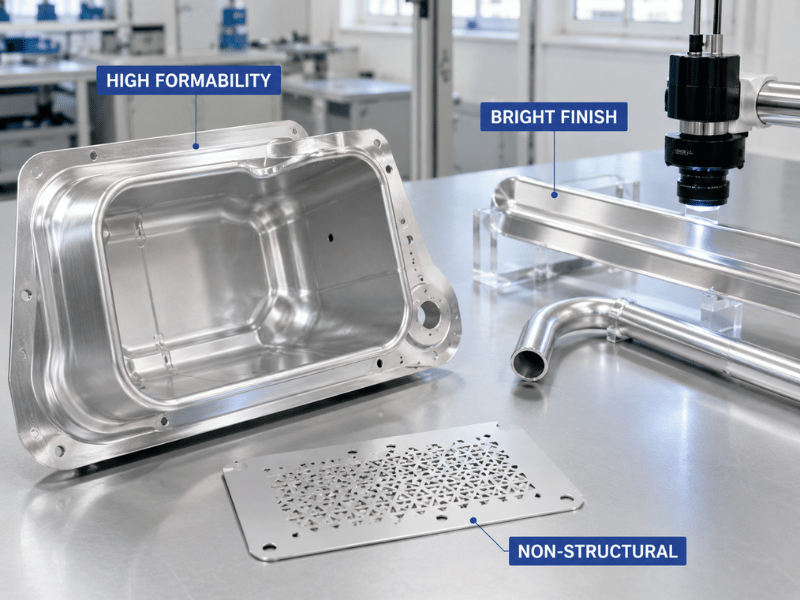
5052보다 마그네슘 함량이 적으며, 이 단 하나의 차이가 그 특성을 규정합니다. 마그네슘이 적으면 5050은 성형성이 더 우수하고 더 밝고 균일한 아노다이징 마감을 얻을 수 있지만, 강도와 피로 저항성이 낮아지는 대가를 치릅니다. 부품이 깊은 성형, 굽힘 또는 외관 노출이 될 때는 5050을 선택하고, 설계가 구조용일 때는 5052나 6061을 선택하십시오.
5050 알루미늄 화학 조성
5050은 내식성과 표면 품질을 보호하는 불순물 상한으로 관리되며, 마그네슘이 주요 강도 기여 원소로 설정됩니다.
| 요소 | 함량 (별도 표기가 없는 한 최대) | 합금 내 역할 |
|---|---|---|
| 알루미늄(Al) | 97.2–98.6% (잔량) | 경량, 내식성 기재 |
| 마그네슘(Mg) | 1.1–1.8% | 주요 강도 기여 원소; 냉간 가공 경화를 유도 |
| 망간(Mn) | 0.10% | 결정립 구조와 입계 내식성 지원 |
| 크롬(Cr) | 0.10% | 내식성 향상, 결정립 성장 억제 |
| 철(Fe) | 0.70% | 연성과 성형 품질 유지를 위해 낮게 유지 |
| 실리콘(Si) | 0.40% | 기계적 특성 일관성 유지를 위해 제한 |
| 구리(Cu) | 0.20% | 최소 수준 — 높은 수준은 내식성을 저하시킴 |
| 아연(Zn) | 0.25% | 내식 거동 유지를 위해 제한 |
| 기타 (각각 / 전체) | 0.05% / 0.15% | 합금 일관성을 위해 미량 원소 관리 |
마그네슘과 크로뮴의 조합이 5050에 우수한 대기 내식성을 부여하며, 낮은 구리와 규소 상한은 아노다이징 층을 흐릿하지 않고 투명하게 유지합니다.
5050 알루미늄 물리적 및 기계적 특성
5050의 핵심 수치는 전도도나 경도가 아니라 낮은~중간 정도의 강도와 높은 성형성입니다.
| 속성 | 가치 |
|---|---|
| 밀도 | 2.68–2.69 g/cm³ |
| 용융 범위 | ~605–650 °C |
| 탄성 계수 | ~69 GPa (10 × 10⁶ psi) |
| 열팽창 계수 | ~23.7 × 10⁻⁶ /K |
| 열 전도성 | ~140–160 W/(m·K) |
| 전기 전도성 | ~35% IACS |
| 내식성 | 매우 우수 — 해양 대기 및 습한 환경에 적합 |
| 용접성 | 우수 — 일반적인 용접 방법과 호환 가능 |
| 성형성 | O 상태에서 양호; 냉간 가공에 따라 감소 |
| 인장 강도, O 템퍼 | 140–180 MPa |
| 인장 강도, H32 템퍼 | 175–215 MPa |
| 인장 강도, H34 템퍼 | 200–240 MPa |
| 항복 강도, O / H32 / H34 | 55–70 / 125–160 / 160–200 MPa |
5050은 열처리가 아닌 변형 경화되기 때문에 강도 수치는 템퍼에 따라 달라집니다: O 상태는 완전 어닐링되어 연하며, H32와 H34는 점진적으로 증가하는 냉간 압하율을 적용합니다. 위 값은 압연 제품의 전형적인 값이며, ASTM B209 또는 GB/T 3880에 따른 정확한 최소값은 두께와 형태에 따라 달라집니다.
사용 가능한 템퍼: O, H32, H34
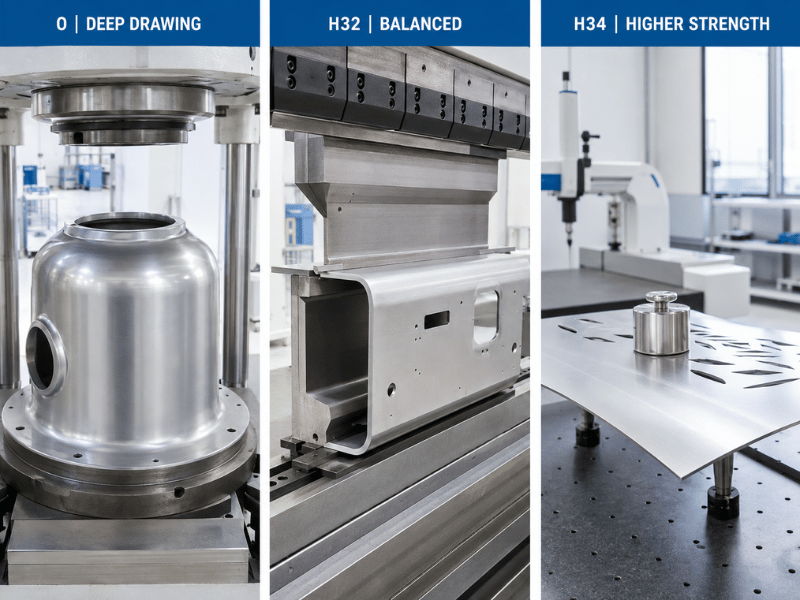
5050은 열처리 강화가 불가능하므로, 템퍼 지정은 냉간 가공 정도와 그에 따른 강도 대 성형성 균형을 정의합니다.
| 성질 | 상태 | 일반적인 UTS (MPa) | 항복 강도 (MPa) | 최상의 대상 |
|---|---|---|---|---|
| O | 완전 소둔, 최연질 | 140–180 | 55–70 | 깊은 드로잉, 복잡한 성형, 스피닝 |
| H32 | 1/4 경화, 안정화 처리 | 175–215 | 125–160 | 중간 정도의 굽힘 및 성형 후 일정 강도 |
| H34 | 1/2 경화, 안정화 처리 | 200–240 | 160–200 | 강도가 우선인 평판 또는 완만하게 곡선진 부품 |
템퍼 선택은 성형 순서를 따릅니다: 무거운 드로잉이나 긴밀한 굽힘이 필요할 때는 O로 시작하고, 부품이 중간 정도의 강도를 필요로 하면서도 어느 정도 성형이 가능해야 할 때는 H32로 이동하며, 성형이 최소이고 강도가 우선일 때만 H34를 사용합니다. H34는 깊은 드로잉 템퍼가 아닙니다 — 감소된 연신율로 인해 긴밀한 반경 작업에서 균열이 발생합니다.
5050 알루미늄의 일반적인 응용 분야
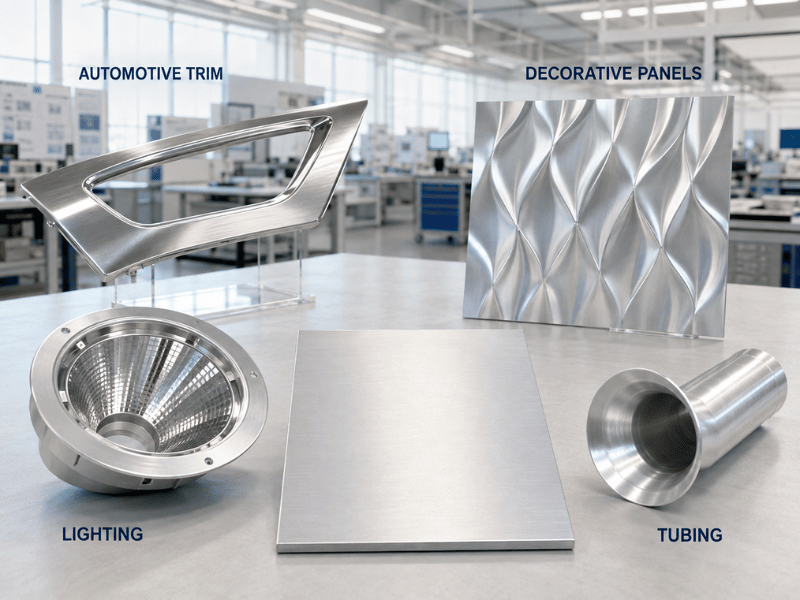
5050의 성형성과 표면 마감은 외관 노출 및 비구조용 부품에서의 상업적 용도를 주도합니다.
- 자동차 트림 및 광택 부품: 성형 용이성이 강도보다 중요한 내장 트림, 장식용 몰딩, 비구조용 차체 패널.
- 건축 및 장식용 패널: 내식성과 깨끗한 아노다이징 외관이 유리한 클래딩, 내장 트림 프로파일, 천장 시스템.
- 조명 기구: 우수한 반사율과 성형성이 반사판 하우징과 조명 커버에 적합합니다.
- 가전 내부: 내식성과 성형 품질이 인클로저 패널에 적합한 냉장고 라이닝 및 제어판 후면.
- 명판 및 표지판: 적절한 표면 준비를 통해 밝은 아노다이징 마감이 가능합니다.
- 튜빙: 합금의 성형성이 굽힘, 플레어링, 끝단 성형을 가능하게 하는 유압 라인, 연료 시스템 튜빙, 장식용 관형 부품.
5050 vs 5052 vs 3003 vs 6061
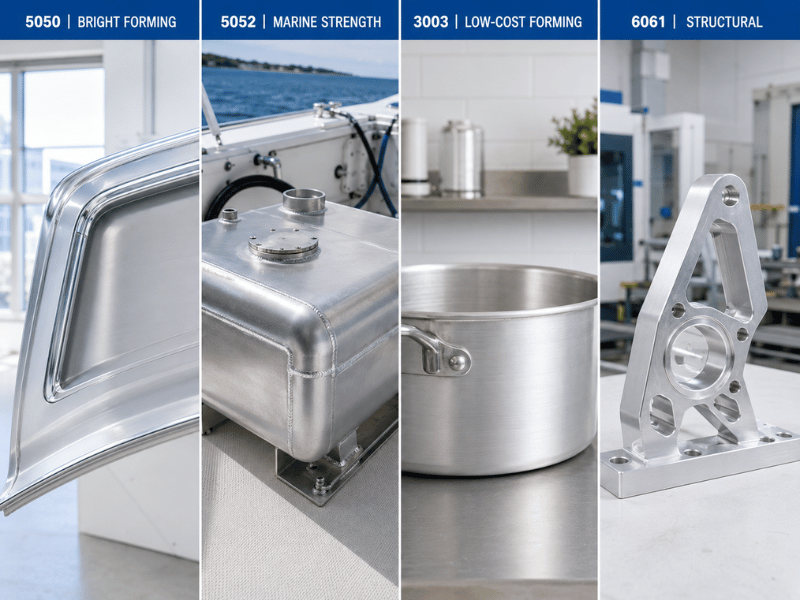
5050은 5000계열 내에서 특정 위치를 차지합니다: 5052보다 강도는 낮지만 장식용 박판 작업에 더 나은 표면 마감과 성형성을 제공합니다.
| 합금 | 주요 특성 | 힘 | 내식성 | 용접성 | 일반 용도 |
|---|---|---|---|---|---|
| 5050 | 비열처리 합금, 높은 성형성, 광택 마감 | 저~중간 강도 (~140–240 MPa) | 매우 우수 | Good | 판금, 자동차 트림, 튜빙, 간판 |
| 5052 | 비열처리 합금, 높은 피로 저항성 | 보통(~190-260MPa) | 우수 | Good | 해양 부품, 연료 탱크, 압력 용기 |
| 3003 | 비열처리 합금, 우수한 성형성 | 낮음 (~110–200 MPa) | 매우 우수 | 우수 | 조리기구, 화학 장비, 범용 판재 |
| 6061 | 열처리 가능, 균형 잡힌 강도 | 중간 강도 (T6 ~310 MPa) | 매우 우수 | Good | 구조 부품, 해양 피팅 |
선택 요약: 다음의 경우 선택하십시오 5050 성형성과 광택 마감이 우선인 장식용 및 박판 판재의 경우; 5052 더 높은 강도, 피로 저항성 또는 해수 사용 환경이 필요할 때; 3003 최대 성형성과 최저 비용이 표면 마감보다 중요할 때; 6061 부품이 하중을 지지해야 할 때.
5050 알루미늄 가공
5050은 가공에서 전형적인 중간 Mg 5xxx 합금처럼 거동합니다 — 성형과 용접이 용이하고, 기계 가공성은 보통입니다.
성형 및 인발. O 템퍼는 균열 없이 딥 드로잉, 스피닝, 복잡한 굽힘을 지원합니다. H32에서 H34로 냉간 가공이 증가함에 따라 최소 굽힘 반경이 커지고 연신율이 떨어지므로, 가능하면 O 상태에서 부품을 성형하고 평평하거나 완만하게 곡선인 형상에만 H34를 지정하십시오.
용접 및 접합. 5050은 GTAW(TIG) 및 GMAW(MIG)로 쉽게 용접됩니다. 석출 경화가 없기 때문에 열영향부가 6xxx 합금에서처럼 연화되지 않지만, 변형 방지를 위한 고정구는 여전히 필요합니다. 내식성을 유지하려면 5xxx 필러 금속(예: 용접 후 강도 및 아노다이징 후 색상 요구에 따라 5356 또는 4043)을 사용하십시오.
절삭 가공. 기계 가공성은 보통입니다 — 다른 5xxx 합금과 유사하고 고강도 등급보다 깨끗하지만, 순알루미늄만큼 절삭성이 좋지는 않습니다. 포지티브 레이크의 초경 공구와 원활한 칩 배출은 구성 날인(built-up edge)과 표면 근처의 가공 경화를 제어합니다.
아노다이징 및 표면 처리. 5050은 밝고 균일한 양극 산화층으로 알려져 있어 건축용 트림과 명판에 사용됩니다. 압연 마감, 아노다이징, 폴리싱, PVC 보호 필름 모두 적용 가능하며, 아노다이징 품질의 표면 준비는 숨겨진 구조 부품보다 여기서 더 중요합니다.
Go/No-Go: 5050을 지정해야 하는 경우
Go — 다음의 경우 5050을 지정하십시오:
- 부품이 비구조용이고 성형성 또는 딥 드로잉이 주요 요구 사항인 경우.
- 밝고 균일한 아노다이징 마감이 제품의 일부인 경우(트림, 간판, 조명).
- 절곡, 플레어링 또는 끝단 성형될 튜빙이 필요한 경우.
- 중간 강도(H34에서 최대 ~240 MPa)가 하중 조건에 충분한 경우.
No-Go — 다음의 경우 5050을 피하십시오:
- 부품이 하중 지지, 피로 중요 또는 지속적인 구조 응력을 받는 경우 — 5052 또는 6061을 사용하십시오.
- 장기간 직접 해수 침지 환경인 경우 — 5052의 더 높은 마그네슘이 더 나은 장기 내식 성능을 제공합니다.
- 최저 비용으로 최고의 성형성이 필요한 경우 — 3003이 더 성형성이 좋고 일반적으로 더 저렴합니다.
- 설계가 열처리 가능한 강도 또는 하드 아노다이징 내마모성을 요구하는 경우 — 6061이 구조용 선택입니다.
Linsy에서 5050 알루미늄 소싱
20년 이상의 경험을 보유한 선전 소재 공장인 Linsy Aluminum은 1000–8000계열 합금 범위에 걸쳐 O, H32, H34 템퍼의 5050을 판재, 플레이트, 코일, 바, 튜브, 와이어로 공급합니다. 자재는 ASTM B209 및 GB/T 3880에 따라 공급되며, 모든 주문에 대해 발행되는 MTC 문서를 통해 화학적 및 기계적 검증이 가능합니다.
SGS 화학 조성, 기계적 물성, 치수 검사 및 초음파 테스트 보고서는 추가 테스트 비용으로 요청 시 제공됩니다. 비재고 사이즈의 경우, Linsy는 일반적으로 10–60일의 리드 타임으로 낮은 MOQ의 맞춤 생산을 지원하며, CNC 가공, 레이저 절단, TIG/MIG 용접, 표면 처리(아노다이징, 폴리싱, 분체 도장)를 포함한 사내 가공을 제공합니다. ISO 9001, ISO 14001, ISO 45001 경영 시스템은 원자재에서 완제품까지 일관된 품질을 지원합니다.
결론
5050 알루미늄은 매우 우수한 성형성, 양호한 내식성, 밝은 아노다이징 마감을 제공하는 실용적인 비열처리 합금이지만, 그 대가로 중간 강도이며 H34에서 인장 값이 약 240 MPa에 불과하므로 구조용 등급이 아닙니다. 하중 지지 능력이나 피로 저항성이 필요한 부품은 대신 5052 또는 6061로 전환해야 합니다.
성형성, 표면 품질 및 내식성이 설계 의도와 일치하는 프로젝트의 경우, Linsy Aluminum은 O, H32, H34 템퍼에 걸쳐 5050을 판재, 플레이트, 코일, 바, 튜브, 와이어로 공급하며, 모든 주문에 MTC를 제공하고, 요청 시 SGS 보고서를 제공하며, 사내 CNC, 레이저, 용접, 표면 처리를 기반으로 10–60일 리드 타임의 낮은 MOQ 맞춤 생산을 지원합니다. 특정 템퍼 또는 제품 형태의 5050이 사양에 포함된 경우, 도면 또는 요구 사항을 보내주시면 등급 적합성 검토 및 견적을 제공해 드립니다.
자주 묻는 질문
5050 알루미늄은 열처리를 통해 강도를 높일 수 있나요?
아닙니다. 5050은 비열처리 5xxx 합금입니다. 모든 강도는 마그네슘 고용체 강화와 템퍼(O, H32, H34)를 통한 변형 경화에서 비롯됩니다. 유사 계열에서 더 높은 강도가 필요하면 5052-H34 또는 열처리 가능한 6061-T6으로 전환하십시오.
5050 H32와 H34 템퍼의 차이점은 무엇인가요?
둘 다 변형 경화 및 안정화 처리되지만, H34는 H32보다 약 두 배의 냉간 압하량을 받습니다. H34는 더 높은 인장 및 항복 강도(약 200–240 MPa 대 175–215 MPa)에 도달하지만 연성 감소와 더 엄격한 굽힘 한계를 대가로 치릅니다. 일부 성형이 남아 있는 경우 H32를 선택하고, 평평하거나 완만하게 곡선인 부품에는 H34를 선택하십시오.
5050 알루미늄은 옥외 또는 해양 환경에 적합한가요?
5050은 해양 대기 및 습한 환경에서 우수한 성능을 발휘합니다; 마그네슘과 크롬 함량이 보호 코팅 없이도 일반 부식에 대한 양호한 저항성을 제공합니다. 직접적인 장기 해수 침지 또는 가혹한 산업 노출의 경우, 5052(더 높은 마그네슘)가 더 나은 장기 내식 성능을 제공합니다.
5050 알루미늄은 어떤 제품 형태로 공급되나요?
5050은 성형 및 장식용 트림용으로 판재와 코일로 가장 일반적으로 공급되며, 더 두꺼운 또는 기계 가공 부품용으로 플레이트와 바도 사용 가능합니다. Linsy Aluminum은 또한 5050을 튜브와 와이어로 공급하며, 낮은 MOQ로 맞춤 치수가 가능합니다.
판금 작업에서 5050과 3003을 비교하면 어떤가요?
둘 다 비열처리 성형 합금이지만, 5050은 약간 더 높은 강도와 더 나은 표면 마감을 제공하여 장식용 및 광택 마감 부품에 더 적합합니다. 3003은 약간 더 성형성이 좋고 일반적으로 비용이更低므로 범용 판금, 조리기구 및 화학 장비에서 주를 이룹니다. 선택은 표면 외관 또는 최대 성형성 중 어느 것이 우선인지에 달려 있습니다.