5050 Alüminyum Alaşım Nedir?
5050, magnezyumun (%1,1–1,8) birincil mukavemetlendirme elementi olduğu 5xxx serisi bir dövme alaşımdır. Tüm 5xxx alaşımları gibi ısıl işlemle sertleştirilemez: mukavemet, 6xxx veya 2xxx alaşımlarının davrandığı gibi çökelme ısıl işleminden değil, magnezyum ile katı çözelti mukavemetlendirmesi ve gerinim sertleştirmesinden (soğuk işlem) gelir.
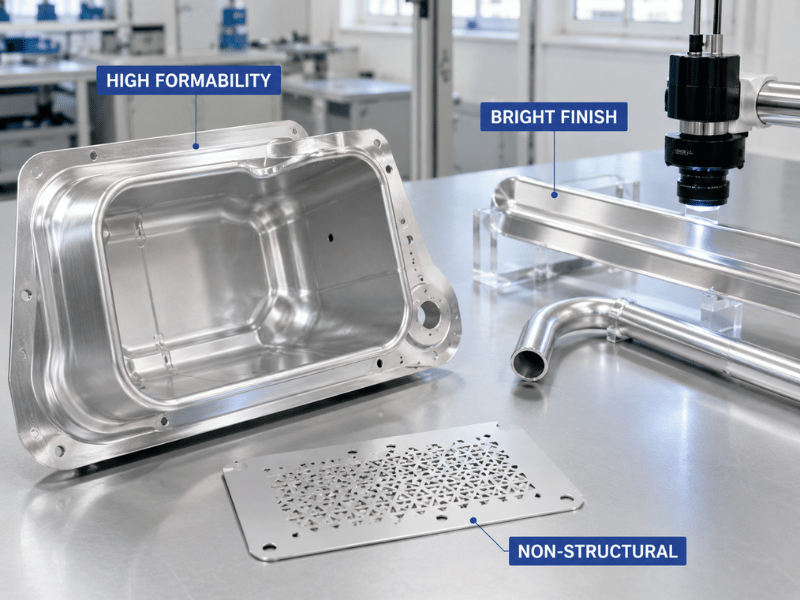
5052'den daha az magnezyum içerir ve bu tek fark karakterini tanımlar. Daha düşük magnezyum, 5050'ye daha iyi şekillendirilebilirlik ve daha parlak, daha homojen bir anodize yüzey kazandırır; ancak bunun bedeli daha düşük mukavemet ve yorulma direncidir. Parça derin şekillendirilecek, bükülecek veya görünür olacaksa 5050'yi seçin — tasarım yapısal olduğunda ise 5052 veya 6061'e yönelin.
5050 Alüminyum Kimyasal Bileşimi
5050, korozyon direncini ve yüzey kalitesini koruyan safsızlık üst sınırlarıyla kontrol edilir; magnezyum ise ana mukavemet katkısı olarak belirlenmiştir.
| Element | İçerik (belirtilmediği sürece maksimum) | Alaşımdaki rolü |
|---|---|---|
| Alüminyum (Al) | ,2–98,6 (denge) | Hafif, korozyona dirençli temel |
| Magnezyum (Mg) | 1.1–1.8% | Birincil mukavemet katkısı; soğuk işlem sertleşmesini sağlar |
| Manganez (Mn) | 0.10% | Tane yapısını ve taneler arası korozyon direncini destekler |
| Krom (Cr) | 0.10% | Korozyon direncini artırır, tane büyümesini bastırır |
| Demir (Fe) | 0.70% | Sünekliliği ve şekillendirme kalitesini korumak için düşük tutulur |
| Silisyum (Si) | 0.40% | Mekanik özellikleri tutarlı tutmak için sınırlandırılmıştır |
| Bakır (Cu) | 0.20% | Minimum düzeyde — yüksek seviyeler korozyon direncini azaltır |
| Çinko (Zn) | 0.25% | Korozyon davranışını korumak için sınırlandırılmıştır |
| Diğerleri (her biri / toplam) | 0.05% / 0.15% | Alaşım tutarlılığı için eser elementler kontrol edilir |
Magnezyum ve krom kombinasyonu, 5050'ye iyi atmosferik korozyon direncini kazandıran şeydir; düşük bakır ve silisyum üst sınırları ise anodize tabakayı bulanık değil berrak tutar.
5050 Alüminyum Fiziksel ve Mekanik Özellikleri
5050'yi tanımlayan değerler, iletkenliği veya sertliği değil, düşük-orta mukavemeti ve yüksek şekillendirilebilirliğidir.
| Mülkiyet | Değer |
|---|---|
| Yoğunluk | 2,68–2,69 g/cm³ |
| Erime aralığı | ~605–650 °C |
| Elastisite modülü | ~69 GPa (10 × 10⁶ psi) |
| Termal genleşme katsayısı | ~23,7 × 10⁻⁶ /K |
| Termal iletkenlik | ~140–160 W/(m·K) |
| Elektriksel iletkenlik | ~ IACS |
| Korozyon direnci | Çok iyi — deniz atmosferi ve nemli ortamlar için uygundur |
| Kaynaklanabilirlik | İyi — yaygın kaynak yöntemleriyle uyumludur |
| Şekillendirilebilirlik | O durumunda iyi; soğuk işlemle azalır |
| Çekme mukavemeti, O temper | 140–180 MPa |
| Çekme mukavemeti, H32 temper | 175–215 MPa |
| Çekme mukavemeti, H34 temper | 200–240 MPa |
| Akma mukavemeti, O / H32 / H34 | 55–70 / 125–160 / 160–200 MPa |
Mukavemet değerleri temper ile ölçeklenir çünkü 5050 ısıl işlemle değil gerinimle sertleştirilir: O koşulu tamamen tavlanmış ve yumuşaktır; H32 ve H34 ise artan soğuk haddeleme uygular. Yukarıdaki değerler haddelenmiş ürün için tipiktir; ASTM B209 veya GB/T 3880'e göre kesin minimumlar kalınlığa ve forma bağlıdır.
Mevcut Temperler: O, H32 ve H34
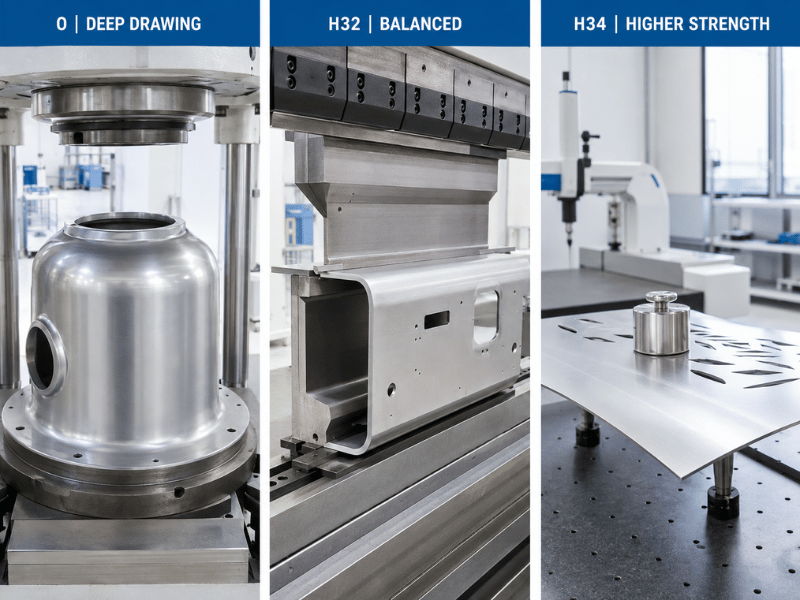
5050 ısıl işlemle sertleştirilemediğinden, temper tanımı soğuk işlem derecesini ve bunun sonucunda ortaya çıkan mukavemet-şekillendirilebilirlik dengesini tanımlar.
| Temper | Durum | Tipik Çekme Dayanımı (MPa) | Akma (MPa) | İçin en iyisi |
|---|---|---|---|---|
| O | Tamamen tavlanmış, en yumuşak | 140–180 | 55–70 | Derin çekme, karmaşık şekillendirme, savurma |
| H32 | Çeyrek sert, stabilize edilmiş | 175–215 | 125–160 | Orta düzeyde bükme artı bir miktar şekillendirme sonrası mukavemet |
| H34 | Yarım sert, stabilize edilmiş | 200–240 | 160–200 | Mukavemetin öncü olduğu düz veya hafif kavisli parçalar |
Temper seçimi şekillendirme sırasını takip eder: ağır çekme veya dar bükümler gerektiğinde O ile başlayın, parça orta düzeyde mukavemet ama yine de bir miktar şekillendirilebilirlik gerektirdiğinde H32'ye geçin ve H34'ü yalnızca şekillendirme minimum düzeyde olduğunda ve mukavemet öncelikli olduğunda kullanın. H34 bir derin çekme temperi değildir — azalmış uzaması dar yarıçaplı işlerde çatlayacaktır.
5050 Alüminyumun Yaygın Uygulamaları
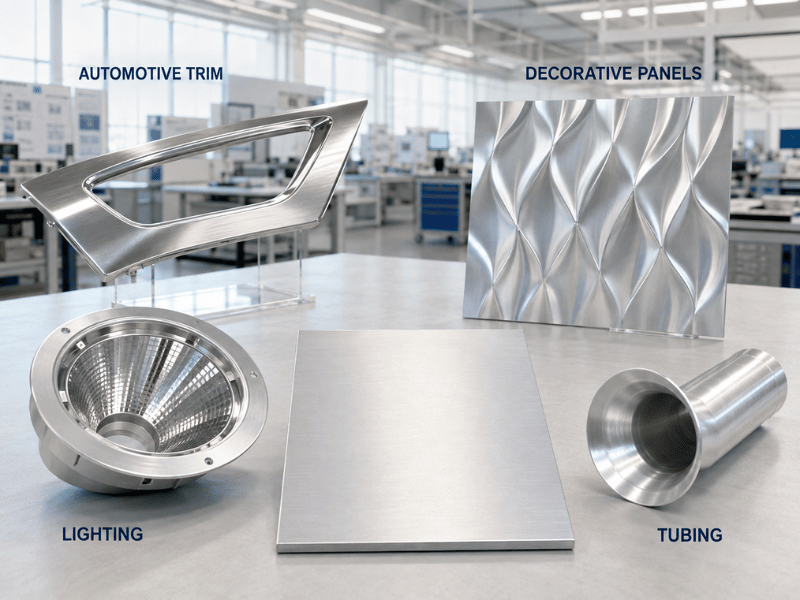
5050’nin şekillendirilebilirliği ve yüzey kalitesi, görünür ve yapısal olmayan parçalardaki ticari kullanımını yönlendirir.
- Otomotiv trim ve parlak işler: şekillendirme kolaylığının mukavemetten daha önemli olduğu iç trim, dekoratif profiller ve yapısal olmayan gövde panelleri.
- Mimari ve dekoratif paneller: korozyon direncinden ve temiz anodize görünümden faydalanan kaplamalar, iç trim profilleri ve tavan sistemleri.
- Aydınlatma armatürleri: iyi yansıtıcılık ve şekillendirilebilirlik, reflektör yuvaları ve lamba kapakları için uygundur.
- Cihaz iç aksamları: korozyon direncinin ve şekillendirme kalitesinin muhafaza panellerine uyduğu buzdolabı astarları ve kontrol paneli arkalıkları.
- İsim plakaları ve tabelalar: uygun yüzey hazırlığı ile parlak bir anodize yüzey elde edilebilir.
- Boru: alaşımın şekillendirilebilirliğinin bükme, genişletme ve uç şekillendirmeye izin verdiği hidrolik hatlar, yakıt sistemi boruları ve dekoratif boru bileşenleri.
5050 vs 5052 vs 3003 vs 6061
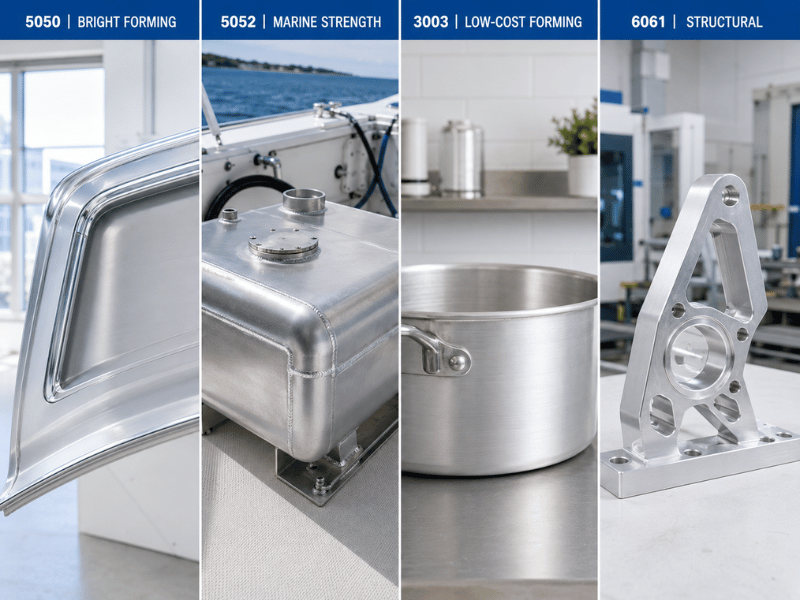
5050, 5000 serisi içinde belirli bir pencereyi kaplar: 5052'den daha düşük mukavemet, ancak dekoratif, ince kalınlıklı işler için daha iyi yüzey kalitesi ve şekillendirme.
| Alaşım | Temel özellikler | Güç | Korozyon | Kaynaklanabilirlik | Tipik kullanım |
|---|---|---|---|---|---|
| 5050 | Isıl işlem görmeyen, yüksek şekillendirilebilirlik, parlak yüzey | Düşük–orta (~140–240 MPa) | Çok iyi | İyi | Sac metal, otomotiv trim, boru, tabela |
| 5052 | Isıl işlem görmeyen, yüksek yorulma direnci | Orta (~190-260 MPa) | Mükemmel | İyi | Deniz parçaları, yakıt tankları, basınçlı kaplar |
| 3003 | Isıl işlem görmeyen, mükemmel şekillendirilebilirlik | Düşük (~110–200 MPa) | Çok iyi | Mükemmel | Pişirme kapları, kimyasal ekipman, genel sac |
| 6061 | Isıl işlem görebilen, dengeli mukavemet | Orta (T6 ~310 MPa) | Çok iyi | İyi | Yapısal bileşenler, deniz bağlantı parçaları |
Seçim özeti: şunları seçin 5050 şekillendirilebilirlik ve parlak yüzeyin öncülük ettiği dekoratif ve ince kalınlıklı sac için; 5052 daha yüksek mukavemet, yorulma direnci veya tuzlu su hizmeti gerektiğinde; 3003 maksimum şekillendirilebilirlik ve en düşük maliyet yüzey kalitesinden daha önemli olduğunda; 6061 parçanın yük taşıması gerektiğinde.
5050 Alüminyum ile Çalışma
5050, imalatta tipik bir orta-Mg 5xxx alaşımı gibi davranır — kolay şekillendirilir ve kaynak yapılır, işlenebilirliği orta düzeydedir.
Şekillendirme ve çekme. O temperi, çatlamadan derin çekme, spinleme ve karmaşık bükümleri destekler. H32'den H34'e soğuk işleme arttıkça, minimum bükme yarıçapı genişler ve uzama düşer; bu nedenle parçayı mümkün olduğunda O temperinde şekillendirin ve H34'ü yalnızca düz veya hafif kavisli geometri için belirtin.
Kaynak ve birleştirme. 5050, GTAW (TIG) ve GMAW (MIG) ile kolayca kaynaklanır. Çökelme sertleşmesi olmadığından, ısıdan etkilenen bölge 6xxx alaşımında olduğu gibi yumuşamaz, ancak distorsiyon için yine de sabitleme gerekir. Korozyon direncini korumak için 5xxx dolgu metalleri (örneğin, kaynak sonrası mukavemet ve anodizasyon sonrası renk ihtiyaçlarına bağlı olarak 5356 veya 4043) kullanın.
İşleme. İşlenebilirlik orta düzeydedir — diğer 5xxx alaşımlarına benzer ve yüksek mukavemetli kalitelerden daha temizdir, ancak saf alüminyum kadar serbest işlenebilir değildir. Pozitif talaş açılı karbür takımlar ve iyi talaş tahliyesi, yığılmış kenar oluşumunu ve yüzey yakınındaki iş sertleşmesini kontrol eder.
Anodizasyon ve yüzey işlemleri. 5050, parlak ve homojen bir anodik tabaka ile bilinir; bu nedenle mimari trim ve isim plakalarında görülür. Hadde yüzeyi, anodizasyon, polisaj ve PVC koruyucu film uygulanabilir; anodizasyon kalitesinde yüzey hazırlığı burada gizli bir yapısal parçadan daha önemlidir.
Git/Gitme: 5050 Ne Zaman Belirtilmeli
Git — 5050'yi şu durumlarda belirtin:
- Parça yapısal değildir ve şekillendirilebilirlik veya derin çekme baskın gereksinimdir.
- Parlak, homojen bir anodize yüzey ürünün bir parçasıdır (trim, tabela, aydınlatma).
- Bükülecek, genişletilecek veya uç şekillendirilecek boruya ihtiyacınız vardır.
- Orta mukavemet (H34'te ~240 MPa'ya kadar) yük durumu için yeterlidir.
Gitme — 5050'den şu durumlarda kaçının:
- Parça yük taşıyıcı, yorulma açısından kritik veya sürekli yapısal gerilme altındadır — 5052 veya 6061 kullanın.
- Uygulama uzun süreli doğrudan tuzlu su daldırmasıdır — 5052’nin daha yüksek magnezyumu daha iyi uzun vadeli korozyon performansı sağlar.
- En düşük maliyetle en yüksek şekillendirilebilirliğe ihtiyacınız vardır — 3003 daha şekillendirilebilir ve genellikle daha ucuzdur.
- Tasarım, ısıl işlem görebilen mukavemet veya sert anodize aşınma direnci gerektirir — 6061 yapısal seçimdir.
Linsy'den 5050 Alüminyum Tedarik Etme
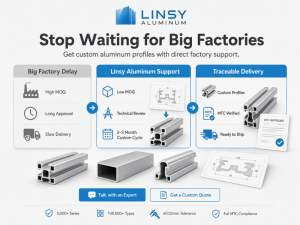
20 yılı aşkın deneyime sahip Shenzhen merkezli bir fabrika olan Linsy Aluminum, 1000–8000 serisi alaşım aralığında O, H32 ve H34 temperlerinde 5050'yi sac, plaka, rulo, çubuk, boru ve tel olarak tedarik eder. Malzeme ASTM B209 ve GB/T 3880'e göre tedarik edilir; her sipariş için düzenlenen MTC belgeleri aracılığıyla kimyasal ve mekanik doğrulama mevcuttur.
SGS kimyasal bileşim, mekanik özellik, boyutsal muayene ve ultrasonik test raporları, ek test maliyeti karşılığında talep üzerine temin edilebilir. Stokta olmayan boyutlar için Linsy, tipik olarak 10–60 gün teslim süresiyle düşük-MOQ özel üretimi ve CNC işleme, lazer kesim, TIG/MIG kaynağı ve yüzey bitirme (anodizasyon, polisaj, toz boyama) dahil olmak üzere şirket içi işlemeyi destekler. ISO 9001, ISO 14001 ve ISO 45001 yönetim sistemleri, ham maddeden bitmiş ürüne kadar tutarlı kaliteyi destekler.
Sonuç
5050 alüminyum, çok iyi şekillendirilebilirlik, iyi korozyon direnci ve parlak anodize yüzey sunan pratik bir ısıl işlem görmeyen alaşımdır — ancak ödünleşimi orta mukavemettir; çekme değerleri H34'te yalnızca yaklaşık 240 MPa'ya ulaşır, bu nedenle yapısal bir kalite değildir. Yük taşıma kapasitesi veya yorulma direnci gerektiren parçalar bunun yerine 5052 veya 6061'e yönelmelidir.
Şekillendirilebilirlik, yüzey kalitesi ve korozyon direncinin tasarım amacına uyduğu projeler için Linsy Aluminum, 5050'yi O, H32 ve H34 temperlerinde sac, plaka, rulo, çubuk, boru ve tel olarak tedarik eder; her sipariş için MTC, talep üzerine SGS raporları ve şirket içi CNC, lazer, kaynak ve bitirme destekli 10–60 gün teslim süresiyle düşük-MOQ özel üretim sunar. Spesifikasyonunuz belirli bir temper veya ürün formunda 5050 gerektiriyorsa, kalite uygunluk incelemesi ve teklif için çizimi veya gereksinimi gönderin.
Sıkça Sorulan Sorular
5050 alüminyum, mukavemeti artırmak için ısıl işleme tabi tutulabilir mi?
Hayır. 5050, ısıl işlem görmeyen bir 5xxx alaşımıdır. Tüm mukavemet, magnezyum katı çözelti güçlendirmesinden ve temper yoluyla gerinim sertleşmesinden (O, H32, H34) gelir. Benzer bir ailede daha yüksek mukavemete ihtiyacınız varsa, 5052-H34'e veya ısıl işlem görebilen 6061-T6'ya geçin.
5050 H32 ve H34 temperleri arasındaki fark nedir?
Her ikisi de gerinim sertleştirilmiş ve stabilize edilmiştir, ancak H34, H32'nin yaklaşık iki katı soğuk haddeleme alır. H34, daha yüksek çekme ve akma mukavemetine (yaklaşık 200–240 MPa'ya karşı 175–215 MPa) ulaşır; bunun bedeli azalmış süneklik ve daha sıkı bükme sınırlarıdır. Bir miktar şekillendirme kaldığında H32'yi seçin; düz veya hafif kavisli parçalar için H34'ü seçin.
5050 alüminyum dış mekan veya denizcilik kullanımı için uygun mudur?
5050, deniz atmosferi ve nemli ortamlarda iyi performans gösterir; magnezyum ve krom içeriği, koruyucu kaplama olmadan genel korozyona karşı iyi direnç sağlar. Doğrudan, uzun süreli tuzlu su daldırması veya agresif endüstriyel maruziyet için 5052 (daha yüksek magnezyum) daha iyi uzun vadeli korozyon performansı sunar.
5050 alüminyum hangi ürün formlarında mevcuttur?
5050 en yaygın olarak şekillendirme ve dekoratif trim için sac ve rulo olarak tedarik edilir; daha kalın veya işlenmiş parçalar için plaka ve çubuk mevcuttur. Linsy Aluminum ayrıca 5050'yi boru ve tel olarak tedarik eder; düşük MOQ'da özel boyutlar mevcuttur.
Sac metal işlerinde 5050, 3003 ile nasıl karşılaştırılır?
Her ikisi de ısıl işlem görmeyen şekillendirme alaşımlarıdır, ancak 5050 biraz daha yüksek mukavemet ve daha iyi yüzey kalitesi sunar; bu da onu dekoratif ve parlak bitmiş parçalar için daha uygun kılar. 3003 biraz daha şekillendirilebilir ve genellikle daha düşük maliyetlidir; bu nedenle genel amaçlı sac metal, pişirme kapları ve kimyasal ekipmanda baskındır. Seçim, yüzey görünümünün mü yoksa maksimum şekillendirilebilirliğin mi öncelik olduğuna bağlıdır.