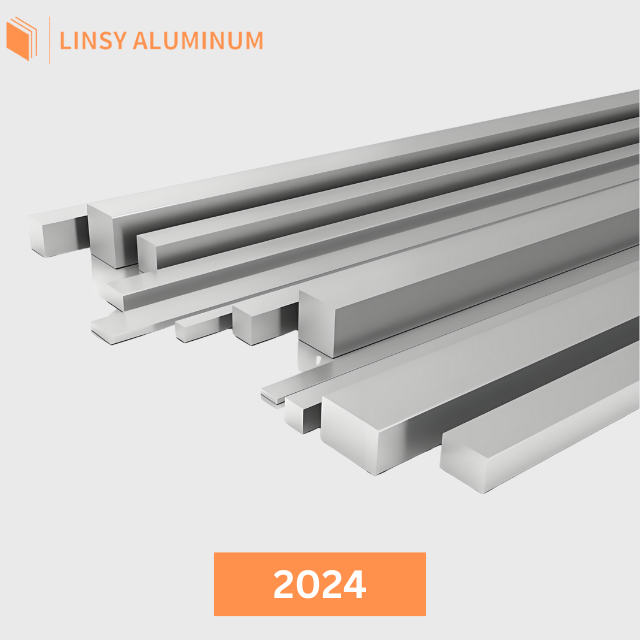


2024 aluminum flat bar is rectangular Al-Cu-Mg stock for brackets, ribs, fittings and structural members under repeated load. Where 7075 wins on absolute strength, 2024 wins on fatigue life. Bare 2024 corrodes readily and it is not reliably weldable — both facts belong on the drawing.
Thickness: 3–80 mm
Width: 10–300 mm
Tempers: O / T3 / T4 / T351 / T851
Tolerance: ASTM B211, h9–h11
Quality documents: MTC report with every order
2024 aluminum flat bar is rectangular solid stock in heat-treatable Al-Cu-Mg, the classic aerospace alloy, used for brackets, ribs, fittings and structural members where the load is repeated rather than a single peak. Where 7075 wins on absolute strength, 2024 wins on fatigue life — which is why airframe structure stayed in this alloy long after stronger grades existed. Two limits decide most jobs: bare 2024 corrodes readily and needs anodizing, coating or cladding, and it is not reliably weldable. Alloy data: 2024 aluminum alloy.
| Item | Range |
|---|---|
| Thickness | 3 – 80 mm |
| Width | 10 – 300 mm |
| Length | 1,000 – 6,000 mm, cut to size |
| Tempers | O / T3 / T4 / T351 / T851 |
| Tolerance | ASTM B211, h9–h11 |
One commercial point worth knowing before you size a 2024 bar: custom widths are cut from the nearest available plate, so two bars of almost the same width can price differently if one falls inside a standard plate width and the other does not. If the design allows a small change in width, ask what the plate widths are — it is often the cheapest saving available on this alloy.
2024 flat bar at these sizes is normally sawn from rolled plate, so the plate tolerances apply and the edges are sawn square — usually better for a structural member than as-extruded edges. Custom widths are cut from the nearest plate, which means the price depends on the plate it comes out of, not just the bar you order.
| Temper | Tensile (MPa) | Yield (MPa) | Elongation | Fatigue (MPa) |
|---|---|---|---|---|
| O | 186 | 76 | 20% | 90 |
| T3 | 483 | 345 | 18% | 138 |
| T351 | 462 | 324 | 17% | 138 |
| T851 | 517 | 455 | 7% | 159 |
Typical AA reference figures; confirm against the MTC. Density 2.78 g/cm³, elastic modulus 73 GPa. Note that fatigue strength is essentially unchanged across T3/T351 while elongation drops from 17% to 7% at T851 — on this alloy, ductility is what varies.
T351 is the machining temper: stretched after quenching, so the bar stays straight when cut. For a flat bar that will be milled, that is the default. T3 keeps the cold work and is slightly stronger (483 against 462 MPa) — appropriate for small sections turned or milled in one operation.
T851 is for higher strength at temperature, at the cost of ductility — use it where the part runs warm and the stress is real. O is for forming before heat treatment and is rarely held as flat bar.
| Alloy / temper | Tensile (MPa) | Yield (MPa) | Fatigue | Where it fits |
|---|---|---|---|---|
| 2024-T351 | 462 | 324 | Best in class | Fatigue-critical brackets, ribs, structural fittings |
| 7075-T651 | 570 | 505 | Lower | Peak strength, wear plates, tooling |
| 6061-T651 | 310 | 276 | Moderate | Weldable, corrosion-resistant general flat bar |
The honest distinction: 7075 is stronger, 2024 lasts longer under cyclic load. Specify 2024 when the part sees many cycles and the stress concentration is real. Neither should be welded, and both need corrosion protection — if the part must be welded or left bare outdoors, neither is the right answer and 6061 is.
Cutting: sawn to size; sawn edges are square and can be milled on request. Straightness is quoted per the standard rather than assumed — if the bar is used as a guide or a rail, say so, because a bow of a few millimetres over 3 m matters there and nowhere else.
Machining: good, and better than 7075 on long-chipping operations — but 2024 makes stringy chips that wrap. Use inserts with a chip breaker and keep the coolant flowing. Order T351 so the bar does not relieve stress during machining.
Finishing — the weak point. Bare 2024 corrodes in damp air, and cut edges are the first to go. Specify anodizing (it darkens, and the film protects less than on 6xxx), a chemical conversion coating, or paint. Never leave machined 2024 bare in a humid shop.
Welding: not recommended. Fusion welding causes hot cracking and property loss in the heat-affected zone. Design for riveting, bonding or mechanical fastening.
Aircraft brackets and ribs, structural fittings, fatigue-loaded machine parts, gearbox and transmission mounts, truck and trailer structural members, hydraulic brackets, riveted assemblies, racing and motorsport components, high-load jigs where fatigue governs.
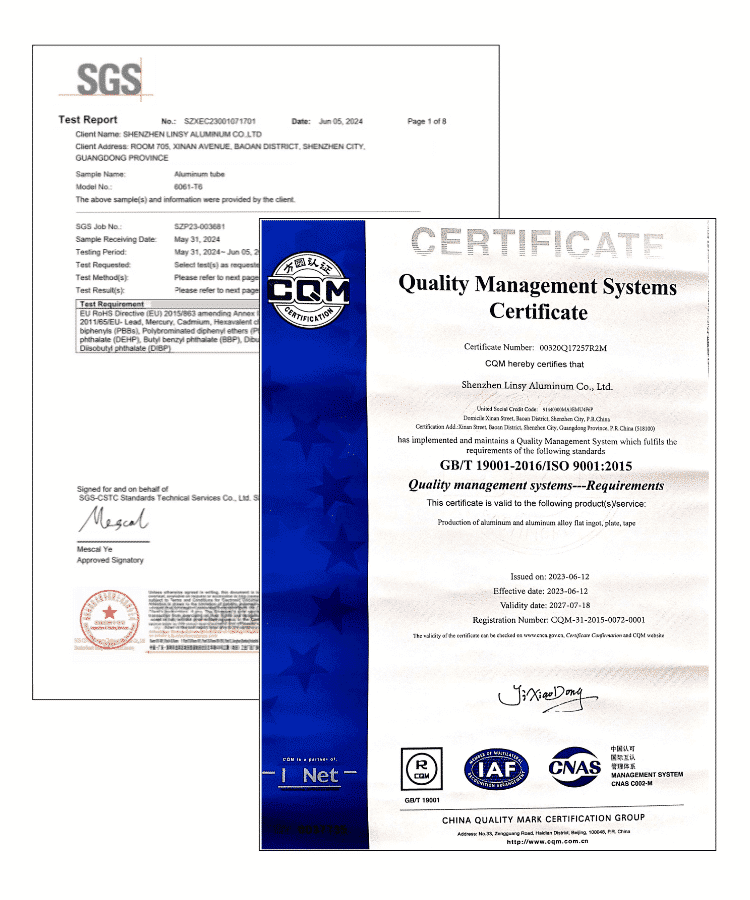
Every order ships with an MTC reporting alloy, temper, chemical composition and mechanical results against ASTM B211 or the ordered standard. Third-party testing is available on request at additional cost; production runs under ISO 9001, ISO 14001 and ISO 45001 certified systems.
Sales confirm stock or custom lead time for that exact combination.
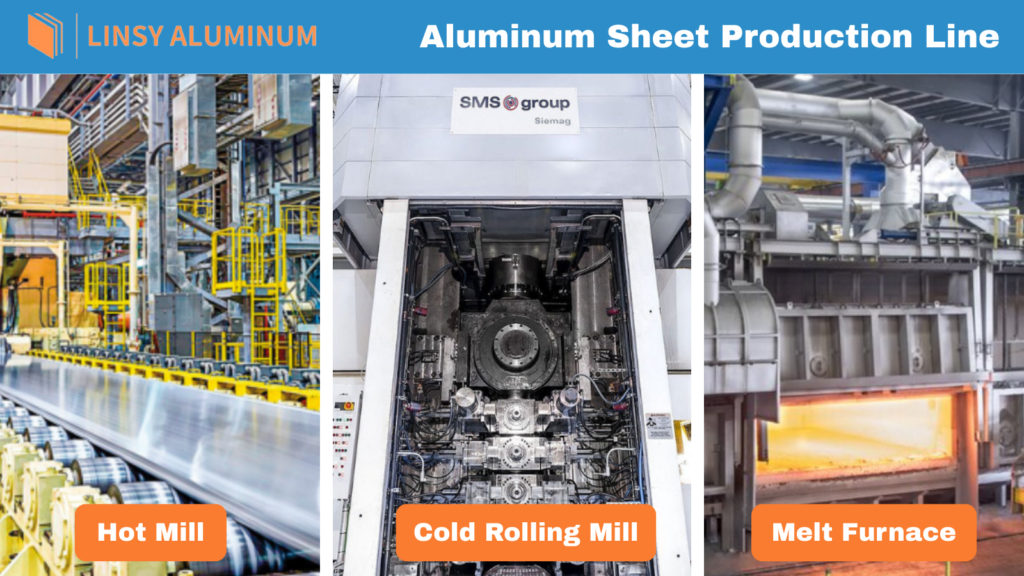
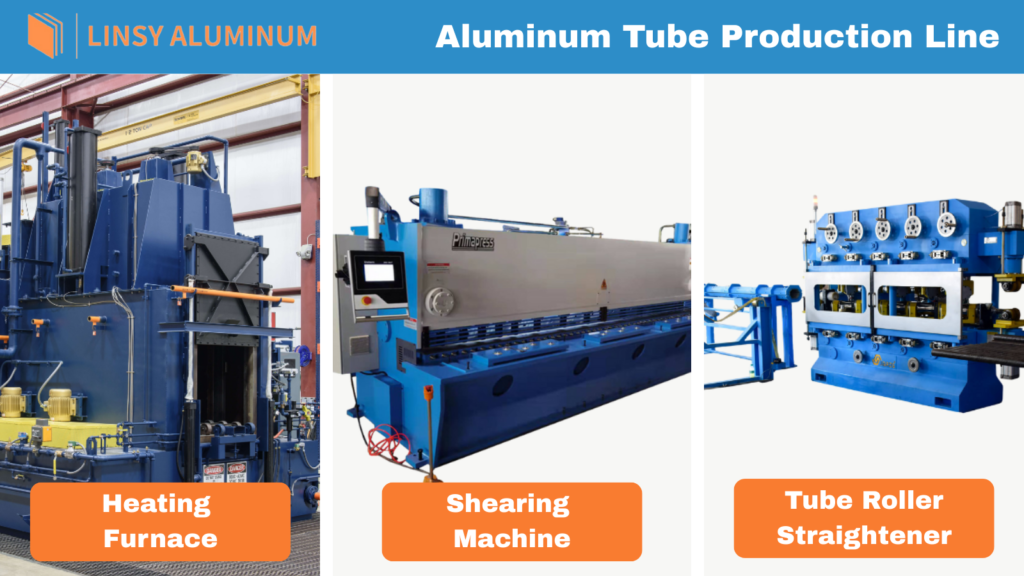
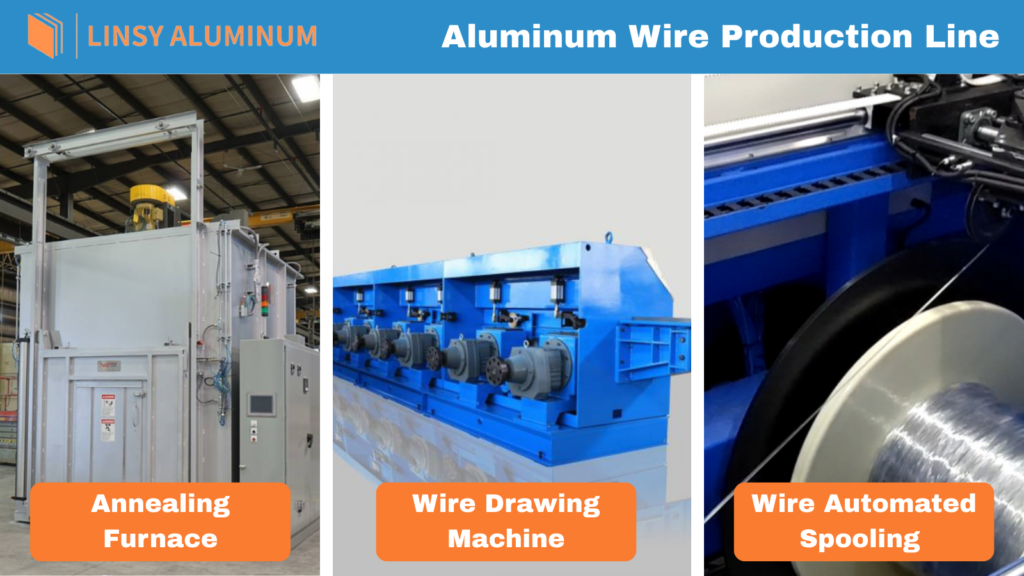
Shenzhen-based aluminum factory, more than 20 years in the industry, supplying 1000–8000 series alloys in standard specifications and custom sizes.
Q: 2024 or 7075 flat bar — which is stronger?
A: 7075 (570 against 462 MPa), but 2024 has better fatigue resistance. On a cyclically loaded part, specify by fatigue data rather than tensile strength.
Q: Does 2024 flat bar need corrosion protection?
A: Yes. Bare 2024 corrodes readily and cut edges go first. Specify anodizing, a conversion coating or paint at quotation — not after machining.
Q: Can 2024 flat bar be welded?
A: No, not reliably. It hot-cracks and loses properties in the heat-affected zone. Design for riveting, bonding or mechanical fastening.
Q: Why T351 rather than T3?
A: T351 is stress relieved by stretching, so the bar stays straight when machined. T3 is slightly stronger but carries more residual stress — use it for small sections.
Q: What sizes do you supply?
A: 3–80 mm thick, 10–300 mm wide, cut to length from 1,000 to 6,000 mm.
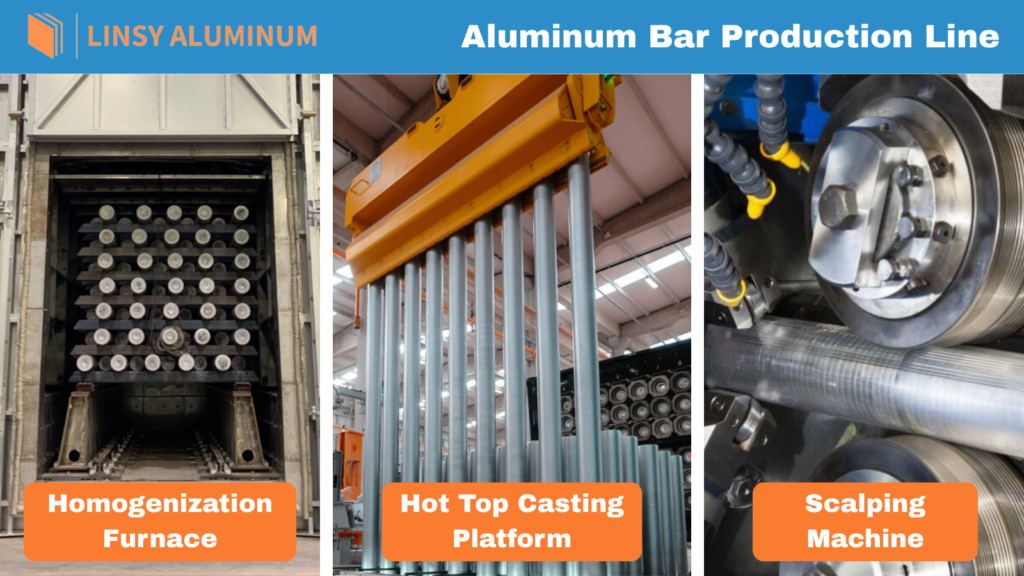
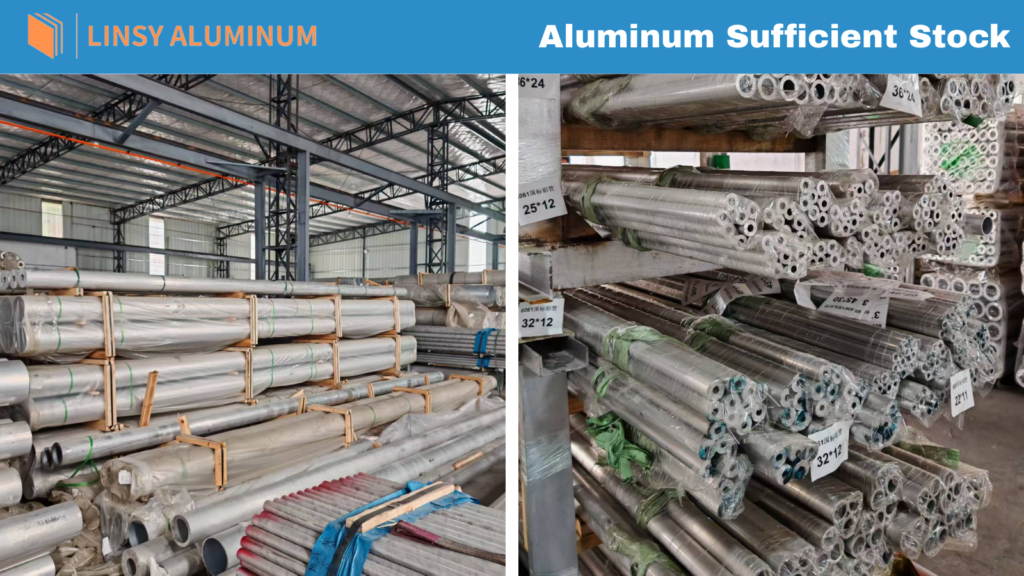
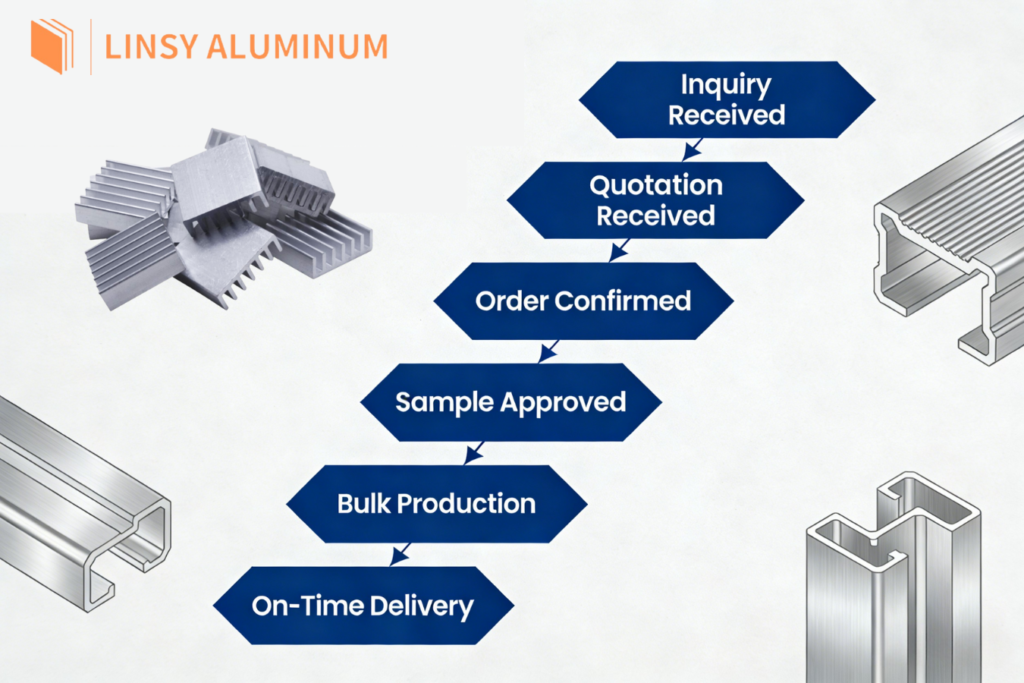
Linsy Advantages
Linsy Aluminum is a leading supplier of aluminum processing products, serving diverse industries including aerospace, general engineering, automotive, marine, shipbuilding and other specialized industrial applications.
We are committed to maintaining the highest standards of quality and environmental responsibility, as demonstrated by our certifications: ISO 9001:2008, ISO 14001:2004 and SGS.