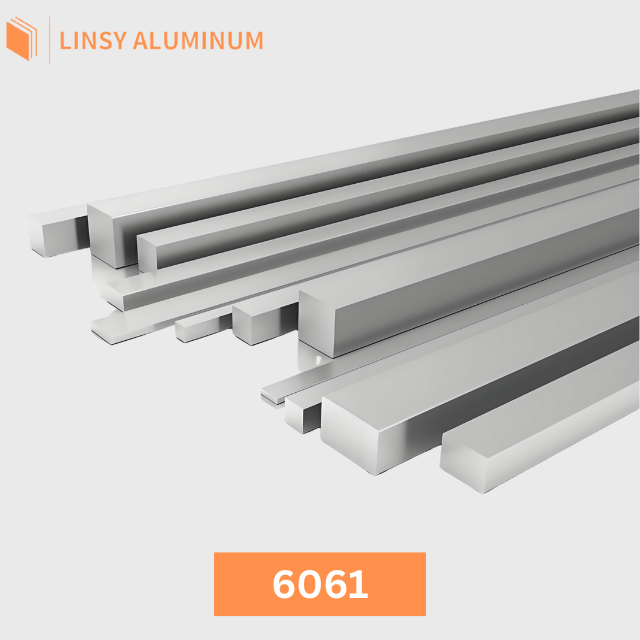


6061 aluminum flat bar is rectangular Al-Mg-Si stock for brackets, rails, frames and machine parts. T6 gives 310 MPa typical tensile; it welds, machines and anodizes cleanly, and resists corrosion well enough for outdoor and marine work. Its limit is strength — about half of 7075 — and welding in T6 softens the heat-affected zone.
Thickness: 3–200 mm
Width: 10–600 mm
Tempers: O / T4 / T6 / T651 / T6511
Standards: ASTM B221, ASTM B209, EN 755
Quality documents: MTC report with every order
6061 aluminum flat bar is rectangular solid stock, heat-treatable Al-Mg-Si, used for brackets, rails, frames, machine parts and anything that needs a flat bearing surface rather than a round section. It is the general-purpose structural flat stock: T6 gives 310 MPa typical tensile, it welds, machines and anodizes cleanly, and it resists corrosion well enough for outdoor and marine work. Its limit is strength — 6061 is about half of 7075 — and welding in T6 softens the heat-affected zone. Alloy data: 6061 aluminum alloy.
| Item | Range |
|---|---|
| Thickness | 3 – 200 mm |
| Width | 10 – 600 mm |
| Length | Up to 6,000 mm, cut to size |
| Tempers | O / T4 / T6 / T651 / T6511 |
| Standards | ASTM B221 (extruded bar), ASTM B209 (plate), EN 755, GB/T 6892 |
Flat bar is specified as thickness × width, and the width-to-thickness ratio matters: a very wide, thin flat bar is usually slit from plate, while a narrow, thick one is extruded. State both dimensions and the application — the route is chosen from them, and it changes the tolerance and the edge.
| Temper | Tensile (MPa) | Yield (MPa) | Elongation | Typical use |
|---|---|---|---|---|
| O | ≤ 150 | 83 – 110 | 10 – 18% | Severe forming before heat treatment |
| T4 | 180 – 210 | ≥ 110 | 10 – 16% | Formed parts that age naturally |
| T6 | ≥ 290 (typical 310) | ≥ 240 (typical 276) | 8 – 12% | General structural and machined bar |
| T651 | ≥ 290 (typical 310) | ≥ 240 (typical 276) | 8 – 12% | Plate-sawn flat bar for machining |
| T6511 | ≥ 290 (typical 310) | ≥ 240 (typical 276) | 8 – 12% | Extruded flat bar, stress relieved |
Typical values; confirm against the MTC. Density 2.70 g/cm³, elastic modulus 69 GPa. T651 and T6511 carry the same strength as T6 — the difference is that the residual stress was relieved, so the bar stays straight when you cut or machine it.
This is the part of a flat bar order that decides whether you get what you expect. The same drawing can be satisfied by two different products:
Practical rule: if the flat bar is a guide rail, a wear strip, or anything where the two faces must be parallel and square, ask for plate-sawn and specify the edge condition. If it is a bracket or a frame member where the faces are not functional, extruded T6511 is cheaper and perfectly adequate.
| Alloy / temper | Tensile (MPa) | Yield (MPa) | Weldability | Where it fits |
|---|---|---|---|---|
| 6061-T6 / T651 | 310 | 276 | Good | Brackets, frames, rails, machine parts, anodized trim |
| 7075-T6 / T651 | 570 | 505 | Not weldable | Maximum-strength machined parts, tooling |
| 5052-H32 | 214 – 262 | ≥ 159 | Excellent | Marine, tanks, formed brackets, chemical service |
6061 is the default because it is the only one of the three that both welds and anodizes well. Go to 7075 only when the strength calculation forces it; drop to 5052 when the part is formed or lives in salt water and the load is modest.
Cutting: sawn to length, cut to size as standard. Plate-sawn flat bar can be supplied with milled edges where squareness matters.
Machining: good in T6 and T651. Order T651 or T6511 for multi-face work so the bar does not move as material comes off. 6061 is gummier than a free-machining grade — sharp polished carbide and a firm feed.
Surface: mill finish, PVC film, or anodized. 6061 takes a uniform clear or dyed anodized film, which is why it is used for visible trim and bracketry.
Brackets and mounting plates, machine frames and rails, guide rails and wear strips, conveyor components, truck and trailer parts, boat fittings, anodized architectural trim, tooling components, bus bar and electrical mounting.
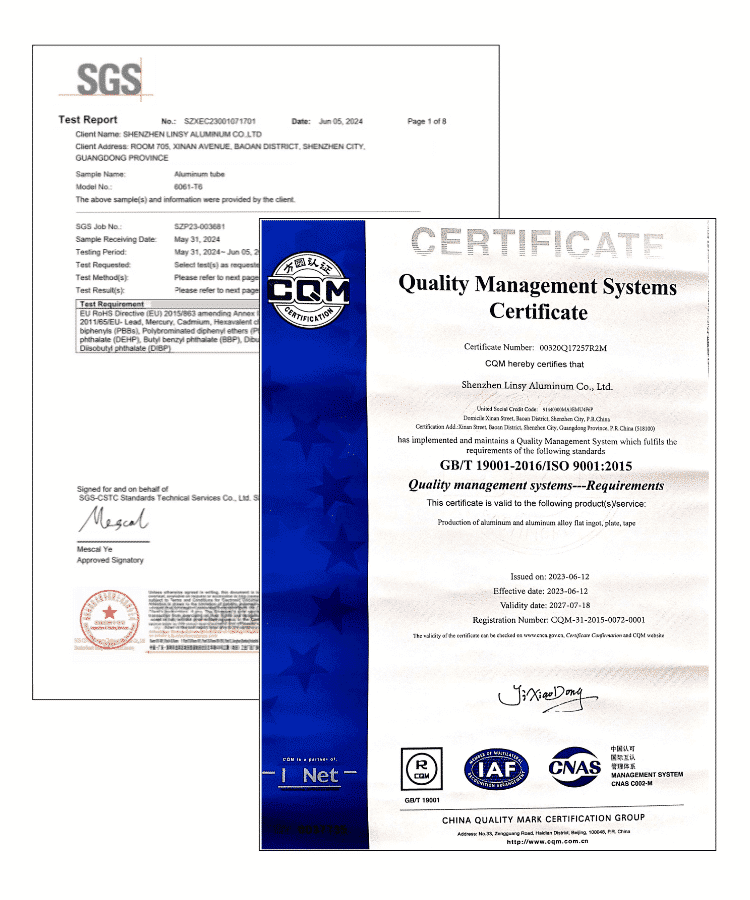
Every order ships with an MTC reporting alloy, temper, chemical composition and mechanical results against ASTM B221 or B209 depending on the route. Third-party testing is available on request at additional cost; production runs under ISO 9001, ISO 14001 and ISO 45001 certified systems.
Sales confirm stock or custom lead time for that exact combination.
Shenzhen-based aluminum factory, more than 20 years in the industry, supplying 1000–8000 series alloys in standard specifications and custom sizes.
Q: Is flat bar extruded or sawn from plate?
A: Both are supplied. Narrow moderate sizes are extruded (T6511); wide or thick sizes are sawn from plate (T651). Tell us the application and whether the faces must be parallel — that decides the route.
Q: T6 or T6511?
A: T6511 if the bar will be machined on more than one face, because the stress relief stops it moving after the first cut. T6 is fine for brackets and frame members cut to length.
Q: Why does the thickness tolerance differ between routes?
A: Extruded flat bar carries an extrusion tolerance; plate-sawn flat bar carries the plate tolerance, which is usually tighter and gives squarer edges. For guide rails and wear strips that difference matters.
Q: Can 6061 flat bar be welded?
A: Yes, with 5356 or 4043 filler, but welding in T6 softens the heat-affected zone towards annealed. Design the joint for the as-welded strength.
Q: What sizes do you hold?
A: 3–200 mm thick, 10–600 mm wide, cut to length up to 6,000 mm. Tell us the finished size and quantity and sales will confirm stock.
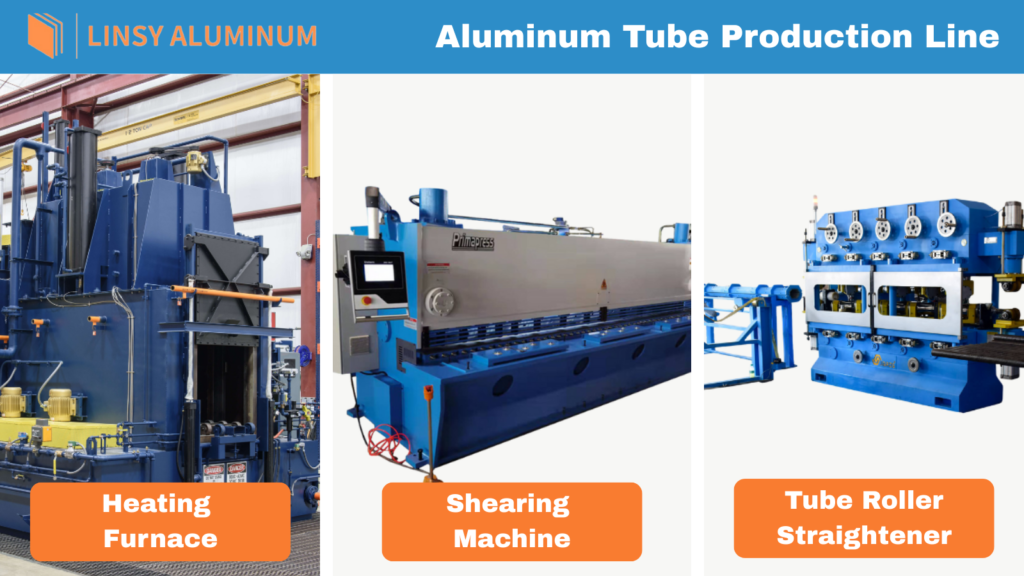
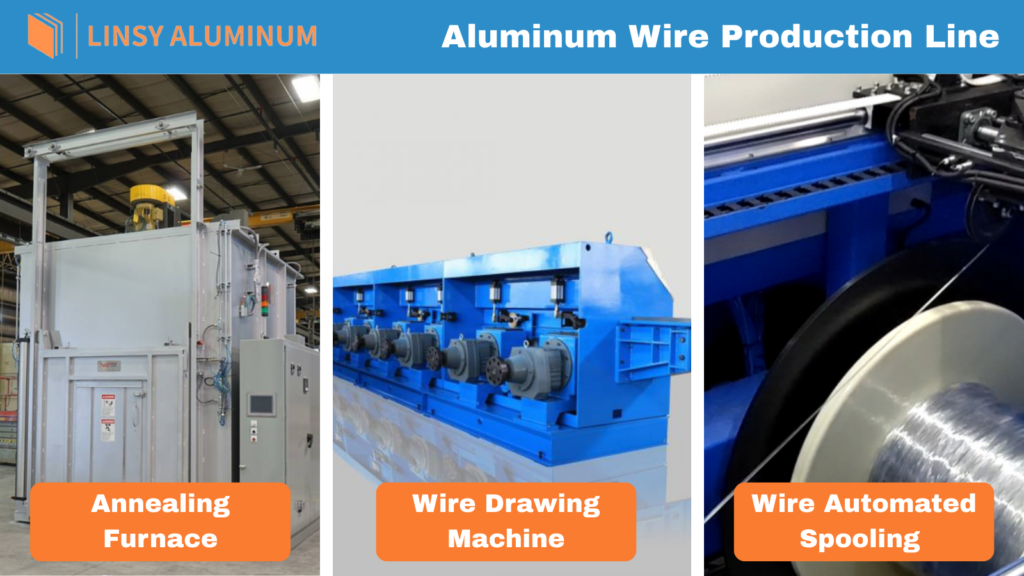
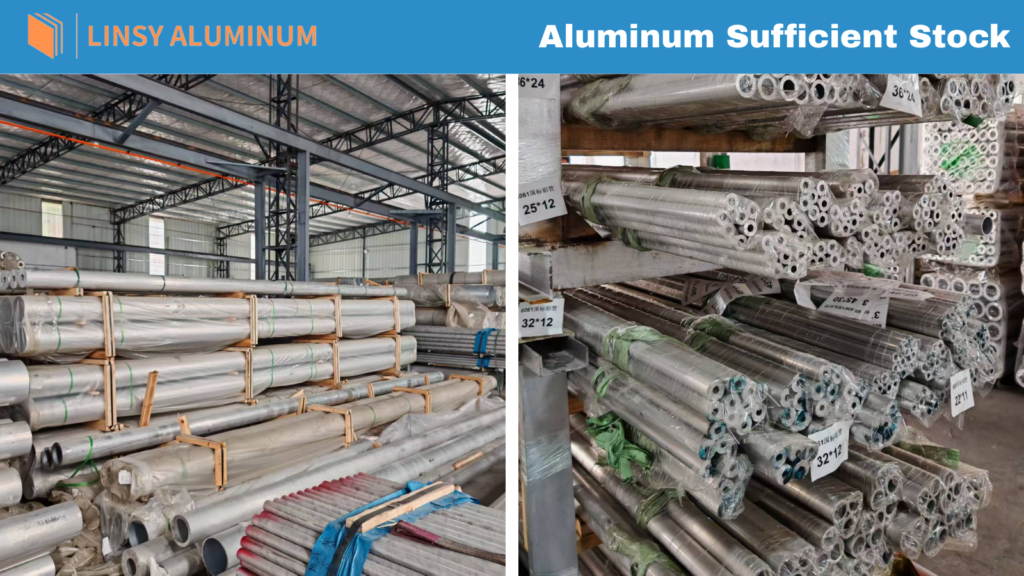
Linsy Advantages
Linsy Aluminum is a leading supplier of aluminum processing products, serving diverse industries including aerospace, general engineering, automotive, marine, shipbuilding and other specialized industrial applications.
We are committed to maintaining the highest standards of quality and environmental responsibility, as demonstrated by our certifications: ISO 9001:2008, ISO 14001:2004 and SGS.