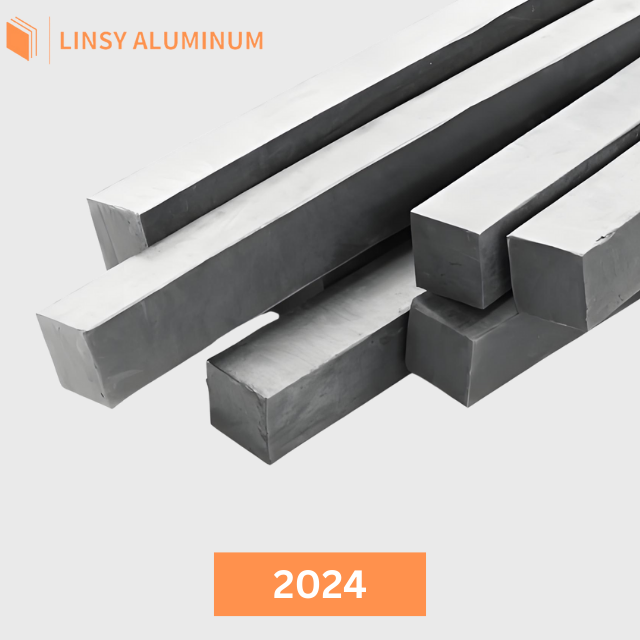


2024 aluminum square bar is solid square stock in Al-Cu-Mg, the aerospace structural alloy, for square parts under repeated load. Where 7075 wins on strength, 2024 wins on fatigue life. Not weldable, and bare 2024 needs protection — both facts belong on the drawing.
Side: 6–150 mm (custom to 300 mm)
Length: 1,000–6,000 mm
Tempers: O / T3 / T4 / T351 / T851
Standards: ASTM B211, ASTM B221
Quality documents: MTC report with every order
2024 aluminum square bar is solid square stock in heat-treatable Al-Cu-Mg, the aerospace structural alloy, used for square parts under repeated load rather than a single peak: fittings, ribs, keys in fatigue-critical assemblies, machine components where the stress cycles. Where 7075 wins on absolute strength, 2024 wins on fatigue life. Two limits decide most jobs: bare 2024 corrodes readily and needs anodizing, coating or cladding, and it is not reliably weldable. Alloy data: 2024 aluminum alloy.
| Item | Range |
|---|---|
| Side length | 6 – 150 mm (custom to 300 mm) |
| Length | 1,000 – 6,000 mm, custom cut |
| Tempers | O / T3 / T4 / T351 / T851 |
| Standards | ASTM B211 (bar and rod), ASTM B221 |
On the designation. T351 and T851 are stress-relieved tempers produced by stretching, and on a sawn solid bar they are legitimate — which is where square bar differs from tube. Smaller square bar is drawn or extruded and carries T3 or T4. Tell us the side and we will confirm which route and designation apply.
| Temper | Tensile (MPa) | Yield (MPa) | Elongation | Fatigue (MPa) |
|---|---|---|---|---|
| O | 186 | 76 | 20% | 90 |
| T3 | 483 | 345 | 18% | 138 |
| T4 | 462 | 324 | 17% | 138 |
| T351 | 462 | 324 | 17% | 138 |
| T851 | 517 | 455 | 7% | 159 |
Typical AA reference figures; confirm against the MTC. Density 2.78 g/cm³, elastic modulus 73 GPa. Fatigue strength barely moves across tempers while elongation collapses from 17% at T351 to 7% at T851 — on a keyed or threaded part, that ductility is what prevents a brittle failure at the corner.
T351 is the machining temper on plate-sawn bar: stretched after quenching, so it stays straight when cut. T3 keeps the cold work and is slightly stronger (483 against 462 MPa) — appropriate for smaller drawn bar worked in one operation. T851 is for higher strength at temperature, at the cost of ductility; do not use it where the part is keyed or threaded.
| Alloy / temper | Tensile (MPa) | Yield (MPa) | Fatigue | Where it fits |
|---|---|---|---|---|
| 2024-T351 | 462 | 324 | Best in class | Fatigue-critical fittings, ribs, keys in cycled assemblies |
| 7075-T651 | 570 | 505 | Lower | Peak strength, wear blocks, tooling |
| 6061-T6511 | 310 | 276 | Moderate | Machine parts, spacers, tapped posts |
7075 is stronger, 2024 lasts longer under cyclic load — a part that sees many cycles should be specified on fatigue data, not tensile strength. Neither should be welded and both need protection; if the part is welded or left bare outdoors, 6061 is the answer.
Solid versus tube: tube gives more stiffness per kilogram but has no wall to hold a thread or a keyway. A keyed or tapped square part must be solid.
Route: small square bar is drawn or extruded (T3/T4); larger sizes are sawn from stretched plate (T351/T851). That is why the temper list on this page spans both — and why the route has to be confirmed before the certificate is written.
Cutting: sawn to length; sawn edges are square and can be milled on request.
On the fatigue question specifically: a keyway or a cross-hole in a 2024 square bar is a stress concentration, and the fatigue strength figures quoted above are for smooth specimens. In practice the notch halves them or worse. If the part is cyclically loaded and has a keyway, either design the fillet radius generously or move up to a larger section — adding material is usually cheaper than changing alloy and rarely as effective as reducing the notch.
Machining: good, better than 7075 on long-chipping operations, but 2024 makes stringy chips that wrap — use inserts with a chip breaker and keep coolant flowing. Order T351 so the bar does not relieve stress during machining.
Finishing — the weak point. Bare 2024 corrodes in damp air and cut edges go first. Specify anodizing (it darkens, and protects less than on 6xxx), a conversion coating, or paint — decided at quotation, not after machining.
Welding: not recommended. Fusion welding hot-cracks and loses properties in the heat-affected zone.
Aircraft fittings and ribs, fatigue-loaded machine components, keys and splines in cycled assemblies, structural fittings, hydraulic components, racing and motorsport parts, high-load jigs where fatigue governs.
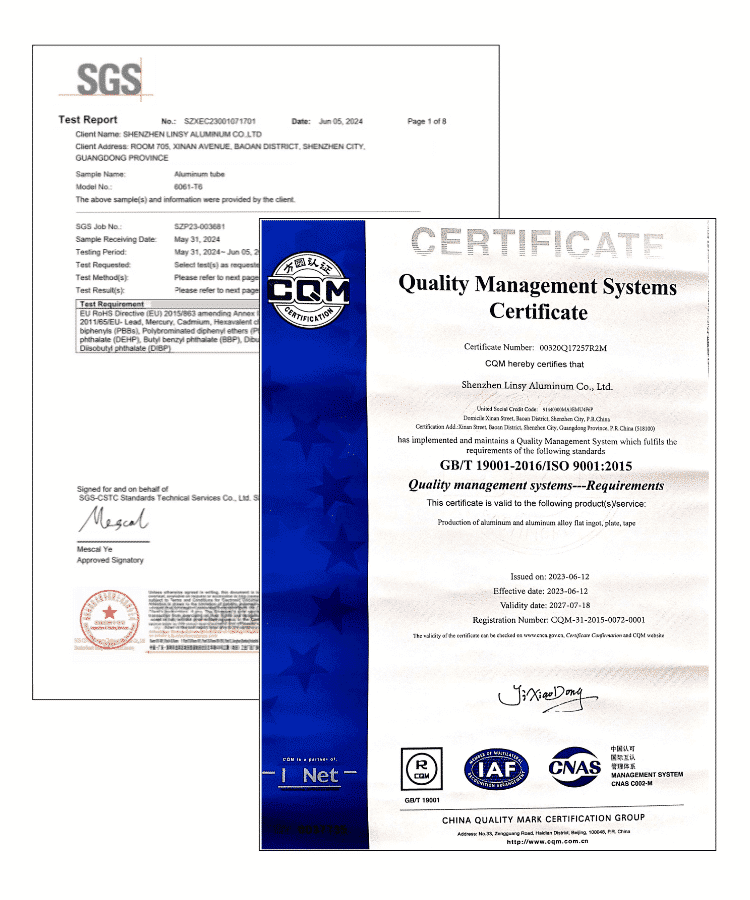
Every order ships with an MTC reporting alloy, temper, side and mechanical results against ASTM B211 or B221. Third-party testing is available on request at additional cost; production runs under ISO 9001, ISO 14001 and ISO 45001 certified systems.
To quote in one round, send: side × length, temper (T351 for machined parts, T3 for small sections), fatigue requirement if the part is cyclically loaded, corrosion protection, end finish, and the destination.
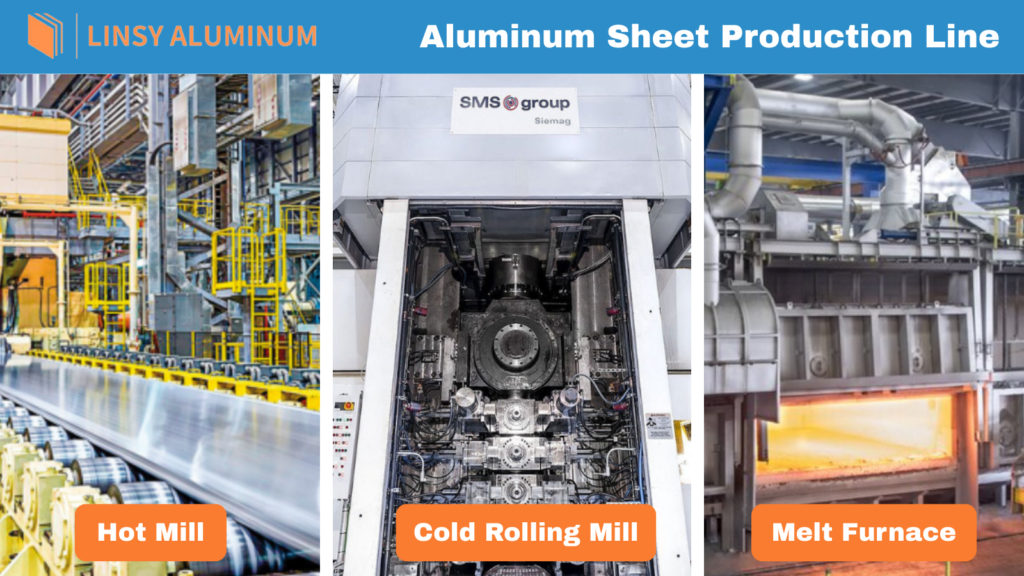
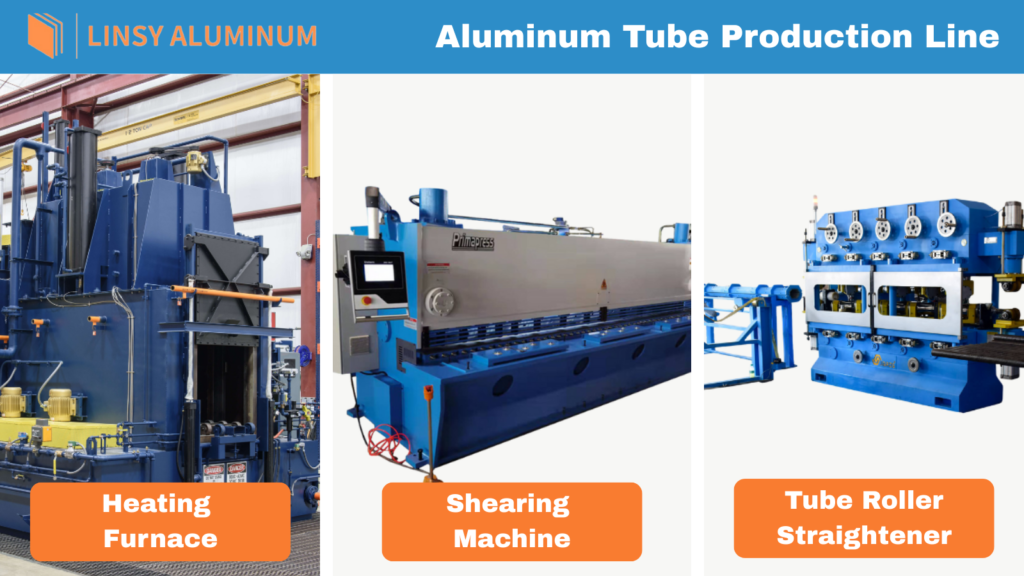
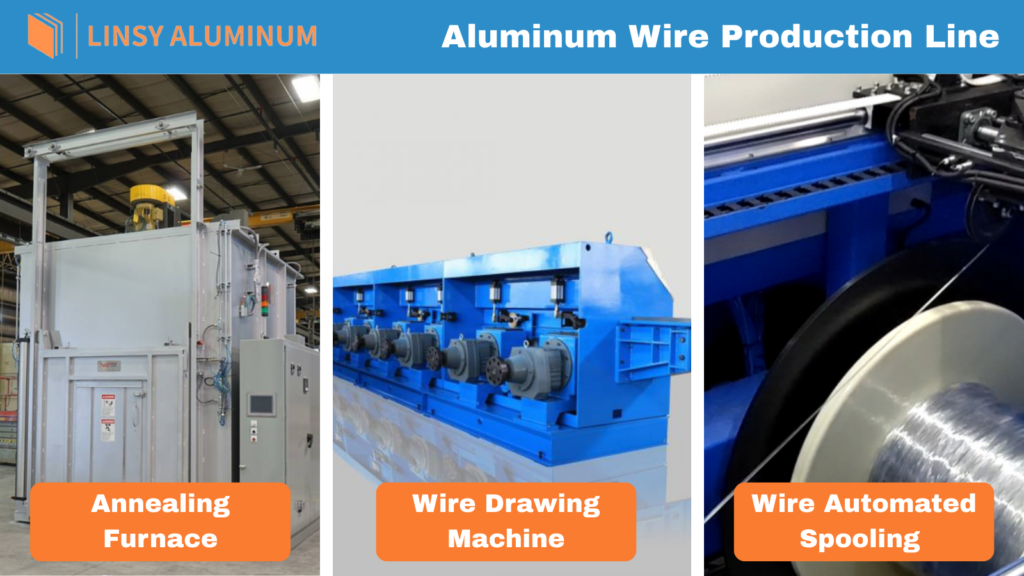
Shenzhen-based aluminum factory, more than 20 years in the industry, supplying 1000–8000 series alloys in standard specifications and custom sizes.
Q: 2024 or 7075 square bar?
A: 7075 is stronger (570 against 462 MPa); 2024 has better fatigue resistance, which is what governs a cyclically loaded part.
Q: Does 2024 square bar need corrosion protection?
A: Yes. Bare 2024 corrodes readily and cut edges go first. Specify anodizing, a conversion coating or paint at quotation.
Q: Can 2024 square bar be welded?
A: No, not reliably. It hot-cracks and loses properties in the heat-affected zone. Design for mechanical fastening.
Q: Why does the temper list include T351 and T851?
A: Because large square bar is sawn from stretched plate, where those are the correct designations. Smaller bar is drawn and carries T3 or T4.
Q: What sizes do you supply?
A: 6–150 mm side as standard, custom to 300 mm, cut to length from 1,000 to 6,000 mm.
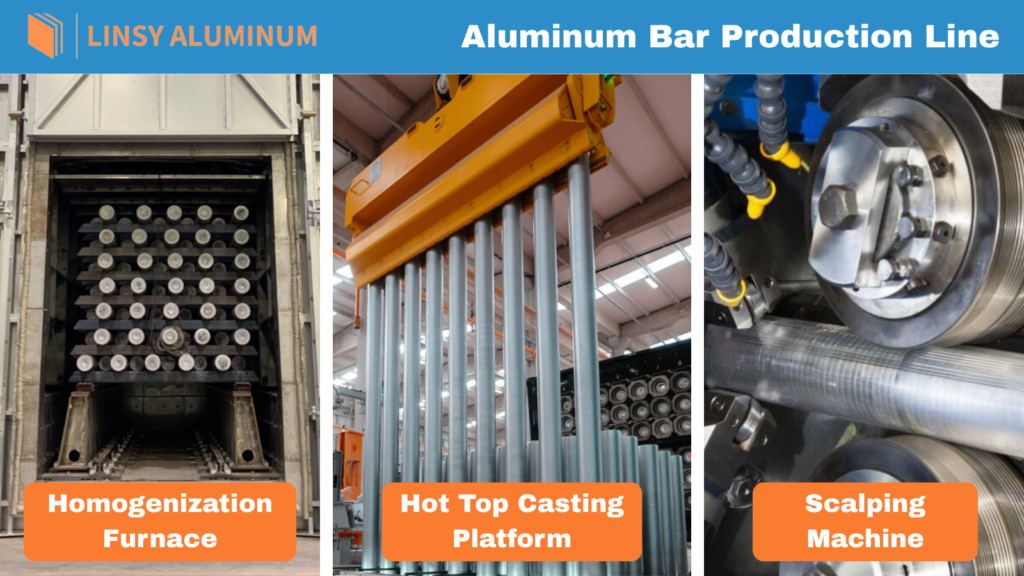
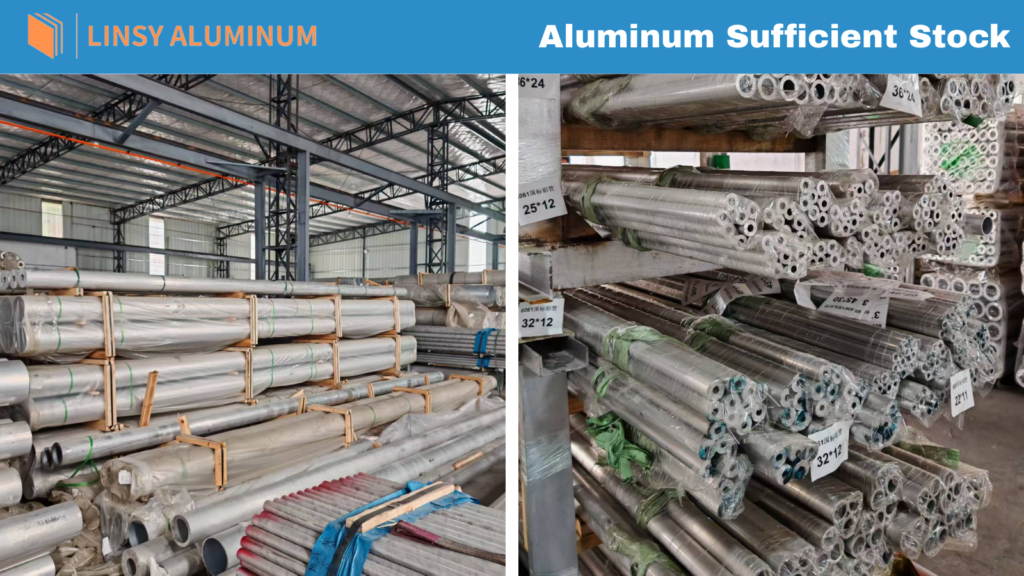
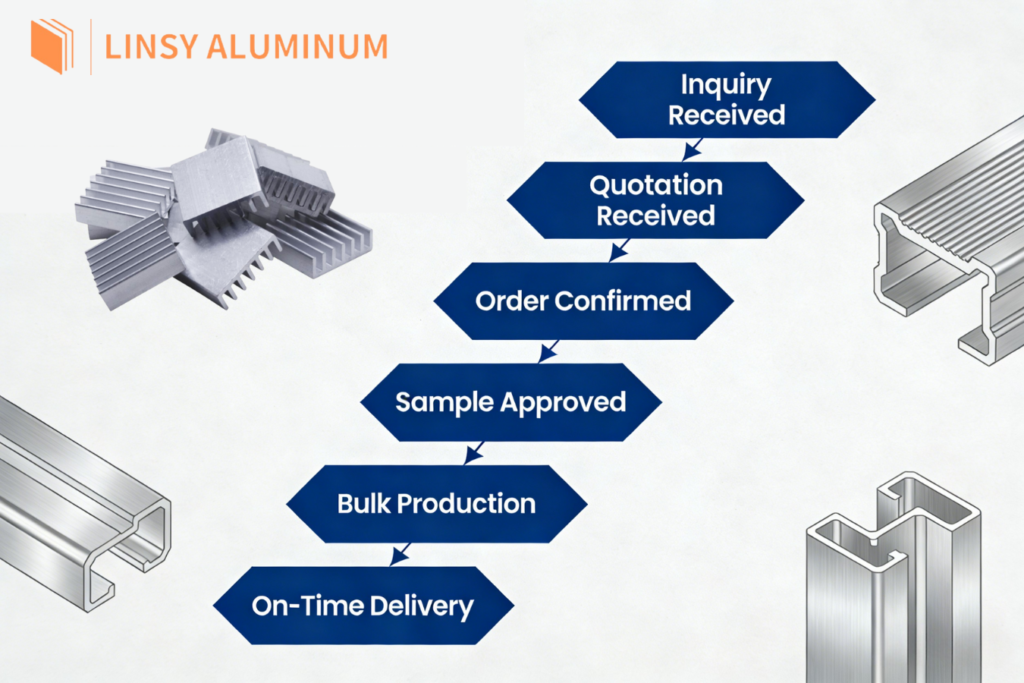
Linsy Advantages
Linsy Aluminum is a leading supplier of aluminum processing products, serving diverse industries including aerospace, general engineering, automotive, marine, shipbuilding and other specialized industrial applications.
We are committed to maintaining the highest standards of quality and environmental responsibility, as demonstrated by our certifications: ISO 9001:2008, ISO 14001:2004 and SGS.